
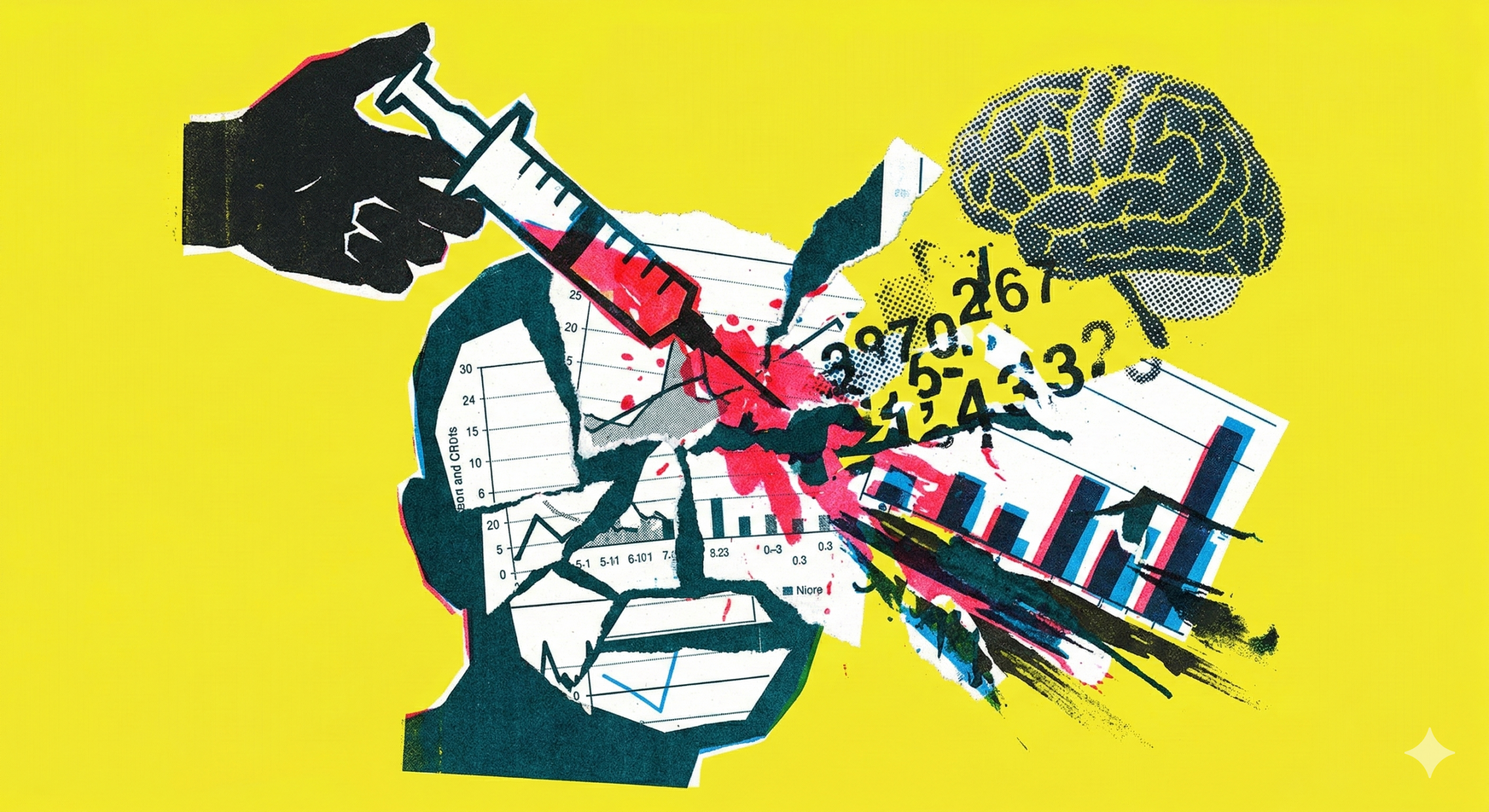
The Crisis That Created the DSM
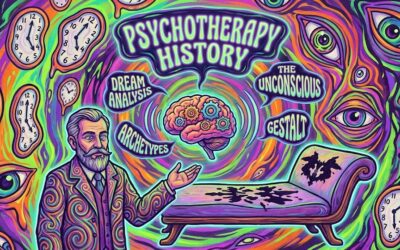
Before 1980, American psychiatry was dominated by psychoanalysis. Diagnosis was secondary, almost administrative. The clinician’s task was understanding the patient’s underlying psychological mechanisms and unique narrative. Mental disorders were viewed as continuous with normal human experience, rooted in conflict, trauma, and environment.
This model had a fatal flaw: it could not cleanly distinguish the mentally well from the mentally ill.
By the early 1970s, psychiatry faced an existential crisis. The anti-psychiatry movement mounted a sustained assault on the profession’s foundations. Thomas Szasz argued that psychiatric conditions were “problems in living” medicalized for social control. Erving Goffman exposed the asylum as a total institution that manufactured the very madness it claimed to treat. R.D. Laing suggested that psychosis might be a sane response to an insane world.
Then came the Rosenhan experiment.
In 1973, psychologist David Rosenhan and seven confederates presented themselves to psychiatric hospitals claiming to hear voices saying “empty,” “hollow,” and “thud.” All eight were admitted and diagnosed with schizophrenia. Once inside, they behaved normally. It took an average of 19 days for them to be released, and none were ever identified as impostors by staff.
The study demonstrated that psychiatry could not reliably distinguish sanity from madness. Further research revealed that a patient’s diagnosis depended more on the theoretical training and geographic location of the psychiatrist than on anything observable about the patient. If the field could not agree on who was sick and who was well, its claim to medical authority, insurance reimbursement, and governmental funding was in grave jeopardy.
Psychiatry needed a solution. It found one in the DSM-III.
The Retreat Behind Numbers
In 1980, the American Psychiatric Association published the third edition of the Diagnostic and Statistical Manual of Mental Disorders. Under the leadership of Robert Spitzer, the DSM-III abandoned psychodynamic depth in favor of symptom checklists. To receive a diagnosis of Major Depressive Disorder, a patient merely needed to check off a specific number of symptoms from a predefined list over a specified duration. Context was irrelevant. Etiology was irrelevant. Only the count mattered.
The APA heralded this as a triumph of empirical science over subjective speculation.
It was nothing of the sort.
Theodore Porter’s Trust in Numbers illuminates what actually happened. Porter argues that the cultural authority of quantification does not derive from scientific success. It derives from political necessity.
“Objectivity lends authority to officials who have very little of their own.”
Strong professional communities rely on qualitative judgment, interpersonal trust, and internal consensus. They don’t need rigid rules because they trust each other’s expertise. Weak communities facing external challenge retreat behind numbers to avoid accusations of bias. Porter calls this “mechanical objectivity”: reducing human judgment to an absolute minimum, substituting standardized metrics and invariable routines.
“Quantification is a technology of distance that minimizes the need for intimate knowledge and personal trust.”
Psychiatry in the 1970s was precisely this kind of weak, embattled elite. Facing existential threat, it turned to mechanical objectivity as a survival strategy. The DSM-III minimized the need for intimate knowledge of the patient, abstracting their individuality into universal, transportable data points.
But there’s a crucial distinction Porter makes that the psychiatric establishment glossed over: the DSM-III improved reliability, not validity.
Reliability means consistency: two clinicians can observe the same patient and agree on the same label. Validity means accuracy: the label describes something real.
Agreeing on a label is not the same as proving the label describes a discrete natural disease. The DSM prioritized consensus over truth. The numerical thresholds within the manual (exactly five symptoms for exactly two weeks) are artifacts of committee votes and institutional compromise, not objective reflections of biological reality.
As Porter cautions: “There is an element of unarticulated expertise built into every attempt to solve problems according to explicit rules.”
The private awareness of these “dirty truths” coexists in living contradiction with the discipline’s public face of perfect objectivity.
The Marketing of the Broken Brain
Armed with the appearance of scientific rigor, psychiatry launched an aggressive rebranding campaign. The psychoanalytic model gave way to the biomedical model. Mental illness was no longer rooted in conflict, trauma, or environment. It was the direct result of genetic defects and neurochemical imbalances in the brain.
Nancy Andreasen’s 1984 book The Broken Brain: The Biological Revolution in Psychiatry encapsulated the new dogma. The psychiatric gaze shifted from psychoanalytically framed conflicts to biomedically framed “broken brains.”
This paradigm shift was deeply intertwined with pharmaceutical economics. The industry required specific, reliable disease categories to market psychotropic medications. The alliance between biological psychiatry and pharmaceutical manufacturers created an industrial complex that sold the public on the idea that human suffering was a mechanical malfunction requiring chemical correction.
Yet after forty years of intensive, well-funded research, the biological revolution has failed to deliver. No definitive biological markers. No distinct pathophysiological mechanisms. No genetic smoking guns for the vast majority of DSM categories. Even the directors of the DSM-IV later admitted that little progress had been made toward understanding etiology, acknowledging the situation was “infinitely more complex” than the biomedical reductionists had imagined.
Instead of curing disease, the model facilitated the medicalization of everyday life, transforming natural human responses to adversity into chronic, lifelong pathological identities.
The STAR*D Scandal
If the biomedical model’s philosophical foundations are shaky, its clinical efficacy should be beyond question. It is not.
The Sequenced Treatment Alternatives to Relieve Depression (STAR*D) trial was the largest and most expensive study of antidepressant treatment ever conducted. Funded by a $35 million NIMH grant, it enrolled 4,041 patients across 41 sites to evaluate real-world outcomes for depression treatment.
In 2006, the investigators reported a cumulative remission rate of 67% after up to four sequential antidepressant trials. The finding became clinical dogma. Textbooks cited it. The NIMH promoted it. The New York Times reported it as proof that persistent medication switching worked.
Then independent researchers gained access to the raw data.
In 2023, H. Edmund Pigott and colleagues published a devastating reanalysis in BMJ Open. They evaluated the dataset with strict fidelity to the original, NIMH-approved research protocol. What they found was catastrophic.
The original investigators had committed multiple fatal protocol violations. They switched primary outcome measures mid-stream, abandoning the blinded, clinician-administered Hamilton Rating Scale in favor of an unblinded, self-rated questionnaire that inflated success rates. They included patients who had already achieved remission before the treatment being evaluated began. They underreported severe suicidality by a factor of four.
When the reanalysis applied the correct outcome measures and proper inclusion criteria, the cumulative remission rate dropped from 67% to 35%.
But the most damning finding concerned sustained recovery. Over the 12-month follow-up, 53.7% of patients dropped out (versus the predicted 20.7%), indicating massive treatment intolerance. When accounting for dropouts and relapses, only 108 of the original 4,041 patients achieved remission and stayed well.
That’s a sustained recovery rate of 2.7%.
If a cardiovascular surgery had a 97.3% failure rate, it would be abandoned immediately. Yet the psychiatric establishment has largely refused to retract the original conclusions or alter clinical guidelines. The fabricated 67% figure remains embedded in the literature.
This is what philosopher Martin Heidegger warned about: scientific frameworks hardening into self-justifying systems that ask only whether something can be categorized, never whether it reflects reality.
The Administrative White Coat
The reliance on fabricated metrics and categorical checklists has driven mental health into an epistemological trap that Adam Curtis describes as the “insecure mirror world”: a labyrinth of predictive models and algorithmic metrics that were built to reflect reality but have slowly become a substitute for it.
In this mirror world, the diagnostic code, the billable unit, and the standardized assessment score become more “real” than the patient sitting in the consulting room.
The DSM encodes this substitution explicitly through the “Clinical Significance Criterion.” Beginning with DSM-IV, symptoms only qualify as a disorder if they cause “clinically significant distress or impairment in social, occupational, or other important areas of functioning.”
This seemingly benign clause structurally aligns psychiatric health with economic productivity. Immense suffering, existential grief, or profound alienation are not medically actionable unless they interrupt the individual’s ability to function within the labor market. The psychological damage caused by poverty, structural racism, and systemic trauma is reclassified as an individual biological deficit requiring pharmaceutical correction to return the subject to productive labor.
To enforce this vision, modern healthcare has erected what I call the “Administrative White Coat”: a sprawling bureaucracy of intake forms, algorithmic risk assessments, prior authorizations, and concurrent documentation requirements. This apparatus creates structural distance between healer and healed.
Stanley Milgram’s obedience experiments demonstrated that institutional authority only maintains its power when it creates a buffer between human actions and their consequences. Compliance with orders to harm dropped to 30% when subjects had to physically touch the victim. The Administrative White Coat is that buffer. It insulates clinicians from the raw, unquantifiable reality of human suffering by mediating every interaction through screens, scales, and codes.
For patients in crisis, this system acts as acute trauma. The psychological cost of navigating insurance denials, prior authorizations, and complex billing codes functions as a friction that intentionally hits the most vulnerable hardest.
For ethical clinicians, it produces profound moral injury. Therapists trained to value the therapeutic alliance are forced to labor within an environment designed to sever that alliance through algorithmic standardization. The system demands the processing of patients as data points, driving burnout and pushing patients who desire actual human connection toward unregulated alternatives.
Beyond the Checklist
Recognizing the breakdown, researchers have sought alternative frameworks. Two have emerged as prominent departures from DSM categorization.
HiTOP: Statistical Refinement
The Hierarchical Taxonomy of Psychopathology (HiTOP) addresses the DSM’s mathematical limitations. It argues that mental health exists on a continuum, not in discrete categories. Using factor analysis, HiTOP groups overlapping symptoms into dimensional spectra rather than binary diagnoses.
This is a genuine statistical upgrade. It eliminates arbitrary boundaries between normality and pathology. It handles comorbidity elegantly. It aligns better with neurobiological evidence.
But HiTOP remains a descriptive taxonomy. It rearranges existing symptom classifications into more elegant statistical space without uncovering underlying causes. It refines the map. It does not question whether the territory exists.
PTMF: Radical Departure
The Power Threat Meaning Framework (PTMF), developed by Lucy Johnstone and Mary Boyle through the British Psychological Society, takes a fundamentally different approach. It abandons the medicalization of distress entirely.
The PTMF posits that emotional distress and troubling behaviors are not symptoms of disease but intelligible responses to power, trauma, and adversity. It replaces the biomedical question “What is wrong with you?” with four narrative inquiries:
Power: What has happened to you? How has power operated in your life?
Threat: How did it affect you? What threats did these experiences pose?
Meaning: What sense did you make of it?
Response: What did you have to do to survive?
By incorporating socioeconomic, cultural, and historical context, the framework resists biological reductionism. It restores agency and narrative. It moves from “patient as broken machine” toward “human being navigating hostile environment.”
Unsurprisingly, the PTMF faces intense institutional resistance. It directly challenges the positivist philosophy underpinning modern psychiatry. It strips away the “technology of distance” that institutional psychiatry requires for bureaucratic efficiency. It demands what the DSM was specifically designed to eliminate: intimate knowledge and personal trust.
The Flock of Dodos
Journalist Matt Hongoltz-Hetling describes modern academic science using the “flock of dodos” metaphor. In evolutionary biology, highly specialized creatures perfectly adapted to narrow environments face rapid extinction when broader conditions change.
Academic mental health science has become a flock of dodos. The research paradigm incentivizes extreme, myopic specialization. A neuroscientist studies the firing rates of one brain region. A clinical psychologist studies the efficacy of one manualized intervention. A geneticist hunts for a single allele. Nobody is institutionally permitted to ask what these disparate data points mean together.
When information is siloed rather than organized into holistic understanding, narrative dies. You cannot see the story until you step back far enough to recognize the pattern. By stripping away narrative, meaning, and context in favor of granular biological data, the biomedical model does not make humans more rational. It makes them lost.
Humans are meaning-making creatures who navigate the world through story. The psychiatric establishment’s refusal to engage with narrative has produced a profound failure to understand the modern crisis of despair.
The evolution of American psychiatry from the psychodynamic era through the DSM-III revolution has been characterized by a relentless quest for scientific legitimacy. Yet the mechanism chosen to secure that legitimacy (rigid quantification and descriptive categorization) has failed to yield the promised breakthroughs.
Porter’s assertion that mechanical objectivity is the refuge of a weak, untrusted elite is acutely visible in the modern mental health apparatus. To shield itself from critique, the discipline constructed an Administrative White Coat: a traumatizing bureaucracy of diagnostic codes and manualized protocols that severs the healing alliance, pathologizes victims of systemic inequality, and enforces a neoliberal vision of productivity at the expense of human flourishing.
The STAR*D scandal reveals the empirical poverty beneath the confident facade. A 2.7% sustained recovery rate, inflated to 67% through protocol violations and outcome switching, codified into clinical guidelines that continue to govern the profession.
For the future of mental healthcare to be viable, it must confront its own academic myopia. Sophisticated dimensional models like HiTOP offer necessary statistical corrections but remain tethered to superficial symptom categorization. Radical frameworks like the PTMF point toward a more authentic horizon, demanding the reintegration of meaning, trauma, and context.
Reclaiming the profession’s integrity will require dismantling the bureaucratic buffer, discarding the illusion that subjective human despair can be perfectly quantified, and returning to the fundamentally human, relational, and narrative core of healing.
The diagnostic categories are made up. The landmark study was fabricated. The biological revolution never arrived. The only thing psychiatry successfully manufactured was the appearance of authority.
Porter was right. Numbers are a technology of distance. And the distance has become unbridgeable.
Joel Blackstock, LICSW-S, is the Clinical Director of Taproot Therapy Collective in Birmingham, Alabama. He specializes in complex trauma treatment using qEEG brain mapping, Brainspotting, and somatic approaches.



















0 Comments