

How patients with “treatment-resistant” bipolar disorder taught us something the research literature was just beginning to confirm, and why we now consider broad-spectrum micronutrients an essential tool for the cases that don’t respond to standard approaches.
I need to tell you how we discovered Hardy Nutritionals, because it matters. We didn’t find them through advertising. We didn’t get samples at a conference. We didn’t read a press release.
We found them because our patients kept telling us something was working.
The Pattern We Couldn’t Ignore
Over several years at Taproot Therapy Collective, I noticed a pattern in certain patients with treatment-resistant presentations. These were primarily people with bipolar disorder, but also severe ADHD, explosive mood dysregulation, and depression that hadn’t responded to multiple medication trials. These were the cases that make clinicians feel helpless. The ones where you’ve tried everything, the psychiatrist has tried everything, and the patient is still suffering.
Then something would shift. A patient who had been cycling for years would stabilize. A child with explosive anger and ADHD symptoms would calm down, not in a sedated way, but in a regulated way. A woman with treatment-resistant depression would start sleeping through the night and report that the fog was lifting.
When I asked what had changed, the answer kept coming back the same: “I started taking this micronutrient formula my functional medicine doctor recommended. It’s called Daily Essential Nutrients.”
The first time I heard this, I was skeptical. The second time, I was curious. By the fifth or sixth time, I couldn’t ignore it anymore. These weren’t placebo responses. These were patients I knew well, patients whose trajectories I had watched for months or years, patients who had tried and failed multiple evidence-based interventions. Something real was happening.
So I did what any clinician should do when they encounter something that works but they don’t understand: I started researching.
What I Found in the Literature
What I discovered surprised me. This wasn’t some fly-by-night supplement company making unsupported claims. Hardy Nutritionals’ Daily Essential Nutrients had been the subject of over 40 independent peer-reviewed studies. These weren’t studies the company funded and controlled. This was research conducted by independent academic teams at universities in New Zealand, Canada, and the United States.
The NoMAD trial (Nutrients for Mental Health, Anxiety and Depression) was a randomized, double-blind, placebo-controlled study conducted by Professor Julia Rucklidge at the University of Canterbury. This is the gold standard of clinical evidence. Adults with anxiety and depression who took Daily Essential Nutrients improved significantly faster than those on placebo. Most notably, twice as many people went into remission from their depression in the micronutrient group compared to the placebo group. The one-year follow-up showed the benefits were sustained, suggesting the treatment repairs underlying metabolic function rather than just suppressing symptoms.
The MADDY study (Micronutrients for ADHD in Youth) was a multi-site RCT conducted across the United States, including Ohio State University and Oregon Health and Science University. The results were striking: three times as many responders (54% vs. 18%) in the micronutrient group compared to placebo. But here’s what really caught my attention: while attention improved, the most profound effect was on emotional dysregulation, meaning aggression, irritability, and explosive moods. This suggests that Hardy’s formulation stabilizes the mood circuitry often comorbid with ADHD, offering a calmative effect that stimulant medications often lack.
And here’s something that matters to parents: unlike stimulants, which can suppress growth, children in the micronutrient group grew a statistically significant 6mm taller than the placebo group during the trial. The safety profile was validated with no differences in adverse events compared to placebo.
The NUTRIMUM trial showed that pregnant women with depression could safely take the formula, with significant improvements in global functioning and sleep. Infants born to these mothers displayed optimal neurodevelopmental scores. This supports the claim that proper nutrient saturation during gestation can alter the trajectory of a child’s future mental health by optimizing the developing nervous system. The research team at Canterbury confirmed there were no adverse birth outcomes.
I reached out to the manufacturer. Not to become a sales rep (I had no interest in that) but to understand what was different about this formula compared to the standard multivitamins I’d been dismissing for years.
Why This Isn’t Just Another Multivitamin: The “Rock” Problem
The conversation with Hardy Nutritionals clarified something important: what they’re doing is fundamentally different from what you find at the pharmacy.
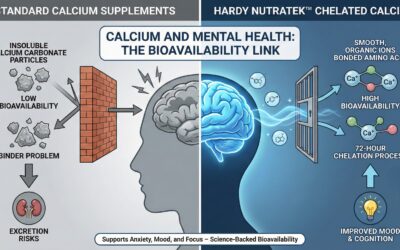
Most commercial multivitamins use cheap mineral forms like oxides, carbonates, and sulfates. The Hardy educational materials refer to these as “rocks,” and the metaphor is apt. The human body is not designed to digest rocks. When ingested, these inorganic salts rely on stomach acid to break them down into free ions. But here’s the problem:
Some binders hold the mineral so tightly that they pass through the digestive tract completely unabsorbed. Others release the mineral too early in the stomach. The free mineral ion, which is electrically charged, immediately seeks to bind with something else. Often it binds to phytates from grains or other food particles, creating an insoluble complex that gets excreted. This is the “expensive urine” phenomenon: the consumer pays for the nutrient, but the cells never receive it. And free mineral ions can be irritating to the gut lining, causing the nausea and diarrhea often associated with cheap multivitamins.
Hardy uses a proprietary 72-hour chelation process called NutraTek that addresses these problems at a fundamental level.
The NutraTek Solution: Mimicking How Plants Work
Here’s the key insight: plants in nature take inorganic minerals from the soil and bind them to organic molecules (proteins) as they grow. Humans evolved to eat plants, not soil. NutraTek mimics this biological process.
Unlike simple “dry blending” where powders are mixed together, NutraTek involves a wet processing stage that lasts for 72 hours. During this time, minerals are introduced to specialized organic molecules, primarily amino acids and protein hydrolysates, in a liquid medium. The extended duration allows for the formation of stable coordinate covalent bonds between the metal ion (the mineral) and the ligand (the organic molecule). The mineral is effectively wrapped or encapsulated by the amino acids.
This chelation process neutralizes the electrical charge of the mineral. A neutral molecule does not react with stomach acid or bind to food particles. It remains stable as it passes through the harsh environment of the stomach and enters the small intestine where absorption occurs.
The Blood-Brain Barrier: The “Trojan Horse” Mechanism
But absorption into the bloodstream is only half the battle. The ultimate goal is getting nutrients into the brain, and the blood-brain barrier presents a formidable challenge.
The BBB is a highly selective semipermeable border of endothelial cells that prevents most solutes in the circulating blood from crossing into the brain. It’s impermeable to most water-soluble molecules and charged ions. This is a protective mechanism to keep toxins out, but it also makes it difficult for inorganic mineral supplements to reach the neurons that need them.
However, the BBB is rich in specific active transport systems designed to import essential nutrients, particularly amino acids and glucose. Research on nutrient transporters at the blood-brain barrier has mapped these mechanisms in detail.
By chelating the mineral to an amino acid, Hardy Nutritionals effectively disguises the mineral as a protein building block. The transport proteins at the BBB recognize the amino acid “shell” and actively transport the entire complex, mineral included, across the barrier and into the brain. This is often described as a “Trojan Horse” mechanism.
The clinical evidence serves as proof that this works. The rapid onset of symptom reduction in neurological conditions (often within weeks) suggests that the nutrients are successfully modifying central nervous system function in a way that standard supplements rarely achieve.
Why Synergy Matters: The Cascade Problem
Conventional psychiatry and standard supplements often look for a “magic bullet”: a single molecule like an SSRI, or a single nutrient like magnesium alone. The Hardy research emphasizes that this approach is fundamentally flawed because neurotransmitter synthesis is a cascade, not a single step.
Consider serotonin production. It requires tryptophan plus iron plus vitamin B6. If you supplement tryptophan but lack the iron or B6 necessary for the enzymatic conversion, the pathway remains blocked.
Dopamine synthesis requires tyrosine plus zinc plus folate plus iron. Miss any one of these cofactors, and the pathway stalls.
The conversion of excitatory glutamate to calming GABA requires glutamate decarboxylase, which is strictly B6-dependent. Magnesium also plays a critical role in regulating the NMDA receptor to prevent excitotoxicity.
The Daily Essential Nutrients formulation provides over 30 essential nutrients in precise ratios to support every step of these metabolic pathways simultaneously. This is why a “pick and mix” approach to supplementation often fails. Taking a multivitamin, a separate zinc tablet, a B-complex, and a magnesium powder often leads to nutrient competition: excess zinc can deplete copper, excess calcium can block magnesium. The Hardy formulations are engineered with precise ratios that mimic the natural balance found in nutrient-dense whole foods.
The “Starving Brain” Hypothesis
The central thesis of the Hardy research is that mental illness is often a manifestation of a “starving brain,” a metabolic organ receiving calories but lacking the specific mineral cofactors required to synthesize neurotransmitters.
This isn’t starvation in the traditional sense. The modern Western diet is calorically dense. But it represents a “type B malnutrition” characterized by scarcity of micronutrients despite an abundance of macronutrients. Modern agricultural practices have bred crops for yield and sugar content, not nutrient density. The result is produce that looks the same as what our grandparents ate but is nutritionally depleted.
The brain consumes approximately 20% of basal metabolic energy despite being only 2% of body weight. It’s the most metabolically demanding organ in the body. When it’s forced to operate in a state of chronic sub-clinical deficiency, the symptoms look remarkably like what we call mental illness.
Genetic Vulnerability: The MTHFR Connection
The theoretical framework extends to the interaction between genetics and nutrition. A significant portion of the population carries variants of the MTHFR gene, leading to reduced efficiency in the folate cycle. This cycle is critical for the production of neurotransmitters and the regulation of homocysteine (a marker of inflammation).
Standard folic acid supplements can be ineffective or even harmful for these individuals. The Hardy formulations utilize methylated forms of folate (L-5-MTHF) and B12 (methylcobalamin) alongside high doses of cofactors. This strategy effectively floods the enzymatic pathways, forcing the reaction forward through mass action kinetics, thereby bypassing the genetic bottleneck.
In an ancestral environment with nutrient-dense food, high nutrient intake might have compensated for these genetic vulnerabilities. In our modern depleted environment, the vulnerabilities manifest as mental illness. Hardy’s clinical-strength doses are designed to override these genetic bottlenecks.
What We See Clinically
 Since integrating Hardy Nutritionals into our recommendations, we’ve observed patterns that match the research.
Treatment-resistant mood disorders respond. Patients with bipolar disorder who had cycled through lithium, anticonvulsants, and atypical antipsychotics without adequate stabilization often show marked improvement when broad-spectrum micronutrients are added. The research on micronutrients and mood stabilization shows effect sizes comparable to standard mood stabilizers, with a fraction of the side effects. Case series have documented greater than 50% reduction in psychotropic medication usage while maintaining or improving clinical stability.
Emotional dysregulation improves before attention does. For kids with ADHD, parents often report that the explosive anger, meltdowns, and irritability improve first, sometimes dramatically. Focus and attention may follow, but the regulation piece is what changes family life. This aligns with the MADDY study findings showing micronutrients’ particular efficacy for the emotional component of ADHD.
Medication needs often decrease. This is important and requires careful management. As nutritional status improves, the brain becomes more responsive, and previously tolerated medication doses may become too strong. The research on micronutrient-drug interactions confirms that broad-spectrum micronutrients don’t cause significant pharmacokinetic interactions via the CYP450 system, but the “potentiation effect” means dosage adjustments are often necessary as the brain heals.
The side effects are positive. Unlike pharmaceutical interventions, which typically come with trade-offs (SSRIs help depression but cause sexual dysfunction; stimulants help focus but suppress appetite and growth), the “side effects” of micronutrient therapy are things like better sleep, more stable energy, improved digestion, and in children, continued normal growth. The gut-brain connection means that supporting nutritional status often improves gut function simultaneously.
Who This Is For (And Who It Isn’t)
We don’t recommend Hardy Nutritionals to everyone. This is a clinical intervention for specific presentations.
Consider broad-spectrum micronutrients for:
Treatment-resistant depression, anxiety, or bipolar disorder, particularly when standard medications haven’t provided adequate relief.
ADHD with prominent emotional dysregulation, irritability, or explosive anger, especially if stimulants help focus but not mood.
Mood instability that seems “biological”: cycling, reactivity, and dysregulation that don’t respond fully to psychological intervention.
Patients who prefer to minimize medication or who haven’t tolerated pharmaceutical options.
Pregnant women with depression who want to avoid SSRIs during pregnancy (the NUTRIMUM data supports safety and efficacy).
Children with neurodevelopmental disorders where parents prefer to try nutritional intervention before or alongside medication.
This probably isn’t the answer for:
Situational depression or anxiety that’s clearly tied to life circumstances and responds to therapy.
Patients who are already stable on medications they tolerate well.
Anyone looking for a quick fix. The onset of action is weeks, not days.
The Practical Details
Daily Essential Nutrients requires commitment. The therapeutic dose is 12 capsules per day (or the powder equivalent), and it takes 4 to 8 weeks to see full effects. The cost is significant, over $100 monthly, though considerably less than the cost of untreated mental illness or polypharmacy.
For patients already on psychiatric medications, we strongly recommend working with your prescribing physician. The potentiation effect is real. As your brain becomes more efficient, medication doses may need adjustment. Hardy provides clinical resources for healthcare providers on managing this transition.
The formula contains high doses of B vitamins, which can cause harmless bright yellow urine. This is normal and indicates absorption, not waste. Starting with a lower dose and building up over a week can minimize any initial digestive adjustment.
There’s also a lower-intensity formula called Optimal Balance designed for general health and mild stress or sleep disturbances. This is positioned as “nutritional insurance” for people who don’t have clinical-level symptoms but want to ensure adequate micronutrient intake. Daily Essential Nutrients is the clinical-strength formulation for people with diagnosable psychiatric conditions.
Why We’re Willing to Put Our Name on This
I’ve been practicing somatic and experiential psychotherapy for years. I believe deeply in the power of psychological intervention. I use Brainspotting, EMDR, and other evidence-based approaches daily.
But I’ve also learned that sometimes the body needs support that talk therapy can’t provide. When a client’s nervous system is metabolically compromised, when the raw materials for neurotransmitter synthesis are missing, psychological intervention alone may not be enough. The path forward for trauma treatment increasingly involves recognizing that biological and psychological factors are inseparable.
We recommend Hardy Nutritionals because we’ve seen it work in our patients. Not as a replacement for therapy or appropriate medication, but as a biological foundation that can make other interventions more effective. The research supports what we’ve observed clinically. And unlike many things in the supplement industry, this formula has been tested in the specific populations we treat, using the specific product we recommend.
That matters. Most supplement research uses different formulations, different doses, different delivery systems. The studies showing that “zinc helps ADHD” don’t tell you whether the zinc tablet at CVS will help your child. The Hardy research uses Daily Essential Nutrients specifically, so when we recommend it, we’re recommending the exact formula that was studied.
The Future of Metabolic Psychiatry
Hardy Nutritionals represents the current clinical standard for what’s emerging as Metabolic Psychiatry. Researchers like Dr. Shebani Sethi at Stanford are leading the charge to understand mental illness as metabolic dysfunction.
By 2030, standard psychiatric intake will likely include metabolic profiling and the prescription of metabolic therapies, including ketogenic interventions and clinical-grade micronutrients, to treat the metabolic dysfunction underlying conditions like bipolar disorder, treatment-resistant depression, and even schizophrenia.
The Hardy approach of bioavailability, broad-spectrum synergy, and rigorous RCT validation will likely remain the benchmark against which new interventions are measured. While pharmaceutical companies race to develop engineered bacteria for the next decade, a clinically validated solution already exists.
How to Get Started
If you’re interested in trying Daily Essential Nutrients, you can order directly from gethardy.com.
Use offer code TAPROOT for 15% off for life.
This isn’t a commission arrangement. We negotiated this discount for our patients and anyone who finds this information helpful. The discount applies to all future orders as long as you use the code, making the ongoing cost more manageable.
We recommend starting a conversation with your healthcare provider before beginning any new supplement, especially if you’re on psychiatric medications. The product works, and that means it has real effects on brain chemistry that may require medication adjustments.
For more information on our approach to integrating nutritional support with psychotherapy, see our articles on harnessing the power of micronutrients for mental health and the gut-brain connection.
The Bottom Line
The brain is a biological organ with metabolic requirements. When those requirements aren’t met, the symptoms look like what we call mental illness. For a subset of patients, particularly those with treatment-resistant presentations, genetic vulnerabilities, or clear metabolic components to their symptoms, addressing the nutritional foundation can be the missing piece that makes everything else work.
We didn’t find Hardy Nutritionals through marketing. We found it through our patients, the ones who had tried everything else without success and then finally found something that helped. The research confirmed what they were telling us. And now we share it with others who might benefit.
The answer to treatment-resistant mental illness may not always be in the brain. Sometimes it’s in what we’re feeding it.
Joel Blackstock, LICSW-S, is the Clinical Director of Taproot Therapy Collective in Birmingham, Alabama. He specializes in trauma treatment using Brainspotting, EMDR, and somatic approaches. Taproot Therapy Collective has no financial stake in Hardy Nutritionals beyond the negotiated patient discount.
References and Further Reading
Hardy Nutritionals: Clinical Resources for Healthcare Providers
PubMed: NoMAD Trial – Efficacy and Safety of Micronutrients for Anxiety and Depression
ResearchGate: NoMAD One-Year Follow-Up
PMC: MADDY Study Design – Micronutrients for ADHD in Youth
PMC: Broad-Spectrum Micronutrients for Emotional Dysregulation
PMC: NUTRIMUM Trial – Micronutrients for Antenatal Depression
PR Newswire: Hardy NUTRIMUM Study Results
University of Canterbury: Nutrition Provides the Essential Foundation for Optimizing Mental Health
PMC: Investigation of Micronutrient-Drug Interactions
Journal of Clinical Psychiatry: Vitamins and Minerals with Mood-Stabilizing Effects
Google Patents: Method for Preparation of Organic Chelate (NutraTek)
PubMed: Exploiting Nutrient Transporters at the Blood-Brain Barrier

















0 Comments