
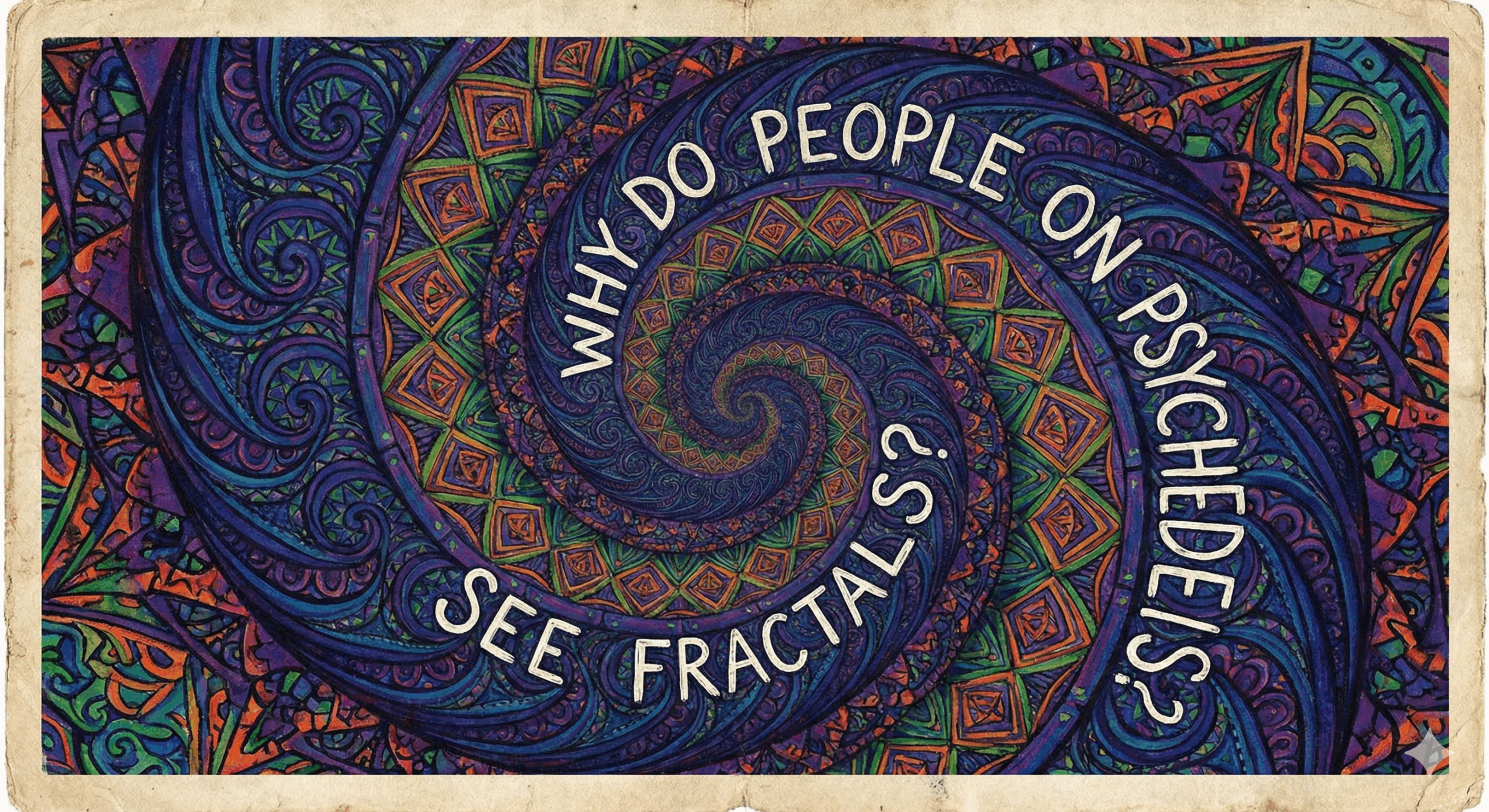
An exploration of one of neuroscience’s most fascinating mysteries: the mathematical precision of visions that emerge when consciousness turns inward.
When the Mind Sees Its Own Machinery
Close your eyes and press gently on your eyelids. Within moments, you will see something remarkable: not darkness, but patterns. Swirling colors, geometric shapes, perhaps a lattice or a spiral emerging from the void. These are phosphenes—the simplest demonstration that your visual system can generate imagery without any input from the external world. Now consider what happens when this generative capacity is dramatically amplified: through psychedelic compounds, through the aura preceding a migraine, through deep meditation, through the hypnagogic state between waking and sleep. What emerges is not chaos, not random static, but ordered geometry of extraordinary precision and beauty.
People who have never met, separated by continents and centuries, describe the same visions: tunnels of light, rotating spirals, honeycomb lattices, cobweb filigrees radiating from a central point. Indigenous shamans painting on cave walls 40,000 years ago depicted the same geometric motifs that modern research subjects sketch after laboratory-administered psilocybin. This consistency across cultures, across individuals, across the millennia of human history demands explanation. Why, when the brain decouples from external reality, does it default to fractal geometry?
The answer to this question reaches into the deepest structures of neuroscience, mathematics, and perhaps consciousness itself. What we see when we see these patterns may be nothing less than the architecture of perception made visible—the hidden machinery of the mind revealing itself in the only language it knows: mathematics.
Part I: The Ancient Testimony of Geometric Visions
Paleolithic Art and the First Recorded Hallucinations
In the painted caves of Lascaux, Chauvet, and Altamira, alongside the famous depictions of bison and horses, appear abstract geometric symbols that have puzzled archaeologists for generations. Grids, dots, zigzags, nested curves, and spiral forms cover the walls of sites across Europe, Africa, and Australia—the same forms appearing independently in cultures with no possible contact. For decades, these “geometric signs” were dismissed as decorative filler or primitive doodling. Then researchers began to notice something striking: the patterns matched, with remarkable precision, the imagery reported by modern subjects under the influence of mescaline.
The anthropologist David Lewis-Williams, working with the British Museum and documented in the Cambridge Archaeological Journal, proposed that these abstract motifs represent the first recorded human hallucinations. Lewis-Williams argued that Paleolithic shamans entered altered states through various means—sensory deprivation in the deep caves, rhythmic drumming, fasting, or perhaps psychoactive plants—and painted what they saw. The geometric patterns were not artistic choices but visual reports, documentation of experiences as real to their perceivers as the animals they hunted.
This theory, known as the neuropsychological model of rock art, drew support from ethnographic studies of the San people of southern Africa, whose shamanic traditions survived into the modern era. San rock paintings display the same geometric progression: simple geometric forms giving way to more complex imagery, finally resolving into therianthropic figures (human-animal hybrids) that represent the shaman’s transformed state. The Rock Art Research Institute at the University of the Witwatersrand has documented this pattern across hundreds of sites, suggesting a universal neurology underlying culturally diverse spiritual practices.
What the ancients experienced in their painted caves, modern neuroscience has begun to explain. But the explanation does not diminish the mystery—if anything, it deepens it. For if these visions arise from the fundamental architecture of the human visual system, then they are not hallucinations in the dismissive sense of “things that aren’t there.” They are perceptions of something quite real: the structure of the perceiving mind itself.
Heinrich Klüver and the Scientific Classification of Form Constants
The systematic scientific study of geometric hallucinations began in the 1920s at the University of Chicago, where the perceptual psychologist Heinrich Klüver undertook a series of self-experiments with mescaline, the psychoactive alkaloid found in the peyote cactus. Klüver was a rigorous scientist in the German experimental tradition, and he approached his altered states with the same meticulous attention he brought to his studies of eidetic imagery and animal behavior. His goal was not mystical experience but taxonomic classification: what exactly do people see when they hallucinate?
After numerous sessions, Klüver identified a striking pattern. While the complex, dream-like visions (landscapes, faces, scenes) varied wildly between sessions and individuals, the elementary geometric forms remained remarkably consistent. He classified these recurring patterns into four categories that have become foundational to the field, known universally as Klüver’s form constants.
The first category Klüver termed tunnels and funnels: the sensation of moving through a cylindrical or conical passage, often with brilliant light at the center, creating a powerful impression of forward motion or acceleration. This is perhaps the most dynamic of the form constants, frequently described in near-death experiences and forming the basis of the famous “tunnel of light” motif that appears across cultures and contexts.
The second category encompasses spirals: rotational patterns centered in the visual field, spinning clockwise or counterclockwise with hypnotic persistence. These spirals often manifest as logarithmic curves—the same mathematical form found in nautilus shells, galaxy arms, and the growth patterns of plants—suggesting a deep connection between the mind’s generative processes and the mathematics of natural growth.
The third category Klüver called lattices: honeycombs, checkerboards, triangular grids, and grating patterns that tile the visual field like wallpaper. These lattices can appear as flat overlays on normal vision or as three-dimensional structures through which the perceiver moves, the walls of an infinite crystalline space.
The fourth category comprises cobwebs: radial patterns resembling spider webs or the spokes of a wheel, often most prominent in peripheral vision and distinct from spirals in their static, connective quality rather than rotational motion.
Klüver made a crucial observation that would guide decades of subsequent research: these form constants are retinocentric. Unlike objects in the external world, which remain stationary when you move your eyes, form constants move with your gaze. Look left, and the tunnel shifts left. This property strongly implies that the source of these images lies not in the higher cortical areas that construct stable representations of the world, but in the early visual system itself—the retina or the primary visual cortex, the very screen on which perception is painted.
Part II: The Neural Canvas—How Brain Architecture Generates Geometry
The Retinotopic Map and the Logarithmic Transformation
To understand why the brain generates spirals and tunnels rather than random noise, we must understand the geometry of vision itself. The journey from light striking your retina to conscious perception involves a remarkable mathematical transformation that, once understood, makes the form constants not merely explicable but almost inevitable.
The retina, the light-sensitive tissue at the back of the eye, is essentially circular—a round sensor that samples the visual world. But the primary visual cortex (V1), the first cortical area to process this information, is a folded sheet of neural tissue. The mapping between these two surfaces—the circular retina and the cortical sheet—is not one-to-one. It involves a mathematical transformation that neuroscientists have mapped in detail through decades of primate research at institutions including the National Institute of Mental Health and documented in journals such as the Journal of Neuroscience.
The retinotopic map—the correspondence between locations on the retina and locations in the visual cortex—follows an approximately logarithmic transformation. The center of the visual field (where we look directly) is massively overrepresented in cortical tissue, while the periphery is compressed. Mathematically, if a point in the visual field is represented by its distance from center (r) and its angle (θ), its representation in the cortex follows the logarithm of these coordinates.
This transformation has profound implications for how cortical activity appears when mapped back to visual experience. Consider what happens if the visual cortex spontaneously generates simple parallel stripes of neural activity—a pattern that emerges naturally in many physical systems undergoing instability. Vertical stripes in the cortex, when mapped back through the inverse logarithmic transformation, become concentric rings in the visual field. Horizontal stripes become radial spokes. Diagonal stripes become logarithmic spirals. And combinations of these—checkerboard patterns in the cortex—become the complex lattices that Klüver documented.
The mathematics are elegant and precise. Researchers including Jack Cowan at the University of Chicago and Paul Bressloff at the University of Utah, publishing in journals such as the Philosophical Transactions of the Royal Society, have demonstrated that the form constants can be derived directly from the known geometry of the retinocortical map. When you see a tunnel of light during a psychedelic experience, you are not perceiving something mystical. You are perceiving the mathematical function that connects your eye to your brain, made visible by spontaneous cortical activity.
The Hypercolumn Architecture and Orientation Selectivity
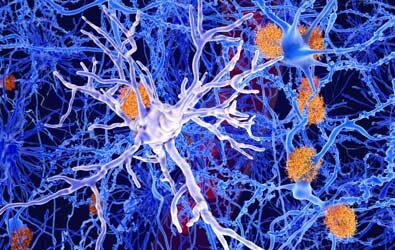
The visual cortex is not a uniform sheet of neurons but an exquisitely organized structure, divided into functional units called hypercolumns that tile the cortical surface like a crystalline lattice. Each hypercolumn, roughly 1 millimeter across, contains a complete set of neurons selective for all possible edge orientations—from horizontal to vertical and everything between. Within each hypercolumn, these orientation-selective neurons are arranged in pinwheel patterns, with cells preferring similar orientations clustered together and smooth transitions between preferences.
This architecture, mapped in extraordinary detail through optical imaging and electrode recording studies published in Nature Neuroscience and the Proceedings of the National Academy of Sciences, is not merely an anatomical curiosity. It constrains what patterns can emerge when the cortex becomes spontaneously active. The hypercolumns are connected to each other by lateral axons that preferentially link neurons with similar orientation preferences—a neuron that responds to horizontal edges connects most strongly to other horizontal-preferring neurons in neighboring columns.
Mathematicians including Martin Golubitsky at Ohio State University recognized that this connectivity pattern imposes specific symmetries on the cortical network—symmetries belonging to mathematical structures called wallpaper groups that describe the possible periodic patterns on a plane. When the cortex becomes unstable and begins generating spontaneous activity, the patterns that emerge are not random but are constrained by these symmetries. The “sacred geometry” reported by psychedelic users—the hexagonal lattices, the interlocking triangles, the honeycomb structures—corresponds directly to the stable solutions (called planforms) that these symmetry groups permit.
The implication is remarkable: when a person under the influence of psilocybin perceives a vast honeycomb lattice extending to infinity, they are perceiving the functional architecture of their own visual cortex. The hexagonal pattern reflects the hexagonal packing of hypercolumns. The perceived “sacred geometry” is quite literally sacred in the sense of being fundamental—it is the geometric blueprint of the machinery that makes all visual perception possible.
Turing Patterns and the Mathematics of Spontaneous Order
But why does the cortex generate these patterns at all? The answer lies in a mathematical framework developed by one of the twentieth century’s greatest minds for an entirely different purpose. In 1952, Alan Turing—famous for breaking the Enigma code and founding computer science—published a paper titled “The Chemical Basis of Morphogenesis” that would revolutionize our understanding of biological pattern formation.
Turing asked a simple question: how does a leopard get its spots? How does a zebra get its stripes? How do the patterns of living things arise from the uniform starting point of a fertilized egg? His answer involved what are now called reaction-diffusion systems—mathematical models of interacting chemicals that diffuse through a medium at different rates.
In Turing’s model, two substances interact: an activator that promotes its own production and the production of an inhibitor, and an inhibitor that suppresses the activator. The key insight is that these substances diffuse at different speeds—the inhibitor travels faster than the activator. This creates a beautiful dynamic: wherever the activator concentration rises, it boosts itself locally but triggers inhibition that spreads outward more rapidly. The result is spots or stripes of high activator concentration surrounded by zones of inhibition—stable patterns emerging spontaneously from an initially uniform state.
The visual cortex, it turns out, is a perfect substrate for Turing patterns. The activator is glutamate, the brain’s primary excitatory neurotransmitter, released by pyramidal neurons that excite their neighbors. The inhibitor is GABA, the primary inhibitory neurotransmitter, released by interneurons that suppress activity in a broader radius. This “local excitation, lateral inhibition” architecture is precisely what Turing’s mathematics requires. Under normal conditions, the balance between excitation and inhibition maintains a stable, uniform state. But alter that balance—as psychedelics do—and the system can cross a threshold (mathematicians call it a bifurcation point) into spontaneous pattern formation.
Research published in PLOS Biology and the journal Neuron has demonstrated that psychedelics achieve exactly this effect. Compounds like LSD and psilocybin are partial agonists at the serotonin 5-HT2A receptor, which is densely concentrated on the pyramidal neurons of the cortex. Activating these receptors increases the gain of excitatory neurons—effectively boosting the “activator” term in the Turing equations. Push this gain high enough, and the uniform resting state becomes unstable. The cortex tips over into patterned activity, and the subject perceives the geometric forms that this activity represents when mapped back through the retinotopic transformation.
The mathematics of how a zebra gets its stripes is the same mathematics of how a person on LSD sees spiraling fractals. This is not metaphor but precise mathematical correspondence, verified through computational models that accurately predict the specific forms reported by human subjects.
Part III: Validation Through Pathology—Migraines, Flicker, and Natural Experiments
Migraine Auras and the Fortification Spectrum
If geometric hallucinations arise from the fundamental architecture of the visual cortex, they should occur not only with psychedelics but in any condition that induces appropriate cortical instability. The migraine aura provides exactly such a natural experiment—and its phenomenology confirms the neural theory with striking precision.
Approximately 25-30% of migraine sufferers experience auras: neurological symptoms that precede or accompany the headache phase. The most common visual aura is the “fortification spectrum” or scintillating scotoma—a shimmering, zigzag pattern that typically begins near the center of vision and expands outward over 20-30 minutes, leaving a temporary blind spot in its wake. The term “fortification spectrum” dates to the 19th century, when observers noted that the angular, zigzag pattern resembled the star-shaped walls of medieval fortresses.
The geometry of these patterns is not random. The zigzag angles typically form approximately 60 degrees—the angle of hexagonal packing, reflecting the hexagonal arrangement of hypercolumns in the visual cortex. The American Migraine Foundation and researchers at institutions including Brigham and Women’s Hospital have documented these patterns extensively, noting their consistency across patients and their correspondence to known cortical anatomy.
The mechanism underlying migraine aura is cortical spreading depression (CSD): a slow wave of intense neuronal depolarization followed by suppression that propagates across the cortex at roughly 3-5 millimeters per minute. This wave was first described by the Brazilian physiologist Aristides Leão in 1944 and has since been confirmed through imaging studies published in Lancet Neurology and Brain.
The relationship between CSD and the visual aura is mathematically precise. The speed at which the scintillating pattern expands across the visual field corresponds exactly to the speed of the CSD wave propagating across the cortical tissue, scaled by the retinotopic magnification factor. Researchers can measure the visual expansion in degrees of visual angle per minute, calculate backward through the retinotopic map, and derive the cortical wave speed—which matches direct measurements of CSD in animal models.
The comparison between migraine and psychedelic geometry is illuminating. Both reveal the structure of the visual cortex, but through different mechanisms. The migraine aura is a traveling wave—a soliton moving through the cortical lattice—while psychedelic patterns are standing waves, global oscillations across the cortical surface. Both conditions expose the same underlying architecture: the hexagonal tiling of hypercolumns, the orientation selectivity of neurons, the logarithmic mapping to the visual field. The convergence of these distinct etiologies on similar geometric forms provides powerful validation that we are seeing not arbitrary neural noise but the fundamental structure of visual processing.
Flicker-Induced Hallucinations and the Bidirectional Link
Perhaps the most striking validation of the neural theory comes from studies of flicker-induced hallucinations—geometric patterns that can be reliably produced in completely drug-free subjects simply by exposing them to stroboscopic light. This phenomenon, sometimes called the Purkinje effect after the Czech physiologist Jan Evangelista Purkyně who described it in the 1820s, demonstrates that the capacity for geometric vision is built into every human brain, requiring only the right stimulus to activate.
Modern research, published in the Journal of Neuroscience and conducted at laboratories including the Sussex Centre for Consciousness Science, has revealed a remarkable “bidirectional link” between the temporal frequency of the flicker and the spatial geometry of the resulting hallucination. Low-frequency flicker (below approximately 10 Hz) tends to produce radial patterns—cobwebs and tunnels. Higher frequencies (10-20 Hz, coinciding with the brain’s alpha and beta rhythms) tend to produce spiral patterns. The specific geometry you see depends on the frequency at which your visual cortex is being driven to resonate.
This finding is crucial because it connects spatial patterns to temporal dynamics. The form constants are not static images but spatiotemporal processes—the visual manifestation of oscillatory activity in neural populations. Psychedelics, which dramatically alter the brain’s oscillatory landscape (reducing alpha power, increasing overall entropy of activity), essentially retune the brain to frequencies that generate fractal imagery. The geometry is a window into the dynamics.
Researchers have even developed devices that exploit this phenomenon for therapeutic or entertainment purposes. The “Dreamachine,” conceived by the artist Brion Gysin and the mathematician Ian Sommerville in the 1960s, was a simple cylinder with slits that rotated around a light bulb, producing flicker at approximately alpha frequency. Users who closed their eyes and faced the spinning cylinder reported vivid geometric hallucinations—a drug-free method of inducing the form constants that has attracted interest from both artists and scientists. Contemporary devices like the PandoraStar use computer-controlled LED arrays to produce more complex flicker patterns, with users reporting increasingly elaborate geometric experiences.
Part IV: Beyond the Visual Cortex—Whole-Brain Harmonics and the Entropic Mind
Connectome Harmonics: The Resonant Frequencies of the Brain
While the neural field theories elegantly explain the elementary form constants—the tunnels, spirals, lattices, and cobwebs that form the building blocks of hallucinatory geometry—they do not fully account for the profound complexity, three-dimensional depth, and continuously evolving nature of high-dose psychedelic experiences. To understand these phenomena, researchers have moved beyond local cortical circuits to consider the dynamics of the entire brain, utilizing concepts from network science and harmonic analysis.
Just as a guitar string has specific resonant frequencies determined by its length and tension—frequencies at which it naturally vibrates when plucked—the human brain has resonant modes determined by its physical connectivity. The brain’s wiring diagram, its “connectome,” is not random but highly structured, with specific pathways connecting different regions in characteristic patterns. When this network is analyzed mathematically, it yields a set of fundamental patterns called connectome harmonics: the natural modes of oscillation that the brain’s architecture supports.
These harmonics are analogous to the eigenmodes of a vibrating drum or the resonant frequencies of a room. Low-frequency harmonics correspond to large-scale, synchronized patterns of activity—broad swaths of cortex rising and falling together. High-frequency harmonics correspond to fine-grained, spatially detailed patterns—rapid fluctuations localized to specific regions. Research by Selen Atasoy at Oxford University and collaborators, published in Scientific Reports and Cell Reports, has demonstrated that these mathematically derived harmonics correspond to real patterns of neural activity measured with neuroimaging.
Under psychedelics, the brain’s repertoire of active harmonics expands dramatically. Neuroimaging studies of subjects under LSD and psilocybin, published in PNAS and Current Biology, show that high-frequency eigenmodes that are normally suppressed become energized. The brain accesses a wider range of its possible resonant states, exploring configurations of activity that are unavailable in ordinary consciousness.
The implication for visual experience is profound. When a person on a high dose of DMT perceives a complex, self-transforming geometric structure—a form that seems to contain infinite detail, that rotates through dimensions, that breathes with apparent life—they may be perceiving the eigenmodes of their own neural network. The complex mandalas are what the physicists call Chladni patterns: visualizations of standing waves, made visible because the visual system is the only channel through which this whole-brain activity can be rendered into experience. The user is, in a sense, seeing the “music” of their brain—its resonant frequencies made visible as sacred geometry.
The Entropic Brain Hypothesis and the Collapse of Hierarchical Processing
Complementing the harmonic perspective, the Entropic Brain Hypothesis (EBH) developed by Robin Carhart-Harris at Imperial College London offers a functional account of why these patterns emerge. The theory, published in Frontiers in Human Neuroscience, proposes that consciousness exists on a spectrum of entropy—from highly ordered, constrained states (like focused attention or dreamless sleep) to highly disordered, unconstrained states (like REM dreaming or psychedelic experiences).
In normal waking consciousness, the brain operates as a hierarchical prediction machine. Higher cortical areas generate “priors”—expectations about what lower areas should be perceiving—and perception is the result of matching incoming sensory data against these top-down predictions. This framework, known as predictive coding and championed by neuroscientists including Karl Friston at University College London, explains how we perceive stable objects and scenes rather than the chaotic flux of raw sensory data. Our brains tell us what we should be seeing, and we largely see what we’re told.
Psychedelics disrupt this hierarchy. By activating 5-HT2A receptors concentrated in the cortex’s deep layers, they weaken the top-down signals that normally constrain perception. The brain becomes what Carhart-Harris calls “anarchic”—the usual hierarchical control breaks down, and lower-level processes operate with unusual autonomy. This is the REBUS model: Relaxed Beliefs Under Psychedelics.
The fractal geometry emerges from this collapse of constraint. Without the repressive influence of high-level priors (which tell the brain “this is a chair,” “this is a face,” “this is the edge of the room”), the visual system is flooded with raw activity and intrinsic neural patterns. To make sense of this input, the system falls back on its most fundamental processing assumption: structure. The brain is, at its core, a pattern-detection and pattern-completion device. When stripped of semantic content, it predicts structure. And because neural networks are recursive—they feed back onto themselves, processing their own outputs as new inputs—the predicted structure becomes recursive. The result is fractal: patterns within patterns within patterns, self-similarity at every scale.
In this framework, the psychedelic user is watching the brain attempt to predict itself. The visual system, designed to construct stable representations of the external world, finds itself without external data and begins processing its own processing. The infinite regress of self-reference manifests as the infinite regress of fractal geometry.
Part V: The Phenomenology of the Impossible—Hyperbolic Geometry and Non-Euclidean Consciousness
Beyond Euclidean Space: The Mathematics of DMT Experiences
Standard human perception models the world as Euclidean: a three-dimensional space where parallel lines never meet, where the angles of a triangle sum to 180 degrees, where moving away from something makes it smaller. This geometric framework, formalized by the ancient Greek mathematician and so fundamental that we rarely notice it, structures not only our spatial perception but our intuitive sense of what is possible. Yet reports from high-dose psychedelic experiences—particularly those involving N,N-DMT—consistently describe spaces that violate Euclidean assumptions in specific, mathematically describable ways.
Users report rooms that are “bigger on the inside than the outside,” objects that display all their sides simultaneously, spaces that contain infinite detail in finite volumes, and architectures that would be physically impossible in our ordinary three-dimensional world. For decades, these reports were dismissed as meaningless confusion or ineffable mystical experience. But theorists at the Qualia Research Institute and elsewhere have proposed that these experiences may be accurately described as hyperbolic geometry—a well-understood mathematical structure that differs from Euclidean geometry in specific, quantifiable ways.
In hyperbolic space, the circumference of a circle grows exponentially with its radius rather than linearly. This means that hyperbolic space contains vastly more “room” than Euclidean space of the same diameter. The Dutch artist M.C. Escher, famous for his impossible architectures and infinite tessellations, was directly inspired by hyperbolic geometry—his “Circle Limit” series depicts hyperbolic tilings projected onto a flat disk, creating the impression of infinite pattern contained within a finite boundary.
The mathematician and consciousness researcher Andrés Gómez-Emilsson has proposed that the “native” geometry of phenomenal space—the space in which conscious experience actually occurs—may be hyperbolic rather than Euclidean, with our ordinary perception representing a constrained, “flattened” rendering of this underlying structure. Psychedelics, by disrupting the constraints that maintain this flattening, allow the intrinsic curvature of experiential space to manifest. The “impossible” spaces of the DMT realm are not impossible at all in hyperbolic geometry; they are what space naturally looks like when negative curvature is allowed.
This theoretical framework, still speculative but mathematically precise, offers explanations for otherwise inexplicable phenomenology. The sense of spaces containing infinite information, the perception of objects from multiple perspectives simultaneously, the experience of traveling vast distances while remaining stationary—all these can be modeled as properties of hyperbolic manifolds. Whether this framework will survive empirical testing remains to be seen, but it represents a serious attempt to bring mathematical rigor to experiences that have long resisted description.
The Symmetry Theory of Valence: Why Sacred Geometry Feels Sacred
Beyond the spatial structure of psychedelic experience lies a question of equal importance: why do these geometric visions carry such profound emotional weight? Why do fractal patterns feel meaningful, even numinous? Why does the perception of perfect symmetry induce states described variously as bliss, awe, cosmic love, or contact with the divine?
The Symmetry Theory of Valence, proposed by researchers at the Qualia Research Institute and drawing on work in computational phenomenology, offers a provocative hypothesis: the pleasantness of an experience correlates directly with the mathematical symmetry of the underlying neural dynamics. High-symmetry states feel good; low-symmetry states feel bad; and the extremely high-symmetry states achievable under psychedelics feel extremely good—potentially accounting for the mystical qualities of peak experiences.
This theory gains support from multiple domains. In physics, symmetric configurations represent low-energy states—systems naturally evolve toward symmetry as they release energy. In information theory, symmetric patterns have low complexity relative to their apparent richness—they encode maximum structure with minimum information. In aesthetics, humans consistently prefer symmetric faces, symmetric art, and symmetric environments across cultures. Something deep in our evaluative systems responds to symmetry as intrinsically valuable.
If neural dynamics follow similar principles, then the “crystalline” quality of form constant perception—the sense of encountering perfect geometric order—may represent the brain settling into states of maximal symmetry, minimum energy, and optimal self-organization. The experience of these states as blissful would not be accidental but would reflect the fundamental relationship between symmetry and value that runs through physics, information theory, and apparently consciousness itself.
The “sacred geometry” traditions of various cultures—the Flower of Life, the Sri Yantra, the geometric patterns of Islamic art—may represent intuitive discoveries of forms that resonate with neural architecture in ways that produce these high-symmetry states. These patterns would be “sacred” not because they were revealed by gods but because they activate the same neural configurations that produce experiences of the divine. The geometry is sacred because seeing it induces the brain states that we interpret as encounters with the sacred.
Part VI: Archetypes and Ancestors—The Semantic Content of Geometric Vision
Jungian Archetypes as Neural Eigenmodes
While the theories discussed thus far explain the mechanism of geometric hallucinations—the how—they leave open the question of meaning—the why. When users report that the patterns feel profoundly significant, that they seem to communicate something essential about reality or consciousness, are they simply confused by unusual brain states, or are they accessing something genuinely meaningful?
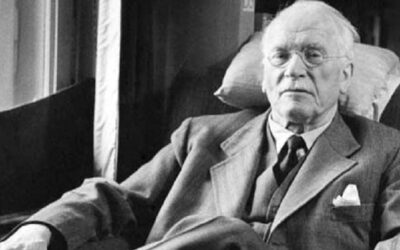
Carl Jung proposed the concept of the collective unconscious: a shared reservoir of ancestral memory and universal psychological patterns that he called archetypes. For decades, this concept was treated as mystical speculation, impossible to reconcile with materialist neuroscience. But recent theoretical work, including a provocative paper titled “Eigenmodes of the Deep Unconscious” published in Neuroscience of Consciousness, has proposed a biological grounding for Jungian ideas.
The argument runs as follows: All human brains share essentially the same connectome architecture—the same basic wiring diagram, with the same fundamental pathways and structures. This shared architecture implies shared eigenmodes—the same resonant patterns of activity that we discussed earlier. These shared eigenmodes are, in this framework, the biological substrate of the archetypes. They are not images themselves but the potential to form images, the attractors in neural state space toward which brain activity naturally flows under appropriate conditions.
When high-level constraints are relaxed under psychedelics (the REBUS model), these deep, evolutionarily conserved eigenmodes become accessible. The user perceives “ancient” symbols—mandalas, the World Tree, the Cosmic Serpent, the Flower of Life—not because they are accessing a spirit world, but because they are accessing the foundational harmonic structure of the human species’ neural architecture. The archetypes are real in a biological sense: they are the attractor states of a brain shaped by hundreds of thousands of years of human evolution and millions of years of vertebrate ancestry.
This synthesis of Jung and neuroscience does not diminish the significance of archetypal experiences but grounds them in something verifiable. The Flower of Life pattern that appears across cultures—in ancient Egyptian temples, in medieval European art, in the psychedelic visions of modern users—may represent the most stable, symmetric standing wave possible on the surface of the human cortex. It appears universally because it reflects universal biology. It feels significant because it represents a fundamental mode of our neural heritage.
Terence McKenna and the Linguistic Hypothesis
No exploration of psychedelic phenomenology would be complete without addressing the ideas of Terence McKenna, the ethnobotanist and philosopher whose theories about the DMT experience remain influential decades after his death in 2000. McKenna’s proposals were radical—he believed that the “machine elves” or “self-transforming elf machines” encountered on DMT were not hallucinations but genuine entities inhabiting a real dimension accessible through chemistry—yet his observations continue to resonate with contemporary researchers.
McKenna described DMT entities as using a “visible language”—communicating not through sound but through objects and patterns that they seemed to sing into existence. “The creatures were speaking in some kind of colored language,” he wrote, “which condensed into rotating machines that were like toys and works of art.” This observation anticipated later theoretical work on the relationship between language, meaning, and visual pattern. If the brain processes meaning through pattern, and psychedelics allow direct perception of pattern, then perhaps the geometric visions are, in some sense, raw meaning prior to linguistic encoding—”language” in a fundamental sense that precedes words.
More provocatively, McKenna proposed that psychedelics allow perception of the “code” underlying reality—that the fractals represent something like the source code of a simulation, or the mathematical structure of physics itself made visible. While this remains highly speculative, it finds echoes in contemporary simulation theory discussions and in the growing recognition that mathematics is not merely a tool for describing reality but may be in some sense constitutive of it. The physicist Max Tegmark has argued in his book “Our Mathematical Universe” and in papers in journals like Foundations of Physics that physical reality is literally a mathematical structure—a position that, if true, would make the direct perception of mathematics more profound than mere hallucination.
Whether McKenna’s interpretations are correct, his phenomenological observations remain valuable data. The consistency of entity encounters under DMT—the specific qualities of the beings described, their behaviors, their apparent attempts at communication—demands explanation even from skeptical frameworks. If these entities are not “real” in McKenna’s sense, what features of neural architecture generate such consistent experiences across users? The question remains open.
Part VII: Integration—What the Geometric Mind Reveals About Consciousness
Multiple Levels of a Single Reality
We have traversed a remarkable landscape of theories: from the reaction-diffusion dynamics of cortical neurons to the harmonic eigenmodes of the whole-brain connectome, from the hyperbolic geometry of experiential space to the archetypal patterns of the collective unconscious. These theories might seem contradictory—some purely neurological, others phenomenological, still others verging on the metaphysical—but they are perhaps better understood as descriptions of the same phenomenon at different levels of abstraction.
At the hardware level, the fractals are Turing patterns: standing waves of excitation and inhibition in the visual cortex, generated when psychedelics boost neural gain past the bifurcation threshold, rendered visible through the logarithmic transformation of the retinocortical map. This is solid neuroscience, mathematically precise and experimentally validated.
At the network level, the fractals are connectome harmonics: the resonant frequencies of the whole-brain neural network, normally suppressed but energized under psychedelics, perceived as complex geometric forms because the visual system is the channel through which such activity becomes experienceable. This extends the local cortical model to encompass global brain dynamics.
At the phenomenological level, the fractals may represent hyperbolic geometries: non-Euclidean structures that emerge when the constraints maintaining ordinary Euclidean perception are relaxed, revealing the intrinsic curvature of experiential space. This remains more speculative but offers a rigorous framework for otherwise ineffable reports.
At the semantic level, the fractals are archetypal eigenmodes: the shared biological heritage of the human species, the attractor states of brains shaped by evolution, perceived as meaningful because they represent the foundational patterns of our neural nature. This provides a framework for the significance users ascribe to their experiences.
These levels are not alternatives among which we must choose but complementary perspectives on a unified phenomenon. The Turing patterns in V1 are part of the connectome harmonics of the whole brain. The connectome harmonics may constitute the geometric structure of experiential space. The stable configurations of that experiential space may be the biological substrate of archetypes. The question is not which theory is correct but how they fit together—and what their integration reveals about the nature of consciousness.
The Fractal Mirror: Perceiving the Perceiver
What emerges from this investigation is a profound recursivity. The geometric visions that arise in altered states are not arbitrary productions of a malfunctioning brain. They are the brain perceiving itself—the visual system turned inward, rendering its own structure into experience. The spirals and tunnels are the shape of the retinocortical map. The lattices are the hypercolumnar architecture. The mandalas are the eigenmodes. The fractals are the recursive self-reference of a system processing its own processing.
This has implications far beyond the neuroscience of hallucinations. If ordinary perception is already a construction—the brain’s best guess about what external reality might be like, based on sensory data and prior expectations—then psychedelic perception is not a departure from reality but a different kind of encounter with it. Instead of perceiving the world through the brain, we perceive the brain through itself. The object of perception becomes the instrument of perception. The screen becomes visible.
For those interested in the nature of consciousness, this is tremendously significant. We typically have no direct access to the mechanisms of our own perception; we see the world, not the processes that construct our seeing. Psychedelic states offer something rare: an opportunity for consciousness to examine its own substrate, for the mind to see the outlines of its own machinery. The geometric visions are, in this sense, a kind of neural introspection—not the verbal self-reflection of ordinary introspection, but a direct perception of neural process.
This capacity has potential implications for both science and practice. For neuroscience, it suggests that trained observers in controlled altered states might provide phenomenological data about neural processes that are otherwise inaccessible—a kind of neurophenomenology in which subjective reports constrain and inform objective models. For therapeutic practice, it suggests that psychedelic experiences involve a genuine encounter with the structure of one’s own mind—an encounter that might, under appropriate conditions, enable restructuring of habitual patterns.
The Clinical Relevance: From Mechanism to Meaning
For clinicians working with altered states—whether through psychedelic-assisted therapy, meditation instruction, or simply supporting clients who have had spontaneous experiences—understanding the neural basis of geometric visions offers practical benefits. It provides a framework for normalizing these experiences: they are not signs of pathology but manifestations of normal neural architecture under unusual conditions. It offers a language for discussing experiences that often feel ineffable: the spirals are retinocortical transformations; the lattices are hypercolumnar planforms; the sense of significance may reflect high-symmetry states.
At the same time, mechanistic understanding need not—and should not—eliminate meaning. That an experience has a neural basis does not make it less real, less significant, or less valuable to the person experiencing it. Love has a neural basis; that does not make it less profound. The perception of beauty has a neural basis; that does not make beauty an illusion. Similarly, the fact that geometric visions arise from cortical dynamics does not diminish their potential significance for those who experience them.
Indeed, the emerging picture suggests a kind of meaning that is neither arbitrary projection nor mystical revelation but something in between: structural significance. The patterns matter not because gods placed them in our minds but because they reflect the deep architecture of what minds are. They are significant the way a fingerprint is significant—not because it was designed to mean something, but because it reveals something true about the structure that produced it. The geometric visions are the fingerprint of consciousness.
The Geometry of Being
We began with a simple question: why do people see fractals during altered states of consciousness? We have arrived at something far larger: an account of the mind as a geometric engine, a system that constructs experience through mathematical transformations and naturally resonates with patterns of profound symmetry and self-similar structure.
The form constants that Klüver documented a century ago have proven to be windows into the deepest levels of neural organization. The “sacred geometry” reported across cultures and millennia reflects not arbitrary mysticism but the genuine structure of visual cortex. The elaborate visions of psychedelic experience represent the brain exploring its own resonant frequencies, perceiving its own eigenmodes, encountering its own evolutionary heritage in the form of archetypal patterns.
None of this diminishes the profound impact these experiences have on those who undergo them. If anything, it suggests that the profundity is warranted. When a person perceives infinite fractal depth, they are perceiving something real: the recursive structure of a system that processes information by iteratively processing its own outputs. When they feel they are encountering the fundamental order of reality, they may be correct in a specific sense: they are encountering the fundamental order of a mind, which is after all part of reality. When they return with a sense that the boundaries between self and world are more permeable than ordinary experience suggests, they have perceived something true: the constructed nature of those boundaries, maintained by mechanisms that psychedelics temporarily disable.
The geometric mind is not a deviation from ordinary consciousness but a revelation of what ordinary consciousness conceals. We do not normally see the machinery of perception because the machinery is designed to present a seamless model of an external world. Strip away the model, and the machinery remains. It has a shape. That shape is mathematical. And mathematics, as the physicist Eugene Wigner observed, is unreasonably effective at describing reality—perhaps because mathematics and reality are, at some level, the same thing.
The ancient shamans who painted spirals on cave walls, the medieval mystics who described visions of geometric light, the modern psychonauts who report fractal elves and hyperbolic spaces—all are describing encounters with this geometric substrate of mind. They used different languages, embedded their experiences in different cultural frameworks, drew different conclusions about what they had encountered. But the underlying experience shows remarkable consistency across the millennia. The patterns are stable because they are structural. They will be seen as long as there are human brains to see them.
What we make of these encounters—whether we frame them as neural phenomena, spiritual revelations, or something that transcends this dichotomy—remains our choice. But we can no longer dismiss them as mere noise, as pathological aberrations, as meaningless misfirings of a confused brain. The geometric visions are meaningful in the most precise sense: they mean something about the nature of the system that produces them. They are the mind’s signature, written in the only language the mind truly knows.
This article draws on peer-reviewed research from journals including Journal of Neuroscience, PNAS, Nature Neuroscience, Frontiers in Human Neuroscience, and Neuroscience of Consciousness. Theoretical frameworks referenced include work from Imperial College London’s Centre for Psychedelic Research, the Qualia Research Institute, and mathematics departments at University of Utah and Ohio State University. Historical sources include archives from the Rock Art Research Institute and the British Museum.















0 Comments