
Your feed is full of it: influencers claiming they “detoxed their dopamine” and now feel amazing. Tech bros swearing that 24 hours without screens reset their brain chemistry. Wellness gurus selling dopamine fasting protocols that promise mental clarity, focus, and freedom from addiction.
The concept is seductive: your brain is overstimulated, your dopamine system is broken, and you just need to reset it by abstaining from pleasure. It sounds scientific. It feels like taking control. And it’s based on a fundamental misunderstanding of how your brain actually works.
Let’s separate what’s real from what’s marketing—and what might actually help you if you’re feeling burned out, scattered, and unable to find pleasure in ordinary life.
What People Think Dopamine Detox Does
The viral version of dopamine detox—popularized by Dr. Cameron Sepah’s 2019 LinkedIn article—claims that by temporarily abstaining from pleasurable activities (social media, junk food, video games, pornography), you can “reset” your dopamine system. The logic goes:
- Modern life floods us with cheap dopamine hits
- This overstimulation “depletes” or “desensitizes” our dopamine system
- By fasting from these stimuli, we “refill” or “resensitize” our dopamine receptors
- After the detox, normal activities feel pleasurable again
It’s a compelling narrative. It’s also not how dopamine works.
What Dopamine Actually Does (It’s Not What You Think)
Here’s where the viral trend gets the neuroscience wrong.
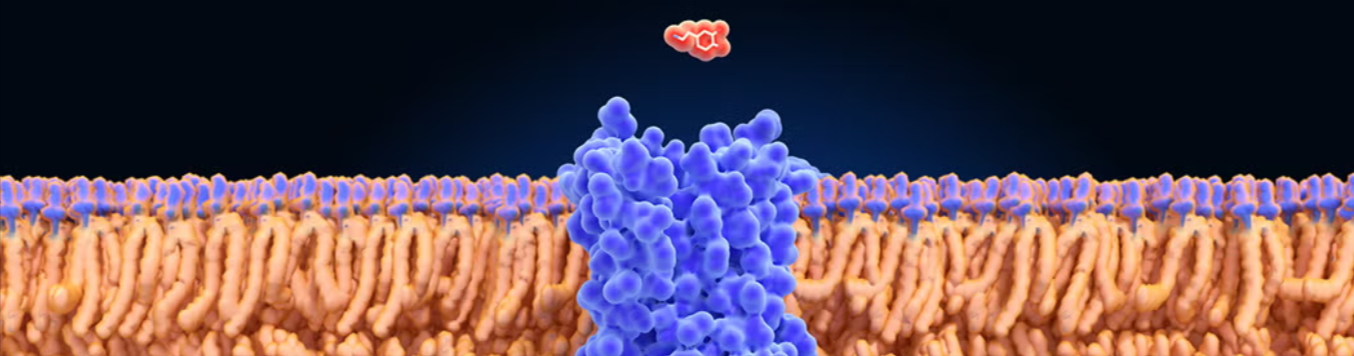
Dopamine is not a “pleasure chemical.” This is perhaps the most persistent myth in popular neuroscience. According to The Scientist’s comprehensive review, decades of research have refined our understanding: dopamine is primarily involved in motivation, prediction, and learning—not pleasure itself.
Neuroscientist Wolfram Schultz’s Nobel Prize-winning research demonstrated that dopamine neurons fire not when we receive a reward, but when we predict a reward—and especially when reality exceeds or falls short of our predictions. Dopamine encodes reward prediction error, not reward itself.
This is why:
- The anticipation of pleasure often feels better than the pleasure itself
- Unexpected rewards feel more exciting than expected ones
- The tenth bite of cake doesn’t feel as good as the first
Your brain’s actual pleasure system involves other neurotransmitters—particularly endogenous opioids in brain regions like the nucleus accumbens and ventral pallidum. Dopamine gets you to seek the reward; opioids make the reward feel good.
Why “Dopamine Depletion” Isn’t a Thing
Here’s the fundamental problem with the detox narrative: you can’t deplete your dopamine by scrolling Instagram.
Your brain continuously produces dopamine regardless of your behavior. As Cleveland Clinic explains, dopamine detox doesn’t reduce actual dopamine levels in the brain—your neurons keep synthesizing it. What changes with excessive stimulation isn’t dopamine quantity but receptor sensitivity and the patterns of neural firing.
The people who actually have dopamine depletion have serious medical conditions:
- Parkinson’s disease: Death of dopamine-producing neurons in the substantia nigra
- Severe depression: Dysfunction in dopaminergic pathways
- Certain drug withdrawals: Temporary suppression of dopamine synthesis
Scrolling TikTok doesn’t cause any of these. The language of “depletion” and “detox” borrows medical terminology to describe something that isn’t a medical condition.
What’s Actually Happening When You Feel “Dopamine Burned Out”
That said, something real is happening when people feel burned out, unable to focus, and disconnected from ordinary pleasures. The viral narrative got the symptom description right even if it got the mechanism wrong.
Research in PMC on dopamine fasting and holistic wellbeing suggests that chronic exposure to high-intensity, variable-ratio rewards (exactly what social media algorithms provide) can lead to:
1. Reward System Desensitization
When you repeatedly flood your reward circuits with intense stimulation, the postsynaptic neurons protect themselves by downregulating receptors. This isn’t depletion—it’s adaptation. Your hardware is fine; your calibration is off.
Think of it like this: if you live next to a train track, you eventually stop noticing the trains. Your hearing isn’t damaged; your brain has just adjusted to the baseline. Similarly, if your baseline is constant high-stimulation content, ordinary life feels flat by comparison.
2. Hijacked Prediction Circuitry
Social media platforms are specifically engineered to exploit dopamine’s actual function: reward prediction. The variable-ratio reinforcement schedule (sometimes you get likes, sometimes you don’t, never predictably) is the same mechanism that makes slot machines addictive. Your dopamine system learns to predict that scrolling might produce a reward—and that uncertainty keeps you engaged.
The problem isn’t that social media gives you too much dopamine. It’s that it trains your prediction system to expect a particular kind of reward, making slower, more delayed rewards feel unrewarding by comparison.
3. Attention Fragmentation
A recent American Psychological Association meta-analysis of 71 studies found that short-form video consumption correlates with poorer attention and inhibitory control. This isn’t about dopamine levels—it’s about training your brain for constant task-switching and immediate payoffs.
When you practice something, you get better at it. When you practice attending to 15-second videos, you get better at attending to 15-second videos—and worse at attending to things that take longer.
4. Nervous System Dysregulation
Constant stimulation keeps your nervous system in a state of low-grade activation. The stream of notifications, the endless scroll, the variable rewards—these maintain a level of physiological arousal that prevents your system from settling into true rest.
What people often describe as “dopamine burnout” may actually be nervous system exhaustion—the inability to shift out of sympathetic activation into parasympathetic recovery.
What Actually Works (Instead of “Detox”)
Given that the problem isn’t dopamine depletion, the solution isn’t dopamine fasting. But that doesn’t mean there’s nothing to do. Here’s what the science actually supports:
1. Stimulus Reduction, Not Elimination
The original version of “dopamine fasting” that Dr. Sepah described was actually just cognitive behavioral therapy (CBT) for impulsive behaviors—reducing problematic behaviors and replacing them with healthier alternatives. This is evidence-based and effective.
The extreme versions that went viral—avoiding all pleasure, sitting in silence for 24 hours, treating dopamine like a toxin—have no scientific support and can actually cause harm. Research shows that people who attempt strict dopamine detoxes often report feeling depressed, unmotivated, and mentally foggy.
What works: Intentionally reducing specific problematic behaviors while maintaining healthy sources of pleasure and connection.
2. Reward Recalibration Through Contrast
Your reward system is calibrated by comparison. If your baseline is constant high-stimulation content, ordinary life feels flat. The solution isn’t eliminating stimulation—it’s introducing contrast.
What works:
- Alternating periods of stimulation with periods of genuine rest (not just different screens)
- Building “boring” activities into your routine so your system recalibrates to a wider range
- Front-loading difficult, less immediately rewarding tasks when your prediction system is fresh
3. Nervous System Regulation
If the problem is nervous system dysregulation rather than dopamine depletion, the solution is nervous system regulation rather than dopamine fasting.
What works:
- Vagal toning: Practices that activate the parasympathetic nervous system—slow breathing, cold exposure, humming, social connection
- Movement: Exercise helps regulate the nervous system and supports healthy dopaminergic function
- Sleep: Adequate sleep is essential for both nervous system recovery and neurotransmitter balance
- Somatic practices: Body-based approaches that help the nervous system discharge accumulated activation
4. Attention Training, Not Attention Deprivation
If the problem is fragmented attention from constant task-switching, the solution is attention training—not simply removing all stimuli and hoping your attention repairs itself.
What works:
- Mindfulness meditation: Specifically trains sustained attention and the ability to notice when attention has wandered
- Single-tasking: Deliberately practicing doing one thing at a time
- Progressive duration: Gradually increasing the time you spend on longer-form activities
- Environment design: Making distractions harder to access rather than relying on willpower
5. Understanding What You’re Actually Avoiding
Here’s what the dopamine detox conversation usually misses: constant stimulation isn’t just a bad habit. It’s often a coping mechanism.
People reach for their phones compulsively when they’re:
- Uncomfortable with silence
- Avoiding difficult emotions
- Managing anxiety
- Escaping from dissatisfaction with their actual lives
Removing the coping mechanism without addressing what it’s coping with often backfires. This is why strict dopamine detoxes can trigger depression and anxiety—you’ve removed the avoidance strategy without building anything to replace it.
What works: Getting curious about what drives the compulsive behavior. What are you avoiding when you scroll? What would you feel if you couldn’t reach for the phone? This is the realm of actual therapy, not wellness hacks.
The Real Problem With Viral Mental Health Trends
The dopamine detox phenomenon illustrates a broader issue: over 83% of mental health advice on TikTok is misleading, according to research. This isn’t because creators are malicious—it’s because complex neuroscience gets simplified into shareable soundbites, losing accuracy in the process.
The dopamine detox narrative succeeds because it:
- Sounds scientific (neurotransmitter names feel medical)
- Offers simple solutions (just stop doing the thing)
- Promises quick results (reset your brain in 24 hours!)
- Externalizes the problem (your brain is broken, not your life)
Real neuroscience and real therapy are rarely this neat. The brain isn’t a machine that needs occasional rebooting. It’s an adaptive system that’s doing its best to navigate the environment you’ve placed it in. Changing that environment—and understanding why you’ve constructed it the way you have—is the actual work.
When to Seek Actual Help
Sometimes what gets labeled “dopamine burnout” is actually something that requires professional attention:
- Anhedonia (inability to feel pleasure) is a core symptom of depression, not a sign you need a detox
- Compulsive behaviors that you genuinely can’t control may indicate addiction or OCD-spectrum issues
- Chronic inability to focus may be ADHD, anxiety, depression, or another condition
- Persistent emotional numbness may indicate dissociation or trauma responses
If you’ve tried reducing your screen time and still can’t feel present, motivated, or engaged with your life, the answer isn’t a stricter detox. It’s getting an actual assessment from someone who can distinguish between lifestyle factors and clinical conditions.
A More Accurate Framework: Reward System Recalibration
Instead of thinking about “dopamine detox,” try thinking about reward system recalibration. This framework acknowledges what’s real:
- Your reward prediction system has been trained by your environment
- It can be retrained by changing your environment and practices
- This takes time, consistency, and usually some discomfort
- It works best when you understand what the compulsive behaviors are serving
Recalibration isn’t about punishment or deprivation. It’s about expanding the range of experiences your system finds rewarding—adding back the slower pleasures that got crowded out, not subtracting all pleasure and hoping that fixes things.
Practical Steps for Reward System Recalibration
Week 1: Assessment
- Track your screen time and what triggers reaching for your phone
- Notice what emotions precede compulsive scrolling
- Identify which activities have lost their appeal
- Get honest about what you’re avoiding
Week 2-4: Environment Design
- Make high-stimulation activities slightly harder to access (app timers, phone in another room)
- Make lower-stimulation activities easier to access (books visible, walking shoes by the door)
- Build deliberate “boring” time into your schedule
- Notice the discomfort that arises and get curious about it
Ongoing: Practice and Support
- Build capacity for discomfort through nervous system regulation practices
- Address underlying emotional drivers with appropriate support
- Celebrate the return of pleasure in ordinary activities
- Expect non-linear progress and be patient with yourself
The Bottom Line
Dopamine detox is a catchy name for a real problem, attached to a fake mechanism and an oversimplified solution. The real issues—reward system adaptation, attention fragmentation, nervous system dysregulation, and avoidance of difficult emotions—are more complex and require more nuanced responses than “just stop doing the pleasurable thing.”
If you’re feeling burned out, scattered, and unable to enjoy ordinary life, that’s worth taking seriously. But the answer isn’t a 24-hour detox that treats dopamine like a toxin. It’s understanding how your brain actually works, what it’s adapted to, and how to create conditions where it can recalibrate toward a wider range of rewards.
And sometimes, it’s acknowledging that the scrolling isn’t the problem—it’s what you’re scrolling to avoid. That’s where real therapy begins.
Working With the Underlying Issues
At Taproot Therapy Collective, we help people understand the difference between viral wellness trends and actual psychological change. When compulsive behaviors are serving as coping mechanisms for anxiety, depression, trauma, or existential dissatisfaction, addressing the behavior without addressing the underlying issue rarely produces lasting change.
Our approach integrates neuroscience with depth psychology—understanding both how your brain works and what you’re actually running from. If you’ve tried the hacks and they haven’t worked, we can help you understand why and what might actually help.
About This Article
This article was written by Joel Blackstock, LICSW-S, Clinical Director of Taproot Therapy Collective in Birmingham, Alabama. Joel integrates contemporary neuroscience with clinical practice and regularly addresses the gap between viral mental health content and evidence-based approaches.
Key Sources:
- The Scientist (2025). Debunking the Dopamine Detox Trend.
- Schultz, W. (2016). Dopamine reward prediction error coding. Dialogues in Clinical Neuroscience.
- Cleveland Clinic (2024). What Is a Dopamine Detox and Does It Work?
- PMC (2024). A Literature Review on Holistic Well-Being and Dopamine Fasting.
- Psychology Today (2025). TikTok Therapy: How Gen Z’s Trend Is Reshaping Mental Health.
- PMC (2025). Exploring Problematic TikTok Use and Mental Health Issues: A Systematic Review.
Last updated: January 2026




















0 Comments