
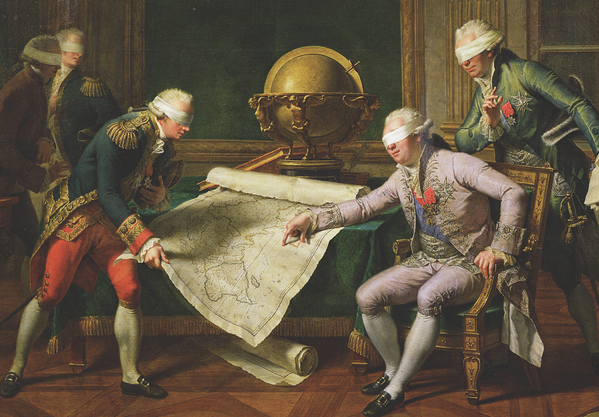
A critical, often fatal, vulnerability in organizational decision-making is the illusion of alignment: the pervasive, unquestioned belief that a team has reached a genuine consensus when, in reality, they are operating under layered cognitive biases that mask deep, unarticulated dissent. This phenomenon is driven by two mirroring, yet diametrically opposed, socio-cognitive distortions: the false consensus effect and pluralistic ignorance.
Two Sides of the Same Illusion
The false consensus effect occurs when an individual projects their own beliefs, preferences, and assumptions onto the broader group, erroneously overestimating how many others share their specific viewpoint. This cognitive bias leads leaders to assume that silence equals agreement. The CEO who champions the doomed initiative may genuinely believe that the leadership team’s quiet acquiescence reflects enthusiastic buy-in rather than calculated self-protection.
Pluralistic ignorance represents the mirror phenomenon: a collective misperception where the majority of group members privately reject a norm, belief, or decision, but publicly support it because they incorrectly assume that everyone else accepts it. In pluralistic ignorance, the group is not actually ignorant of where it stands individually, but is confidently, collectively mistaken about where the group stands as a whole. Social psychologist Floyd Allport introduced this concept a century ago, and it remains as devastating today as it was then.
The Reputation Intelligence newsletter illuminates the cognitive mechanisms at play. Drawing on clinical psychologist Yael Schonbrun’s work and social psychologist Kurt Gray’s moral typecasting research, we see that people constantly sort others into simplified categories. “In moments where a little nuance could help us repair and reconnect, our brains often default instead to oversimplification” (Reputation Intelligence, 2025). In the context of strategic alignment, this sorting manifests as: “The CEO and other executives support this, so anyone who disagrees must be negative, uncommitted, or lacking vision.” The individual dissenter fears being sorted into the “villain” category, the person who could not get on board, so they remain silent.
The March to Abilene
Pluralistic ignorance is the psychological engine behind the infamous “Abilene Paradox,” an organizational dynamic where a group of people collectively march into a disastrous decision despite the fact that no individual actually wanted to pursue that course of action. In the corporate landscape, this manifests daily through group-scale preference falsification: entire teams nodding in agreement to an impossible, aggressive deadline while privately believing it cannot be met; employees remaining silent about fatal, structural flaws in a software project because they assume widespread support; or executives failing to question a CEO’s poor strategic pivot because they believe they are the only dissenting voice in the room.
The systemic pressure for speed, combined with the desire to maintain artificial harmony, heavily incentivizes this behavior. Projects operate under tight deadlines and financial constraints, making early convergence appear efficient. But the efficiency is illusory. The time “saved” by suppressing dissent will be spent ten times over in failed implementation, rework, and damage control. The team that could not tolerate ten minutes of uncomfortable disagreement will spend six months managing the consequences of that avoidance.
When the Same Words Mean Different Things
The challenge deepens when we recognize that even apparent agreement often masks fundamental misunderstanding. To achieve what Harvard Business School professor Rosabeth Moss Kanter terms “Kaleidoscope Thinking,” teams must recognize that the same words or strategic visions often mean completely different things to different departments. When the CEO says “customer-centric,” Engineering hears “more features,” Sales hears “faster delivery,” and Customer Service hears “better support.” Everyone agrees to “be more customer-centric.” Nobody agrees on what that means. The alignment is entirely illusory.
This phenomenon connects to what Schonbrun identifies as the challenge of reading complexity in conflict situations. She asks: “What complexity might I be missing here?” (Reputation Intelligence, 2025). In the context of organizational alignment, this question becomes: what are my colleagues actually hearing when I use these words? What assumptions are they making that differ from mine? What concerns are they suppressing to maintain the appearance of agreement?
Michael Toebe’s Reputation Intelligence newsletter on disinformation captures another relevant dynamic: “My silence should not be mistaken for agreement with lies” (Reputation Intelligence, 2026). In organizations, silence should never be mistaken for agreement, period. Yet the false consensus effect continually tempts leaders to interpret quiet rooms as aligned teams. The VP of Engineering’s silence about technical feasibility is not consent. It is strategic self-protection in an environment where dissent carries career risk.
The Meeting Where Everyone Nods
Schonbrun describes how people view those they have “swiped left” on (sorted as villains) as “emotionless robots with complete control over their actions but zero capacity for genuine suffering,” while viewing themselves as “vulnerable souls with authentic feelings who hurt deeply but had no real choice in how we got here” (Reputation Intelligence, 2025). This asymmetry creates a devastating dynamic in consensus-building situations. Those who might dissent perceive themselves as vulnerable and fear the judgment of being sorted as difficult or negative. Those pushing for consensus fail to recognize that others might have legitimate concerns because they have sorted them into the category of “team players who would speak up if they disagreed.”
The result is a meeting where everyone nods and nothing happens. Or rather, everything happens: implementation begins, resources are committed, careers are staked on outcomes, and the collective delusion proceeds until reality forcibly intervenes. The post-mortem reveals what everyone knew but nobody said. The organization learns nothing because the structural incentives that created the illusion remain unchanged.
Institutional Tools for Surfacing Dissent
Simply demanding that employees “speak up” or “think outside the box” is entirely futile in systems that structurally reward conformity and punish outliers. Dissent must be institutionalized through rigorous, repeatable frameworks that shift the burden of risk away from the individual and onto the process itself. Several highly effective tactical tools exist for surfacing actual disagreement before it mutates into organizational sabotage.
The Pre-Mortem Analysis, developed by cognitive psychologist Gary Klein, fundamentally alters the psychological dynamics of project planning. Before a project launches, the team is asked to imagine a future state where the project has failed catastrophically. Participants are given a set time limit to write down, and then share, every possible event, assumption, or blind spot that could have led to this failure. Because the exercise assumes failure as an immutable starting premise, it entirely bypasses the social risk of being perceived as a pessimist or a detractor. It invites alternative interpretations and explicitly rewards team members for surfacing the exact critical flaws that pluralistic ignorance would otherwise suppress.
Ritual Dissent is a structured protocol requiring a group to subject their proposals to ritualized, formalized critique by their peers. In practice, parallel teams work on the same problem. A spokesperson presents their team’s conclusions to another group, and then physically turns their back to listen silently while the other group forcefully tears the idea apart, offering unvarnished criticism. By compartmentalizing the critique process and removing eye contact, it removes the interpersonal friction of direct confrontation. This method develops organizational muscles for speaking honestly and listening with extreme discipline without taking criticism personally, thereby refining the proposal through rigorous stress-testing.
Making Dissent Visible
The Fist of Five is a sophisticated, democratic consensus-building tool that measures the entire spectrum of agreement rapidly and visually. Traditional voting (yes/no) forces complex issues into a binary framework that obscures subtle, yet critical, reservations, often resulting in a false consensus that satisfies no one. In the Fist of Five, participants hold up fingers to indicate their level of support: zero (fist) indicates strong disagreement or veto; one finger indicates major reservations requiring discussion; two fingers indicates mild objection requiring further discussion; three fingers indicates neutrality, willing to proceed without enthusiasm; four fingers indicates agreement with minor reservations; five fingers (open hand) indicates full, enthusiastic support.
If any team member displays fewer than three fingers, the voting process halts, and those individuals are given the floor to explain their objections. This methodology makes dissent immediately visible, completely neutralizing pluralistic ignorance and forcing the group to integrate minority concerns into the final architecture of the decision. The VP of Engineering can hold up one finger without having to take the social risk of verbally challenging the CEO’s initiative. The structure does the work that interpersonal courage cannot.
Structural Remedies for Cognitive Illusions
Schonbrun’s questions for conflict resolution translate directly into practices for surfacing alignment illusions: “What would it look like if the person I’ve swiped left on actually had understandable reasons for their position?” becomes “What would it look like if this initiative failed despite our apparent consensus?” “What if my own ‘side’ had some blind spots or unintended consequences I hadn’t considered?” becomes “What are we assuming that might not be true?” These questions, embedded into decision-making processes rather than left to individual initiative, create systematic checks against cognitive distortion.
The strategic planning meeting reconvenes. Before proceeding, the facilitator runs a pre-mortem: “Imagine it’s one year from now and this initiative has failed catastrophically. What went wrong?” The VP of Engineering describes the technical dependencies that could derail the timeline. The CMO articulates the market assumptions that might prove incorrect. The CFO presents the scenario where revenue projections fall short. None of this is framed as opposition to the initiative. All of it is framed as risk analysis required for success. The CEO learns what she needed to know. The plan is modified. The initiative proceeds with eyes open.
Alignment is not the absence of disagreement. It is the presence of genuinely shared understanding, achieved only when dissent has been surfaced, examined, and integrated. Everything else is the illusion of consensus, the collective march toward an Abilene nobody actually wants to visit.













0 Comments