

Every day, anesthesiologists perform a kind of magic. They administer drugs that make consciousness disappear. One moment a patient is awake, aware, experiencing the world. The next moment, they are gone, somewhere beyond dreaming, beyond memory, beyond experience itself. And then, when the surgery ends, consciousness returns, as mysterious in its restoration as in its vanishing.
Stuart Hameroff spent decades performing this magic, and it made him ask a question that most of his colleagues had learned to ignore. What exactly are we turning off? What is consciousness, and how do anesthetic drugs erase it so completely?
The answers he found led him far from the operating room, into the strange world of quantum physics, into collaboration with one of the greatest mathematical physicists of our time, and into a theory of consciousness that remains among the most controversial and discussed ideas in modern science.
From Operating Room to Quantum Physics
Stuart Hameroff was born on July 16, 1947. He trained as a physician and chose anesthesiology as his specialty, eventually joining the faculty at the University of Arizona Medical Center in Tucson in 1977. He remains there today as Professor Emeritus, still practicing as an anesthesiologist while pursuing his research on consciousness.
What set Hameroff apart from most anesthesiologists was a particular fascination with cellular biology, specifically with structures called microtubules. These are tiny protein tubes found inside virtually all cells, forming part of what biologists call the cytoskeleton, the internal scaffolding that gives cells their shape and allows them to move, divide, and transport materials internally.
Hameroff became interested in microtubules during his medical training when he studied cell division. The process of mitosis, in which one cell divides into two, depends critically on microtubules forming the spindle fibers that pull chromosomes apart. Watching this process unfold under the microscope, Hameroff was struck by how organized, how purposeful it seemed. Single-celled organisms with no nervous systems at all could perform complex behaviors. How did they coordinate these activities without neurons?
His answer, developed over years of research and published in his 1987 book Ultimate Computing, was that microtubules might be doing information processing. Their lattice structure, composed of repeating protein subunits called tubulin, resembled the regular arrays of a computer memory. Perhaps, Hameroff thought, microtubules were biological computers, processing information at a level far below the neurons that most neuroscientists focused on.
This was an unusual idea, but it was still within the bounds of conventional thinking about computation and information. What pushed Hameroff into truly controversial territory was his attempt to understand how anesthetics work.
The Mystery of Anesthetic Action
General anesthetics are remarkably diverse chemically. Some are gases, others are liquids that are injected. They include noble gases like xenon, halogenated hydrocarbons, alcohols, and various other compounds with little obvious chemical similarity. Yet they all produce the same effect: they make consciousness disappear.
How can such different substances all do the same thing? The standard explanation focuses on cell membranes and ion channels, the molecular machinery that neurons use to generate electrical signals. Anesthetics were thought to disrupt this machinery, perhaps by altering the properties of cell membranes or blocking specific receptors.
But Hameroff noticed something peculiar. The potency of anesthetics correlates almost perfectly with their solubility in a particular kind of environment: non-polar regions within proteins. These are the water-repelling pockets inside protein molecules where certain amino acids cluster together, creating tiny hydrophobic caves.
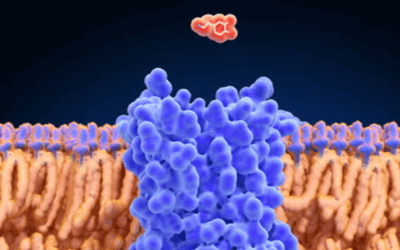
Microtubule proteins have plenty of these non-polar pockets. And Hameroff discovered that anesthetics seemed to bind precisely in these regions within tubulin, the protein that forms microtubules. This suggested that anesthetic action might occur inside neurons, in the microtubules, rather than at the cell surface.
But why would disrupting microtubules eliminate consciousness? If microtubules were just structural elements, blocking their function might impair cellular housekeeping but should not eliminate awareness. Hameroff began to suspect that microtubules were doing something more fundamental, something directly related to consciousness itself.
The Emperor’s New Mind Changes Everything
In 1989, the English mathematical physicist Roger Penrose published The Emperor’s New Mind, a book arguing that human consciousness cannot be explained by any computational process. Penrose based his argument on mathematical logic, specifically on Gödel’s incompleteness theorems, which show that there are mathematical truths that no algorithm can prove. Human mathematicians can see these truths, Penrose argued, so human understanding must involve something beyond computation.
But what? Penrose proposed that the answer lay in quantum physics, specifically in the mysterious process by which quantum superpositions collapse into definite states. This process appears to be genuinely random, not deterministic, and Penrose speculated that it might be fundamentally non-computable. If consciousness exploited this quantum collapse, it could transcend the limits of algorithmic computation.
Penrose had a theory of quantum collapse but lacked a mechanism for implementing it in the brain. When Hameroff read The Emperor’s New Mind, he immediately saw a connection. His work on microtubules had suggested they might be biological information processors. What if they were not classical computers but quantum computers? What if the non-polar pockets where anesthetics bind were precisely the sites where quantum effects occurred?
Hameroff wrote to Penrose, describing his research on microtubules and anesthesia. The two met in 1992, and over the next several years they developed what would become known as the Orch OR theory: Orchestrated Objective Reduction.
Orchestrated Objective Reduction
The Orch OR theory is complex, weaving together ideas from quantum mechanics, general relativity, neuroscience, and philosophy of mind. But its essential claims can be summarized.
First, quantum superpositions can occur in microtubules. The tubulin proteins that form microtubules contain aromatic amino acids with delocalized electrons that can exist in quantum superpositions. These quantum states can be maintained long enough to be functionally relevant because the non-polar pockets shield them from the watery environment of the cell.
Second, these quantum superpositions undergo a special kind of collapse that Penrose calls “objective reduction.” Unlike the standard interpretation of quantum mechanics, where collapse occurs upon measurement or observation, Penrose proposes that superpositions become unstable when they involve sufficient mass-energy and spontaneously collapse according to the structure of spacetime geometry. This collapse is non-computable and connects the brain to the deepest level of physical reality.
Third, when objective reduction occurs in microtubules, it produces a moment of conscious experience. The pattern of tubulin states that results from the collapse corresponds to the content of that moment of consciousness. Multiple microtubules across many neurons can become quantum-entangled, allowing for the integration of information that characterizes unified conscious experience.
Fourth, anesthetics work by disrupting these quantum processes. They bind in the non-polar pockets of tubulin and somehow prevent or dampen the quantum vibrations that would otherwise lead to conscious experience. This explains why chemically diverse anesthetics all have the same effect: they all bind in the same regions and disrupt the same quantum processes.
The theory is extraordinarily ambitious. It proposes that consciousness is not merely correlated with brain activity but is a fundamental feature of physical reality, connected to the structure of spacetime itself. It suggests that the mystery of consciousness and the mystery of quantum measurement may be two aspects of the same underlying puzzle.
The Science of Consciousness Conferences
Even before the Orch OR theory was fully developed, Hameroff recognized that consciousness research needed a community, a place where scientists, philosophers, and others could come together across disciplinary boundaries to explore these questions.
In 1994, Hameroff organized the first “Toward a Science of Consciousness” conference in Tucson. It brought together approximately three hundred researchers from diverse fields, including figures who would become major contributors to consciousness studies: David Chalmers, who would soon articulate the “hard problem” of consciousness; Christof Koch, who would spend his career searching for the neural correlates of consciousness; Bernard Baars, whose Global Workspace Theory remains influential; Benjamin Libet, whose experiments on the timing of conscious decisions sparked decades of debate; and of course Roger Penrose.
The Tucson conference became a landmark event. It demonstrated that consciousness could be studied scientifically, that researchers from philosophy, neuroscience, psychology, physics, and other fields could communicate productively about these questions. The conference has continued biennially (now called simply “The Science of Consciousness”) and remains the premier gathering in the field.
Partly as a result of the Tucson conferences, the Association for the Scientific Study of Consciousness was formed, providing ongoing institutional support for the field. Hameroff also helped establish the Center for Consciousness Studies at the University of Arizona, which has supported research and education in consciousness science for over two decades.
These institutional contributions may prove at least as important as Orch OR itself. Whatever the fate of any particular theory, Hameroff helped create the conditions for consciousness to be taken seriously as a scientific topic.
Criticism and Response
Orch OR has been heavily criticized since its inception, and it remains far outside the mainstream of neuroscience and physics.
The most damaging critique came from physicist Max Tegmark, who in 2000 published calculations suggesting that quantum coherence in microtubules would decay far too rapidly to be relevant to neural processes. The brain, Tegmark argued, is warm, wet, and noisy, exactly the conditions that destroy the delicate quantum correlations that quantum computation requires.
Hameroff and colleagues responded that Tegmark had used inappropriate assumptions and had not addressed the specific mechanisms proposed in Orch OR. They pointed to the shielded nature of the non-polar pockets within tubulin and to emerging evidence of quantum effects in other biological systems, such as photosynthesis and bird navigation.
Neuroscientists Rick Grush and Patricia Churchland argued that consciousness does not seem to depend on microtubule function in any obvious way. Patients with certain microtubule-affecting conditions remain conscious, while anesthetics that do not primarily target microtubules can still eliminate consciousness.
Philosophers questioned the inference from Gödel’s theorem to non-computability of consciousness, a criticism that applied equally to Penrose’s original argument.
More recently, in 2022, Italian physicists conducted experiments that failed to find evidence for the gravity-related quantum collapse that is central to Penrose’s version of objective reduction, weakening support for that specific aspect of the theory.
Hameroff has responded to these critiques over the years, arguing that new evidence supports quantum effects in microtubules and that the theory continues to make testable predictions. The debate continues.
What Orch OR Means for Therapy
For clinicians working with consciousness and its disorders, Orch OR raises fascinating possibilities even if its specific claims remain unproven.
The theory suggests that consciousness may be more fundamental than most neuroscientists assume. Rather than being an emergent property of neural computation, consciousness might be built into the fabric of reality itself, accessed by biological systems through quantum processes. This would have profound implications for how we think about mental disorders, altered states, and the therapeutic process.
Hameroff has speculated about connections between Orch OR and various phenomena that conventional neuroscience struggles to explain. Near-death experiences, with their reported sense of consciousness leaving the body, might involve quantum processes that continue even when neural activity has stopped. Psychedelic experiences might involve enhanced or altered quantum effects in microtubules. Meditation and other contemplative practices might somehow influence these quantum processes.
These speculations are controversial and largely untested. But they point toward a broader lesson that even conventional therapists can appreciate: we do not fully understand consciousness, and humility about our current theories is warranted.
For practitioners of brain-based approaches to trauma therapy, Hameroff’s work raises questions about what exactly is happening at the cellular level during treatment. When Brainspotting or EMDR facilitates the processing of traumatic memories, what changes in the brain? Most explanations focus on neural networks and synaptic connections. But if microtubules play a role in consciousness and memory, as Hameroff proposes, then the picture may be more complex.
Dissociation, the fragmentation of consciousness that often accompanies trauma, poses particular puzzles for any theory of consciousness. How does a unified conscious experience split into separate streams? How do aspects of experience become walled off from awareness? Orch OR, with its emphasis on quantum entanglement as a mechanism for integration, might eventually offer insights into these phenomena, though such applications remain speculative.
The broader point is that consciousness science is still in its infancy, and the final word on how awareness arises from matter has not been written. Therapists work at the frontier of human experience, helping people navigate transformations of consciousness that we do not fully understand. A certain openness to unconventional ideas may serve us well.
Recent Developments and Continuing Work
In 2014, Hameroff and Penrose published a comprehensive review and update of Orch OR in Physics of Life Reviews. The paper reviewed twenty years of criticism and response, updated the theory in light of new evidence, and pointed to experimental findings that the authors claimed supported their predictions.
One line of supporting evidence came from the laboratory of Anirban Bandyopadhyay at the National Institute for Materials Science in Japan. Bandyopadhyay’s group found evidence for quantum vibrations in microtubules at frequencies ranging from megahertz to terahertz. These vibrations appeared to show characteristics consistent with quantum coherence, though the interpretation remains debated.
Hameroff has also pursued clinical applications of his ideas, exploring whether transcranial ultrasound stimulation, which delivers mechanical vibrations to the brain at megahertz frequencies, might influence microtubule function and thereby affect mental states. Early clinical trials have reported improvements in mood, though the mechanism remains unclear and larger studies are needed.
In 2017, Hameroff co-founded the Penrose Institute with Roger Penrose and others, intended to support research based on Penrose’s various contributions to physics, cosmology, and consciousness science.
Now retired from clinical anesthesiology, Hameroff continues to write, speak, and organize conferences on consciousness. He remains convinced that Orch OR captures something essential about the nature of mind, even as critics continue to challenge the theory’s foundations.
Publications and Resources
Books by Stuart Hameroff
Hameroff, S.R. (1987). Ultimate Computing: Biomolecular Consciousness and NanoTechnology. Amsterdam: Elsevier.
Key Scientific Papers
Hameroff, S., & Penrose, R. (1996). Orchestrated reduction of quantum coherence in brain microtubules: A model for consciousness. Mathematics and Computers in Simulation, 40(3-4), 453-480.
Hameroff, S., & Penrose, R. (2014). Consciousness in the universe: A review of the ‘Orch OR’ theory. Physics of Life Reviews, 11(1), 39-78. Available at: https://pubmed.ncbi.nlm.nih.gov/24070914/
Conference Information
The Science of Consciousness Conference: https://consciousness.arizona.edu/
Center for Consciousness Studies, University of Arizona: https://consciousness.arizona.edu/
Biographical Resources
Stuart Hameroff Official Website: https://hameroff.arizona.edu/
University of Arizona Profile: https://profiles.arizona.edu/person/hameroff
Wikipedia Biography: https://en.wikipedia.org/wiki/Stuart_Hameroff
Google Scholar Profile: https://scholar.google.com/citations?user=MbFxFeoAAAAJ
Related Coverage
Popular Mechanics profile (2024): https://www.popularmechanics.com/science/a63186374/consciousness-microtubules/
ScienceDaily on quantum vibrations in microtubules: https://www.sciencedaily.com/releases/2014/01/140116085105.htm
Key Dates
1947 Born July 16
1970s Medical training including anesthesiology residency at University of Arizona
1977 Joins anesthesiology faculty at University of Arizona
1987 Publishes Ultimate Computing, proposing microtubules as biological information processors
1989 Roger Penrose publishes The Emperor’s New Mind
1992 Hameroff meets Penrose and they begin collaborating
1994 First “Toward a Science of Consciousness” conference in Tucson
1996 First major paper on Orch OR published
1998 Co-founds Center for Consciousness Studies at University of Arizona
2000 Max Tegmark publishes critique of quantum coherence in microtubules
2014 Twenty-year review of Orch OR published in Physics of Life Reviews
2017 Co-founds Penrose Institute
2020 Roger Penrose wins Nobel Prize in Physics
Present Continues as Professor Emeritus and consciousness researcher at University of Arizona
Interested in brain-based approaches to healing? Contact GetTherapyBirmingham.com to learn about somatic and neuroscience-informed therapy.












0 Comments