
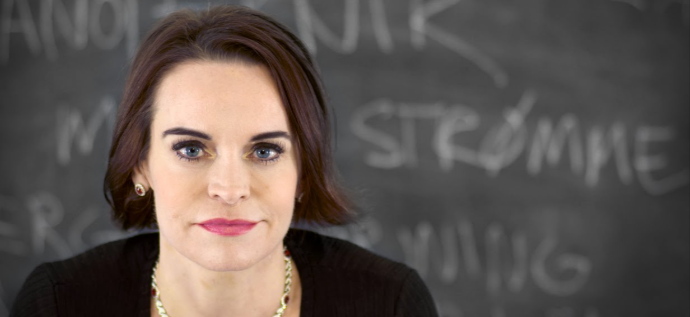
In November 2025, something unexpected emerged from Uppsala University in Sweden. Not from the philosophy department or the neuroscience labs, but from the Division of Nanotechnology and Functional Materials. Maria Strømme—one of the most cited materials scientists in the Nordic region, inventor of “impossible” nanomaterials, and a woman who has spent decades probing matter at its smallest scales—published a paper that asks the largest possible question: What is the fundamental nature of reality?
Her answer reverses everything we thought we knew. Consciousness, Strømme argues, is not a byproduct of brain activity. It is not generated by neurons or emergent from computation. Instead, consciousness is a foundational field underlying everything we experience—matter, space, time, and life itself. The brain doesn’t produce awareness; it filters it, shaping a universal field of consciousness into the localized stream we experience as individual selfhood.
The paper, published in AIP Advances, was selected as the best paper of the issue and featured on the journal’s cover. For a physicist known for pragmatic innovations in drug delivery systems and sustainable batteries, this represents an extraordinary intellectual pivot—from the smallest scales of matter to the very structure of reality.
For those of us in psychotherapy, Strømme’s framework isn’t just philosophically interesting. It offers a physics-based vocabulary for phenomena we encounter clinically but struggle to explain: the transformative power of insight, the mysterious persistence of consciousness in damaged brains, the healing that occurs through expanded states of awareness, and the curious fact that consciousness seems to defy easy materialist reduction. This article explores Strømme’s theory, her remarkable scientific background, and what her framework might mean for understanding and facilitating psychological healing.
The Scientist Who Made the Impossible
To understand why Strømme’s consciousness theory deserves serious attention, we need to understand who she is. This isn’t a philosopher speculating from an armchair or a mystic clothing intuitions in scientific language. Strømme’s credentials in hard science are impeccable—and her track record of challenging scientific consensus and being proved right is remarkable.
Born in Svolvær, Norway in 1970, Strømme grew up in a family steeped in science. Her father was a nuclear physicist; her sisters pursued careers in mechanical engineering and space physics. After earning her doctorate in solid-state physics from Uppsala University in 1997, she became Sweden’s youngest professor in a technical subject when she was appointed to the newly created chair in nanotechnology in 2004.
Since then, she has built one of Europe’s leading nanotechnology research groups, published over 470 scientific papers, accumulated over 18,000 citations, and holds more than 30 patents. She’s been elected to the Royal Swedish Academy of Sciences, the Royal Swedish Academy of Engineering Sciences, the Norwegian Academy of Technological Sciences, and the Norwegian Academy of Science and Letters. Her honors include the Royal Swedish Academy of Engineering Sciences Gold Medal and designation as a Wallenberg Scholar—Sweden’s most prestigious research funding distinction.
But what makes Strømme particularly relevant to her consciousness work is her history of achieving what others declared impossible.
Upsalite: The “Impossible Material”
In 2012, Strømme’s research group accidentally created something that scientists had tried—and failed—to synthesize for over a century. When attempts to create a stable, anhydrous (water-free), mesoporous form of magnesium carbonate failed in 1908, researchers concluded it was chemically impossible. Further attempts in 1926 and 1961 reached the same conclusion.
Strømme’s team wasn’t trying to prove them wrong. They were working on drug delivery systems when they modified an old procedure, left a reaction running over a weekend, and returned to find a strange new gel in place of their expected results. After a year of careful analysis—knowing their findings would be contested—they confirmed they had synthesized what had been declared impossible: Upsalite.
The material’s properties were extraordinary. A single gram of Upsalite has an internal surface area of 800 square meters—roughly the sail area of a megayacht. It absorbs moisture better than any known material, can be regenerated at low temperatures, is non-toxic, and has 26 trillion nanopores per gram. The scientific world took notice; within weeks, media coverage sent Google searches for “Upsalite” from zero to half a million.
Strømme’s team founded Disruptive Materials to commercialize the discovery. Today, Upsalite is used in pharmaceuticals, cosmetics, electronics humidity control, and environmental remediation. The “impossible” material won Sweden’s SKAPA Award for best invention of the year.
This history matters for understanding her consciousness work. Strømme has demonstrated willingness to pursue findings that contradict scientific consensus—and the rigorous methodology to validate those findings against inevitable skepticism. When she claims that the standard materialist account of consciousness may be fundamentally incomplete, this isn’t speculation. It’s a hypothesis from someone who has already proved scientific orthodoxy wrong.
The Universal Consciousness Field: A New Framework
Strømme’s consciousness theory, formally titled “Universal consciousness as foundational field: A theoretical bridge between quantum physics and non-dual philosophy,” takes as its starting point a question that has troubled philosophers and scientists alike: Why does subjective experience exist at all?
The conventional neuroscientific view holds that consciousness emerges from brain activity—that neurons firing in complex patterns somehow give rise to the felt quality of experience, the redness of red, the painfulness of pain, the sense of being a self looking out at a world. This is the “hard problem” of consciousness that philosopher David Chalmers famously articulated: we can explain the brain’s information processing functions, but we cannot explain why there is “something it is like” to be a conscious being.
Strømme inverts this relationship entirely. In her model, consciousness doesn’t emerge from matter. Matter emerges from consciousness. The universal consciousness field exists prior to space, time, and physical substance. The material world we experience—including our brains and bodies—arises as a kind of crystallization or differentiation within this primordial field of awareness.
The Three Principles: Mind, Consciousness, and Thought
The theoretical architecture of Strømme’s model rests on what she calls the “three principles” (or 3Ps): Universal Mind, Universal Consciousness, and Universal Thought. These aren’t metaphors or loose concepts; she treats them as fundamental properties that can be described mathematically using the language of quantum field theory.
Universal Mind represents the underlying, formless intelligence—the “ground” from which everything arises. This is not a personal mind or a thinking entity, but rather the fundamental capacity for intelligence that pervades reality. Strømme relates this to what physicist Max Planck called “the matrix of all matter” and to concepts from non-dual philosophy traditions.
Universal Consciousness is the capacity for awareness itself—not awareness of any particular thing, but the basic “light” by which anything can be known or experienced. In Strømme’s formulation, this is what gives the universal field its knowing quality.
Universal Thought is the dynamic mechanism through which differentiation and experience arise. It’s the principle by which the formless takes form, by which the unified field generates the multiplicity we experience as separate objects, events, and selves.
These three principles work together: Universal Mind provides the intelligent ground, Universal Consciousness provides the capacity for awareness, and Universal Thought provides the dynamism through which particular experiences manifest. Individual human consciousness, in this framework, is what happens when a biological organism (specifically, a brain) filters and focuses the universal field into a localized stream of experience.
The Brain as Filter, Not Generator
Perhaps the most therapeutically relevant aspect of Strømme’s model is her conception of the brain’s role. Rather than generating consciousness, the brain acts as what she calls a “transceiver”—both transmitting and receiving, but not originating.
The analogy she uses is a radio. A radio produces sound—that’s its function—but it doesn’t generate the radio waves carrying the signal. Those waves exist in the environment; the radio tunes into them, decodes them, and converts them into a form we can perceive. If the radio breaks, the sound stops, but the broadcast continues. The apparatus is necessary for the local manifestation, but it’s not the source.
Similarly, Strømme proposes that the brain has evolved to filter universal consciousness into a form useful for biological survival. This filtering serves an adaptive function: an organism overwhelmed by the totality of awareness couldn’t focus on finding food or avoiding predators. The brain narrows and shapes the field into a manageable stream—the coherent, bounded experience of being a particular person in a particular location with particular concerns.
But this means the brain also restricts access. The localized self we experience is not the whole of what we are; it’s a filtered, reduced version shaped by biological and psychological structures. When those structures are altered—through meditation, certain substances, brain injury, or the approach of death—the filtering may change, potentially allowing access to aspects of the field normally screened out.
Explaining the Unexplained: Phenomena That Fit the Model
One measure of a theory’s value is its ability to account for puzzling observations that other frameworks struggle to explain. Strømme explicitly addresses several phenomena that have resisted materialist explanation.
Terminal Lucidity
One of the most mysterious phenomena in end-of-life care is terminal lucidity—episodes where patients with severe dementia or extensive brain damage suddenly regain clarity, memory, and coherent personality shortly before death. These episodes have been documented in patients with Alzheimer’s disease, brain tumors, strokes, and other conditions that should make such clarity impossible according to standard models.
Materialist neuroscience struggles to explain how a brain severely compromised by disease or damage could suddenly function at or beyond normal capacity. If consciousness is generated by neural processing, less processing capacity should mean less consciousness, not more.
Strømme’s model offers a different account. If the brain functions primarily as a filter that restricts access to the universal consciousness field, then as that filter degrades or breaks down, paradoxically more of the underlying field might become accessible. The interference pattern created by the brain’s normal filtering dissolves, and “atypical access” to the universal field becomes possible. The damaged radio, failing in its normal function, might briefly pick up the signal more clearly before ceasing to function entirely.
Near-Death Experiences
Near-death experiences (NDEs) present similar challenges to materialist models. People who have been clinically dead—with no measurable brain activity—frequently report vivid, structured experiences: movement through tunnels toward light, encounters with deceased relatives, life reviews, feelings of cosmic unity and unconditional love, and a sense of knowing or understanding that transcends normal cognition.
These experiences occur precisely when the brain should be incapable of generating any experience at all. They’re often reported as more real than ordinary consciousness, not less—the opposite of what we’d expect from a failing neural system producing hallucinations.
In Strømme’s framework, clinical death represents the complete dissolution of the brain’s filtering function. The localized consciousness that was being focused by the biological apparatus “returns to the ocean”—rejoins the universal field from which it was temporarily differentiated. The characteristic features of NDEs—expansion, interconnection, omniscience, unconditional love—are exactly what we might expect if individual consciousness were merging back into a unified field of awareness.
Mystical and Non-Ordinary States
The model also addresses the remarkable consistency of mystical experiences across cultures and traditions. Whether induced by meditation, fasting, breathwork, psychedelics, or spontaneous occurrence, these states share common features: dissolution of self-other boundaries, perception of underlying unity, access to knowledge that feels more fundamental than ordinary knowing, and a quality of “realness” that exceeds normal experience.
If the brain is filtering a universal field, then practices or substances that temporarily alter or reduce that filtering would naturally produce experiences of expanded awareness, unity, and access to normally screened information. The consistency across cultures makes sense if everyone is accessing the same underlying field through different methods of loosening the same filtering mechanism.
The Physics Behind the Philosophy
What distinguishes Strømme’s work from purely philosophical speculation is her effort to express these ideas in the mathematical language of physics. She draws on several established frameworks to construct her model.
Quantum Field Theory
In modern physics, fields are fundamental—more fundamental than particles. What we experience as particles are actually localized excitations or disturbances in underlying fields. The electromagnetic field, for instance, pervades all of space; photons (particles of light) are localized excitations of that field. Matter itself, in quantum field theory, is understood as patterns in fields rather than as tiny solid objects.
Strømme extends this logic to consciousness. Just as the electromagnetic field is fundamental and photons are localized excitations of it, the consciousness field is fundamental and individual minds are localized excitations. Your sense of being a separate conscious self is, in this view, analogous to a wave in the ocean—real as a wave, but not fundamentally separate from the ocean itself.
David Bohm’s Implicate Order
Strømme explicitly builds on the work of physicist David Bohm, whose concept of the “implicate order” proposed that behind the visible, tangible world (the “explicate order”) lies a deeper level of undivided wholeness from which our familiar reality unfolds.
Bohm, one of the most original thinkers in 20th-century quantum physics, suggested that both matter and consciousness might be understood as projections from this deeper order. The separation we perceive between mind and matter, between one thing and another, is a feature of the explicate order—the unfolded, manifest level of reality. At the implicate level, everything is enfolded together in an undivided wholeness.
Strømme’s universal consciousness field can be understood as a development of Bohm’s implicate order, with consciousness given explicit primacy rather than being treated as one of two projections (mind and matter) from a neutral substrate.
Symmetry Breaking and the Emergence of Space-Time
One of the most technically sophisticated aspects of Strømme’s theory is her account of how the differentiated world emerges from the undifferentiated field. She draws on the concept of “symmetry breaking” from particle physics.
In physics, the early universe is thought to have existed in a state of perfect symmetry—all forces unified, no distinctions between types of particles. As the universe cooled, this symmetry “broke,” giving rise to the distinct forces and particles we observe today. The uniformity tipped into structure.
Strømme applies similar logic to consciousness. The universal field exists initially in an undifferentiated state—timeless, spaceless, without distinctions. Tiny fluctuations in this field, followed by processes analogous to symmetry breaking, give rise to the basic distinctions (self/other, here/there, now/then) that constitute the structure of experience. Space and time themselves, in this view, are not pre-existing containers but emergent properties of the consciousness field’s differentiation.
The Three Principles in Psychology: Historical Connections
Strømme’s three principles of Mind, Consciousness, and Thought have a significant parallel in psychology—one she explicitly acknowledges. In 1973, Sydney Banks, a Scottish welder living in British Columbia, had what he described as a profound spiritual insight into these same three principles, which he understood as explaining how all psychological experience is created.
Banks’ insight gave rise to what is now known as Three Principles Psychology (also called Health Realization), a therapeutic approach that has been applied in settings ranging from high-poverty housing projects to executive coaching, from addiction treatment to education. The approach focuses not on the content of thoughts (what people think) but on the nature of thought itself (how experience is created moment-to-moment from within).
The core insight of Three Principles Psychology is that psychological experience is created from the inside out. Universal Mind provides the intelligent energy behind life; Thought gives us the capacity to create mental content; Consciousness makes that content feel real. When people understand that their feelings come from their thinking in the moment—not from external circumstances or past events—a natural resilience and well-being tends to emerge.
What Strømme has done is take these psychologically-derived principles and express them in the formal language of physics. She provides a scientific framework for what Banks articulated experientially, suggesting that the same principles that explain psychological functioning also explain the fundamental structure of reality.
This connection between physics and psychology is not coincidental. Both Banks and Strømme are pointing toward the same insight: that consciousness is fundamental, that individual experience is created within consciousness through thought, and that recognizing this has profound implications for human well-being and understanding.
Testable Predictions: Science, Not Just Philosophy
A crucial feature of Strømme’s work is its commitment to testability. She explicitly offers predictions that could, in principle, be confirmed or falsified by empirical investigation. This distinguishes her framework from purely philosophical positions that make no contact with observation.
Neural coherence patterns in deep meditation: If consciousness interacts with the brain as a fundamental field rather than being generated by neural activity, deep meditative states should show distinctive signatures—patterns of neural coherence that correlate with reported experiences of accessing something beyond ordinary mentation. This prediction aligns with existing research on long-term meditators showing unusual neural synchronization patterns.
Collective consciousness effects: Strømme suggests that if individual consciousnesses are localized excitations of a universal field, there should be detectable correlations between minds—particularly during major world events when many people are focused on the same thing. This connects to research programs like the Global Consciousness Project, which has been monitoring networks of random number generators for deviations during significant global events since 1998.
Anomalies in terminal lucidity and NDEs: The model predicts that these phenomena are not random neural noise but structured experiences reflecting genuine access to the universal field. Careful documentation of content and timing in such experiences could provide evidence for or against this prediction.
Effects of field isolation: If consciousness depends on interaction with a universal field, isolating subjects from external electromagnetic and other fields might produce measurable effects on consciousness. This is a more challenging prediction to test but suggests experimental approaches.
Implications for Psychotherapy
For clinicians, Strømme’s framework offers more than theoretical interest. It provides a way of understanding therapeutic phenomena that materialist models struggle to explain, and it suggests directions for practice.
The Nature of Insight and Transformation
In psychotherapy, we regularly witness moments of genuine insight—sudden shifts where clients see themselves, their situations, or their patterns in an entirely new way. These moments often feel qualitatively different from gradual learning or cognitive reframing. They have a quality of “revelation”—of something being shown rather than figured out.
If consciousness is fundamental and individual minds are connected to a universal field of intelligence, insight might represent moments when the brain’s ordinary filtering relaxes enough to allow fresh information from the field. The wisdom or clarity that arrives in such moments isn’t constructed by the individual mind; it’s accessed from a deeper source.
This has implications for how we facilitate therapy. Rather than trying to help clients think their way to solutions, we might focus on creating conditions where the thinking mind can quiet and deeper knowing can emerge. This aligns with the emphasis in Three Principles-based approaches on helping clients recognize the nature of thought rather than trying to change its content.
Understanding Altered States
Many therapeutic approaches involve altered states of consciousness—whether through EMDR’s bilateral stimulation, somatic experiencing’s tracking of body sensation, hypnotherapy, meditation-based approaches, or psychedelic-assisted therapy. These approaches often produce effects that seem disproportionate to their cognitive content.
Strømme’s model suggests these approaches work by temporarily modifying the brain’s filtering function, allowing access to normally unavailable information or perspectives. The healing isn’t coming from the technique per se; the technique is opening a door to resources that were always present but normally screened out.
This understanding might help clinicians work more skillfully with altered states—recognizing that the value lies not in the particular method but in what it allows access to, and that different clients may need different approaches to achieve similar openings.
Continuity of Consciousness
One of the most challenging aspects of trauma work is helping clients with the existential questions that often arise: questions about the nature of self, the meaning of suffering, what continues and what changes through transformative experience. Materialist frameworks offer limited resources for these conversations—if consciousness is just brain activity, questions about meaning become difficult to address without venturing into religion.
Strømme’s framework offers a middle path. Without requiring belief in any particular religious doctrine, it provides a coherent account in which consciousness has continuity beyond the individual brain, in which suffering serves a function within a larger intelligence, and in which the individual self is both real (as a localized pattern) and not ultimately separate (as an expression of the universal field). This gives therapists a language for conversations about meaning that is neither reductively materialist nor specifically religious.
The Mind-Body Connection
If consciousness is fundamental and the body is an expression of consciousness rather than its generator, the mind-body connection takes on new meaning. Somatic symptoms aren’t just physical events that affect the mind; they’re expressions of consciousness manifesting through the body. Similarly, changes in consciousness can have direct physical effects because body and mind are both expressions of the same underlying field.
This supports the integration of body-based approaches in psychotherapy and suggests that working with consciousness directly (through insight, meditation, or other means) may have physical effects that would be puzzling if consciousness were merely a brain byproduct.
Resonances with Depth Psychology
Strømme’s model has remarkable resonances with concepts from depth psychology that have influenced therapeutic practice for over a century.
Jung’s concept of the collective unconscious—a layer of psyche shared by all humans, containing archetypal patterns that shape individual experience—maps surprisingly well onto Strømme’s universal consciousness field. The archetypes could be understood as recurring patterns in how the field differentiates into individual experience, templates that shape the forms consciousness takes when it localizes into human minds.
Jung’s idea of individuation—the process of integrating unconscious contents into conscious awareness—might be understood as progressively dissolving the filters that normally restrict access to the collective (or universal) field. The goal isn’t to escape individual existence but to recognize its larger context, to live as both the wave and the ocean simultaneously.
The concept of synchronicity—meaningful coincidences that seem to transcend normal causality—makes more sense in a framework where individual minds are not truly separate. If all consciousness is connected at a fundamental level, correlations between apparently separate events are not violations of causality but expressions of underlying unity that occasionally become visible to our filtered awareness.
Criticisms and Considerations
No theoretical framework is without challenges, and Strømme’s model has faced its share of skepticism. Some criticisms deserve attention.
The problem of physical interaction: If consciousness is fundamental and matter emerges from it, how exactly does this happen? Strømme uses concepts from quantum field theory and symmetry breaking, but the precise mechanism by which awareness gives rise to physical substance remains to be fully articulated. This is an area where more theoretical development is needed.
Departure from scientific consensus: The standard view in neuroscience remains that consciousness is generated by brain activity. Strømme’s inversion of this relationship, while not logically impossible, contradicts assumptions that most scientists hold. Extraordinary claims require extraordinary evidence, and while the anesthesia research on microtubules and quantum coherence provides some support, the case is not yet definitive.
The risk of premature closure: For therapists attracted to this framework, there’s a risk of adopting it as a belief system rather than a working hypothesis. The value of Strømme’s model lies in the questions it opens and the phenomena it helps us notice, not in providing final answers that foreclose further inquiry.
Conclusion: Science at the Edge
Maria Strømme’s journey from nanotechnology to consciousness theory illustrates something important about scientific progress. Sometimes the most significant advances come from researchers who bring methods and mindsets from one field into another—who ask questions that specialists have stopped asking because they seem settled or unanswerable.
Strømme brings to consciousness research the same qualities that allowed her to create “impossible” materials: willingness to challenge consensus, rigor in testing claims, and patience to develop ideas fully before presenting them. Her framework isn’t the final word on consciousness—she would be the first to say it requires further development and testing—but it represents a serious scientific effort to address questions that matter deeply for how we understand ourselves and our work.
For psychotherapy, her model offers something valuable regardless of whether every detail proves correct: a framework that takes consciousness seriously as something more than brain function, that provides scientific language for phenomena we encounter clinically, and that suggests consciousness itself—not just its contents—may be the proper focus of therapeutic attention.
As Strømme herself observes, similar paradigm shifts have occurred before in human history. We once believed the Earth was the center of the universe; that view eventually gave way. We once believed matter was made of indivisible atoms; quantum physics revealed a stranger reality beneath. Perhaps our current assumption that consciousness is generated by brains will prove to be another case where the obvious assumption turns out to be exactly backwards—where what we took as fundamental is actually derivative, and what we dismissed as derivative is actually fundamental.
Whether or not this proves true, Strømme’s work invites us to hold our assumptions more lightly, to remain curious about consciousness rather than assuming we already understand it, and to notice the phenomena—in our clients and in ourselves—that don’t quite fit the standard story. In therapy as in science, the most important discoveries often begin with taking seriously what everyone else has learned to ignore.
Joel is a Licensed Independent Clinical Social Worker (LICSW-S) and Clinical Director of Taproot Therapy Collective in Birmingham, Alabama. His practice specializes in integrated brain-based approaches for complex trauma, including brainspotting, EMDR, Emotional Transformation Therapy, and neuromodulation. He writes regularly on the intersection of neuroscience, depth psychology, and clinical practice.









0 Comments