

Who Is Roger Penrose? A Nobel Laureate’s Quest to Prove Consciousness Cannot Be Computed
By The Clinical Team at GetTherapyBirmingham.com
On October 6, 2020, the Royal Swedish Academy of Sciences announced that Roger Penrose had won half of the Nobel Prize in Physics for proving that black holes are a robust prediction of general relativity. He was 89 years old. The prize represented recognition for work he had done more than fifty years earlier, in 1965, when he demonstrated mathematically that matter collapsing under gravity must inevitably form a singularity, a point of infinite density.
But for many people interested in the nature of mind, Penrose was famous for something else entirely. For three decades, he had argued that human consciousness cannot be explained by any computer algorithm, that the mind does something that no Turing machine can replicate, and that understanding consciousness will require a revolution in physics itself.
This is an extraordinary claim. It runs counter to the dominant assumptions of cognitive science, artificial intelligence, and most neuroscience. It has been criticized, dismissed, and sometimes ridiculed by experts in these fields. And yet Penrose has never backed down. He continues to insist that consciousness involves something genuinely non-computable, something that cannot be captured by any program no matter how sophisticated.
For therapists working with the mysterious terrain of human experience, Penrose’s arguments deserve serious attention. Not because they provide easy answers or practical techniques, but because they force us to confront fundamental questions about the nature of the minds we are trying to help heal. Is the human mind really just a biological computer? Or is there something more going on, something that escapes purely mechanical explanation?
The Family That Made Mathematics
To understand Roger Penrose, you need to understand the extraordinary family that shaped him. Born on August 8, 1931, in Colchester, England, Roger was the second of four children in what can only be described as a dynasty of intellectual achievement.
His father, Lionel Sharples Penrose, was a distinguished medical geneticist and Fellow of the Royal Society. At the time of Roger’s birth, Lionel was conducting the Colchester survey, a major research project investigating whether mental illness was primarily caused by genetic or environmental factors. This question, touching on the fundamental nature of mind and its relationship to biology, would echo throughout Roger’s later work.
His mother, Margaret Leathes, was a physician. His older brother Oliver became a professor of statistical mechanics and was also elected to the Royal Society, doing important work on liquid helium and Bose-Einstein condensates. His younger brother Jonathan became perhaps the greatest British chess player of his era, winning the British Chess Championship a record ten times, seven consecutively, and once defeating the reigning world champion Mikhail Tal. His sister Shirley became a distinguished geneticist.
In such an environment, intellectual achievement was not merely encouraged but assumed. Young Roger grew up surrounded by mathematical puzzles, scientific discussions, and the expectation that important questions could be addressed through rigorous thinking. The family had a particularly close relationship with the Dutch artist M.C. Escher, exchanging ideas about mathematical concepts in art, and Penrose would later become famous for the “impossible figures” that inspired some of Escher’s most celebrated works.
Roger attended University College School in London before earning his degree in mathematics at University College London, graduating with first-class honors. He then went to Cambridge for his doctorate, initially working in algebraic geometry under the supervision of William Hodge. But his interests were already shifting toward physics.
A Mathematician Becomes a Physicist
At Cambridge, Penrose encountered three courses that would redirect his intellectual trajectory. One was Hermann Bondi’s lectures on general relativity, Einstein’s theory of gravity and the structure of spacetime. Another was Paul Dirac’s course on quantum mechanics, presented with what Penrose would later describe as a kind of mathematical beauty entirely different from anything he had seen before. The third was a course on mathematical logic that introduced him to Turing machines and Gödel’s incompleteness theorems.
These three threads, relativity, quantum mechanics, and mathematical logic, would interweave throughout Penrose’s subsequent career, eventually coming together in his theory of consciousness.
Penrose completed his doctorate in 1957 with a thesis on tensor methods in algebraic geometry, but his heart was increasingly in physics. He held positions at Bedford College London, Princeton, Syracuse, and King’s College London before becoming professor of applied mathematics at Birkbeck College London in 1964. In 1973, he was appointed to the Rouse Ball Chair of Mathematics at Oxford University, a position he held until his retirement.
Throughout this period, Penrose made fundamental contributions to mathematical physics. He invented twistor theory, a novel approach to the geometry of spacetime that continues to influence theoretical physics. He discovered the Penrose tiling, a way of covering a plane with tiles that never repeats, creating beautiful patterns that appear in certain crystal structures. And in 1965, he proved his singularity theorem, showing that gravitational collapse inevitably leads to singularities, laying the groundwork for our modern understanding of black holes.
For this work, Penrose shared the 1988 Wolf Prize in Physics with Stephen Hawking, with whom he had collaborated on extending singularity theorems to the entire universe. The Nobel Prize would come thirty-two years later, a remarkably long delay that some attributed to the theoretical nature of the work and some to lingering skepticism about black holes themselves.
But by the time the Nobel came, Penrose had become at least as famous for his work on consciousness as for his physics.
The Emperor’s New Mind
In 1989, Penrose published The Emperor’s New Mind: Concerning Computers, Minds, and the Laws of Physics. The book was a bestseller and won the Royal Society Science Book Prize. It was also deeply controversial.
Penrose’s argument began with the work of mathematician Kurt Gödel. In 1931, Gödel proved his incompleteness theorems, demonstrating that any formal mathematical system powerful enough to express basic arithmetic must contain true statements that cannot be proven within that system. This result shattered the hope that mathematics could be completely mechanized, that there could be an algorithm that would eventually prove all mathematical truths.
Penrose argued that Gödel’s theorem has profound implications for understanding the mind. Human mathematicians can recognize the truth of Gödel sentences, statements that a formal system cannot prove. We can “see” that these statements are true, even though no algorithm working within the formal system can establish their truth. This suggests that human mathematical understanding transcends what any algorithm can achieve.
If human understanding is genuinely non-algorithmic, then the mind cannot be a computer in the classical sense. No program running on any digital computer, no matter how powerful, could fully replicate what the human mind does. The strong artificial intelligence program, the claim that the mind is essentially a computer program and could in principle be implemented on silicon, would be fundamentally mistaken.
Penrose acknowledged that this was a controversial position. The consensus among cognitive scientists and AI researchers was that the mind is indeed computational, that neural activity implements algorithms, and that consciousness will eventually be explained in these terms. But Penrose believed the consensus was wrong, and he was willing to follow his argument wherever it led.
Where it led was to physics. If the mind does something non-computable, then it must exploit some aspect of physical reality that is itself non-computable. Classical physics is entirely computable, at least in principle. Quantum mechanics, in its standard formulation, is also computable, the Schrödinger equation is deterministic and can be simulated on a computer.
But there is one aspect of quantum mechanics that seems to escape computation, the so-called “collapse of the wave function” that occurs when a measurement is made. Before measurement, a quantum system exists in a superposition of states. Upon measurement, it “collapses” to a single definite state. This process appears random and instantaneous, and there is no agreed-upon explanation for how or why it occurs.
Penrose proposed that this quantum collapse might be the key to consciousness. Perhaps the non-computable aspect of mind arises from some process related to wave function collapse. Perhaps consciousness involves quantum effects that cannot be simulated by any classical computer.
Orchestrated Objective Reduction
In The Emperor’s New Mind, Penrose raised the question but did not provide a detailed answer. That would come through his collaboration with Stuart Hameroff, an anesthesiologist at the University of Arizona.
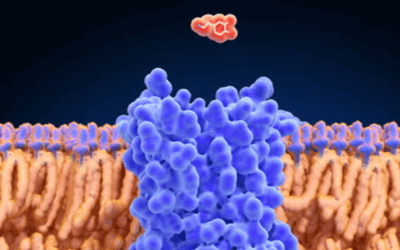
Hameroff had been studying microtubules, tiny protein structures found inside neurons and other cells. Microtubules form part of the cell’s internal scaffolding, the cytoskeleton, and play important roles in cellular transport and division. Hameroff had proposed that microtubules might be involved in information processing within cells, and that their structure might allow for quantum effects.
When Hameroff read The Emperor’s New Mind, he contacted Penrose to suggest that microtubules could be the site of the quantum processes Penrose was looking for. The two began collaborating, eventually developing what they called Orchestrated Objective Reduction, or Orch OR.
The theory has several components. First, Penrose proposed that wave function collapse is not merely a matter of measurement or interaction with the environment, as most physicists believe, but a genuine physical process triggered by the instability of superpositions involving significant amounts of mass-energy. He called this “objective reduction” because it would occur even without any observer or measurement apparatus. The trigger would be gravitational, related to the incompatibility between quantum superposition and the structure of spacetime in general relativity.
Second, Hameroff argued that microtubules within neurons could maintain quantum coherence long enough for these objective reduction events to occur. The coherent quantum states in microtubules would periodically collapse, and these collapses would produce moments of conscious experience.
Third, Penrose suggested that the non-computability of consciousness arises because objective reduction involves Platonic mathematical truths. The collapse selects from among superposed possibilities in a way that is not random but is guided by mathematical relationships that cannot be captured by any algorithm.
The resulting theory is extraordinarily ambitious. It attempts to explain consciousness by linking the deepest mysteries of quantum mechanics, the deepest mysteries of general relativity, and the deepest questions about the nature of mathematics and computation. If correct, it would require a revolution in our understanding of all these domains.
The Critics Respond
Orch OR has been criticized extensively and from multiple directions.
Physicists have questioned whether quantum coherence could be maintained in the warm, wet environment of the brain. Quantum effects typically require extremely low temperatures because thermal noise destroys the delicate correlations that quantum computation requires. In a paper published in Physical Review E, physicist Max Tegmark calculated that any quantum coherence in microtubules would decohere, that is, would be destroyed by thermal fluctuations, in a timeframe far shorter than the timescale of neural processes. The brain, Tegmark argued, is simply too warm and noisy for quantum computation.
Penrose and Hameroff have responded to this criticism, arguing that Tegmark’s calculations did not address the specific mechanisms they proposed and that quantum effects in biological systems have been observed in contexts like photosynthesis. The field of “quantum biology” has grown substantially since Tegmark’s initial critique, and the question of whether quantum effects play functional roles in living systems remains open.
Philosophers and mathematicians have criticized Penrose’s interpretation of Gödel’s theorem. Many argue that the Penrose-Lucas argument, named for philosopher John Lucas who made similar arguments before Penrose, fails because humans are not provably consistent. We make mathematical errors. We believe false things. If the human mind is not perfectly consistent, then the Gödelian argument does not apply to it.
Penrose has responded that human mathematicians can correct their errors and that mathematical insight involves seeing truths that transcend any particular formal system. The debate continues, with most experts in mathematical logic unconvinced by Penrose’s position.
Computer scientists and AI researchers have generally rejected the claim that human cognition is non-computable. They point to the remarkable progress in artificial intelligence, including systems that can prove mathematical theorems, play chess at superhuman levels, and now generate fluent text and realistic images. While these systems may not be conscious in the way humans are, they demonstrate that complex cognitive achievements can emerge from purely computational processes.
Neuroscientists have raised questions about the role of microtubules in consciousness. While microtubules are important cellular structures, there is no direct evidence that they are the site of conscious processing. Many neuroscientists favor theories that locate consciousness in the patterns of neural activity, particularly in the cortex, rather than in quantum processes within individual neurons.
What Penrose’s Ideas Offer to Therapists
Despite the criticisms, Penrose’s work raises questions that anyone working with human consciousness should consider. Even if his specific theory is wrong, the problems he identifies are real.
The hard problem of consciousness, the question of why there is subjective experience at all, remains unsolved. Why does neural activity feel like something? Why is there an “inside” to conscious experience, a first-person perspective that cannot be captured by any third-person description? Penrose is surely right that this is a genuine mystery that current science has not explained.
The relationship between consciousness and computation is also a genuine puzzle. Current AI systems, for all their impressive capabilities, show no sign of being conscious. They process information, they respond to inputs, they generate outputs, but there is no reason to believe there is anyone home, no subject of experience, no felt quality to their processing. This suggests that consciousness may indeed require something beyond mere computation, even if that something is not what Penrose proposes.
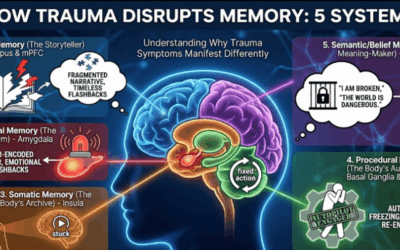
For therapists working with trauma, these questions have practical implications. Trauma affects consciousness itself. It disrupts the normal flow of experience, creating dissociation, fragmentation, and alterations in the sense of self and time. Understanding consciousness at a deeper level may help us understand how trauma disrupts it and how healing can restore it.
Penrose’s emphasis on the limits of algorithmic thinking also resonates with therapeutic practice. Therapists know that healing does not proceed algorithmically. You cannot write a program that will cure PTSD. The therapeutic relationship involves something that escapes mechanical description, something in the meeting of two minds that cannot be reduced to information processing.
This does not mean that therapy is mystical or beyond scientific understanding. But it does suggest that the science of consciousness, and therefore the science of therapy, may require conceptual frameworks that go beyond current computational models. Penrose may be pointing toward something important even if his specific theory is wrong.
Approaches like Brainspotting and EMDR work with the body and brain in ways that engage processes far beneath conscious awareness. The subcortical regions that store traumatic memories operate according to principles we do not fully understand. Perhaps quantum effects play some role in these processes. Perhaps not. But the humility that Penrose brings, the recognition that our current scientific frameworks may be fundamentally incomplete, is appropriate for anyone working at the frontier of healing.
The Road to Reality
In 2004, Penrose published The Road to Reality: A Complete Guide to the Laws of the Universe, an enormous book of over a thousand pages that surveys modern physics and mathematics. The book reflects Penrose’s conviction that understanding the universe requires mathematical sophistication, and that the deepest truths of nature are mathematical in character.
This Platonic view of mathematics, the belief that mathematical objects exist independently of human minds and that we discover rather than invent them, underlies Penrose’s approach to consciousness. He believes that mathematical insight involves genuine contact with an eternal realm of mathematical truth, and that this contact cannot be explained by any computational process.
Whether or not one accepts this philosophy, Penrose’s work exemplifies a particular style of scientific thinking. He is willing to follow arguments wherever they lead, even when they lead to conclusions that most experts reject. He insists on taking the mystery of consciousness seriously, refusing to explain it away or pretend that current science has solved it. And he brings to the problem a depth of mathematical and physical knowledge that few others can match.
Roger Penrose was knighted in 1994 for his services to science. He has received numerous honors including the Copley Medal of the Royal Society in 2008, the society’s oldest and most prestigious award. He continues to write and speak about consciousness, cosmology, and the foundations of physics.
His ideas about consciousness remain controversial. But they represent a serious attempt to grapple with perhaps the deepest question science can ask, the question of how matter gives rise to mind, how the physical processes in our brains produce the felt quality of conscious experience. Even if his answers turn out to be wrong, the questions he raises will endure.
Selected Publications
Penrose, R. (1989). The Emperor’s New Mind: Concerning Computers, Minds, and the Laws of Physics. Oxford: Oxford University Press.
Penrose, R. (1994). Shadows of the Mind: A Search for the Missing Science of Consciousness. Oxford: Oxford University Press.
Penrose, R. (2004). The Road to Reality: A Complete Guide to the Laws of the Universe. London: Jonathan Cape.
Penrose, R. (2010). Cycles of Time: An Extraordinary New View of the Universe. London: Bodley Head.
Penrose, R. (2016). Fashion, Faith, and Fantasy in the New Physics of the Universe. Princeton: Princeton University Press.
Hameroff, S., & Penrose, R. (2014). Consciousness in the universe: A review of the Orch OR theory. Physics of Life Reviews, 11(1), 39-78. Available at: https://pubmed.ncbi.nlm.nih.gov/24070914/
Key Dates
1931 Born August 8, Colchester, England
1952 BA in Mathematics, University College London
1957 PhD in algebraic geometry, Cambridge University
1964 Appointed professor of applied mathematics, Birkbeck College London
1965 Publishes singularity theorem proving black holes form inevitably under gravitational collapse
1973 Appointed Rouse Ball Professor of Mathematics, Oxford University
1988 Shares Wolf Prize in Physics with Stephen Hawking
1989 Publishes The Emperor’s New Mind
1994 Publishes Shadows of the Mind
1994 Knighted for services to science
2004 Publishes The Road to Reality
2008 Awarded Copley Medal of the Royal Society
2020 Awarded Nobel Prize in Physics
Bibliography
Books by Roger Penrose
Penrose, R. (1989). The Emperor’s New Mind. Oxford: Oxford University Press. Available at: https://www.goodreads.com/book/show/179744.The_Emperor_s_New_Mind
Penrose, R. (1994). Shadows of the Mind. Oxford: Oxford University Press.
Penrose, R. (2004). The Road to Reality. London: Jonathan Cape.
On Orchestrated Objective Reduction
Hameroff, S., & Penrose, R. (1996). Orchestrated reduction of quantum coherence in brain microtubules: A model for consciousness. Mathematics and Computers in Simulation, 40(3-4), 453-480.
Hameroff, S., & Penrose, R. (2014). Consciousness in the universe: A review of the ‘Orch OR’ theory. Physics of Life Reviews, 11(1), 39-78.
Wikipedia entry on Orchestrated Objective Reduction: https://en.wikipedia.org/wiki/Orchestrated_objective_reduction
Critical Responses
Tegmark, M. (2000). Importance of quantum decoherence in brain processes. Physical Review E, 61(4), 4194.
Internet Encyclopedia of Philosophy entry on the Lucas-Penrose argument: https://iep.utm.edu/lp-argue/
Wikipedia entry on the Penrose-Lucas argument: https://en.wikipedia.org/wiki/Penrose–Lucas_argument
Biographical Resources
Nobel Prize Biographical: https://www.nobelprize.org/prizes/physics/2020/penrose/biographical/
MacTutor History of Mathematics Archive Biography: https://mathshistory.st-andrews.ac.uk/Biographies/Penrose/
Britannica Biography: https://www.britannica.com/biography/Roger-Penrose
Wikipedia Biography: https://en.wikipedia.org/wiki/Roger_Penrose
Related Reading
Chalmers, D.J. (1996). The Conscious Mind. Oxford: Oxford University Press.
Koch, C. (2012). Consciousness: Confessions of a Romantic Reductionist. Cambridge, MA: MIT Press.
Looking for brain-based therapy in Birmingham, Alabama? Contact GetTherapyBirmingham.com to learn about our approaches to trauma and consciousness.










0 Comments