

The Philosopher Who Argued You Are Only Conscious of What You Think You Are Conscious Of
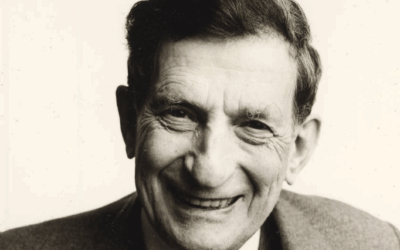
What makes a mental state conscious rather than unconscious? This question, which has puzzled philosophers and scientists for centuries, received a provocative answer from David Rosenthal, Professor of Philosophy at the City University of New York Graduate Center. His answer is deceptively simple: a mental state is conscious when you are aware of being in that state. Consciousness is not an intrinsic property of certain mental states but arises from a specific kind of relation, when a mental state becomes the object of a higher-order thought.
This Higher-Order Thought theory, which Rosenthal has developed and defended since the 1980s, has become one of the most influential and debated approaches to understanding consciousness in contemporary philosophy of mind. For anyone working with the mind and its complexities, whether therapists, neuroscientists, or philosophers, understanding Rosenthal’s framework illuminates fundamental questions about what it means to be consciously aware.
The Basic Idea
Consider a simple experience: seeing a red apple. According to common intuition, the redness you experience is just there, immediately present to you, an intrinsic feature of your visual state. But Rosenthal challenges this intuition. He argues that what makes your perception of the red apple conscious, as opposed to unconscious, is that you have a thought about that perception. You are aware that you are seeing red.
This higher-order thought need not itself be conscious. You do not need to consciously think about your perception for the perception to be conscious. The higher-order thought can be, and typically is, unconscious. What matters is simply that the thought exists and represents you as being in the first-order perceptual state.
The theory explains the difference between conscious and unconscious mental states in terms of whether they are accompanied by appropriate higher-order representations. Many of our mental processes occur without our being aware of them. Subliminal perceptions influence our behavior, unconscious desires shape our choices, and implicit memories guide our actions, all without entering conscious awareness. On Rosenthal’s view, these states are unconscious precisely because we have no higher-order thoughts about them.
Why Higher-Order Thoughts?
The appeal of Higher-Order Thought theory lies in its explanatory power. It provides a clear, non-circular account of what distinguishes conscious from unconscious mental states. Other theories often struggle with this distinction. If consciousness is an intrinsic property of certain brain states, why do some brain states have it while others do not? If consciousness is global broadcasting, as in Global Workspace Theory, then why does broadcasting make a state conscious? Rosenthal’s answer cuts through these difficulties: consciousness is awareness, and awareness requires representation.
The theory also explains why we can introspect our conscious states. When a mental state is conscious, we can report on it, think about it, and use it to guide our behavior in flexible ways. This is because we already have a thought about it. The higher-order thought is what makes these cognitive capacities possible.
Rosenthal has argued extensively that verbally expressed thoughts are always conscious. When you speak your thoughts aloud, you are necessarily aware of having them. This connection between language and consciousness is not coincidental on his view but follows directly from the structure of verbal expression. Speaking a thought requires having a higher-order awareness of that thought, since the speech act itself expresses that awareness.
Consciousness Without Introspection
One crucial distinction in Rosenthal’s framework is between conscious states and introspective awareness of those states. A mental state can be conscious, meaning accompanied by a higher-order thought, without being introspected. Introspection occurs when you have a conscious higher-order thought about the state, a thought you are aware of having. Most conscious states are not introspected. You experience the world moment to moment without constantly reflecting on your experiences.
This distinction matters for understanding therapeutic work. Much of therapy involves bringing states that were already conscious into introspective awareness, examining them, understanding their structure and origins. But therapy also involves making genuinely unconscious material conscious, which on Rosenthal’s view means facilitating the formation of higher-order thoughts about previously unrepresented mental states.
Mental Qualities and Consciousness
One of the most challenging aspects of consciousness to explain is qualitative character, the felt quality of experiences. What is it about seeing red that makes it feel a certain way? Many philosophers have argued that qualitative properties are intrinsically conscious, that there could not be unconscious qualitative states. Rosenthal vigorously disputes this claim.
He has developed what he calls the homomorphism theory of mental qualities. On this view, qualitative properties are relational properties defined by their role in perceptual discrimination. The qualitative character of seeing red is determined by how the visual system discriminates red from other colors, not by some intrinsic glow of redness in the brain.
This means qualitative states can exist without being conscious. Subliminal visual processing involves qualitative discrimination, the system is distinguishing colors, shapes, and orientations, but these discriminations do not enter awareness. The qualities are there in the processing, but without higher-order representation, there is nothing it is like to have them.
This view has important implications for understanding altered states of consciousness, dissociative experiences, and the relationship between perception and awareness. Qualitative processing can be disrupted at different levels, and consciousness of qualities can be disrupted independently of the qualities themselves.
Empirical Support
While Higher-Order Thought theory originated in philosophy, Rosenthal has increasingly engaged with empirical findings. In collaboration with neuroscientist Hakwan Lau, he has argued that the theory receives support from research on brain function.
The prefrontal cortex, which is involved in monitoring and metacognition, appears to play a crucial role in conscious awareness. Patients with prefrontal damage often have impairments in awareness of their own mental states. This is consistent with the idea that consciousness depends on higher-order representation, which may be implemented in prefrontal regions.
Research on blindsight, where patients with damage to primary visual cortex can respond to visual stimuli without conscious awareness, also supports the theory. These patients process visual information, as shown by their above-chance performance on discrimination tasks, but report no visual experience. On Rosenthal’s view, the sensory processing occurs without the higher-order thoughts that would make it conscious.
Rosenthal and Lau have also pointed to research showing that manipulating metacognitive processes can affect consciousness. When participants are led to have higher or lower confidence in their perceptions, their reports of conscious experience change accordingly. This suggests that something like higher-order representation is indeed involved in determining whether states are conscious.
Philosophical Debates
Higher-Order Thought theory has faced numerous objections, and Rosenthal has responded to them at length.
One common objection concerns misrepresentation. If consciousness depends on higher-order thoughts, what happens when a higher-order thought misrepresents its target? Suppose you have a higher-order thought that you are experiencing red when in fact your visual system is processing blue. Rosenthal argues that in such cases, you would consciously experience what the higher-order thought represents, namely red, even though the first-order state carries different information. This shows that consciousness tracks higher-order representation rather than first-order content.
Another objection concerns the relationship between consciousness and self-awareness. Critics argue that many conscious experiences in animals and infants occur without sophisticated higher-order capacities. Rosenthal responds that the higher-order thoughts required for consciousness need not be linguistically structured or reflectively sophisticated. They are simply mental representations that one is in a certain state, and such representations are likely present in many nonhuman animals.
Ned Block has argued that there is a form of consciousness, phenomenal consciousness, that is independent of the access consciousness that higher-order theories explain. Rosenthal rejects this distinction, arguing that the putative cases of phenomenal consciousness without access can be explained in other ways and that there is no good evidence for phenomenal consciousness beyond its cognitive effects.
Consciousness and Function
Rosenthal has also addressed the puzzling question of why consciousness exists at all. What function does it serve? Interestingly, he argues that consciousness per se may have little or no utility. The work done by conscious states could equally be done by unconscious states. What matters is the cognitive and behavioral capacities that often accompany consciousness, such as flexible response, introspection, and verbal report.
This deflationary view of consciousness’s function fits with his theory. If consciousness is simply the presence of higher-order representation, then there is no mysterious force that consciousness adds to cognition. The higher-order thoughts do their work, providing monitoring and metacognition, and consciousness is a byproduct of this monitoring.
For clinicians, this perspective is both humbling and liberating. Consciousness may not be the magical ingredient we sometimes assume it to be. Therapeutic change can occur through shifts in both conscious and unconscious processes, and the goal is not necessarily to make everything conscious but to facilitate adaptive functioning.
Clinical Implications
Higher-Order Thought theory offers a useful framework for thinking about clinical phenomena involving consciousness and its disruptions.
In dissociative disorders, patients may have mental states that are active and influencing behavior but of which they have no awareness. On Rosenthal’s view, this could reflect a failure of higher-order representation. The first-order states are present but not accompanied by the thoughts that would make them conscious. Treatment might then be understood as facilitating the formation of these higher-order thoughts, gradually bringing dissociated material into awareness.
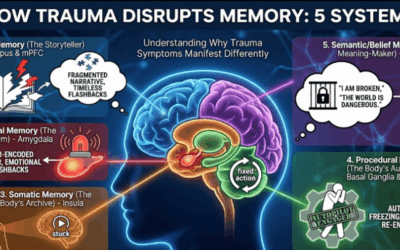
Trauma often involves states that are simultaneously too present and too absent. Traumatic memories may intrude into consciousness as fragments while remaining disconnected from the narrative context that would allow them to be fully processed. The higher-order representation of these states may be distorted, incomplete, or dissociated from other aspects of self-awareness.
Mindfulness practices, which train sustained attention to present experience, can be understood as exercises in higher-order representation. By deliberately maintaining awareness of sensations, emotions, and thoughts, practitioners strengthen the capacity for stable higher-order representation. This may explain some of mindfulness’s therapeutic benefits.
The Association for the Scientific Study of Consciousness
Rosenthal was a founding member and past president of the Association for the Scientific Study of Consciousness, an interdisciplinary organization that brings together philosophers, neuroscientists, psychologists, and others interested in consciousness research. This organization has played a crucial role in establishing consciousness as a legitimate topic of scientific inquiry, moving it from philosophical speculation to empirical investigation.
Through conferences, publications, and collaborative projects, the ASSC has fostered the kind of interdisciplinary dialogue that consciousness research requires. Rosenthal’s involvement reflects his commitment to engaging with empirical work rather than remaining purely in the philosophical realm.
Selected Publications
Rosenthal, D. M. (1986). Two concepts of consciousness. Philosophical Studies, 49(3), 329-359.
Rosenthal, D. M. (1997). A theory of consciousness. In N. Block, O. Flanagan, & G. Güzeldere (Eds.), The Nature of Consciousness (pp. 729-753). MIT Press.
Rosenthal, D. M. (2005). Consciousness and Mind. Oxford University Press. Available at: https://global.oup.com/academic/product/consciousness-and-mind-9780198236979
Rosenthal, D. M. (2012). Higher-order awareness, misrepresentation, and function. Philosophical Transactions of the Royal Society B, 367(1594), 1424-1438. Available at: https://pubmed.ncbi.nlm.nih.gov/22492755/
Lau, H., & Rosenthal, D. (2011). Empirical support for higher-order theories of conscious awareness. Trends in Cognitive Sciences, 15(8), 365-373. Available at: https://pubmed.ncbi.nlm.nih.gov/21737339/
Bibliography
Academic Profiles
David Rosenthal CUNY Graduate Center Page: https://www.gc.cuny.edu/people/david-rosenthal
David Rosenthal Personal Website: https://www.davidrosenthal.org
David Rosenthal Academia.edu Profile: https://gc-cuny.academia.edu/david
PhilPeople Profile: https://philpeople.org/profiles/david-rosenthal
Related Resources
Stanford Encyclopedia of Philosophy on Higher-Order Theories: https://plato.stanford.edu/entries/consciousness-higher/
Association for the Scientific Study of Consciousness: https://theassc.org/
Internet Encyclopedia of Philosophy on Consciousness: https://iep.utm.edu/consciousness/
Exploring how consciousness research informs trauma therapy? Contact GetTherapyBirmingham.com to learn about our integrative approaches to healing.








0 Comments