

The Question That Won’t Go Away
You are reading these words right now. Light is hitting your retina, signals are traveling through your optic nerve, neurons are firing in cascading patterns across your brain. But somewhere in that process, something else is happening. Something science still cannot fully explain.
You are not merely processing information. You are experiencing it. There is something it feels like to be you, reading this sentence, sitting where you are sitting, aware of the weight of your body and the rhythm of your breath. This inner theater of experience, this felt quality of being alive, is what philosophers call consciousness.
And here is the puzzle that has consumed neuroscientists for decades. We can map the brain down to individual neurons. We can watch blood flow through cortical regions in real time. We can measure electrical activity with millisecond precision. But we still cannot explain how three pounds of wet tissue generates the felt experience of being someone.
This is not merely a philosophical curiosity. Understanding consciousness has profound implications for medicine, for ethics, for how we treat patients in comas and vegetative states, for how we think about anesthesia and sleep and trauma. If we could crack this puzzle, we might finally understand what happens when awareness flickers out under the surgeon’s lights, or what remains when a stroke devastates half a brain, or why certain therapeutic approaches reach places that talk therapy cannot touch.
Over the past several decades, neuroscientists have proposed at least ten major theories attempting to explain how consciousness arises from the brain. These theories often seem to contradict each other. They locate consciousness in different brain regions, describe different mechanisms, and make different predictions about what kind of physical system can be aware.
But as we will see, many of these apparent contradictions dissolve when we recognize that these theories are often describing different aspects of the same phenomenon, like blind men touching different parts of an elephant. Some describe the content of consciousness. Others describe the access we have to that content. Still others describe the physical substrate that makes any of it possible in the first place.
What follows is a journey through these ten frameworks. My hope is not merely to inform you about cutting-edge neuroscience, but to help you see your own mind differently. Because ultimately, these are not just theories about consciousness in the abstract. They are theories about you.
The Broadcast and the Theater
Imagine walking into a large theater. The house is dark except for a single spotlight illuminating one actor on the stage. That actor is speaking, and their words are being broadcast to everyone in the audience. Meanwhile, hundreds of stagehands work behind the scenes in the darkness, building sets, preparing costumes, coordinating lighting cues. They do essential work, but they are invisible to the audience.
This is the central metaphor of Global Neuronal Workspace Theory, developed primarily by the neuroscientists Stanislas Dehaene and Bernard Baars. In their view, the brain is organized as a vast collection of specialized modules that operate in parallel and largely unconsciously. One module processes color. Another handles motion. Another parses language. Another manages motor planning. These modules work simultaneously, like the stagehands backstage, doing their jobs without your awareness.
Consciousness, in this framework, is what happens when information from one of these modules gets selected by the spotlight of attention and broadcast to the entire system. Suddenly that information is available to all the other modules. It can be held in working memory, reported verbally, used for planning, evaluated against past experiences. The information has become globally accessible.
The neural basis of this broadcast, according to the theory, is a network of long-distance neurons connecting the prefrontal cortex, the parietal cortex, and the cingulate regions. These neurons have unusually long axons that span distant brain areas, creating a kind of information superhighway. When a signal is strong enough and receives sufficient attention, it triggers what researchers call “ignition,” a self-amplifying cascade of activity across this workspace network.
The evidence for this theory comes from studies using visual masking, where a stimulus is flashed so briefly that subjects cannot consciously see it. Brain imaging reveals that early sensory processing, the first hundred milliseconds or so, happens whether the stimulus is seen or not. The visual cortex responds either way. But a later wave of activity, appearing around 300 to 500 milliseconds after the stimulus and involving the prefrontal regions, only appears when the subject reports conscious awareness. This late wave, known as the P300, appears to be the signature of the global broadcast.
Studies of anesthesia provide additional support. When people lose consciousness under drugs like propofol, local neural processing often continues. The auditory cortex still responds to sounds. But the long-range connections between frontal and posterior brain regions collapse. The network fragments. The broadcast system goes offline, and with it goes awareness.
However, a landmark study published in 2024 by the Cogitate Consortium, which was designed to pit this theory against its rivals, produced more complicated results. The prefrontal cortex did contain information about conscious content, but the activity was not sustained in the way the theory predicted. Instead of maintaining a constant “broadcast” throughout the experience, the prefrontal regions showed spikes at the beginning and end of the experience, but often returned to baseline while the experience continued. This suggests that the global broadcast may be essential for accessing conscious content, but perhaps not for generating the experience itself.
The Geometry of Experience
If the broadcast theory asks what consciousness does, a very different approach asks what consciousness is in purely physical terms. This is the project of Integrated Information Theory, developed by the neuroscientist Giulio Tononi.
Tononi begins not with the brain but with experience itself. He notes that consciousness has certain undeniable properties. It exists for the experiencer, not for an outside observer. It is structured, meaning your visual field has a left and right side, colors and shapes, foreground and background. It is specific, meaning being in one conscious state rules out being in billions of other possible states. It is unified, meaning you cannot experience the left half of your visual field independently of the right half. And it is definite in its boundaries.
From these phenomenological starting points, Tononi reasons backward to ask what kind of physical system could possess such properties. His answer is that the system must generate what he calls integrated information, symbolized by the Greek letter Phi. Phi is a mathematical measure of a system’s irreducibility, the degree to which the whole generates causal effects beyond the sum of its parts.
A system with high Phi is one where the components are both differentiated, meaning they can be in many different states, and integrated, meaning those states are richly interconnected. A system with low Phi might be either undifferentiated, like a uniform block of matter, or unintegrated, like a collection of independent parallel processors.
This framework leads to surprising predictions. The posterior regions of the brain, including the visual, parietal, and temporal cortices, have a grid-like lattice architecture that seems ideally suited for maximizing Phi. These regions are highly interconnected, with each area communicating bidirectionally with many others. In contrast, the cerebellum, which contains roughly 80 percent of the brain’s neurons, has a very different architecture. It is composed of parallel feed-forward modules that process information independently. According to the theory, the cerebellum should have very low Phi despite its enormous neuronal count. It should not be conscious.
This prediction aligns with clinical observations. Damage to the posterior cortex reliably destroys aspects of conscious experience, eliminating the ability to see colors or recognize faces or perceive motion. But extensive damage to the cerebellum, while devastating for motor coordination, does not seem to diminish consciousness itself.
The most compelling empirical validation of this theory is a technique called the Perturbational Complexity Index, or what some researchers casually call “zap and zip.” The procedure involves using magnetic stimulation to perturb the brain and then measuring how the resulting electrical activity spreads across the cortex. In conscious states, whether wakefulness or dreaming, the perturbation triggers a complex, spatially spreading, and temporally sustained pattern. In unconscious states, whether deep sleep or anesthesia or coma, the perturbation triggers either a localized response that quickly dies out or a global but stereotyped wave that lacks complexity.
This index has proven remarkably reliable at distinguishing conscious from unconscious states, even in patients who cannot report their experiences. It has correctly identified awareness in patients diagnosed as vegetative, revealing that some of them retained consciousness despite being unable to communicate.
In the 2024 adversarial collaboration, this theory received partial support. The study confirmed that the neural correlates of conscious content were primarily located in the posterior cortex, exactly as Tononi predicted. However, the predicted long-range synchronization between posterior regions, which the theory takes to reflect the integration of information, was not reliably observed. This suggests that while the posterior cortex is indeed central to conscious experience, the mechanism of integration may operate at a finer scale than current imaging technology can detect.
The Quantum Basement
Now we descend to perhaps the most controversial territory in consciousness science. What if the physical basis of awareness is not the firing of neurons at all, but something happening at a far smaller scale, inside the very structure of the cell itself?
This is the proposal of Orchestrated Objective Reduction, developed by the mathematical physicist Roger Penrose and the anesthesiologist Stuart Hameroff. Their theory locates consciousness in quantum processes occurring within microtubules, the hollow lattice-like protein structures that form the internal skeleton of every cell.
Penrose’s contribution to this theory begins with mathematics. He observed that human understanding seems to involve something that cannot be captured by any algorithmic process. Specifically, he pointed to Gödel’s incompleteness theorems, which demonstrate that any consistent formal system can generate truths it cannot prove. Penrose argued that human mathematicians can “see” these truths through insight, something no classical computer running on deterministic algorithms could replicate. He concluded that consciousness must involve a new kind of physical process, one governed by quantum mechanics but operating according to principles not yet fully understood.
The specific mechanism Penrose proposed is called objective reduction. In standard quantum mechanics, a particle can exist in a superposition of states until it is measured, at which point the wave function “collapses” into a definite outcome. Penrose proposed that this collapse is not random but is instead governed by gravity. When the mass displacement involved in a quantum superposition reaches a certain threshold, the superposition becomes unstable and collapses into a definite state. He further proposed that each such collapse is associated with a moment of proto-consciousness, a fundamental building block of awareness.
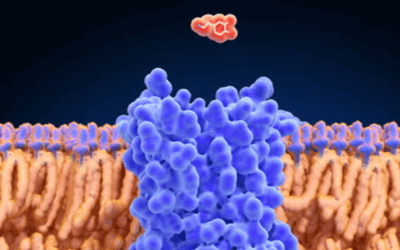
Hameroff provided the biology. He identified microtubules as the ideal substrate for such quantum processes. These structures are made of tubulin proteins arranged in a geometric lattice. The hydrophobic pockets within these proteins, Hameroff argued, could shield quantum states from the thermal noise of the cellular environment, allowing coherent quantum effects to persist long enough to influence neural computation. The microtubules could function as quantum computers, processing information through superposition until the threshold for objective reduction is reached, at which point a conscious moment arises.
For decades, critics dismissed this theory on thermodynamic grounds. The brain is warm, wet, and noisy, conditions that should destroy quantum coherence in femtoseconds. But evidence from quantum biology has weakened this objection. Quantum coherence has been observed in photosynthesis and in the magnetic navigation of birds, both warm biological systems. The theory remains speculative, but it is no longer obviously impossible.
A pivotal study published in 2024 by researchers at Wellesley College provided striking support for the microtubule hypothesis. The researchers gave rats a drug called epothilone B, which binds specifically to microtubules and stabilizes their structure. Crucially, this drug does not affect the membrane ion channels that are the traditional targets of anesthetics. They then exposed the rats to isoflurane, a common anesthetic.
The finding was remarkable. Rats treated with epothilone B took significantly longer to lose consciousness. The drug that stabilized microtubules delayed the onset of anesthesia. This is one of the first demonstrations of a direct causal link between microtubule integrity and the threshold for unconsciousness, suggesting that these cellular structures may indeed play a role in generating awareness.
This theory remains contested. An experiment at the Gran Sasso underground laboratory in 2022 tested one aspect of Penrose’s physics, the prediction that spontaneous quantum collapse should emit a tiny amount of radiation. The detectors found no such radiation within the predicted parameters. However, proponents argue that the biological orchestration of the collapse, as opposed to spontaneous collapse, might operate in a different parameter space. The theory endures, bolstered by the biological evidence from Wellesley even as the physics remains under scrutiny.
The Prediction Machine
We have examined theories that focus on what consciousness does, what consciousness is, and what consciousness is made of at the quantum level. Now we turn to a framework that asks a different question entirely. What is consciousness for?
The Free Energy Principle, formulated by the neuroscientist Karl Friston, begins not with consciousness but with existence itself. To be alive is to resist entropy. Every living organism must maintain its structure against the relentless tendency of the universe toward disorder. A dead organism diffuses into its environment. A living one maintains boundaries.
Friston proposes that the brain’s fundamental purpose is to enable this resistance. It does so by becoming a prediction machine, constantly generating models of what will happen next and acting to minimize the difference between those predictions and sensory reality. This difference is what Friston calls free energy or surprise. An organism that consistently fails to predict its sensory input is an organism encountering unexpected threats, unmet needs, and boundary violations. It is an organism on the path to dissolution.
In this framework, the brain is a hierarchical inference engine. At each level, it generates predictions about the level below. The lowest levels predict raw sensory data. Higher levels predict more abstract patterns. When the predictions match the input, all is well. When they don’t match, the system generates a prediction error that ripples upward, forcing the model to update.
But here is the crucial insight. The organism has two ways to minimize surprise. It can update its internal model to match the world, which is perception. Or it can act on the world to make the world match its model, which is action. When you feel cold and put on a coat, you are not updating your belief that you are warm. You are changing the world to make your prediction of warmth come true.
Consciousness, in this view, is associated with the process of precision weighting. The brain must constantly estimate how reliable its prediction errors are. A prediction error in low light might be noise and should be ignored. A prediction error under clear conditions might signal a real threat and should be attended to. Attention is the process of increasing the gain on certain prediction errors. And Friston suggests that the subjective feeling of awareness is the experience of this precision optimization, the system assessing the uncertainty of its own inferences.
A profound validation of this principle came from a 2020 study by researchers at RIKEN. They cultured cortical neurons in a dish and stimulated them with patterned electrical signals. They found that the neural networks spontaneously self-organized in ways that minimized variational free energy. The neurons “learned” to predict the hidden sources of the patterns without a body, without a brain, without any evolutionary pressure. They did it simply because minimizing free energy is what neural tissue does. This suggests that the prediction principle is not a high-level cognitive strategy but a fundamental thermodynamic property of neuronal matter.
The Feedback Loop
Another theory draws attention to a specific mechanism within the visual system that may be essential for generating conscious experience. This is Recurrent Processing Theory, developed by the neuroscientist Victor Lamme.
When light hits your retina, a rapid wave of neural activity sweeps forward through the visual system, from the primary visual cortex through higher and higher areas. This feedforward sweep happens quickly, within the first hundred milliseconds or so. It allows for feature extraction and even complex categorization. Your brain can determine that there is an animal in the scene before you consciously see anything.
But Lamme argues that this feedforward sweep, for all its computational power, is unconscious. Consciousness only arises when feedback signals travel from higher areas back to lower areas, creating recurrent loops of activity. These loops allow the visual system to integrate information across areas, binding color with motion with shape into a unified percept.
The evidence for this theory comes from studies using magnetic stimulation to disrupt specific phases of visual processing. When researchers apply stimulation very early, disrupting the feedforward sweep, subjects see nothing. But critically, when stimulation is applied later, after the feedforward signal has already passed to higher areas, subjects also report seeing nothing. The feedforward information reached its destination, but consciousness did not arise because the feedback signal was blocked. This proves that the initial forward wave is not sufficient for awareness. The recurrent loop is essential.
This theory has important implications for the distinction between phenomenal consciousness, the raw feeling of experience, and access consciousness, the ability to report and use that experience. Lamme argues that recurrent processing in the visual cortex can generate phenomenal consciousness even without connecting to the frontal lobes. You might be conscious of something without being able to report it. This would explain the strange phenomenon of rich visual experience in the background of a scene that you could not describe if asked.
Electrophysiological studies support this distinction. An early brain wave component called Visual Awareness Negativity, appearing around 200 milliseconds after a stimulus, correlates with subjective visibility. A later component, the P300 emphasized by the global workspace theory, correlates with the decision to report. These may be separate processes, with phenomenal experience arising first in the recurrent loops and access following later through the global broadcast.
The Metacognitive Mirror
Higher-Order Thought theories, advanced by philosophers like David Rosenthal and neuroscientists like Hakwan Lau, propose something that sounds almost paradoxical. They argue that a mental state is not conscious in itself. It only becomes conscious when it is the target of another mental state, a higher-order representation that is about the first-order state.
Consider the visual representation of a red apple in your primary visual cortex. According to this theory, that representation alone is not conscious. It becomes conscious only when another part of your brain, specifically regions in the prefrontal cortex, represents the fact that you are having that visual experience. The higher-order thought “I am seeing red” transforms the lower-order activity into conscious experience.
This might sound like an infinite regress, requiring thoughts about thoughts about thoughts forever. But proponents argue that the regress stops at the second order. The higher-order thought does not itself need to be the target of yet another thought. It operates more like a spotlight, illuminating certain first-order states while leaving others in darkness.
The central battleground for this theory is the prefrontal lesion data. If higher-order thoughts are essential for consciousness, and if these thoughts are generated in the prefrontal cortex, then damage to the prefrontal cortex should abolish conscious experience. But patients with extensive prefrontal damage often seem to retain perceptual consciousness. They can see and hear. They just have trouble with planning, impulse control, and other executive functions.
Defenders of the theory argue that these lesions typically spare the specific subregions involved in metacognition. They also point to phenomena like Type 2 Blindsight, where patients with damage to the visual cortex report having a “feeling” that something is present in their blind field even though they cannot describe what it is. This suggests that higher-order machinery can generate a ghostly form of consciousness even when the first-order input is degraded, supporting the causal importance of the metacognitive level.
The Controlled Hallucination
Building on the Free Energy Principle, the neuroscientist Anil Seth has developed what he calls the Beast Machine theory of consciousness. This framework offers a distinctive account of what it feels like to be a body.
Seth argues that perception is not a readout of the world but a controlled hallucination. Your brain is constantly generating predictions about the causes of sensory signals. What you consciously perceive is not the sensory data itself but the prediction that best explains the data. You see the world not as it is but as your brain expects it to be, refined by the ongoing comparison with sensory input.
But Seth adds a crucial evolutionary layer. The most fundamental predictions the brain makes are not about the external world at all. They are about the internal body. The brain is constantly predicting the parameters of biological regulation, including heart rate, blood glucose, temperature, respiration, and all the processes that keep the organism alive. This internal prediction, this model of bodily states, is the foundation of selfhood.
We feel real and embodied, Seth argues, because the brain is continuously modeling its own survival. The felt sense of being a self is not a metaphysical given but a predictive construct, a useful representation that allows the organism to regulate itself effectively. Consciousness of the external world is built on top of this more basic consciousness of the internal world.
Evidence for this comes from research on interoception, the perception of internal bodily signals. Studies show that individual differences in interoceptive accuracy, measured by tasks like counting heartbeats without touching the chest, correlate with the intensity of emotional experience and the stability of the sense of self. People who are more attuned to their bodily signals have more vivid emotional lives and a more stable sense of who they are.
The Rubber Hand Illusion provides another demonstration. When a rubber hand is stroked synchronously with your real hidden hand, your brain can update its self-model to “own” the rubber hand. You feel touch on the rubber. Your sense of embodiment shifts. This happens because the brain is minimizing prediction error, resolving the conflict between vision and touch by accepting the premise that the rubber hand is part of the body. The self is not fixed but continuously constructed.
The Attention Schema
Attention Schema Theory, proposed by the neuroscientist Michael Graziano, offers a specific mechanism for why we believe we have consciousness at all. In Graziano’s view, consciousness is a data structure that the brain uses to control attention.
The brain is an information-processing system that constantly selects certain signals for deeper processing while ignoring others. This selection process, attention, is computationally complex. To manage it effectively, the brain needs a simplified internal model of what attention is and what it is doing. This is analogous to how the brain maintains a body schema, a simplified model of the body’s position and movement, to control the limbs.
The attention schema is a model of attention itself. But here is the key insight. The schema describes the process of attention without describing the physical neurons doing the work. It depicts attention as an ethereal, immaterial quality that “seizes” or “holds” objects. When the brain accesses this schema and uses it to control behavior, it reports having a subjective, non-physical experience of that object.
In other words, consciousness is the brain’s simplified description of its own attention processes, a description that necessarily leaves out the mechanical details and therefore seems magical and immaterial. We believe we have consciousness because we are accessing a model that describes our attention in non-physical terms.
Evidence for this theory comes from studies showing that awareness and attention are dissociable but functionally linked. When subjects are unaware of a visual cue, masked so it cannot be consciously seen, they can still have their attention drawn to it. But this unaware attention is unstable and decays rapidly compared to aware attention. Without the internal model to sustain and direct the attentional pointer, the system loses control.
Brain imaging supports the involvement of the temporoparietal junction in this process. This region is active both when we think about the minds of others and when we report our own awareness. Damage to this area leads to hemispatial neglect, where patients lose not just vision on one side but awareness of that side. They do not realize they are missing half the world. The attention schema for that region of space has been destroyed.
The Electromagnetic Field
How do millions of discrete neurons, spatially separated and firing in their own rhythms, combine to form a single unified experience? This is the binding problem, and it has plagued consciousness science for decades. The Conscious Electromagnetic Information field theory, proposed by Johnjoe McFadden and Susan Pockett, offers a radical solution.
The theory proposes that the physical substrate of consciousness is not the neurons themselves but the electromagnetic field generated by their combined activity. While neurons are discrete, the field is continuous. It integrates information at the speed of light, effectively pooling data from across the brain into a single physical entity. The binding happens not through neural connections but through the field itself.
Crucially, this theory proposes a causal loop called ephaptic coupling. The electromagnetic field generated by neural activity is not merely a byproduct. It feeds back onto the neurons, influencing their firing thresholds. McFadden argues that this field-to-neuron influence is the physical mechanism of will. A voluntary action is one driven by the global field influencing motor regions, whereas a reflex is driven by synaptic transmission alone.
For decades, ephaptic coupling was considered negligible. But recent research has overturned this assumption. Studies have demonstrated that weak electric fields, tuned to mimic natural brain oscillations, can entrain the firing of neurons in cortical tissue. The feedback loop is real. The field can influence the neurons that generate it.
This theory also explains why synchronized neural firing, particularly gamma oscillations around 40 Hz, correlates with conscious experience. When neurons fire in synchrony, their electromagnetic fields add together constructively, creating a stronger global field. When they fire asynchronously, the fields cancel out. Consciousness may require the amplification that synchrony provides.
The Selective Jungle
Gerald Edelman, a Nobel laureate for his work on the immune system, proposed that the brain operates according to the same principles as natural selection. His Theory of Neuronal Group Selection, also called Neural Darwinism, views the brain as a somatic selection system.
During development and throughout life, the brain generates massive variability in neural circuits. Through a process of synaptic selection, circuits that successfully integrate sensory input with value systems, the limbic signals of reward and punishment, are strengthened. Others are weakened. The brain is not a machine that is programmed but an ecosystem that evolves.
Consciousness, in Edelman’s view, arises from a Dynamic Core, a functional cluster of thalamocortical loops that are highly interconnected through what he called reentry. Reentry is not simple feedback but a massive parallel recursive exchange of signals between cortical maps. The color map communicates with the motion map, which communicates with the shape map, all simultaneously and bidirectionally. This reentrant activity binds features into coherent perception without requiring a central homunculus to watch the show.
Edelman’s framework predicts that consciousness requires both high differentiation, meaning diversity of possible states, and high integration, meaning reentrant connectivity. This anticipates the mathematical formalization later developed by Tononi, who was Edelman’s student, in Integrated Information Theory. The two theories share intellectual DNA.
Evidence for Neural Darwinism comes from studies showing that disrupting reentrant pathways destroys perceptual grouping even when feedforward pathways remain intact. The theory also explains the brain’s remarkable degeneracy, the ability of structurally different circuits to perform the same function, which is a hallmark of selectionist systems.
The Storyteller Revisited
We have now surveyed theories that emphasize global broadcasting, integrated information, quantum processes, predictive inference, recurrent loops, higher-order thoughts, controlled hallucination, attention schemas, electromagnetic fields, and neural Darwinism. The final theory returns us to territory we have explored before, but with a specific focus on what the conscious self actually is.
The work on split-brain patients, pioneered by Roger Sperry and Michael Gazzaniga, revealed that when the connection between the brain’s hemispheres is severed, each hemisphere can operate independently. Commands sent to the right hemisphere, which controls the left hand and cannot speak, produce actions that the verbal left hemisphere cannot explain. Asked why they stood up, the patient’s left hemisphere, the Interpreter, instantly confabulates a plausible reason. “I wanted to get a Coke.”
This suggests that the conscious self, the narrating “I,” is not the author of behavior but its press secretary. It receives reports of actions that have already been initiated by systems it cannot access, and it spins those reports into a coherent story of intentional action. The self is a useful fiction, a narrative construct that creates the illusion of unified agency.
However, a 2017 study by Pinto and colleagues challenged the most extreme version of this view. Using modern methods to test split-brain patients, they found that while perception was indeed divided, with the left hand unable to identify what the right visual field saw, the patients reported a unified field of consciousness. They did not feel like two people sharing a skull. They had a single integrated sense of self and body control.
This finding suggests that while information content can be split between the hemispheres, something about the agent of consciousness remains undivided. Perhaps subcortical structures maintain experiential unity. Perhaps the electromagnetic field binds what the corpus callosum cannot. The “two minds” hypothesis requires revision, even as the Interpreter remains central to our understanding of the narrative self.
Synthesis: The Elephant in the Dark
If you have followed this journey, you may feel a mix of fascination and frustration. Ten theories, each with evidence in its favor, each describing consciousness differently. How can they all be right?
The answer may be that they are describing different aspects of a complex phenomenon. Consciousness is not one thing but many, and these theories may be mapping different territories.
The posterior cortex, with its grid-like architecture, appears to generate the content of experience. This supports Integrated Information Theory and Recurrent Processing Theory. The prefrontal regions appear to enable access to that content, allowing it to be reported, held in working memory, and used for planning. This supports Global Workspace Theory and Higher-Order Thought theories. The microtubules may provide a quantum substrate that enables these processes, operating at a scale beneath conventional neuroscience. The electromagnetic field may provide the binding that unifies discrete neural activity into seamless experience. The Free Energy Principle may describe the underlying computational logic that all these structures implement. And the Interpreter may be the narrator who takes credit for the whole show.
The 2024 Cogitate study showed that the debate between prefrontal and posterior theories is nuanced. Both regions contain information about conscious content, but they play different roles. The anterior regions may be essential for the access and reporting of consciousness, the ability to talk about and use the experience. The posterior regions may be where the phenomenal experience itself arises.
Meanwhile, the 2024 Wellesley study on microtubules suggests that the physical substrate of consciousness may extend deeper than the neuron, into the molecular architecture of the cell. This does not contradict the higher-level theories but suggests they are describing different levels of a multi-scale system.
What does this mean for therapy and mental health? It means that consciousness is not a single target but a layered phenomenon. Some therapeutic approaches, like cognitive behavioral therapy, work at the level of the Interpreter, changing the stories we tell about ourselves. Other approaches, like somatic experiencing, work at the level of the body and the predictive systems that maintain physiological regulation. Still others, like EMDR and brainspotting, may work by modulating the recurrent loops and thalamocortical dynamics that underlie perceptual processing of traumatic memory.
Understanding that consciousness arises from multiple mechanisms at multiple scales helps explain why no single therapeutic modality works for everyone. Different approaches may be accessing different layers of the architecture. The art of clinical work lies in finding which layer needs attention for this person, at this moment, with this particular history and presentation.
We are only at the beginning of understanding how awareness arises from matter. But the ten theories surveyed here represent genuine progress. They offer testable predictions, empirical validation, and increasingly precise maps of the territory. The elephant is coming into focus.
And that matters, because you are the elephant. Every moment of your lived experience, every feeling and thought and perception, arises from the architecture these theories describe. Understanding that architecture is not merely an intellectual exercise. It is the first step toward understanding yourself.
Want to explore how these theories of consciousness connect to healing and integration? Contact GetTherapyBirmingham.com to learn more about brain-based approaches to trauma and transformation.














0 Comments