Executive Summary: The Hidden Script of Your Life
The Rise and Fall: Transactional Analysis (TA) exploded in the 1960s with Eric Berne’s Games People Play, offering a user-friendly alternative to psychoanalysis. While it faded from academia due to its pop-culture saturation, its core concepts remain foundational to modern therapy.
Key Concepts:
- The Ego States (PAC): We shift between three modes of being: The Parent (judging/nurturing), The Adult (calculating/rational), and The Child (feeling/reactive).
- The Drama Triangle: Developed by Berne’s student Stephen Karpman, this maps conflict into three roles: Victim, Persecutor, and Rescuer.
- Scripts: Unconscious life plans formed in childhood that dictate our adult destiny unless interrupted by therapy.
Modern Relevance: TA is the ancestor of Internal Family Systems (IFS) and Attachment Theory, helping patients understand why they keep having the same argument with different people.
What Happened to Transactional Analysis? The Forgotten Model That Explains Your Relationships

There are few models of psychotherapy that have flared in popularity and waned as violently as Transactional Analysis (TA). In 1964, psychiatrist Eric Berne published Games People Play, a slim book that was intended for a professional audience but accidentally became a cultural phenomenon, selling over 5 million copies.
TA was revolutionary because it democratized therapy. Before Berne, psychoanalysis was an elite, jargon-heavy practice shrouded in mystery. Berne took complex Freudian concepts (Id, Ego, Superego) and translated them into plain English (Child, Adult, Parent). He argued that we are not just one person, but a committee of three, constantly negotiating with the committees inside everyone else.
Despite its decline in academic prestige—largely due to its absorption into “pop psychology” and unfortunate associations with the pseudo-scientific “rebirthing” movement of the 1970s—TA remains one of the most practical tools for understanding conflict. Today, its DNA survives in Internal Family Systems (IFS) and Narrative Therapy. This article digs into the archaeology of TA to recover the tools that can still save your relationships.
Part I: The Architecture of the Soul (The PAC Model)
Berne’s central insight was that the human personality is not a solid block. Under stress, we “switch” into different states of being, each with its own thoughts, feelings, and behaviors. He called these Ego States.
1. The Parent (The Internalized Authority)
This state acts like a tape recorder playing back the rules, warnings, and judgments of your early caregivers.
* The Controlling Parent: “You shouldn’t do that.” “That’s stupid.” This is the voice of the Inner Critic.
* The Nurturing Parent: “Let me help you.” “Poor thing.” This can be soothing, but it can also be smothering or enabling.
When you are in your Parent state, you are not reacting to reality; you are reacting to a rulebook written 20 years ago.
2. The Child (The Internalized Reaction)
This is the part of you that feels. It preserves the emotions and coping strategies you developed when you were small.
* The Adapted Child: The part that obeys to stay safe. It is anxious, people-pleasing, and prone to guilt.
* The Free/Natural Child: The source of creativity, intuition, and spontaneity. It is also impulsive and demanding.
In modern therapy, we often call this “Inner Child Work.” When you feel suddenly overwhelmed by a minor rejection, you have likely regressed into the Child state.
3. The Adult (The Computer)
The Adult is the only state that is present-focused. It does not judge (Parent) and it does not react (Child). It gathers data and solves problems. The goal of TA is to strengthen the Adult so it can mediate between the strict Parent and the needy Child.
* The Adult says: “I see you are angry. Let’s figure out a solution.”
* The Child says: “You hate me!”
* The Parent says: “You should be ashamed of yourself for yelling.”
Part II: The Transactions (Why We Fight)
A “Transaction” is the fundamental unit of social intercourse. Problems arise when the wires get crossed.
Complementary vs. Crossed Transactions
A Healthy Transaction (Adult-to-Adult):
Husband: “Do you know where my keys are?”
Wife: “They are on the table.”
Here, information is exchanged without emotional baggage.
A Crossed Transaction (The Fight):
Husband (Adult): “Do you know where my keys are?”
Wife (Parent-to-Child): “Why can’t you ever keep track of your things? I’m not your maid!”
The wife has shifted into the Critical Parent, forcing the husband into the Defensive Child. The conversation is no longer about keys; it is about worthiness and shame.
Read More: This dynamic is often at the core of marital misunderstanding, where partners unknowingly trigger each other’s childhood scripts.
Part III: The Games We Play
Berne defined a “Game” as a repeating pattern of behavior with a hidden motive. On the surface, it looks like a normal interaction, but underneath, it is a setup to confirm a negative belief about the self or the world (a “Payoff”).
Common Games:
- “Why Don’t You — Yes, But”:
One person presents a problem (“I’m lonely”). The group offers solutions (“Join a club”). The person rejects every solution (“Yes, but I’m too tired”).
The Payoff: The person gets to prove that their problem is unsolvable and that no one can help them (validating the Child’s hopelessness).
- “If It Weren’t For You”:
A person marries a controlling partner to avoid taking risks. They say, “I would have been a great artist if it weren’t for my controlling husband.”
The Payoff: They get to avoid the fear of failure while blaming their partner for their stagnation.
- “Kick Me”:
A person behaves proactively to invite rejection, confirming their life script: “I am unlovable.”
Part IV: The Karpman Drama Triangle
Perhaps the most enduring contribution of TA came from Berne’s student, Stephen Karpman. He mapped the three roles we play in dysfunctional conflict.
- The Persecutor: The “Bad Guy.” Controlling, critical, and angry. (Shadow Parent).
- The Victim: The “Poor Me.” Helpless, overwhelmed, and oppressed. (Shadow Child).
- The Rescuer: The “Hero.” Enters to save the Victim from the Persecutor, but actually disempowers the Victim to feel superior. (Shadow Parent).
The “Drama” happens when the roles switch. The Rescuer gets tired of helping and becomes the Persecutor (“I do everything for you!”). The Victim gets angry and becomes the Persecutor (“You never help me right!”).
Deep Dive: Understanding this triangle is essential for breaking cycles of codependency. Read our full guide on The Karpman Drama Triangle.
Part V: Life Scripts and “I’m OK, You’re OK”
TA posits that by age seven, you have already written the script for your entire life. You decided whether the world was safe or dangerous, whether you were good or bad. Berne called these “Existential Positions.”
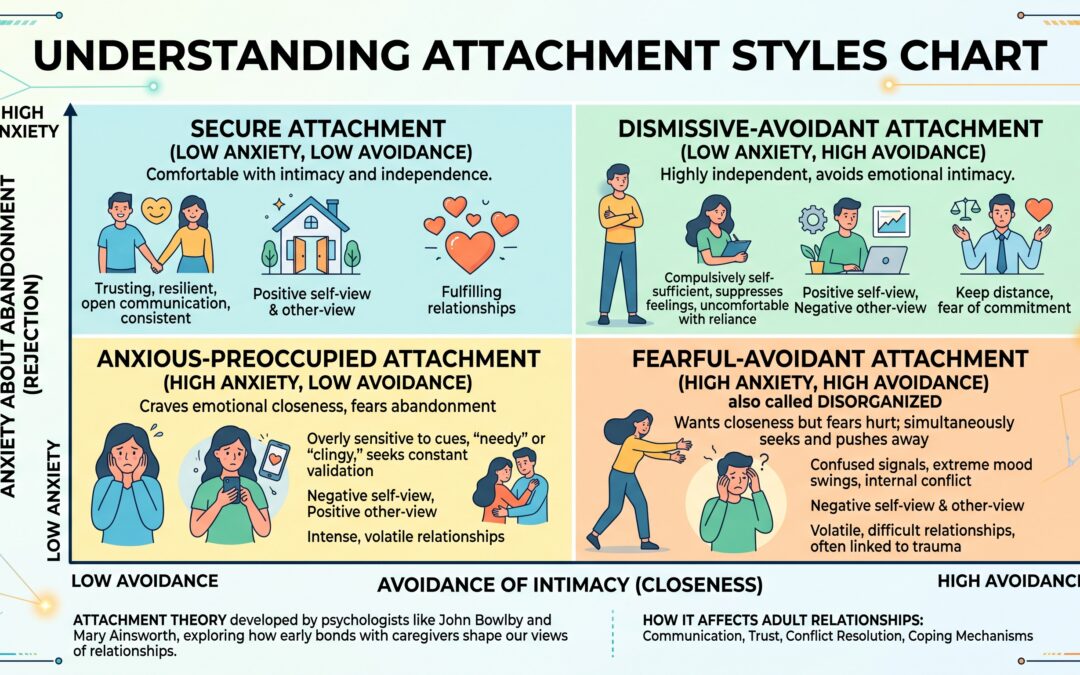
- I’m OK, You’re OK: The healthy position. (Secure Attachment).
- I’m Not OK, You’re OK: The position of the depressive or anxious person. “I am defective, and you are superior.” (Anxious Attachment).
- I’m OK, You’re Not OK: The position of the narcissist or sociopath. “I am perfect, and you are the problem.” (Avoidant Attachment).
- I’m Not OK, You’re Not OK: The position of despair. “Life is pointless.”
These positions map almost perfectly onto modern Attachment Theory.
Read More: How to Know Your Attachment Style.
Part VI: The Legacy of TA in Modern Therapy
Why did TA disappear? It was partly a victim of its own success. It became so popular it was viewed as a fad. However, its core mechanics were simply absorbed into other modalities.
Today, Internal Family Systems (IFS) uses “Parts” to describe what Berne called Ego States. When an IFS therapist talks about a “Manager” part, they are describing the Parent. When they talk about an “Exile,” they are describing the wounded Child.
Read More: Parts Based Therapy and IFS.
Transactional Analysis teaches us that we are not victims of our past; we are just following a script we wrote when we were too young to know better. The goal of therapy is to rewrite the last act.
Bibliography
- Berne, E. (1964). Games People Play: The Psychology of Human Relationships. Grove Press.
- Harris, T. A. (1969). I’m OK, You’re OK. Avon.
- Steiner, C. (1974). Scripts People Live: Transactional Analysis of Life Scripts. Grove Press.
- Karpman, S. B. (1968). “Fairy Tales and Script Drama Analysis.” Transactional Analysis Bulletin.
- Stewart, I., & Joines, V. (1987). TA Today: A New Introduction to Transactional Analysis. Lifespace Publishing.


0 Comments