
The Irish Mystic Who Synthesized East and West
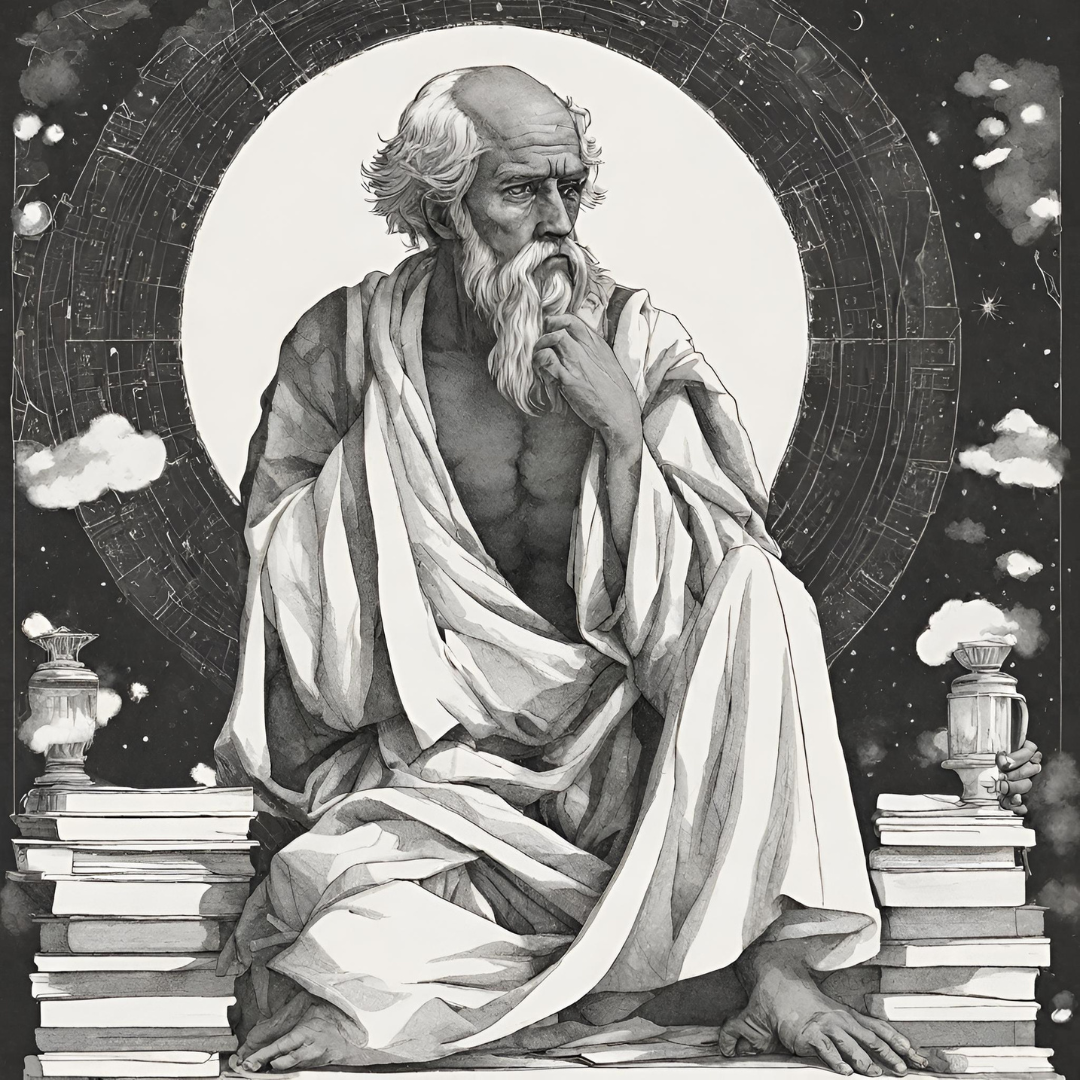
In the dark intellectual winter of the 9th century, a singular voice emerged from Ireland to illuminate the Carolingian court of Charles the Bald. John Scottus Eriugena (c. 815–877) was not merely a theologian; he was a bridge between the mystical theology of the Greek East and the rational Latin West. At a time when few scholars could read Greek, Eriugena translated the works of Pseudo-Dionysius the Areopagite, injecting the potent serum of Neoplatonism into the bloodstream of Western thought.
Eriugena’s masterpiece, the Periphyseon (On the Division of Nature), presents a cosmos that is not a static hierarchy but a dynamic cycle of procession and return. For the depth psychologist, his work offers a startlingly modern map of the psyche. He anticipates the Jungian concept of the Self not as a fixed entity, but as a process of unfolding. His vision of God as “Nothingness” (because He transcends being) parallels the psychoanalytic understanding of the Unconscious as the fertile void from which all consciousness emerges.
Scholar of the Palatine Academy
Born in Ireland around 800 AD, Eriugena (meaning “born in Ireland”) arrived in France around 845. His mastery of Greek allowed him to access the apophatic (negative) theology of the Byzantine world, which emphasized that the Divine is beyond all categories. This stood in stark contrast to the affirmative, legalistic theology developing in Rome.
He served at the Palatine Academy, where he taught the liberal arts and formulated a philosophy that was centuries ahead of its time. His system was so radical—verging on pantheism—that his works were condemned by the Council of Sens in 1225 and placed on the Index of Prohibited Books. Yet, like Amalric of Bena and other visionaries, his underground influence persisted, feeding the roots of Meister Eckhart and the Rhineland mystics.
Key Milestones in Eriugena’s Life
| Year | Event / Publication |
| c. 815 | Born in Ireland, likely receiving a monastic education. |
| c. 845 | Arrives at the court of Charles the Bald in France; appointed head of the Palace School. |
| c. 860 | Completes the translation of the Corpus Areopagiticum (works of Pseudo-Dionysius) from Greek to Latin. |
| c. 867 | Publishes Periphyseon (De Divisione Naturae), his magnum opus on the fourfold nature of reality. |
| c. 877 | Dies, possibly in England. Legend suggests he was stabbed to death by his students with their pens (styli). |
The Fourfold Division of Nature
Eriugena’s cosmology is structured around a dialectical process that prefigures Hegel. In the Periphyseon, he divides all of reality into four stages, which can be read psychologically as the lifecycle of the Self:
Nature Which Creates and Is Not Created
This is God as the unmanifest Source, the “Divine Dark.” Psychologically, this is the Unconscious before the emergence of the ego—the primal, undifferentiated potential.
Nature Which Is Created and Creates
These are the “Primordial Causes” or Platonic Ideas. In Jungian terms, these are the Archetypes. They are the structures within the psyche that pattern our experience, created by the evolutionary history of the species but serving as the creators of our individual reality.
Nature Which Is Created and Does Not Create
This is the physical world of space and time. It is the realm of the Ego and material reality. Here, the infinite potential of the archetypes is limited into specific forms. This is not a “fall” into sin, but a necessary manifestation.
Nature Which Neither Creates Nor Is Created
This is God as the End of all things—the return of the many into the One. This is the goal of Individuation (or Theosis), where the conscious personality reintegrates with the Self, carrying the harvest of its experience back to the source.
Theosis and the Transformation of Trauma
For Eriugena, the ultimate goal of human existence is Theosis, or deification. This is not becoming a god in a pagan sense, but realizing that the core of the human soul is, and always has been, divine. This perspective offers a radical framework for treating trauma.
The Descent is Not a Fall
Traditional theology often views the existence of suffering and the body as a punishment for sin. Eriugena, however, argues that the descent of the soul into matter is a “compassionate coming-down.” Trauma, in this light, is a dissociative descent into the density of experience. It is a necessary confrontation with the finite.
The Return Through Integration
Healing is the process of Reditus (Return). Just as the universe must return to God, the fragmented parts of the psyche must return to the wholeness of the Self. This mirrors the alchemical stage of Nigredo (blackening), where the ego is broken down to be rebuilt.
In clinical practice, this means we do not simply try to “fix” symptoms. We view the symptom as a lost part of the soul seeking to return to the whole. The therapist acts as a mediator in this cosmic process, helping the client recognize that their “brokenness” is actually the friction caused by the divine spark struggling to wake up within the constraints of trauma.
Eriugena’s Legacy in Depth Psychology
Eriugena’s thought flows like an underground river through Western history, surfacing in the works of Meister Eckhart, German Idealism, and finally, Jungian psychology. His insistence that God is the “Non-Being” that grounds all Being provides a metaphysical language for the Shadow.
For the modern patient, Eriugena offers dignity. He suggests that we are not flawed creatures seeking redemption from an angry sky-god, but manifestations of the divine process seeking to know itself. Our struggles, our traumas, and our healing are the very mechanism by which the Universe becomes conscious.
Further Reading & Resources
- Stanford Encyclopedia of Philosophy: John Scottus Eriugena.
- Internet Encyclopedia of Philosophy: Life and Works of Eriugena.
- Dumbarton Oaks: Resources on Byzantine and Medieval Philosophy.




0 Comments