
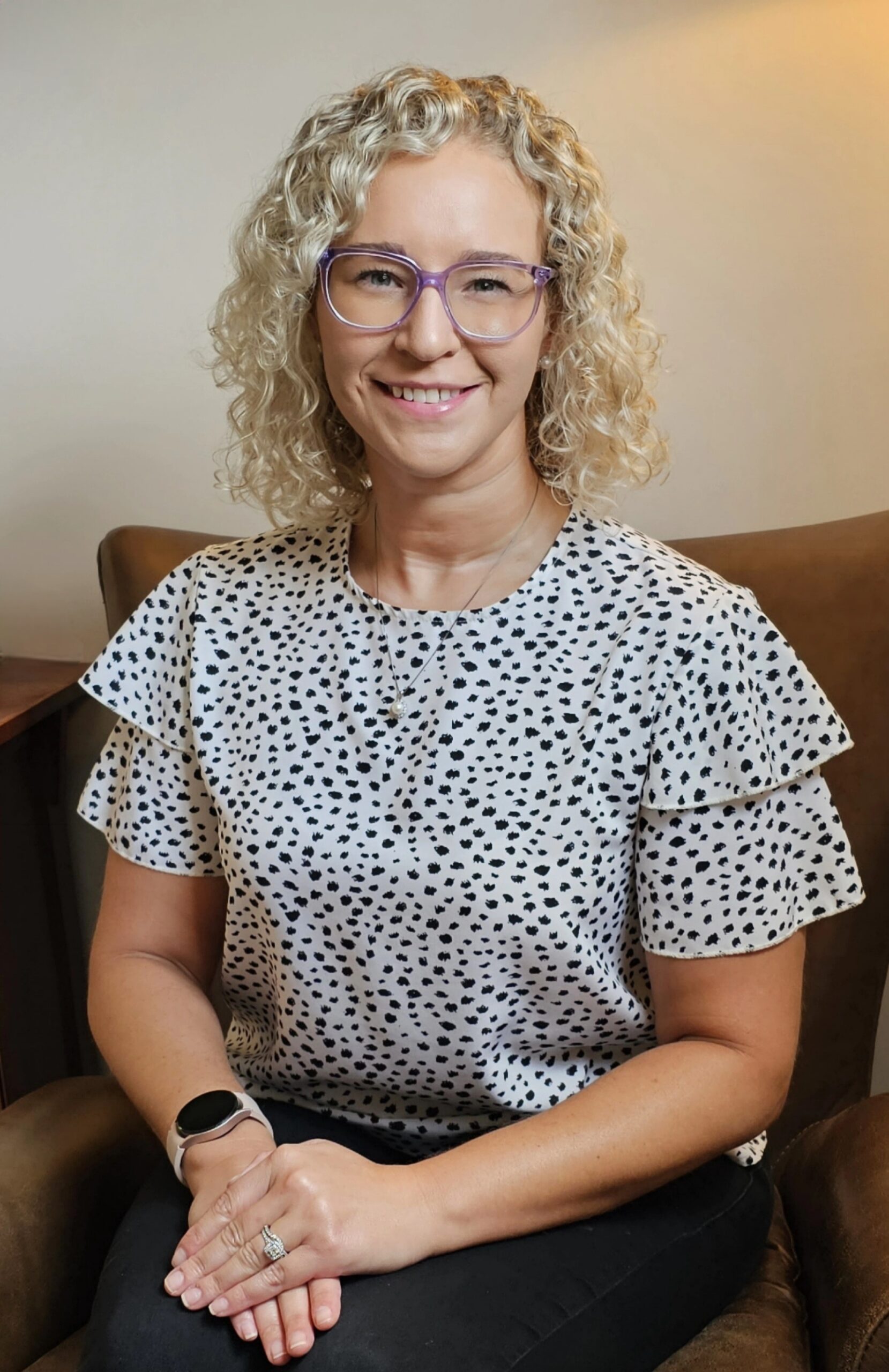
Marie Danner
Lead Clinician
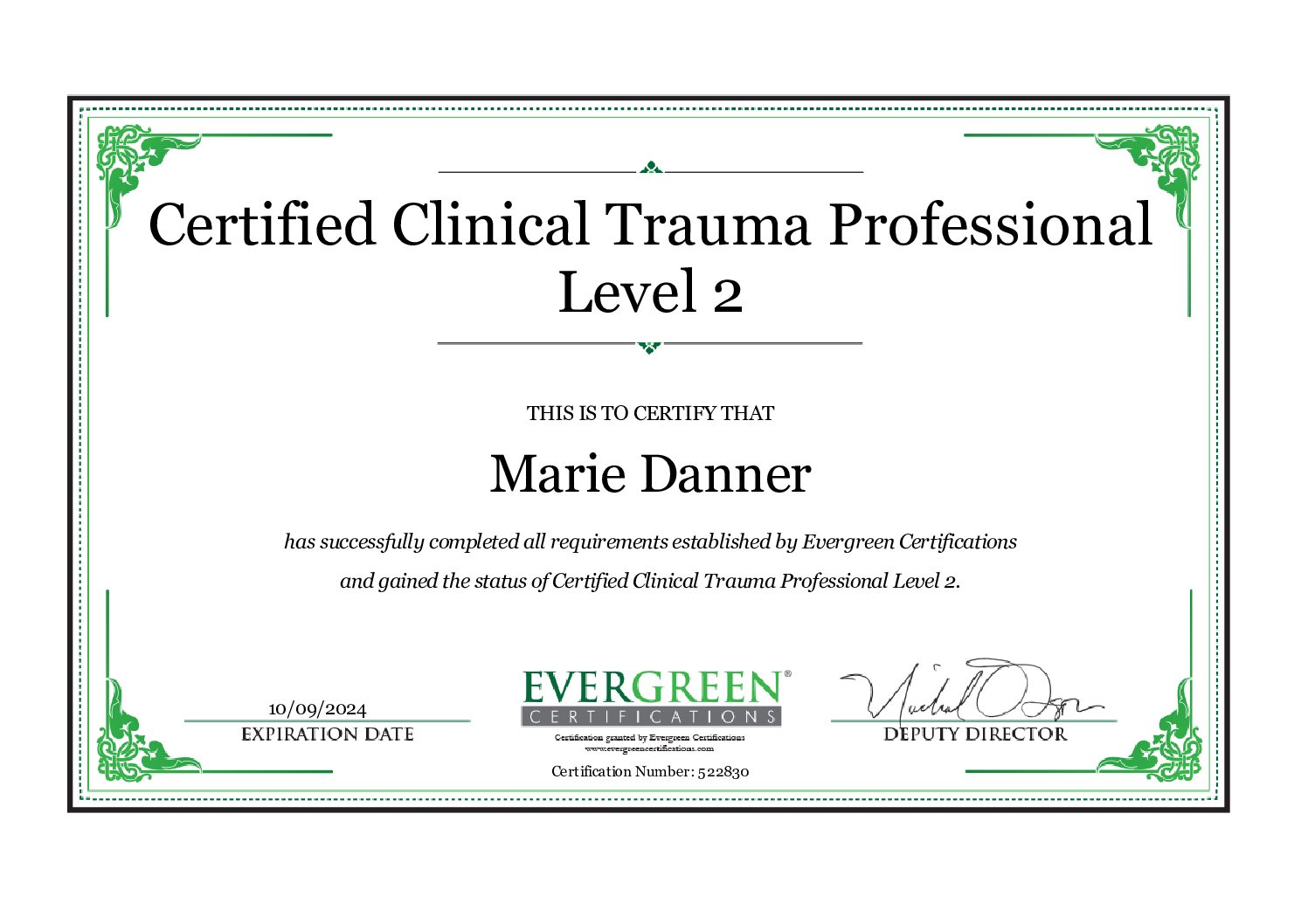
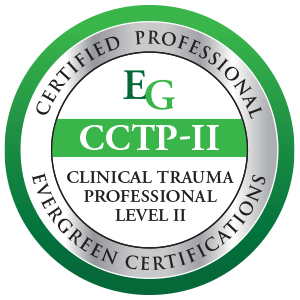
LICSW-S MSW CCTP-II

About Marie
Marie Danner is a Licensed Independent Clinical Social Worker–Supervisor and the Lead Clinician at Taproot Therapy Collective in Hoover, Alabama, minutes from Birmingham. She works with adults who already know that childhood abuse, neglect, or an unpredictable home left them with insecure attachment, and who are ready to heal it at the root. Her primary method is Lifespan Integration, a gentle, body-based trauma therapy. She supports it with Brainspotting and skills-based work when you need them.
When You Already Know Where It Started
You may have done the reading. You can name your [attachment style]([ATTACHMENT STYLES ARTICLE URL]). You can trace the knot in your stomach when someone goes quiet back to a parent whose moods decided whether home was safe. You can connect the way you shut down when someone gets close to years of learning that needing people wasn’t worth the risk. Maybe you’ve spent years in talk therapy and could explain your history better than some clinicians could.
And still, the patterns keep playing out. You might panic when a partner pulls away, or pull away the moment someone gets close. You might over-explain every boundary, or keep ending up in relationships that feel familiar in the worst way. Sometimes it can feel like a younger version of you takes over the moment conflict starts.
Marie knows that insight alone rarely changes this. Understanding why you struggle happens in the thinking brain. Attachment wounds live deeper, in a nervous system that learned how to survive long before you had words for what was happening. Her work is built for people who are done explaining their story and ready to change how their body holds it.
How Attachment Wounds Form
Children learn how relationships work from the way they are related to. When caregivers are mostly warm and consistent, a child learns two things: I’m worth caring for, and other people can be counted on. When care is frightening, neglectful, or unpredictable, a child adapts in order to survive.
Some children learn to hold on tighter and watch constantly for signs of rejection, which often becomes an anxious or preoccupied attachment style. Others learn to need nothing and handle everything alone, which often becomes a dismissive-avoidant style. When the people who were supposed to be safe were also the source of fear, a child may learn to want closeness and fear it at the same time. That pattern is called fearful or disorganized attachment.
None of these patterns are character flaws. They were intelligent strategies for surviving the environment you grew up in. The trouble is that your nervous system keeps running them as though you’re still that child, still in that house. For a deeper look at how each style shows up in adult relationships and in therapy, read our guide to [attachment styles and how they’re used in therapy]([ATTACHMENT STYLES ARTICLE URL]).
Why Marie Uses Lifespan Integration
Lifespan Integration (LI) was developed by therapist Peggy Pace. It works directly with the part of you that doesn’t know the trauma is over. In an LI session, Marie helps you connect with a memory or feeling tied to a painful experience. She then guides you through a timeline of memories from each year of your life, up to the present. Repeating that timeline helps your mind and nervous system register what your thinking brain already knows: time has passed, you survived, and you are no longer the child who needed those strategies to stay safe.
LI is gentle. You don’t have to narrate every detail of what happened to you. It can also reach early and pre-verbal attachment injuries, which are hard to talk about because they happened before you had words. The goal is a more solid, continuous sense of who you are, which Marie calls authentic self-integration.
Marie tailors this core work to each person. She uses Brainspotting to reach stuck places that words don’t touch. She teaches DBT and CBT skills to help you stay within your window of tolerance, so that processing feels manageable. For clients who want their healing to include questions of meaning, faith, and purpose, she also brings in existential and spiritual reflection.
What Therapy With Marie Looks Like
Your first sessions focus on your history and your goals, and on building the timeline that LI uses. If you need more stability before processing, Marie will start there. After that, LI and Brainspotting sessions become the center of the work.
Change from this kind of therapy often shows up quietly, and outside the therapy room first. A text that would once have sent you spiraling lands a little softer. You notice you stated a boundary once instead of defending it for twenty minutes. Marie pays close attention to these shifts and helps you notice them as they emerge, because recognizing real progress is part of what makes it last.
Therapy with Marie is collaborative. She won’t manage you or try to fix you, and she won’t steer around the difficult parts of your history. She walks alongside you as you approach them gently, at a pace your nervous system can handle.
Is Marie the Right Therapist for You?
Marie is likely a strong fit if three things are true for you:
- You can already connect your current struggles to childhood abuse, neglect, or disrupted attachment.
- You’ve tried talk therapy and understand your story, but you still feel stuck in it.
- You’re motivated to try a structured, body-based approach like Lifespan Integration, rather than weekly conversation alone.
If you’re mainly looking for support with current stress, a life transition, or a space to talk things through, you deserve a therapist whose work is built around that. Taproot has other skilled clinicians with a range of specialties, and our intake coordinator can help match you with the right one.
A Personal and Professional Commitment
Marie is a trauma survivor who has experienced the life-changing effects of Lifespan Integration and somatic trauma work in her own life. She knows firsthand that root-level healing is possible, and she brings that hope and understanding to every client she works with. She believes therapy should be a safe, honest space for real transformation, and she treats the whole person: mind, body, and spirit.
Experience and Credentials
Throughout her career as a social worker, Marie has served in three main roles. She was a Family Advocate for a local nonprofit. She worked as a group, individual, and family therapist at a residential substance use treatment center. She was also Lead Therapist at an outpatient substance use and co-occurring mental health treatment center. That experience gives her a steady, comprehensive foundation for treating complex trauma, and for treating the relational wounds that often sit underneath addiction, anxiety, and depression.
-
- Licensed Independent Clinical Social Worker–Supervisor (LICSW-S), Alabama License #4899C, and board-certified supervisor for social workers pursuing independent licensure
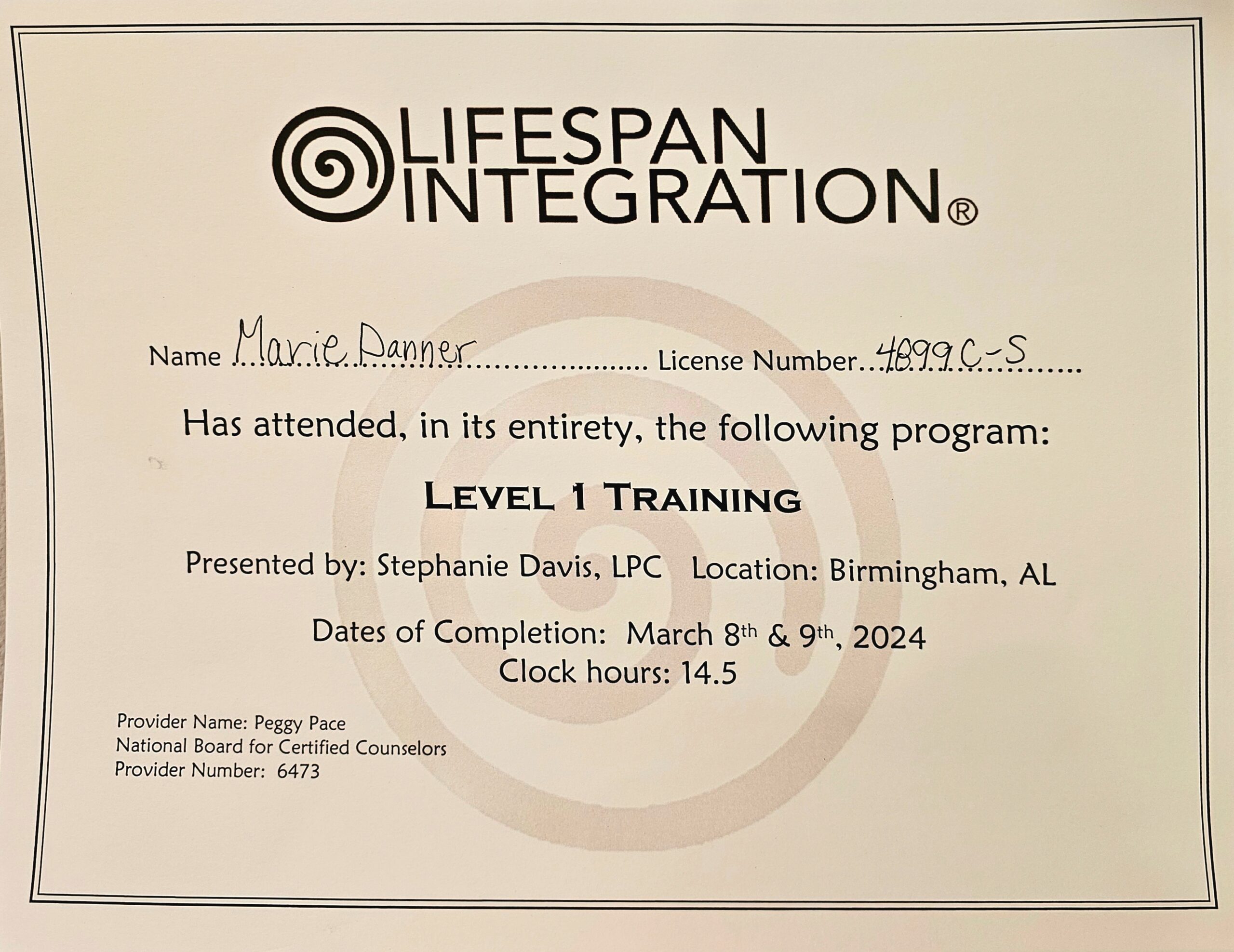
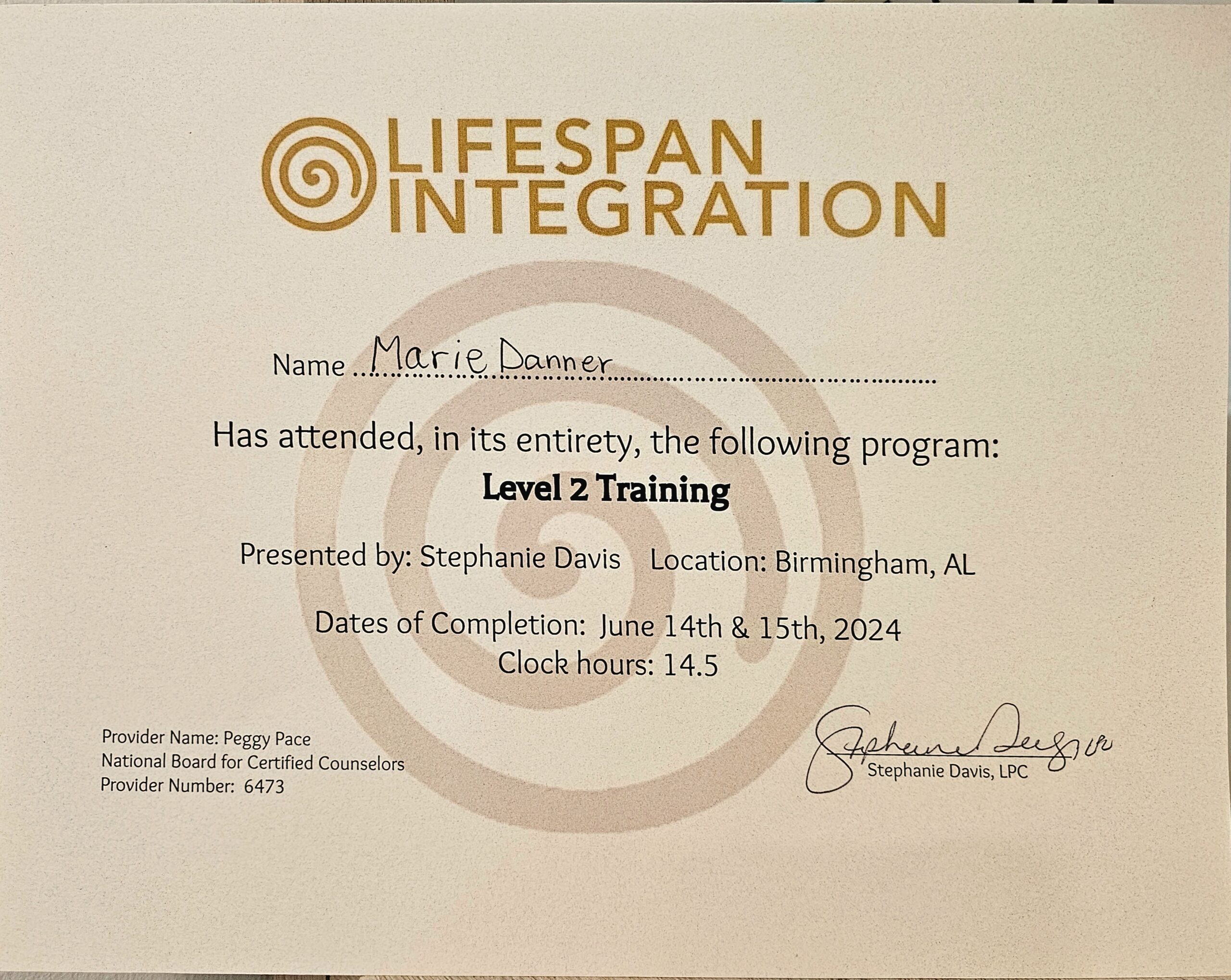
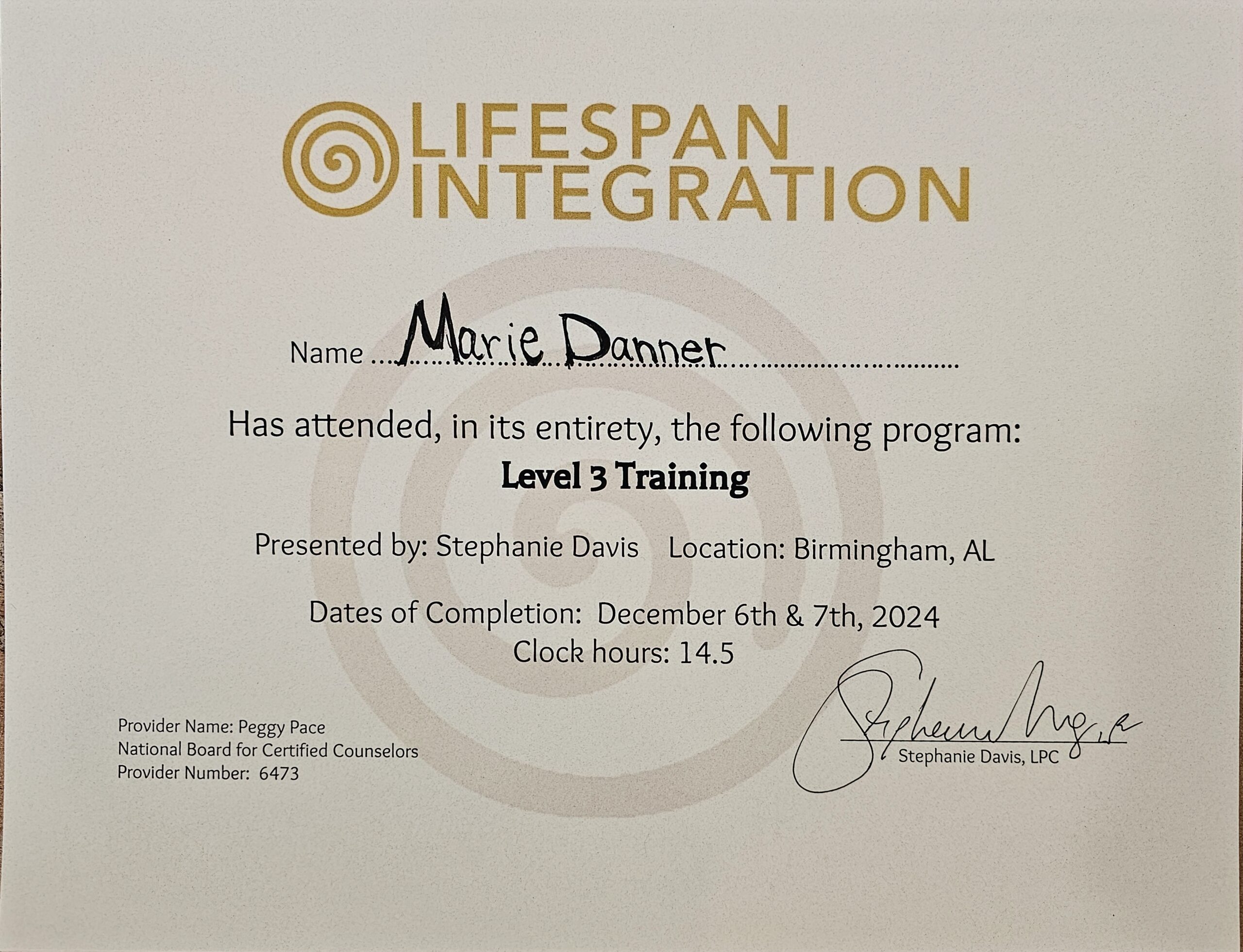
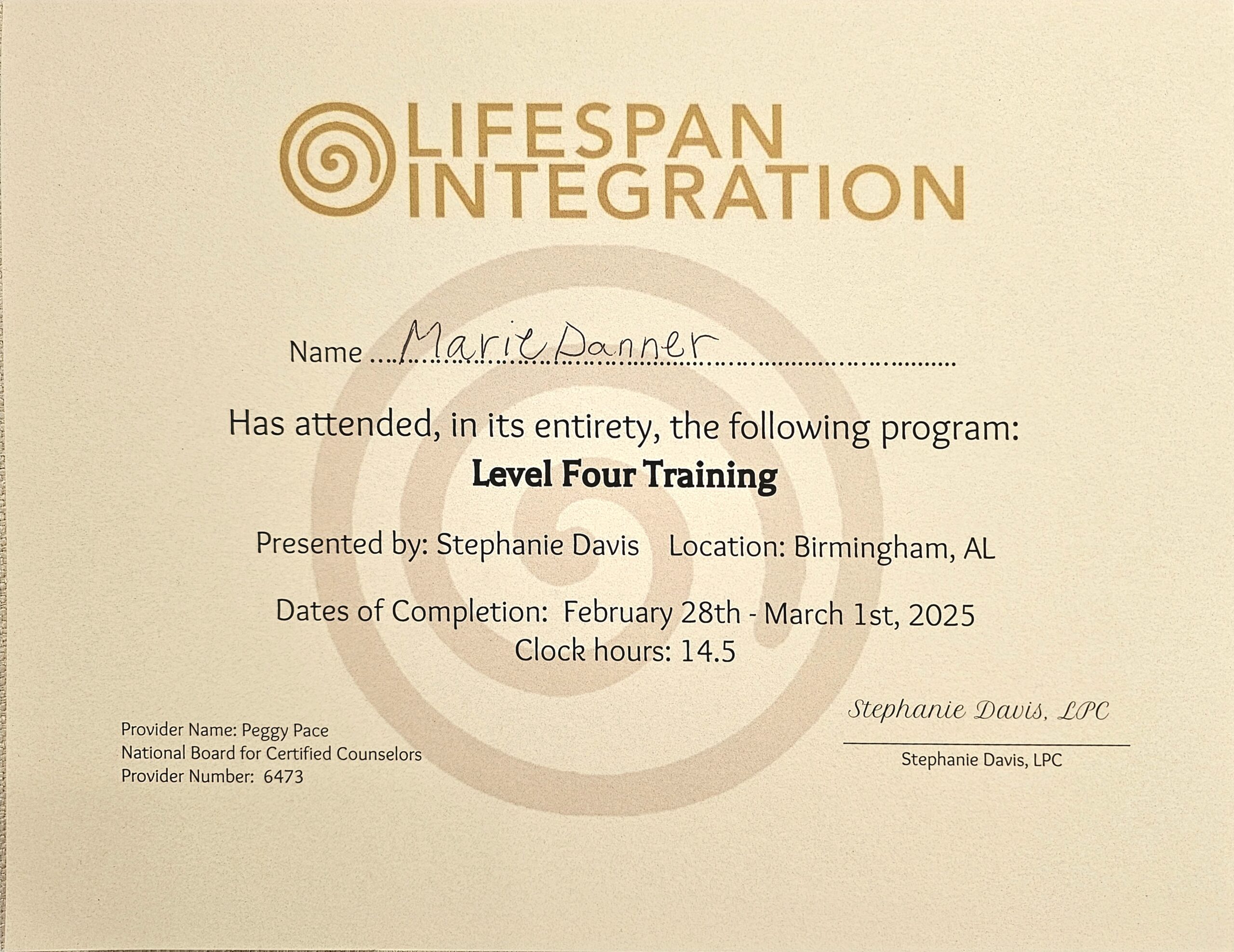
- Level 4 Lifespan Integration Practitioner
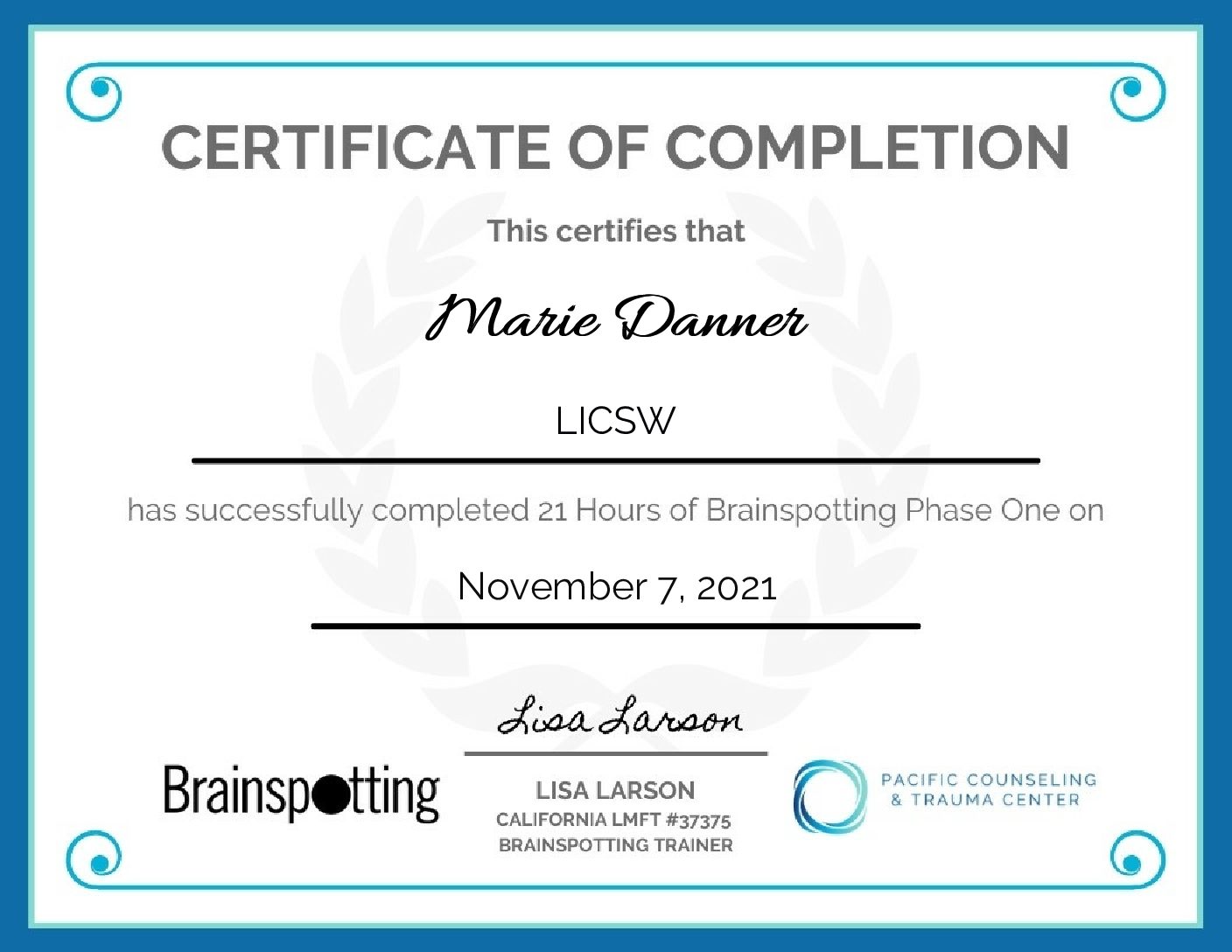
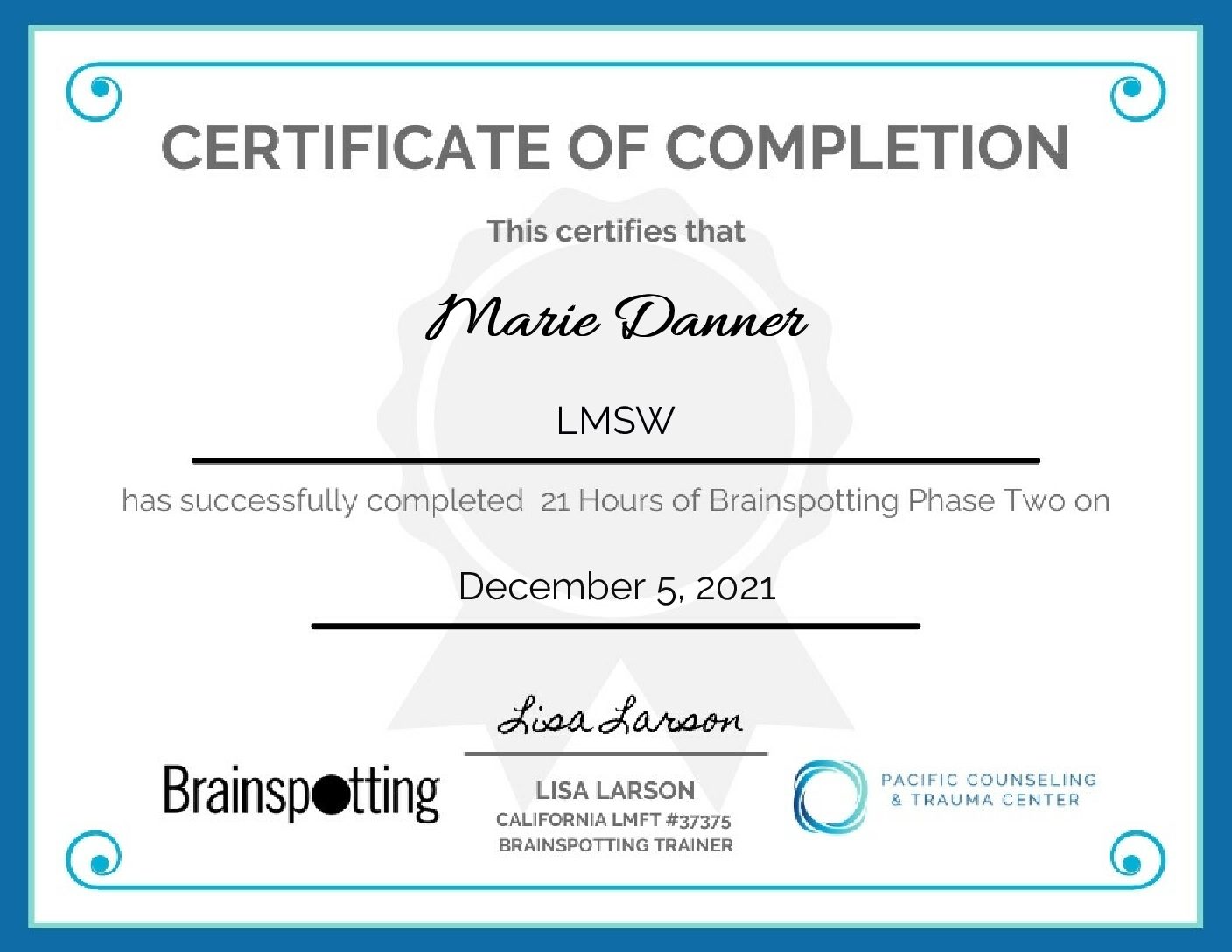
- Phase 2 trained in Brainspotting
- NPI #1548939432
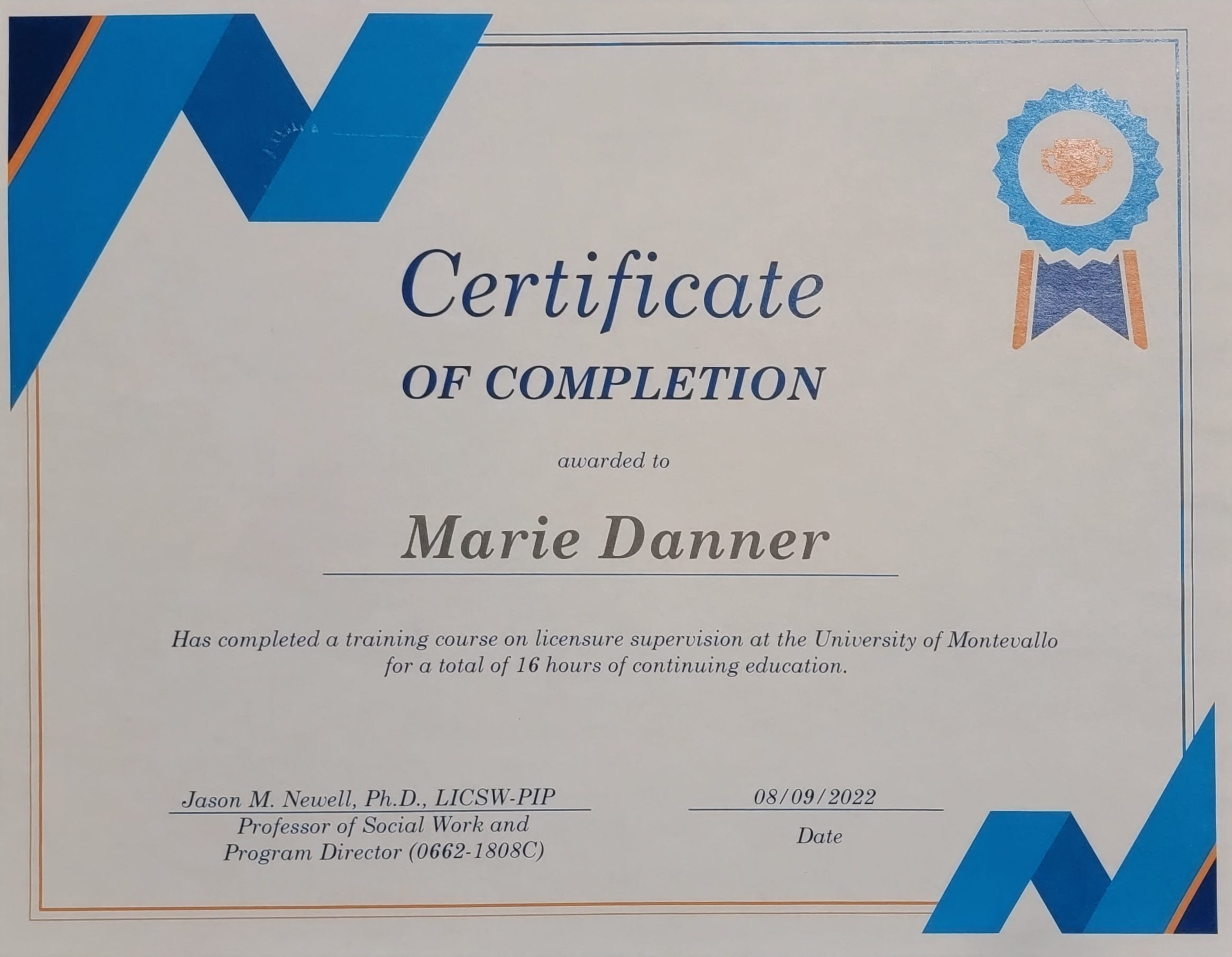
Marie was born and raised in Birmingham, AL. She earned her BS in Social Work from the University of Montevallo and her Master’s in Clinical Social Work from Samford University. You can also find Marie on Psychology Today.
Marie’s Specialties
Areas of focus: Attachment trauma and insecure attachment · Childhood and developmental trauma · Complex trauma, C-PTSD, and PTSD · Relational trauma · Inner-child and parts work · Spiritually integrated therapy
Approaches: Lifespan Integration · Brainspotting · DBT and CBT skills · Existential therapy
Beyond the Practice
Outside the office, Marie is passionate about health and movement. She enjoys strength training and amateur bodybuilding, and she loves being outdoors hiking, kayaking, or relaxing by the pool. She values time with her husband and friends; the two of them are self-proclaimed foodies who love discovering new restaurants. Marie is also the proud parent of two dogs who bring joy to her everyday life.
Frequently Asked Questions
What is attachment trauma?
Attachment trauma is the lasting impact of growing up without safe, consistent connection to a caregiver, whether through abuse, neglect, unpredictability, or emotional unavailability. In adulthood it often shows up as anxiety in relationships, difficulty trusting others, a harsh inner critic, or painful relationship patterns that keep repeating.
How is Lifespan Integration different from talk therapy?
Talk therapy helps you understand your history. Lifespan Integration works with how your nervous system holds it. By guiding you through a timeline of your life again and again, LI helps your mind and body register that past trauma is over, so old survival reactions can ease without you having to retell every painful detail.
Do I need clear childhood memories for Lifespan Integration to work?
No. Many people with attachment trauma have gaps in their memory. Marie can help you build your timeline from what you do know, such as where you lived or what grade you were in each year.
Can I see Marie online?
Yes. Marie sees clients in person at Taproot’s Hoover office and by secure video anywhere in Alabama.
How do I get started with Marie?
Book online or call (205) 598-6471 to schedule a free 15-minute intake call. Our intake coordinator will talk with you about what you’re looking for and whether Marie is the right fit. You can also email Marie directly at MarieDanner@
Taproot Therapy Collective has eleven clinicians who treat a wide range of issues and conditions using somatic, brain-based, and depth therapies.
—