
The Doctor Illuminatus of the Rhineland
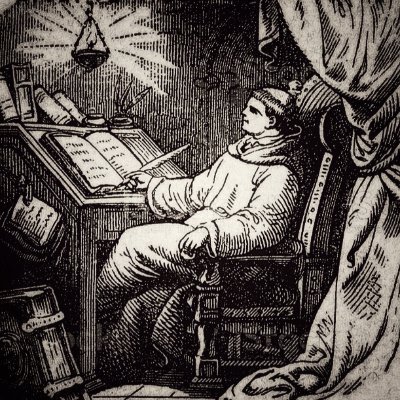
In the 14th century, a spiritual plague swept through Europe alongside the physical Black Death. Amidst this chaos, a German Dominican friar named Johannes Tauler (c. 1300–1361) emerged as a voice of profound psychological clarity. A disciple of Meister Eckhart, Tauler stripped away the complex metaphysics of his teacher to focus on the practical, lived experience of the soul.
Tauler is often called the “Doctor Illuminatus.” For the modern depth psychologist, his work is a precursor to the understanding of the Shadow and the necessity of ego-death. He taught that the path to wholeness requires a descent into the “Ground of the Soul” (Grund der Seele), a concept that directly anticipates the Jungian Self.
Biography & Timeline: Johannes Tauler (c. 1300–1361)
Born in Strasbourg to a wealthy family, Tauler renounced his privilege to join the Dominican Order. His life was defined by the tension between the institutional Church and the direct, mystical experience of God. Unlike many mystics who withdrew from the world, Tauler was a man of the people. During the Black Death, while other clergy fled, he stayed in Strasbourg to nurse the sick and dying.
He was part of the “Friends of God” (Gottesfreunde), a loose network of mystics who sought a direct relationship with the Divine outside of rigid hierarchy. His sermons were preserved not in Latin, but in Middle High German, making them accessible to the layperson—a radical act of democratization that would later influence Martin Luther.
Key Milestones in the Life of Tauler
| Year | Event / Publication |
| c. 1300 | Born in Strasbourg, Holy Roman Empire. |
| c. 1315 | Enters the Dominican Order. |
| c. 1324 | Studies in Cologne, likely under Meister Eckhart. |
| 1339-1343 | Exiled to Basel during the conflict between Pope John XXII and Emperor Louis IV. |
| 1348 | The Black Death strikes Strasbourg; Tauler remains to minister to the dying. |
| 1361 | Dies in Strasbourg, leaving a legacy of over 80 sermons. |
Major Concepts: The Ground of the Soul
The Inner Way (Der Innere Weg)
Tauler’s central teaching is the “Inner Way,” a process of turning inward to find God. This is not an intellectual exercise but an experiential one. He distinguished between:
- Outer Man: The ego, driven by senses and worldly attachment.
- Inner Man: The rational mind and intellect.
- The Ground: The deepest spark of the soul where the human and Divine merge.
Psychologically, this “Ground” is the Self—the organizing center of the psyche that transcends the ego.
Gelassenheit (Detachment/Yielding)
To reach the Ground, one must practice Gelassenheit—a letting-be or yielding. This is not passivity, but a cessation of the ego’s frantic need to control. It is the psychological equivalent of the “flow state” or the Taoist concept of Wu Wei.
The Conceptualization of Trauma: The School of Suffering
Tauler’s view of suffering is radically transformative. He does not see pain as a punishment, but as a “School of Suffering” designed to break the shell of the ego.
The Dark Night of the Soul
Long before St. John of the Cross coined the term, Tauler described the “divine abyss” where the soul feels abandoned by God. He argued that this feeling of abandonment is actually the stripping away of the ego’s projections.
Clinical Application: In trauma therapy, patients often hit a point of despair where their old coping mechanisms fail. Tauler frames this not as failure, but as the necessary disintegration preceding a higher integration. The “dark night” is the psyche clearing space for the new.
The Virgin Wax
Tauler uses the metaphor of the soul becoming “virgin wax”—soft and malleable. Trauma hardens us; healing softens us. The goal of therapy is to melt the rigid defenses (armoring) so that the psyche can be imprinted by the Self (God) rather than by the trauma.
Legacy: The Mystic of the Everyday
Tauler’s genius was in bringing mysticism down from the mountain. He taught that a peasant threshing grain could be closer to God than a monk in prayer if the peasant possessed Gelassenheit. This validation of ordinary life is crucial for modern therapy.
He reminds us that the “religious function” of the psyche is not about peak experiences or visions, but about the humble, daily work of surrendering the ego’s demands. By integrating Tauler’s wisdom, we learn that the cure for the divided mind is found in the quiet, inner ground that has been waiting for us all along.
Further Reading & Resources
- Paulist Press: Johannes Tauler: Sermons.
- Christian Classics Ethereal Library: The Inner Way.
- Stanford Encyclopedia of Philosophy: German Mysticism.
















0 Comments