
Free Resources for Therapy Patients
Taproot Therapy is in Birmingham Alabama, but we want you to get better no matter where you are.
These are self help resources for working with PTSD, panic, dissociation, shadow work, trauma, or anxiety.
Please be advised that self help is no substitute for a skilled therapist. These materials are not meant to treat any psychiatric condition.
The Jungian Approach to Mythology
Mythological Dictionaries for Depth Psychology
Explore our comprehensive dictionaries of mythological systems through the lens of depth psychology:
Greek Mythology
The humanized gods with complex personalities and conflicts; emphasis on fate vs. free will.
Egyptian Mythology
Cyclical view of existence; complex afterlife journey; integration of opposing forces.
Norse Mythology
Stark worldview with emphasis on courage despite fate; confronting limitations with integrity.
Proto-Myths & Prehistoric Religion
Emergence of consciousness; relationship with nature; primal fears and animistic worldview.
Jungian Dream Dictionary
Explore the symbolic language of dreams through archetypes, animals, architecture, colors, and more
Explore the DictionaryThis is a body-scan meditation that I use in therapy. Enough of my patients asked to record it on their phones that I decided to record it myself.
Gestalt emotion recognition and regulation training.
These are some questions for personality development, personal growth, and life reflection.
Interventions for panic, dissociation, and denationalization.
Information for understanding the parts of your personality and their development.
These work sheets are free for individual, personal and nonprofit use. For groups and programs please inquire for rates.
A career and life planning worksheet.
Recent Articles
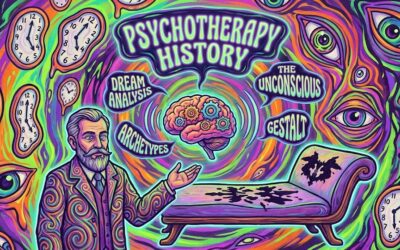
The Architecture of the Soul and the Machine: A Critical History and Future of Psychotherapy
A critical deep dive into the hidden history of psychotherapy, exploring how the personal traumas of founders like Freud and Jung collided with societal forces to shape modern mental health. Drawing on the works of Adam Curtis, James Hillman, and Sonu Shamdasani, this article traces the shift from the “architecture of the soul” to the “technocratization of care,” exposing the impact of profit motives and algorithmic logic while proposing a metamodern path forward for the profession.

The Influencing Machine: How Technology Shapes the Architecture of Psychosis
Explore how technological delusions in psychosis evolved from the 1810 Air Loom to modern simulation theory, revealing deep truths about technology’s impact on the human psyche and offering insights for healing in the digital age.

Is My Friend or Business Partner a Con Artist?
Understanding the Psychology Behind Deception and Emotional Manipulation Have you ever wondered if your business partner is a con artist? Perhaps you've noticed a pattern where their stories don't quite add up, where their accomplishments seem to exist only in...

The Science Behind the Fizz: What Kombucha Actually Does to Your Body and Brain
A few months ago, I started drinking kombucha regularly. Within a couple of weeks, I felt different. More energy. Better sleep and general mood. I'd always heard that the health benefits of kombucha were pseudoscience so I started to look into it. At first I figured...
The Kaleidoscope: Digital Dreamtime and the Collision of Parallel Realities
How do you know that the color blue you see is the same as the color blue I see? We both call it blue. We point at the sky and use the same word. But do we actually share the same subjective experience of that wavelength of light? Some people do not. They might be...
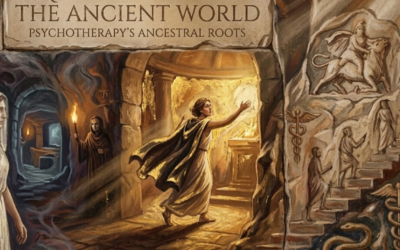
What the Ancient Mysteries Knew About Healing Trauma
The Eleusinian, Mithraic, and Dionysian mysteries weren’t religious observances. They were orchestrated psychodramas designed to shatter the ego and rebuild the self. Modern trauma therapy has inadvertently reconstructed their methods.
The Architecture of the Soul and the Machine: A Critical History and Future of Psychotherapy
A critical deep dive into the hidden history of psychotherapy, exploring how the personal traumas of founders like Freud and Jung collided with societal forces to shape modern mental health. Drawing on the works of Adam Curtis, James Hillman, and Sonu Shamdasani, this article traces the shift from the “architecture of the soul” to the “technocratization of care,” exposing the impact of profit motives and algorithmic logic while proposing a metamodern path forward for the profession.
The Influencing Machine: How Technology Shapes the Architecture of Psychosis
Explore how technological delusions in psychosis evolved from the 1810 Air Loom to modern simulation theory, revealing deep truths about technology’s impact on the human psyche and offering insights for healing in the digital age.
Is My Friend or Business Partner a Con Artist?
Understanding the Psychology Behind Deception and Emotional Manipulation Have you ever wondered if your business partner is a con artist? Perhaps you've noticed a pattern where their stories don't quite add up, where their accomplishments seem to exist only in...
The Science Behind the Fizz: What Kombucha Actually Does to Your Body and Brain
A few months ago, I started drinking kombucha regularly. Within a couple of weeks, I felt different. More energy. Better sleep and general mood. I'd always heard that the health benefits of kombucha were pseudoscience so I started to look into it. At first I figured...
The Kaleidoscope: Digital Dreamtime and the Collision of Parallel Realities
How do you know that the color blue you see is the same as the color blue I see? We both call it blue. We point at the sky and use the same word. But do we actually share the same subjective experience of that wavelength of light? Some people do not. They might be...
What the Ancient Mysteries Knew About Healing Trauma
The Eleusinian, Mithraic, and Dionysian mysteries weren’t religious observances. They were orchestrated psychodramas designed to shatter the ego and rebuild the self. Modern trauma therapy has inadvertently reconstructed their methods.
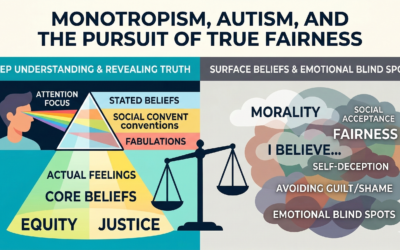
The Ethical Advantage: Why Autistic Minds Are Built for Justice
Here is a pattern I see constantly in clinical practice: an autistic client accurately identifies an injustice at work, in their family, or in society. They name it clearly. They expect others to recognize the obvious problem and act accordingly. Instead, they're...