
Locus of Control: The Psychology of High Performance and Imposter Syndrome

Why do the most competent employees often feel like frauds, while the least competent overestimate their abilities? This paradox, known as the Dunning-Kruger effect, is a common observation in industrial-organizational psychology. [cite_start]However, the root cause goes deeper than simple self-awareness—it lies in the psychological concept of Locus of Control[cite: 1429].
The answer lies in where people believe the power over their lives resides. Ineffective individuals often operate from an External Locus of Control, believing that fate, luck, or other people determine their outcomes. [cite_start]Conversely, effective high-performers operate from an Internal Locus of Control, understanding how their own actions contribute directly to their success or failure[cite: 1429].
However, this strength can become a weakness. [cite_start]While a highly internal locus of control drives individual excellence, it can make leaders less adaptable to systemic problems that cannot be solved by personal effort alone[cite: 1429]. A manager with an extreme internal locus may become blind to structural deficiencies, taking personal responsibility for failures that are actually organizational. The goal of psychological maturity is a Flexible Locus of Control—taking ownership of our behavior without enabling the dysfunction of others.
The Double-Edged Sword of the Inner Critic
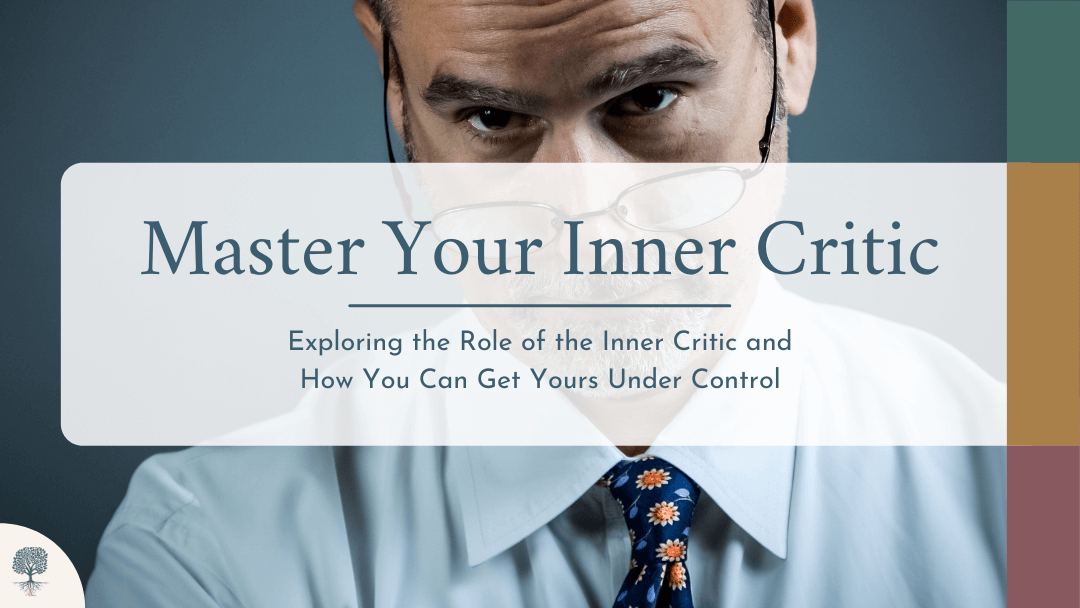
Our “inner critic” is the internal narrator that constantly analyzes our performance, highlighting where we fall short. It is the voice that says, “Everyone thought you were stupid,” even when they laughed at your joke. [cite_start]It promises happiness only after the next achievement[cite: 23].
People who are over-identified with this critical voice often suffer from Imposter Syndrome. They obsessively learn every detail of their field not out of curiosity, but out of fear—fear that someone will discover they “don’t belong.” Paradoxically, this neurosis creates highly talented employees. [cite_start]These individuals compensate for their feelings of inadequacy through ceaseless work, attempting to fill every gap in their knowledge to avoid being “found out”[cite: 23].
The Trap of the High Achiever
Effective executives often credit their success to this inner drive. They blame no one but themselves and are willing to shoulder the heaviest burdens. In the early to mid-stages of a career, this trait is rewarded with rapid promotion. However, at the executive level, this same trait can lead to:
- Burnout: The inability to delegate or trust systems.
- Blindness: Ignoring systemic weaknesses because of a belief that “working harder” is always the solution.
- Isolation: The belief that asking for help is a sign of weakness.
This is why executives often enter therapy mid-career. They spent decades believing that wealth or power would finally silence the critic. Upon achieving both, they are confused to find the voice is as loud as ever. [cite_start]There is no external accomplishment that can silence an internal critic; that work must be done on the inside[cite: 23].
The Origins of the Critic
The inner critic is rarely our own voice. [cite_start]It is usually the internalized echo of a critical caregiver, teacher, or societal standard from our developmental years[cite: 23]. This internalization is a survival mechanism; as children, we adopt the rules of our environment to ensure safety and attachment. This explains why many self-made individuals come from challenging backgrounds—their drive was forged in the fire of early adversity.
We often mistake this critical voice for “responsibility” or “adulthood.” However, like any tool, it is only useful in moderation. When the inner critic becomes a tyrant, it perpetuates a cycle of abuse that robs life of joy. [cite_start]It keeps us in a state of chronic flight or freeze, driven not by passion, but by the terror of not being “enough”[cite: 1025].
Mastering the Internal Democracy
Ultimately, the inner critic is a defense mechanism against fear—specifically, the fear of inadequacy or rejection. If we obey it blindly, we lead a life ruled by fear. [cite_start]The psyche is meant to be a democracy of many parts (as described in Internal Family Systems), but the critic often attempts a coup to become the dictator[cite: 23].
Truly effective individuals understand this dynamic. They appear different in different situations because they consciously choose which “part” of themselves to deploy. To fully utilize your talents, you must learn to:
1. Identify the critic when it speaks.
2. Separate its voice from your own reality.
3. Choose a response rather than reacting out of habit.
Decision-making must become a conscious choice, not a reaction to unknown internal forces. [cite_start]By mastering your inner world, you master your talents—or at the very least, you learn to become your own best critic rather than your own worst enemy[cite: 1429].
Bibliography
- Rotter, J. B. (1966). Generalized expectancies for internal versus external control of reinforcement. Psychological Monographs: General and Applied, 80(1), 1-28.
- Clance, P. R., & Imes, S. A. (1978). The imposter phenomenon in high achieving women: Dynamics and therapeutic intervention. Psychotherapy: Theory, Research & Practice, 15(3), 241-247.
- Hollis, J. (1999). The Eden Project: In Search of the Magical Other. Inner City Books.
- Burns, D. D. (1980). Feeling Good: The New Mood Therapy. William Morrow & Co.
- Miller, W. R., & Rollnick, S. (2012). Motivational Interviewing: Helping People Change (3rd ed.). Guilford Press.
Further Reading
- Bandura, A. (1997). Self-efficacy: The Exercise of Control. W.H. Freeman and Company.
- Dweck, C. S. (2006). Mindset: The New Psychology of Success. Ballantine Books.
- Neff, K. D. (2011). Self-Compassion: Stop Beating Yourself Up and Leave Insecurity Behind. HarperCollins.
- Siegel, D. J. (2012). The Developing Mind: How Relationships and the Brain Interact to Shape Who We Are (2nd ed.). Guilford Press.
- Covey, S. R. (1989). The 7 Habits of Highly Effective People: Powerful Lessons in Personal Change. Free Press.




0 Comments