

The Therapist’s Grand Grimoire: A Comprehensive Narrative Encyclopedia of 80 Clinical Interventions
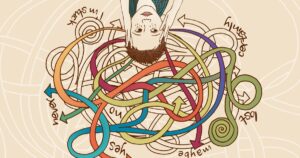
The practice of psychotherapy is not a monolith but a mosaic composed of hundreds of distinct techniques developed over a century of clinical experimentation and research. For the modern clinician, the challenge is not merely to learn these interventions but to integrate them into a cohesive framework that addresses the cognitive, somatic, and existential dimensions of the human experience. This comprehensive guide seeks to explore eighty specific therapeutic tools, moving beyond simple definitions to examine the neurobiological and psychological mechanisms that make them effective. From the structured logic of cognitive restructuring to the symbolic depth of Jungian analysis, these interventions represent the collective wisdom of the field. Many of these concepts are explored in greater auditory depth on our mental health podcast, and visual demonstrations can be found on our YouTube channel. Furthermore, practitioners can access tangible versions of these exercises through our library of free therapy worksheets.
The Architecture of Thought: Cognitive and Behavioral Restructuring
The cognitive revolution in psychology established that our emotional reality is largely constructed by our internal narratives. This perspective, championed by figures like Albert Ellis and Aaron Beck, posits that it is not events themselves that disturb us, but our judgments about them. To reshape these narratives, clinicians often employ **Visualization Therapy**, a technique that leverages the brain’s neuroplasticity by having clients vividly imagine coping with stressors, thereby encoding new neural pathways for resilience. This is often supported by **Mantra-Based Therapy**, where the client actively replaces maladaptive schemas with a repeated affirmative phrase, effectively interrupting the default mode network of the brain.
When clients feel trapped by their current circumstances, the **Miracle Question Technique** from Solution-Focused Brief Therapy serves as a powerful cognitive pivot. By asking the client to describe a world where their problem has vanished overnight, the therapist bypasses defense mechanisms and accesses the client’s innate problem-solving creativity. To ground these new insights in reality, **Behavioral Experiments** are utilized, treating the client’s fears as hypotheses to be tested rather than facts to be endured. This empirical approach is essential for dismantling anxiety disorders and aligns with the rigors of the scientific method applied to subjectivity.
Deepening the cognitive work involves granular analysis, where **Slowing Down a Typical Day** allows the therapist and client to dissect the microstructure of the client’s routine, identifying the exact moments where stress spikes or maladaptive behaviors occur. This forensic attention to detail is applied in **Analyze Messages about Events A-B-C**, a cornerstone of Rational Emotive Behavior Therapy (REBT), where clients map the trajectory from Activating events to Beliefs and finally to Consequences. This framework is crucial for **REBT A-B-C for Anger**, helping clients see that it is not the external insult that causes rage but their internal demand for respect.
Similarly, the **A-B-C Framework for Emotional Disturbances** applies this logic to depression and anxiety, empowering clients to engage in **Disputing Irrational Beliefs** by vigorously challenging the logic of their internal critic. To aid in this process during moments of high stress, the **Make a Mantra for Soothing** intervention provides a portable cognitive anchor, while the **Quick Interventions Handout** ensures clients have a menu of coping strategies available during a crisis. For more on the limitations and applications of these structured approaches, one can examine Cognitive Behavioral Therapy: The Rocket-Finned Civic of the Therapy World.
For clients struggling with obsessive-compulsive tendencies, the instruction to **Challenge Rituals and Rediscover Desires** forces a confrontation with the anxiety driving the ritual, exposing the underlying fear that the ritual was designed to mask. This often reveals that the obsession is a distraction from a deeper unfulfilled need. To facilitate the processing of these insights, the **Cognitive Interweaves Sheet** helps clients identify the stuck points in their processing, linking past traumas to present triggers. Finally, **Cognitive-Behavioral Therapy (CBT) for Anger** combines these restructuring techniques with impulse control training, and **Inner Critic: Stopping the Inner Critic’s Meaning** involves cognitively disputing the internal voice of judgment, reducing the shame that fuels aggression. For authoritative guidelines on CBT protocols, the American Psychological Association’s Clinical Practice Guidelines offer a robust resource.
The Wisdom of the Body: Somatic Regulation and Mindfulness
As psychology has evolved, it has increasingly recognized that the body keeps the score of our emotional lives, a core tenet of the Somatic approach. **Guided Meditation** is not merely a relaxation tool but a method of attentional training that increases the density of the prefrontal cortex, enhancing emotional regulation. This is often deepened with **Meditate on the Power of the Body**, an intervention that shifts the client’s relationship with their physicality from one of objectification or shame to one of gratitude and functional appreciation. **Mindful Walking** brings this awareness into motion, requiring the client to synchronize their breath with their steps, which serves to ground the nervous system in the present moment.
For clients who struggle with self-worth, **Loving Kindness Meditation** stimulates the oxytocin and opioid systems in the brain, actively countering the physiological correlates of shame and self-criticism. Therapists can utilize our Free Body Scan Mindfulness Meditation Script to introduce these concepts in session. The connection to others is biologically imperative, and **Guided Meditation for Connections** utilizes visualization to reinforce the client’s internal sense of social safety. Conversely, **Guided Meditation: Finding a Vulnerable Part of Yourself** directs this compassion inward, allowing the client to approach their own fragility without judgment.
In moments of acute stress, the technique of **Tense and Then Relax Muscles** (Progressive Muscle Relaxation) utilizes the physiological feedback loop to force the parasympathetic nervous system to engage. For survivors of trauma who struggle with feeling present, **Re-Attachment to the World** exercises use sensory engagement to tether the consciousness back to the immediate environment, combatting dissociation. When dissociation becomes a primary symptom, **Dissociation Worksheet Interventions** provide a structured cognitive scaffold to help the client identify triggers and apply grounding techniques before they fully detach. For a deeper understanding of these mechanisms, the Somatic Experiencing International website provides extensive resources on the physiology of trauma.
The **Compassion Exercise for Dissociation** reframes this detachment not as a failure but as a brilliant survival strategy that is no longer needed. Simple somatic tools like **Imagination Exercise to Release Tension** use the power of the mind-body connection to visualize stress leaving the body as a color or substance. Furthermore, clients are taught to **Create a Physical Mantra or Action**, such as a specific hand gesture or posture that serves as a somatic anchor for safety. This aligns with the concept of **Self-Hypnosis**, empowering the client to induce a state of calm and suggestibility to reinforce their own therapeutic goals. The work of pioneers like Peter Levine underscores the necessity of these bottom-up approaches.
Unearthing the Unconscious: Depth Psychology and Psychodynamics
Depth psychology posits that true healing requires accessing the unconscious material that drives our behavior. **Inner Child Work** is a cornerstone of this approach, where the client establishes a dialogue with the younger, wounded parts of themselves. This is vividly enacted in the technique **Revisit Room as a Child**, where the client visualizes entering their childhood home to rescue or comfort their younger self. You can explore more about this process in our guide on how to Heal Yourself By Finding Your Inner Child. **Free Association**, the fundamental rule of psychoanalysis, asks clients to speak without censorship, allowing the therapist to trace the subtle threads that connect seemingly unrelated thoughts to deep-seated conflicts. This exploration is often structured by the **Psychodynamic Worksheet**, which maps the client’s relational history to reveal the repetition compulsions that sabotage their current relationships.
The influence of Carl Jung is evident in interventions like the **Jungian Archetypes Worksheet**, which helps clients identify the universal patterns such as the Hero or the Sage playing out in their lives. **Accepting the Shadow for Trauma** requires the client to acknowledge and integrate the dark or rejected parts of their personality, like the anger, selfishness, or vulnerability that were exiled to survive. This work often involves **Mandala Creation**, where the client draws within a circle to represent the totality of the Self, using geometry and color to bypass verbal defenses. For a detailed look at this, see our article on The Jungian Shadow: Exploring the Hidden Depths of the Psyche. **Designing a New Self-Archetype** allows the client to actively construct a future identity that integrates their trauma history with their potential.
The exploration of lineage is critical in psychodynamics. **Psycho Dynamic: Loveability from the Parent of the Opposite Sex** examines how the client’s early relationship with their mother or father set the template for their romantic desirability. Similarly, **Learning to Be in the World from the Parent of the Same Sex** investigates the modeling of gender roles and social efficacy. By identifying these inherited scripts, the client can choose to keep what serves them and discard what does not. The **Spiritual Mother and Father** intervention takes this a step further by having the client imagine ideal archetypal parents who can provide the perfect attunement and guidance that their biological parents could not. For more on the foundational concepts of this school of thought, the International Association for Analytical Psychology serves as the central authority.
Rewriting the Narrative: Trauma and Memory Consolidation
Trauma fragments the narrative of the self, and therapy seeks to make it whole again. **Narrative Therapy with “Tree of Life”** is a powerful metaphor where the client maps their roots (heritage), trunk (skills), and branches (hopes), creating a resilient description of their identity. **EMDR (Eye Movement Desensitization and Reprocessing)** utilizes bilateral stimulation to process stuck memories, and the **EMDR Drawing** protocol allows clients to externalize the trauma visually before processing it. Readers can learn more about the efficacy of this modality in our article: What Is EMDR? How Can EMDR Help with Trauma, Anxiety, and PTSD?.
The **Finding the Traumatic Belief About the Self Worksheet** helps the client pinpoint the specific negative cognition that was installed during the trauma. The **EMDR Cognitive Bridging Worksheet** facilitates the linkage between the past traumatic event and the current irrational belief, allowing for the reprocessing of the memory. For those interested in the brain mechanisms behind this, we discuss how Brainspotting Changed My Life and impacts the subcortical brain.
Creative externalization is found in **Sand Tray Therapy**, where the client builds a world in the sand using miniatures. This allows the unconscious to speak through symbols. **Paint or Represent Yourself BEFORE the Trauma** is a grief work intervention that helps the client mourn the loss of their innocence while reconnecting with the core self that remains untouched by the event. In **Reimagine a Damaging Situation with Needs Fulfilled**, the client engages in rescripting, imagining the traumatic event again but this time with a protector present who stops the abuse. **Working with Nightmares and Introducing New Ideas** (Image Rehearsal Therapy) allows clients to rewrite the ending of their nightmares while awake, reducing the terror of sleep. Clinical standards for these treatments are maintained by the EMDR International Association.
The Ecology of the Self: Systemic and Internal Family Systems
The psyche operates as a system, and Voice Dialogue and parts work provide a map for this territory. The intervention to **Find, Flesh Out, and Feel Protectors** invites the client to identify the parts of themselves that manage anxiety or anger. By **Changing into Different Protectors**, the client embodies these parts to understand their positive intent. **Voice Dialogue** and **Voice Dialogue: Sub-Personalities** facilitate a direct conversation between these conflicting inner selves, negotiating a peace treaty that allows for internal harmony.
In the realm of interpersonal relationships, **Boundaries vs. Rules** clarifies the distinction that boundaries are what we do to protect ourselves, while rules are attempts to control others. The **Rules vs. Boundaries Evaluation** helps clients see where they are wasting energy. This is vital for **Anger Management: Rules vs. Boundaries**, as much chronic anger stems from the violation of unenforceable rules. **Transactional Games Analysis** helps clients identify the unconscious games they play to confirm their negative life scripts, a concept rooted in the work of Eric Berne, which we explore in The Rise and Fall of Eric Berne’s Transactional Analysis.
Attachment styles are explored through **Reactive Attachment Based on Horney Styles**, where clients identify if they move *toward*, *against*, or *away* from others under stress. **Horney Attachment Styles: Slow Down and Choose** teaches the client to pause in that moment of stress and choose a response that fosters connection. For a deeper dive into these personality dynamics, see The 3 Neurotic Personality Styles: Insights from Psychoanalyst Karen Horney.
Finding Meaning in Suffering: Existential and Transpersonal Approaches
At the highest level of integration, therapy addresses the meaning of life itself. **Existential Self-Imagination** asks the client to confront the reality of their death to prioritize their life. The **Map of Meaning** helps the client chart their own values against the landscape of their culture. **Life’s Big Question** focuses the therapy on the central existential dilemma the client is facing. The **Soul’s Code Exploration** looks for the acorn of the client’s destiny, the innate character that was present at birth, a concept popularized by James Hillman.
**Heart and Soul Interventions** prioritize the development of depth and character over mere happiness. **Indra’s Net Exercises** connect the client to the vast web of interdependence. **Microcosm-Macrocosm Interview** helps the client see their internal struggles as reflections of universal human themes. The exploration of **Left Hand and Right Hand Path Myths** validates the client’s individual spiritual journey. We explore these themes further in Therapy, Spirituality, & Mysticism.
Finally, the granular work of emotional processing is supported by tools like **Emotional Time Travel**, which traces a current trigger back to its original source memory. **Stay with That Feeling** builds distress tolerance by asking the client to surf the wave of an emotion without acting on it. **Go Inside the Feeling** deepens this by asking the client to explore the somatic texture of the emotion. **Tracing Emotions to Their Roots** and **Identifying Root Emotions Floating Down** are visualization techniques that help the client separate the secondary emotions from the primary emotions. **Gestalt Experiencing for Fear or Rage** provides a safe container for the cathartic release of these intense energies, often using **Gestalt Chairwork** to direct the emotion toward an empty chair. **Express Emotions through Movement Observation** builds emotional literacy by having the client study the non-verbal expression of others. **Release Resentment and Promote Healing** frames forgiveness not as a moral duty to the offender but as a release of toxic energy for the victim. **Drawing Your Life as a Roller Coaster** provides a visual narrative of resilience, helping the client integrate the highs and lows of their journey into a cohesive story. **Rearview Mirror Meditation** allows the client to look back with wisdom rather than regret, while **Visit a Peaceful Place and Connect with Protectors** ensures they always have a sanctuary to return to. For philosophical context on these existential questions, the Stanford Encyclopedia of Philosophy provides rigorous academic background.
Comprehensive Bibliography and Academic References
Beck, J. S. (2011). *Cognitive Behavior Therapy: Basics and Beyond* (2nd ed.). The Guilford Press.
Bowlby, J. (1988). *A Secure Base: Parent-Child Attachment and Healthy Human Development*. Basic Books.
Campbell, J. (1949). *The Hero with a Thousand Faces*. Pantheon Books.
Edinger, E. F. (1972). *Ego and Archetype: Individuation and the Religious Function of the Psyche*. Shambhala Publications.
Ellis, A. (2001). *Overcoming Destructive Beliefs, Feelings, and Behaviors*. Prometheus Books.
Frankl, V. E. (1959). *Man’s Search for Meaning*. Beacon Press.
Herman, J. L. (1992). *Trauma and Recovery*. Basic Books.
Hillman, J. (1996). *The Soul’s Code: In Search of Character and Calling*. Random House.
Horney, K. (1945). *Our Inner Conflicts: A Constructive Theory of Neurosis*. W. W. Norton & Company.
Jung, C. G. (1959). *The Archetypes and the Collective Unconscious*. Bollingen.
Kabat-Zinn, J. (1990). *Full Catastrophe Living*. Delacorte Press.
Levine, P. A. (1997). *Waking the Tiger: Healing Trauma*. North Atlantic Books.
Linehan, M. M. (1993). *Cognitive-Behavioral Treatment of Borderline Personality Disorder*. The Guilford Press.
Perls, F., Hefferline, R. F., & Goodman, P. (1951). *Gestalt Therapy: Excitement and Growth in the Human Personality*. Julian Press.
Schwartz, R. C. (1995). *Internal Family Systems Therapy*. The Guilford Press.
Shapiro, F. (2001). *Eye Movement Desensitization and Reprocessing (EMDR)*. The Guilford Press.
Stone, H., & Stone, S. (1989). *Embracing Our Selves: The Voice Dialogue Manual*. New World Library.
Van der Kolk, B. A. (2014). *The Body Keeps the Score*. Viking.
White, M., & Epston, D. (1990). *Narrative Means to Therapeutic Ends*. W. W. Norton & Company.
Yalom, I. D. (1980). *Existential Psychotherapy*. Basic Books.

















0 Comments