
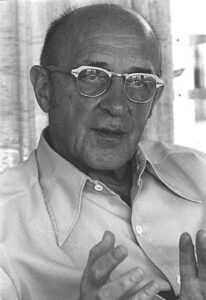
 Carl Rogers
Did you enjoy this article? Checkout the podcast here: https://gettherapybirmingham.podbean.com/
In a remarkable response to the dominant therapeutic models of his era, such as psychoanalysis and behaviorism, Carl Rogers revolutionized the field with his groundbreaking Rogerian therapy, also known as person-centered therapy. With an unwavering commitment to client-centeredness and a profound empathy, Rogers forged a path that celebrated the subjective experience, self-determination, and intrinsic potential for growth within each individual.
During the mid-20th century, psychoanalysis reigned supreme in the realm of therapy, fixating on unraveling unconscious processes and early childhood experiences. However, Rogers recognized the inherent imbalance in this approach, as it positioned the therapist as an authoritative figure possessing expertise, overshadowing the unique perspective and innate self-understanding of the individual seeking help.
Simultaneously, behaviorism wielded considerable influence, emphasizing observable behavior and the power of conditioning. Its reliance on external rewards and punishments to shape behavior, however, fell short for Rogers. He perceived this approach as a disservice to the profound richness of an individual’s inner world, failing to acknowledge their intrinsic worth and capacity for self-direction.
In response to these prevailing models, Rogers crafted person-centered therapy as a radical alternative that placed the client’s subjective experience at the heart of the therapeutic process. He firmly believed in the existence of an innate drive within each person, propelling them toward growth and self-actualization. Rejecting the notion of therapists as authoritative figures responsible for diagnosing and prescribing solutions, Rogers placed utmost importance on establishing a secure, empathetic, and non-judgmental therapeutic environment, one that nurtured trust and fostered a collaborative spirit.
Central to Rogers’ therapy were three pivotal elements: unconditional positive regard, empathy, and congruence. Unconditional positive regard entailed wholeheartedly accepting and valuing the client as an inherently worthy individual, irrespective of their thoughts, feelings, or behaviors. Empathy, a cornerstone of the approach, demanded that therapists delve deeply into the client’s experience, gaining a profound understanding and appreciation of their unique perspective. Congruence, the final essential component, required therapists to embody genuine authenticity, reflecting their own experiences and emotions without pretense.
Rogers’ person-centered therapy swiftly redirected the therapeutic spotlight from the therapist’s expertise to the subjective experience and self-understanding of the client. It introduced a compassionate and supportive framework in which individuals could explore their thoughts, emotions, and aspirations freely. By cultivating self-acceptance and promoting introspection, Rogers posited that clients could tap into their inner reservoirs of resources, gain transformative insights, and embark on a journey of personal growth and self-actualization.
In essence, Carl Rogers’ Rogerian therapy emerged as a profound reaction against the prevailing therapeutic approaches of his time, challenging the authoritative stance of psychoanalysis and the behavioristic focus on external control. By championing empathy, unconditional positive regard, and congruence, Rogers constructed a therapeutic environment that revered the individual’s subjective experience and untapped potential for growth. By placing the client’s self-determination at the forefront and facilitating a profound understanding of their own unique journey, Rogers sought to empower individuals to chart their own course toward personal growth and self-actualization. His legacy endures as a testament to the transformative power of empathy, authenticity, and the inherent resilience of the human spirit.
Carl Rogers Bio
Carl Rogers (1902-1987) stands as an iconic and influential American psychologist, revered for his significant contributions to the development of humanistic psychology. Born on January 8th in Oak Park, Illinois, Rogers’s insatiable curiosity about human behavior blossomed from an early age. Throughout his career, he became an instrumental figure in the realm of psychotherapy and counseling through the creation of his groundbreaking approach known as person-centered therapy.
Rogers embarked on his academic journey by initially pursuing a degree in agriculture at the University of Wisconsin-Madison. However, the yearning to fathom the depths of human psychology soon emerged as his true calling. He redirected his focus to theology and earned a Master of Divinity degree from the Union Theological Seminary in New York City. This theological foundation profoundly influenced his therapeutic approach, instilling in him the belief in the transformative power of unconditional positive regard and acceptance when working with individuals.
In 1931, Rogers completed his Ph.D. in clinical psychology from Columbia University, where he devoted his research efforts to personality measurement and child development. During this formative period, he commenced constructing his humanistic framework for therapy. Rogers ardently posited that every individual possesses an inherent drive toward personal growth and self-actualization, necessitating a therapeutic milieu characterized by support and empathy to facilitate this profound transformative process.
Throughout his illustrious career, Rogers fearlessly challenged the prevailing therapeutic paradigms of his time, notably psychoanalysis and behaviorism. It was through the development of person-centered therapy that he paved an awe-inspiring path forward. This approach placed paramount importance on empathy, unconditional positive regard, and congruence within the therapeutic relationship. Rogers steadfastly believed in the individual’s innate capacity to uncover their own solutions and truths, perceiving the therapist as a compassionate facilitator responsible for creating a secure space conducive to self-exploration and unparalleled personal growth.
Rogers’s impact on the field of psychology and therapy reverberates powerfully to this day. His seminal works, including “Client-Centered Therapy” and “On Becoming a Person,” revolutionized the therapeutic landscape, encapsulating his principles and practices. The person-centered approach birthed by Rogers has achieved global recognition and continues to shape the work of therapists and researchers worldwide.
Carl Rogers served as a professor at esteemed institutions such as Ohio State University and the University of Chicago, profoundly influencing the next generation of aspiring psychologists. In California, he co-founded the Center for Studies of the Person, where he devoted himself to further research, writing, and teaching until his peaceful passing on February 4th, 1987, in San Diego.
Rogers’s enduring legacy as a pioneer of humanistic psychology and person-centered therapy is characterized by his unwavering emphasis on empathy, self-acceptance, and an unyielding belief in the boundless capacity for growth and self-actualization within each individual. His unparalleled contributions have indelibly shaped the field of psychology, serving as a timeless inspiration for countless therapists and forever transforming our understanding and approach to psychological well-being.
Carl Roger’s Technique
Carl Rogers, known for his person-centered approach to therapy, utilized various techniques and had a distinct style that emphasized empathy, unconditional positive regard, and congruence. Additionally, he conducted research that contributed to the field of psychology. Here are some key techniques, style, and research associated with Carl Rogers:
Active Listening:
Rogers emphasized the importance of active listening in therapy. This involved genuinely hearing and understanding the client’s words, emotions, and underlying meanings without judgment or interruption. Active listening allowed the therapist to develop a deep empathic understanding of the client’s experience.
Reflection:
Rogers used reflection as a technique to validate and clarify the client’s feelings and experiences. Through reflective statements, the therapist paraphrased and restated the client’s words, providing a mirror for the client to gain insight into their own thoughts and feelings.
Unconditional Positive Regard:
Rogers believed in providing a non-judgmental, accepting, and supportive environment for clients. Unconditional positive regard involved conveying a deep sense of respect, acceptance, and genuine care for the client, regardless of their thoughts, emotions, or behaviors.
Empathy:
Empathy was a central element of Rogers’ therapeutic style. He aimed to understand and appreciate the client’s subjective experience from their perspective, demonstrating genuine empathy and sensitivity to their emotions and struggles. This empathic understanding fostered trust, openness, and the client’s exploration of their own thoughts and feelings.
Congruence/Authenticity:
Rogers advocated for therapists to be genuine, authentic, and transparent in their interactions with clients. Congruence meant that therapists openly expressed their own emotions, thoughts, and reactions in the therapeutic relationship, creating an atmosphere of honesty and authenticity.
Self-Exploration and Personal Growth:
Rogers believed that therapy should provide a space for clients to explore their inner experiences, develop self-awareness, and facilitate personal growth. His person-centered approach focused on helping individuals tap into their own inner resources and guiding them towards self-actualization.
Research on Psychotherapy:
Rogers conducted extensive research on psychotherapy outcomes and the effectiveness of person-centered therapy. His studies demonstrated the importance of therapeutic factors such as empathy, congruence, and unconditional positive regard in promoting positive change and client satisfaction.
Client-Centered Approach:
Rogers’ person-centered approach emphasized that the client is the expert in their own life. He emphasized the importance of the therapeutic relationship, viewing it as a partnership where the therapist provides support and guidance, but ultimately the client determines their own path towards growth and healing.
Carl Rogers Lasting Impact on the Profession of Psychotherapy
Carl Rogers left an indelible mark on the field of psychology and therapy, pushing the boundaries to their maximum potential and reshaping the profession in profound ways. His innovative ideas and person-centered approach have not only transformed the way therapists engage with clients but have also had a broader impact on our understanding of human nature and mental health. Let’s explore the key aspects of Carl Rogers’ enduring influence on the field:
Revolutionary Person-Centered Therapy:
Rogers’ pioneering development of person-centered therapy introduced a paradigm shift in therapeutic practice. Placing the client at the forefront of the process, this approach fostered a safe, empathetic, and non-judgmental environment for clients to explore their thoughts, emotions, and experiences. Person-centered therapy continues to be widely practiced and has influenced a range of therapeutic modalities and orientations.
Empathy and Active Listening:
Rogers emphasized the vital role of empathy and active listening as fundamental therapeutic skills. By deeply understanding the client’s subjective experience, Rogers paved the way for a more compassionate and understanding approach to therapy. The concept of active listening, marked by attentive and non-judgmental engagement, has become a cornerstone of effective therapeutic practice across diverse orientations.
Transformative Therapeutic Relationship:
Rogers revolutionized our understanding of the therapeutic relationship, recognizing its significance in the healing process. By emphasizing qualities such as unconditional positive regard, genuineness, and empathy, he fostered a climate of trust and collaboration between therapist and client. This shift in focus from techniques to the quality of the therapeutic relationship has become a fundamental tenet of contemporary therapeutic practice.
Client-Centered Empowerment:
Rogers’ client-centered approach prioritized the client’s autonomy, self-determination, and personal growth. Challenging traditional models where the therapist held an authoritative role, he advocated for empowering clients to access their inner resources, make informed decisions, and strive for self-actualization. This client-centered orientation has influenced not only therapy but also other domains like coaching and counseling.
Research and Outcome Studies:
Rogers conducted extensive research on psychotherapy outcomes, effectiveness, and the therapeutic process. His studies underscored the importance of factors such as the therapeutic relationship, client engagement, and personal growth in achieving positive outcomes. Rogers’ research has contributed to the evidence base of psychotherapy and highlighted the significance of client-focused approaches in facilitating change.
Humanistic Psychology:
Rogers played a central role in the development of humanistic psychology, which emphasizes a holistic understanding of individuals and their potential for self-actualization. Alongside other humanistic psychologists, he challenged reductionistic and deterministic perspectives, shedding light on the subjective experiences, values, and meaning-making of individuals.
Carl Rogers’ enduring impact on the therapy profession extends far beyond his lifetime. His ideas and contributions have shaped the therapeutic landscape, influencing a multitude of approaches and orientations. The emphasis on empathy, active listening, the therapeutic relationship, and client empowerment has become integral to contemporary practice. Furthermore, Rogers’ humanistic principles have had a far-reaching influence, fostering a more comprehensive understanding of human nature and promoting a compassionate, person-centered approach to mental health and well-being.
Bibliography:
Rogers, C. R. (1951). Client-Centered Therapy: Its Current Practice, Implications, and Theory. Houghton Mifflin.
Rogers, C. R. (1961). On Becoming a Person: A Therapist’s View of Psychotherapy. Houghton Mifflin.
Rogers, C. R. (1965). The Therapeutic Relationship and Its Impact: A Study of Psychotherapy with Schizophrenics. University of Wisconsin Press.
Rogers, C. R. (1980). A Way of Being. Houghton Mifflin.
Rogers, C. R., & Sanford, R. C. (1984). Client-Centered Psychotherapy. In H. I. Kaplan & B. J. Sadock (Eds.), Comprehensive Textbook of Psychiatry/IV (Vol. 1, pp. 1723-1735). Williams & Wilkins.
Kirschenbaum, H. (1979). On Becoming Carl Rogers. Delacorte Press.
Kirschenbaum, H., & Henderson, V. L. (Eds.). (1990). The Carl Rogers Reader. Houghton Mifflin.
Thorne, B. (1992). Carl Rogers. Sage Publications.
Further Reading:
Cain, D. J. (2002). Classics in the Person-Centered Approach. PCCS Books.
Cain, D. J. (2010). Person-Centered Psychotherapies. American Psychological Association.
Cornelius-White, J. H., Motschnig-Pitrik, R., & Lux, M. (Eds.). (2013). Interdisciplinary Handbook of the Person-Centered Approach: Research and Theory. Springer.
Frankel, Z. V., & Sommerbeck, L. (Eds.). (2010). Client-Centered and Experiential Psychotherapy in the 21st Century: Advances in Theory, Research and Practice. PCCS Books.
Joseph, S. (2019). The Person-Centered Approach to Therapeutic Change. SAGE Publications.
Mearns, D., & Thorne, B. (2013). Person-Centred Counselling in Action. SAGE Publications.
Rogers, C. R. (1951). Significant Aspects of Client-Centered Therapy. American Psychologist, 6(4), 95-103.
Rogers, C. R. (1957). The Necessary and Sufficient Conditions of Therapeutic Personality Change. Journal of Consulting Psychology, 21(2), 95-103.
Schmid, P. F., & Mearns, D. (2006). Being-With and Being-For: Essentials of a Person-Centered Approach. Person-Centered and Experiential Psychotherapies, 5(4), 296-307.



















0 Comments