The Intellectual Foundations of Ken Wilber’s Integral Theory: A Deep Dive into His Sources

The Intellectual Foundations of Ken Wilber’s Integral Theory: A Deep Dive into His Sources

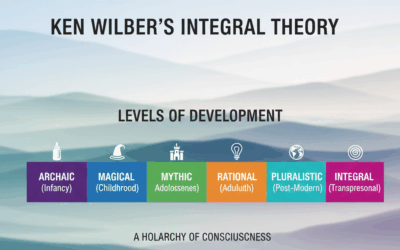
Ken Wilber's Integral Theory: Architecture, Ambition, and the Anatomy of Its Decline Ken Wilber's Integral Theory stands as one of the most ambitious intellectual projects of the late twentieth century, attempting nothing less than a comprehensive synthesis of human knowledge across all domains of inquiry. From its emergence in the 1970s through its peak influence in the early 2000s to its current marginal status in academic and clinical circles, the trajectory of Integral Theory offers profound lessons about the...
read more
The Anthropology of Feeling Dirty: Mary Douglas, OCD, and the Purification of the Self

The Anthropology of Feeling Dirty: Mary Douglas, OCD, and the Purification of the Self

Why trauma survivors feel "stained" even when nothing physical happened—and how ritual can restore the symbolic order of the self. The Sensation That Won't Wash Away She scrubs her hands until they're raw. She's been doing it for months now, ever since the assault. The soap, the hot water, the endless repetition—none of it helps. She knows, intellectually, that she's not dirty. Nothing visible stains her skin. Yet the sensation persists: a feeling of contamination that no amount of washing can remove. This is one...

read more
Counselor Near Me: Why the Best Match Isn’t About Reviews

Counselor Near Me: Why the Best Match Isn’t About Reviews

You're sitting in your car after another sleepless night, phone in hand, typing "counselor near me" into Google for the fifth time this week. The results are overwhelming – dozens of smiling faces, all promising to help, most with 4.8 stars or higher. You click on the one with the most reviews, the one everyone says is "the best," and book an appointment. Six sessions later, you're wondering why you feel worse than when you started. Here's what no one tells you about finding a counselor: the highest-rated...

read more
Exploring the Depths of Jungian Psychology with Quique Autrey | PSYCHE Podcast Interview

Exploring the Depths of Jungian Psychology with Quique Autrey | PSYCHE Podcast Interview

In this captivating episode of the PSYCHE podcast, host Quique Autrey embarks on a deep dive into the world of Jungian psychology with guest Joel Blackstock. Together, they explore a wide range of topics, from the potential oversimplification of Jung's ideas by American Jungians to the neurological validation of Jung's phenomenological map of the soul. Joel's Journey: From CBT to Depth Psychology and Somatic Practices Joel shares his personal journey, starting with his early exposure to mythology and religion,...

read more
The Mystical Roots and Therapeutic Fruits of Initiation Rites

The Mystical Roots and Therapeutic Fruits of Initiation Rites

Is Psychotherapy a Type of Initiation Have you ever been part of a fraternity, sorority, or similar organization? If so, you may have experienced rituals or ceremonies that felt both challenging and transformative. Even if you haven't, you've likely encountered such rites of passage in religious services, coming-of-age celebrations, or weddings. These experiences tap into a deep human need for initiation—a symbolic death and rebirth that ushers us into a new stage of life. We see this theme in modern day rituals...

read more

How Did Jung and Freud’s Parents Effect Their Psychology

Is Religious Cosmology Just the Unlived Life of the Parent?  A commonly quoted fact about astronomy is that the Universe is “expanding”, but that’s not really true. Our universe is nothing more than a giant ball of rules that we can measure. Rules like time, temperature, and distance. We say that the Universe is “expanding” because the amount of space we can measure inside it is increasing. We have no way of knowing what is outside of this ball of rules. It is doubtful that measurements like time and temperature...

read more
Is The Pineal Gland an Evoloutionary Basis for Archetypes

Is The Pineal Gland an Evoloutionary Basis for Archetypes

The Subcortical Brain and the Roots of the Unconscious Evolutionary Pathways from the Parietal Eye to Affective Consciousness The human mind presents itself as a paradox of evolutionary engineering. Conscious awareness—that luminous theater of thought, language, and self-reflection—represents merely the visible portion of a vast cognitive architecture. Beneath the folded convolutions of the neocortex lies an ancient terrain that we share with lineages stretching back to the earliest vertebrates: the subcortical...

read more
What Does Mysticsim have to do with Therapy?

What Does Mysticsim have to do with Therapy?

The Mystical Depths of the Psyche: Exploring the Intersection of Mysticism, Psychology, and Psychotherapy Throughout history, humans have sought to understand the depths of their own minds and souls through various mystical and spiritual traditions. In recent times, the fields of psychology and psychotherapy have also delved into the inner workings of the psyche, often drawing upon mystical concepts. This essay explores the fascinating intersection of mysticism, psychology, and psychotherapy, examining how these...

read more
Illuminating the Mind: Lessons Psychology Can Learn from Anthropology and Philosophy

Illuminating the Mind: Lessons Psychology Can Learn from Anthropology and Philosophy

  Psychology Beyond the Individual Time moves in one direction, memory in another. We are that strange species that constructs artifacts intended to counter the natural flow of forgetting. — William Gibson, "Dead Man Sings" How Philosophy and Anthropology Enrich the Path to Mental Well-being Psychology, as the scientific study of the mind and behavior, has made tremendous strides in understanding the human experience. Through empirical rigor, it has mapped cognitive biases, decoded neural pathways, and...

read more
Vipassana Meditation: An Ancient Technique for Developing Insight and Equanimity

Vipassana Meditation: An Ancient Technique for Developing Insight and Equanimity

Executive Summary: The Neurobiology of Insight The Mechanism: Vipassana acts as a neural "interrupter," breaking the feedback loop between the Amygdala (fear center) and the Default Mode Network (rumination). It forces the brain to process "bottom-up" somatic data rather than "top-down" narratives. The Clinical Verdict: While highly effective for rewiring the traumatized brain's response to stress, it carries a risk of flooding. Without a sufficient "Window of Tolerance," the silence can amplify dissociation...

read more
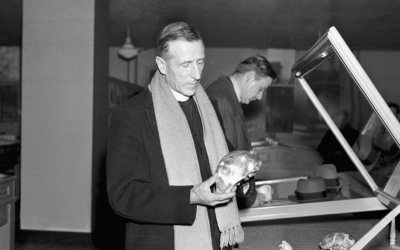
Pierre Teilhard de Chardin: Reconciling Matter and Spirit

Pierre Teilhard de Chardin: Reconciling Matter and Spirit

Who was Pierre Teilhard de Chardin? Pierre Teilhard de Chardin (1881-1955), the French Jesuit priest, paleontologist, and philosopher, devoted his life to reconciling the realms of matter and spirit, science and religion. His unique vision sought to bridge the apparent chasm between the tangible world of atoms and molecules and the intangible world of consciousness and divinity. Teilhard's thought, as expressed in his seminal work The Heart of Matter, resonates with the ancient wisdom of Gnosticism, which...

read more
St. John of the Cross: Mystical Wisdom for Modern Psychology

St. John of the Cross: Mystical Wisdom for Modern Psychology

St. John of the Cross: The Psychologist of Divine Darkness "In the evening of life, we will be judged on love alone." — St. John of the Cross In the crucible of 16th-century Catholic reform, one man's profound mystical insights illuminated the path of spiritual transformation in a way that continues to resonate with seekers across traditions and modern psychologists alike. St. John of the Cross (1542–1591), the renowned Spanish mystic, Carmelite friar, and Doctor of the Church, gifted humanity with a corpus of...

read more
Gordon Alport: The Science of Personality

Gordon Alport: The Science of Personality

Who was Gordon Alport? Gordon Allport (1897-1967) was a pioneering American psychologist who made significant contributions to the study of personality, social psychology, and the psychology of religion. He is best known for his trait theory of personality, which emphasizes the importance of individual differences and the unique patterns of traits that define each person's personality. Allport's work helped to establish personality psychology as a major field of study and influenced generations of researchers and...

read more
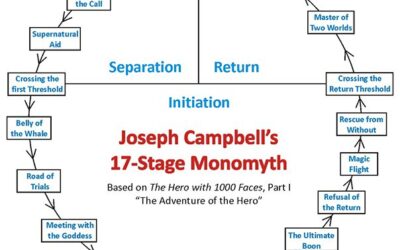
Joseph Campbell’s The Hero’s Journey in Psychotherapy

Joseph Campbell’s The Hero’s Journey in Psychotherapy

Confronting the Shadow of Mental Health Challenges The hero's journey is a powerful narrative structure that has shaped storytelling across cultures and throughout history. First articulated by mythologist Joseph Campbell, the hero's journey follows a protagonist's transformative quest to overcome challenges and emerge victorious. This archetypal story arc has profoundly influenced literature, film, and even the practice of psychotherapy, providing a framework for understanding personal growth and the...

read more
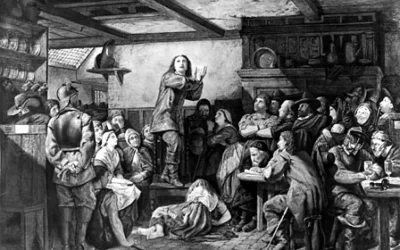
George Fox and the Quaker Path to Integration and Wholeness

George Fox and the Quaker Path to Integration and Wholeness

  Who was George Fox?   George Fox (1624-1691), the founder of the Religious Society of Friends (Quakers), developed a form of Christian spirituality that continues to offer valuable insights for contemporary psychology and spiritual practices. This article explores Fox's key teachings and their relevance to modern well-being and personal growth. Key Concepts in Fox's Teachings 1. The Inner Light Central to Fox's philosophy Belief in direct, unmediated experience of God within every individual Challenges...

read more
Emanuel Swedenborg’s Mystical Visions and Their Influence on Carl Jung’s Psychology

Emanuel Swedenborg’s Mystical Visions and Their Influence on Carl Jung’s Psychology

Who was Emanuel Swedenborg? Emanuel Swedenborg, a Swedish philosopher, scientist, and mystic who lived from 1688 to 1772, had a profound impact on the development of Western spirituality and psychology. His visionary experiences and ideas about the nature of the spiritual world and its relationship to the material realm influenced many thinkers, including the renowned Swiss psychiatrist Carl Jung. “Kindness is an inner desire that makes us want to do good things even if we do not get anything in return. It is the...

read more
Sri Aurobindo and Carl Jung: Pioneers of Consciousness and the Implications for Psychology and Psychotherapy

Sri Aurobindo and Carl Jung: Pioneers of Consciousness and the Implications for Psychology and Psychotherapy

Who was Sri Aurobindo? "There is nothing mind can do that cannot be better done in the mind's immobility and thought-free stillness. When mind is still, then truth gets her chance to be heard in the purity of the silence." — Sri Aurobindo Sri Aurobindo, an Indian philosopher and yogi, and Carl Jung, a Swiss psychiatrist, were two of the most influential thinkers of the 20th century. Despite coming from different cultural backgrounds and intellectual traditions, their ideas about the nature of consciousness and...

read more