

Psychology Beyond the Individual
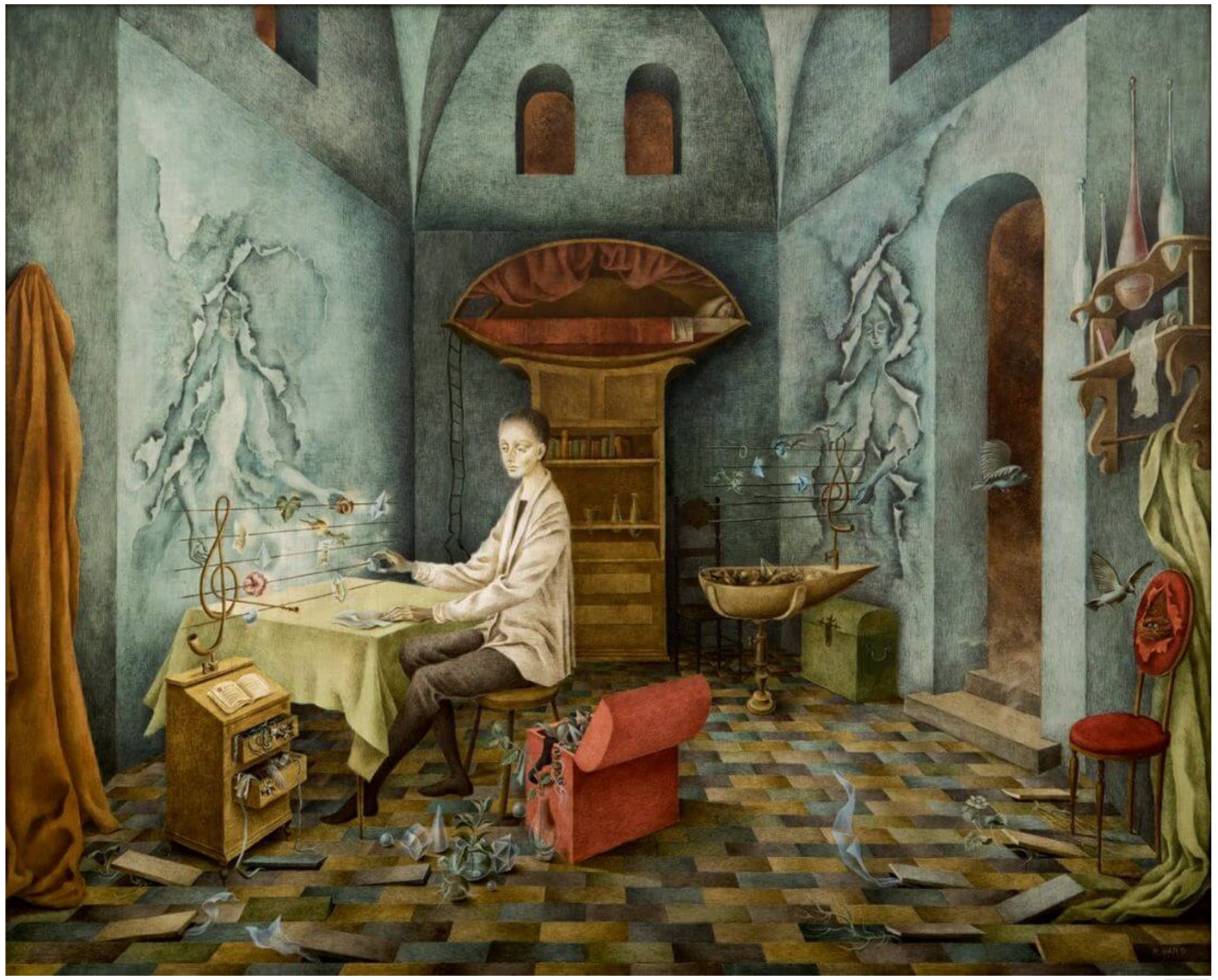
Time moves in one direction, memory in another. We are that strange species that constructs artifacts intended to counter the natural flow of forgetting.
How Philosophy and Anthropology Enrich the Path to Mental Well-being
Psychology, as the scientific study of the mind and behavior, has made tremendous strides in understanding the human experience. Through empirical rigor, it has mapped cognitive biases, decoded neural pathways, and developed effective treatments for profound suffering. However, its frequent default—a methodological inheritance from the natural sciences—to seeing the mind as an internal, individual, and universal entity can limit its scope. This perspective often brackets out the vast, messy, and meaningful contexts that make us human. To truly grasp the complexities of mental life, we must turn to two essential disciplines: philosophy and anthropology. These fields offer profound insights that create a more holistic, contextual, and meaning-centered approach. By dialoguing with the wisdom they provide, psychology can move beyond its unexamined assumptions and argue that the psyche is not a discrete object but a dynamic process, profoundly shaped by bodily, cultural, relational, and existential contexts. This integration allows us to imagine powerful new possibilities for healing and flourishing.
The Cultural Psyche: Mind as a Social Artifact
Anthropology’s core insight is that human experience is irreducibly cultural. Thinkers like David Abram, in his work on the “ecology of enchantment,” demonstrates how our very perception is an act of participation with the “more-than-human” world, suggesting our senses are shaped by the land itself. Similarly, Victor Turner‘s explorations of ritual, “liminality” (the betwixt-and-between state), and “communitas” (the unstructured bond of community) reveal how societies structure psychological transformation. Rites of passage are not mere traditions; they are potent psychological technologies for navigating life transitions. This perspective challenges psychology’s tendency toward universalism, proving that symptoms of distress (e.g., hearing voices, ecstatic states) may be adaptive, or even sacred, within a different cultural lens.
This cultural context is so powerful that it forms what Erich Fromm called a “social unconscious,” a set of shared, repressed assumptions that filter reality for an entire society. Frantz Fanon provided a searing analysis of this process in the colonial context, detailing how societal dynamics of power and oppression become “epidermalized”—written onto the black body as a psycho-affective experience of inferiority. This is not individual pathology; it is a shared, political trauma. Critical psychologists like Derek Hook, drawing on Michel Foucault, extend this critique. Foucault’s concepts of “power/knowledge” and the “medical gaze” reveal how psychology itself can become a tool of power, reproducing societal norms by defining what is “normal” and “pathological,” thereby making justice and cultural reflexivity central to any true therapeutic praxis.
This cultural mediation is embedded in our most basic tool: language. Edward Sapir and Benjamin Lee Whorf famously argued in their hypothesis of linguistic relativity that a language’s structure shapes its speakers’ worldview. As Ludwig Wittgenstein held, “the limits of my language mean the limits of my world.” This is the foundation of cultural psychology, where researchers like Richard Shweder, Hazel Markus, and Shinobu Kitayama have empirically demonstrated how core psychological processes, from “happiness” to self-concept (e.g., the “independent” Western self vs. the “interdependent” Eastern self), differ profoundly across cultures. A powerful real-world example of this is the Hearing Voices Movement, which actively challenges the purely biomedical model by reframing “auditory hallucinations” as a meaningful—if difficult—human experience, rather than an unequivocal symptom of pathology.
The Embodied Mind: Thinking Through the Body
Both philosophy and anthropology challenge psychology’s Cartesian legacy of a mind-body split. The phenomenologist Maurice Merleau-Ponty argued for the “primacy of perception,” positing that the “lived body” (*le corps propre*) is our fundamental way of being-in-the-world. We are not a “ghost in a machine”; we are our bodies. Perception is an active, embodied process of engagement, not a passive reception of data. This shift toward an embodied, enactive view suggests that healing is not just about changing our thoughts (“cognitivism”) but involves reintegrating our felt sense of being—our posture, breath, and visceral sensations.
This perspective radically decenters rational thought. It aligns perfectly with neuroscientist Antonio Damasio’s “somatic marker hypothesis,” which demonstrates that rational decision-making is impossible without emotional, “gut” feelings. These somatic markers are the body’s way of thinking. This invites a fuller attendance to the irrational, embodied, affective dimensions of mind. The mind, in this view, is not confined to the skull. Philosopher Andy Clark suggests the mind is “extended,” interwoven with the active, sensing body and external tools. A blind person’s cane, a notebook, or a smartphone are not just *aids* to cognition; they become *part* of the cognitive system itself.
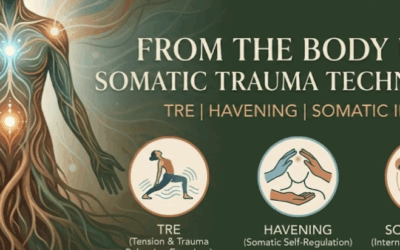
Building on Merleau-Ponty’s work, contemporary theorists like Francisco Varela, Evan Thompson, and Eleanor Rosch developed the concept of “enaction.” They argue that cognition is not a process of internal representation (like a computer) but an act of “bringing forth a world” through our sensorimotor engagement. This suggests mental health is a function of *how* we inhabit our bodily “being-in-the-world.” This is captured in Jakob von Uexküll‘s concept of umwelt—the unique, subjective perceptual world of an organism. A tick’s *umwelt* is composed of butyric acid and warmth; a human’s is a rich tapestry of color, sound, and meaning. Understanding another’s *umwelt* is the root of empathy and explains the profound, bottom-up efficacy of body-oriented practices like Somatic Experiencing or EMDR.
The Storied Self: Identity as Narrative and Dialogue
These fields also converge to challenge the Western notion of a singular, unitary self. Thinkers like Paul Ricoeur and Jerome Bruner argue that personal identity is not a fixed essence but an ongoing narrative, a story we tell ourselves *about* ourselves, shaped by the “cultural plotlines” available to us. Ricoeur brilliantly distinguished between *idem*-identity (sameness, like a fingerprint) and *ipse*-identity (self-constancy, like keeping a promise). We are who we are not because we are the “same” from day to day, but because we actively weave our experiences into a coherent, ongoing story. This underscores the therapeutic power of helping people re-author their life stories from ones of victimhood to ones of survival and agency.
This narrative self is also fundamentally relational and dialogical. Martin Buber’s distinction between the “I-Thou” (a mutual, authentic encounter) and “I-It” (a relationship of utility and objectification) provides the basis for authentic relation. For Buber, the psyche is not “in” the person but lives in the “space between.” The Russian philosopher Mikhail Bakhtin saw the psyche as “polyphonic,” like a Dostoyevsky novel, a chorus of inner voices in constant conversation. This “dialogical self” framework, later explored by Gilles Deleuze with his concept of the “rhizome” (a non-hierarchical network), sees the self as a multiplicity. This suggests health is less about forced integration into a “single” self and more about fostering flexibility and compassion between these inner parts, as seen in therapies like Internal Family Systems (IFS).
This “relational turn” is rooted in the hard science of intersubjectivity. Developmental psychologist Colwyn Trevarthen showed that infants are born with “primary intersubjectivity,” ready for “protoconversations” with caregivers, attuning to rhythm, tone, and gaze long before language. Daniel Stern, in his minute observations, argued that the self is an emergent property of these relational moments. Relational psychoanalysts like Stephen Mitchell built on this, seeing the therapeutic encounter as a “relational matrix”—a meeting of two subjectivities that co-create a new reality. The individual mind is, in this sense, a social achievement.
The Soul’s Code: Meaning, Existence, and Transcendence
Finally, these disciplines enrich psychology by re-centering meaning, existence, and transcendence—dimensions often bracketed out by secular science. Philosophers like Hans-Georg Gadamer and Paul Ricoeur developed hermeneutics, the art of interpretation. From this view, symptoms are not brute facts but “texts”—embodied communications to be deciphered. Therapy becomes a “fusion of horizons” (Gadamer’s term) where client and therapist co-create a new, richer understanding. Often, this suffering is entangled with the “givens” of the human condition, as explored by existential philosophers like Jean-Paul Sartre (who spoke of our “radical freedom” and “bad faith”) and Soren Kierkegaard (who called anxiety “the dizziness of freedom”). Psychotherapists such as Rollo May, Irvin Yalom (famous for his “four givens”: death, freedom, isolation, and meaninglessness), and James Bugental operationalized this, creating therapies that help people face existential anxiety with courage and authenticity.
This work is rooted in Edmund Husserl‘s phenomenology—the study of lived experience, which asks us to “bracket” our assumptions and return “to the things themselves.” This psyche is also inherently poetic. Ernst Cassirer saw humans as “symbolic animals,” creating worlds through myth and ritual. Gaston Bachelard explored the “poetics of space,” arguing that the house, with its attic and cellar, is a universal map of the soul. This view is championed by archetypal psychology, founded by James Hillman. Drawing on Platonic thought and the work of Carl Jung, Hillman re-visions the soul (psyche) as an objective field of archetypal images, arguing for an “acorn theory” that we are each born with a unique *daimon*, or calling.
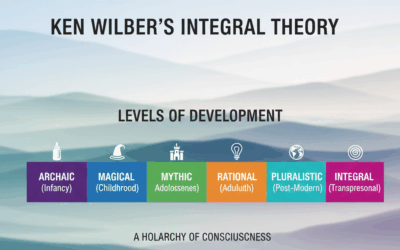
This reclaims the spiritual dimension, which depth psychologists like Roberto Assagioli (founder of Psychosynthesis) and transpersonal thinkers like Stanislav Grof (pioneer of holotropic breathwork) and Ken Wilber (creator of “integral theory”) see as integral to healing. This includes transpersonal states of consciousness. William James, in *The Varieties of Religious Experience*, argued for their pragmatic value. Mircea Eliade mapped the “sacred and profane” across cultures. Michael Winkelman‘s anthropological work demonstrated the cross-cultural universality of shamanic healing states. And Henri Bergson argued for the reality of “intuition” and the *élan vital* (creative life force) as data that exceeds rational analysis. Today, contemplative science rigorously studies how practices like meditation can produce measurable changes in brain function, challenging the idea of a fixed adult mind and expanding our understanding of human possibility. By integrating these holistic perspectives, psychology can move beyond reductionism and embrace a more powerful, context-sensitive, and compassionate vision of human flourishing.
Disclaimer
This article provides an in-depth exploration of holistic mental health perspectives informed by philosophy and anthropology. The information is for educational purposes and is not a substitute for professional medical or psychological advice. Seek professional guidance for all mental health concerns.





0 Comments