
How to Use Philosophy in Existential Therapy

Philosophy and psychology have long been intertwined, both seeking to understand the complexities of the human mind and experience. By applying philosophical frameworks as lenses of inquiry, we can gain deeper insights into psychological phenomena and develop more effective therapeutic practices. Let’s explore how approaches like phenomenology, epistemology, existentialism, and others offer valuable perspectives for psychology.
Phenomenology: Exploring Lived Experience
Phenomenology, developed by philosophers like Edmund Husserl and Maurice Merleau-Ponty, emphasizes the study of conscious experience as it is lived and felt by individuals. By bracketing preconceptions and attending closely to the textures and structures of subjective experience, phenomenology aims to access deeper layers of meaning.
For psychology, phenomenology provides a rich approach to understanding the inner worlds of clients. As Carl Jung recognized, focusing on first-person experience allows therapists to explore aspects of the psyche that may be pre-verbal or symbolic, beneath the level of language. Phenomenological attunement – closely attending to the client’s own words, metaphors, embodied feelings – can foster empathy and insight.
Merleau-Ponty’s emphasis on embodiment is also vital for psychology. Recognizing how the lived body shapes our perceptions and emotions, not just the mind, opens possibilities for somatic and body-based therapies. Phenomenology reminds us that consciousness is always embodied and embedded in the world.
Existentialism: Engaging Ultimate Concerns
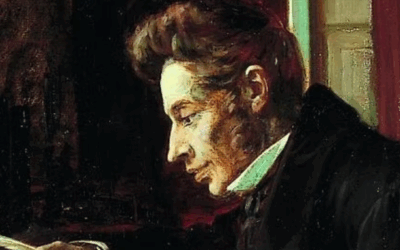
Existentialism, advanced by thinkers like Martin Heidegger, Jean-Paul Sartre, and Søren Kierkegaard, grapples with the fundamental challenges of the human condition – freedom, isolation, meaninglessness, death. By confronting these “ultimate concerns” head-on, existential thought aims to foster a deeper, more authentic way of being.
Existential themes frequently emerge in therapy, as clients struggle with questions of purpose, responsibility, and finitude. Rather than avoiding these weighty topics, existential therapists like Irvin Yalom engage them directly as pathways to growth. Facing our existential anxieties and crafting lives of meaning and commitment in spite of them is the hallmark of existential resilience.
The existentialist emphasis on radical freedom and choice is also powerful for therapy. Recognizing that we always retain the ability to take a stance toward our circumstances, no matter how limiting, can catalyze empowerment and change. An existential lens reframes therapy as a space to expand awareness, claim authorship of one’s life, and “choose to choose.”
Hermeneutics: Interpreting Meaning
Hermeneutics, the theory of interpretation advanced by Paul Ricoeur, Hans-Georg Gadamer, and others, studies how we derive meaning from lived experience and linguistic/cultural worlds. Hermeneutics recognizes that our realities are fundamentally shaped through interpretation, an ongoing dialectic between self and world, past and present.
For therapy, hermeneutics provides a framework for interpreting and re-authoring clients’ narrative identities. Our sense of self emerges from the stories we tell about our lives, consciously and unconsciously. Therapy can be a space to critically examine these stories, to excavate their origins, and to expand our capacity for meaning-making.
Hermeneutics also attunes therapists to cultural context. Our interpretive horizons are embedded in historical traditions, value systems, power dynamics. Responsibly navigating the sometimes radical differences between therapist and client requires hermeneutic sensitivity, an ability to question one’s own pre-judgments and remain open to other meaning systems.
Epistemology: Examining How We Know
Epistemology inquires into the nature, sources, and limits of knowledge. Philosophers like Immanuel Kant and Saul Kripke have examined fundamental questions of what justifies belief, the relationship between knower and known, and whether we can establish certain universal truths or foundations for knowledge.
While dense, epistemology is relevant to psychology’s own self-understanding as a discipline. What is the epistemic status of our theories and practices? How do we “know” the minds of others, and with what certainty or limits? Reflecting on these questions can sharpen the philosophical foundations of psychology.
Epistemology also raises questions of power relevant to the therapy relationship. Who gets to be a “knower” and make knowledge claims? How might the unequal epistemological authority between therapist and client play out, especially across dimensions of social identity? An epistemological lens can make visible previously unseen dynamics that shape the therapeutic encounter.
Critical Theory: Emancipation Through Critique
Critical theory, developed by the Frankfurt School and thinkers like Michel Foucault, examines the psychological impacts of oppressive social/political conditions. By exposing the subtle workings of power, domination, and ideology, critical theory aims to catalyze resistance and liberation.
A critical lens is vital for socially responsible therapy. Understanding how distress is often rooted in oppressive systems, not just individual psyches, can depathologize client struggles. Therapy can become a space for conscientization, for deepening analysis of the social matrix and building empowered capacity to challenge it.
Critical ideas like Foucault’s “disciplinary power” are also relevant to therapy itself as a institution. How might prevailing psychological discourses and practices unwittingly reinforce problematic norms or limit human possibility? Turning critique inward can spur continual transformation of the field.
Moving Forward
Philosophy provides profound tools for psychology to examine its foundations, expand its horizons, and sharpen its practices. By thinking with and through key philosophical ideas, we can develop a more reflexive, critical, and humane approach to understanding and caring for the human mind.
Of course, translating between philosophy and psychology is not always straightforward. Dense texts must be adapted to clinical contexts; abstract ideas must be made concrete. But the effort is worthwhile to build a psychology that is grounded in the deepest wells of human thought.
As the field grows, psychologists can be intellectually ambitious in borrowing from philosophy to broaden their conceptual and practical toolbox. An integrative and generative dialogue between the disciplines can yield new insights and innovations. At its best, psychology is a kind of philosophy in action – a praxis of the mind aimed at reducing suffering and unlocking human possibility.













0 Comments