The Enduring Wisdom of Ernest Becker’s “The Denial of Death”

by | Jul 31, 2024 | 0 comments

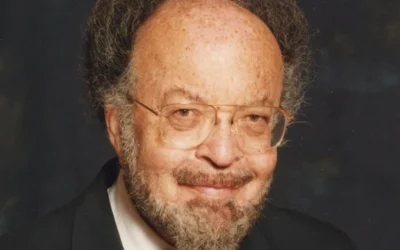
Who was Ernest Becker?
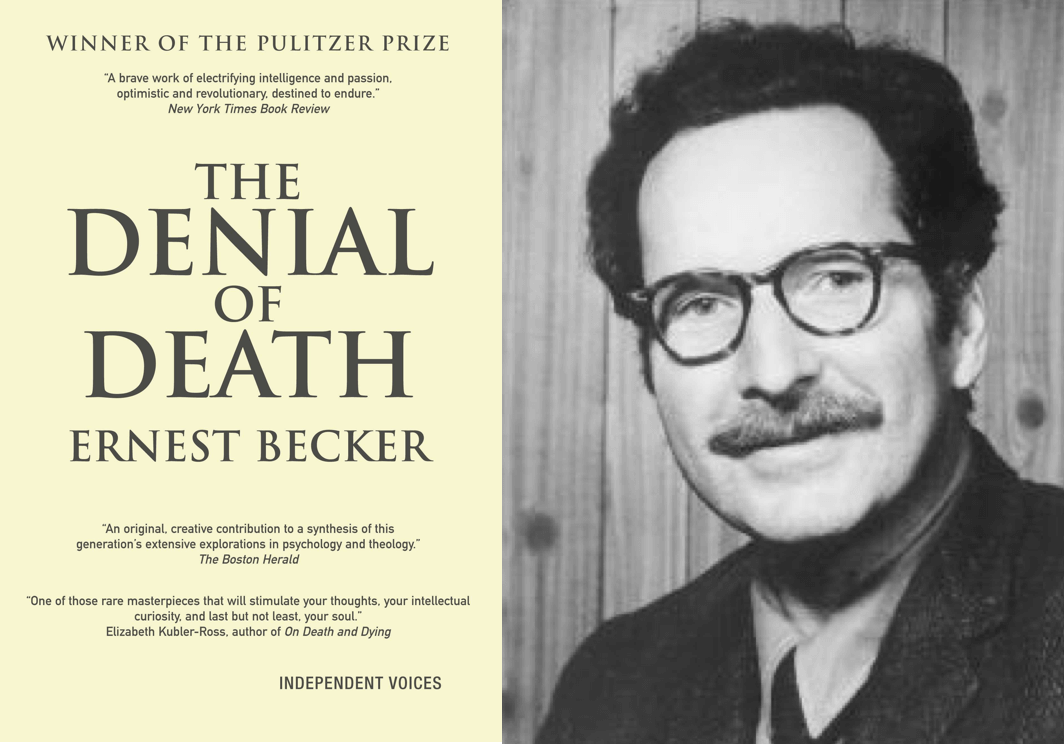
In the labyrinth of the evolving profession of psychology few books have had as subtle influence on the profession as Ernest Becker’s “The Denial of Death.” Awarded the Pulitzer Prize for General Non-Fiction in 1974, this groundbreaking book offers a profound exploration into the human psyche’s struggle with and avoidance of  the inevitability of death. Becker’s thesis, rooted in the concept of “terror management theory,” suggests that the fear of death underpins much of human behavior, driving us to construct elaborate psychological defenses to cope with this existential dread. This article aims to dissect the intricate arguments, themes, and potential resolutions presented in Becker’s magnum opus, underscoring its pertinence in our contemporary quest for meaning and legacy.

The Core of Becker’s Argument: Terror Management Theory

Becker introduces the concept of terror management theory as the foundation of his thesis, proposing that all human culture is ultimately an elaborate, symbolic defense mechanism against the knowledge of our mortality. This theory suggests that in order to manage the terror stemming from our awareness of death, humans create cultural worldviews—myths, religions, and philosophies that imbue life with meaning and contribute to a sense of permanence and legacy.

The Quest for Immortality: Symbolic and Literal

Humans, according to Becker, engage in a dual quest for immortality: symbolic and literal. Symbolic immortality is sought through achievements, creations, and contributions that ensure one’s name and legacy live on long after physical death. Literal immortality, on the other hand, is pursued through religious and spiritual beliefs in an afterlife or reincarnation, providing a more direct denial of death’s finality.

Symbolic Immortality Through Wealth and Power

The accumulation of wealth and the quest for power are seen as primary mechanisms for achieving symbolic immortality. By amassing fortunes and erecting monuments—whether they be skyscrapers, corporations, or charitable foundations—individuals strive to leave behind a tangible mark of their existence. This drive is often fueled by the desire to be remembered, to have one’s name etched into the annals of history, and to influence future generations.

Legacy Through Progeny: The Ego’s Extension

Becker delves into the complex dynamics of familial legacy, examining how the desire to live on through one’s progeny can manifest in unhealthy expectations and pressures. This aspect of immortality seeking involves projecting one’s ambitions, values, and unfulfilled dreams onto children, viewing them not as independent beings but as extensions of oneself. This, Becker argues, can stifle personal growth and lead to generational conflicts.

The Role of Religion and Ideology

Religion and ideology play crucial roles in Becker’s analysis, serving as both solace and sanctuary from the terror of death. Through religious belief and ritual, individuals connect with a sense of eternal life, whether it be in the form of heaven, reincarnation, or spiritual legacy. Ideologies, including political and social movements, offer a different kind of immortality, promising one’s place in the trajectory of history.

Navigating Mortality: Towards Healthier Engagements

Despite the grim undertones of Becker’s thesis, he does not leave us adrift in existential despair. Instead, he offers pathways towards healthier engagements with our mortality, emphasizing authenticity, creativity, and altruism as means to transcend the fear of death.

Authenticity and Individuality

Becker advocates for an embrace of authenticity and individuality, urging us to live in accordance with our true selves rather than conforming to external expectations or societal norms. By fostering genuine self-expression and pursuing passions, we can create a life that, while finite, is rich in meaning and satisfaction.

Creativity as Legacy

Artistic and creative endeavors offer powerful avenues for confronting and transcending the fear of death. Through creation—be it art, literature, music, or innovation—we leave behind a piece of ourselves, a testament to our existence that can inspire, comfort, and provoke long after we are gone. This form of legacy, rooted in positive contribution rather than domination or control, represents a more constructive engagement with the desire for immortality.

Altruism and Making a Difference

Altruistic actions and the desire to make a positive impact on the world reflect another path towards a meaningful legacy. By contributing to the betterment of society, championing causes, and helping those in need, we achieve a sense of connection to something larger than ourselves. This, Becker suggests, can mitigate the terror of death by embedding our lives within a broader narrative of human progress and compassion.

Embracing Mortality, Enriching Life

Ernest Becker’s “The Denial of Death” serves as a profound meditation on the human condition, offering both a diagnostic of our deepest fears and a prescription for living a meaningful life. By confronting the reality of our mortality, we are invited to reconsider our priorities, values, and the legacy we wish to leave behind. Becker’s work, though anchored in the psychological theories of the 20th century, remains a timeless guide for those seeking to navigate the complexities of existence with courage, creativity, and compassion. In an age marked by rapid change and existential uncertainties, the wisdom encapsulated in “The Denial of Death” echoes louder than ever, urging us to face our fears and embrace the finite nature of life as a catalyst for genuine fulfillment and lasting impact.

Bibliography

Becker, E. (1973). The Denial of Death. New York: Free Press.

Greenberg, J., Pyszczynski, T., & Solomon, S. (1986). The causes and consequences of a need for self-esteem: A terror management theory. In R. F. Baumeister (Ed.), Public Self and Private Self (pp. 189-212). New York: Springer-Verlag.

Yalom, I. D. (2008). Staring at the Sun: Overcoming the Terror of Death. San Francisco: Jossey-Bass.

Solomon, S., Greenberg, J., & Pyszczynski, T. (2015). The Worm at the Core: On the Role of Death in Life. New York: Random House.

Influential Psychologists
Sigmund Freud

Ernest Becker

Fritz Perls 

Virginia Satir

JL Moreno 

Albert Ellis

Carl Rogers

Alfred Adler

Wilhelm Reich 

Eugen Bleuer

Herbert Silberer

Pierre Janet

Milton Erickson

Anna Freud

Gordon Alport

Mary Ainsworth

Harry Harlow

John Watson

Stanley Milgram

Donald Winnicott

Lev Semyonovich

B.F. Skinner

Ivan Pavlov

Kurt Lewin

Jean Piaget

Elisabeth Kubler Ross

Erik Erickson

Abraham Maslow

Theodore Millon

Explore the Other Articles by Categories on Our Blog 

Hardy Micronutrition is clinically proven to IMPROVE FOCUS and reduce the effects of autism, anxiety, ADHD, and depression in adults and children without drugsWatch Interview With HardyVisit GetHardy.com and use offer code TAPROOT for 15% off

Who was Theodore Millon?

Who was Theodore Millon?

The Grand Unifier: Theodore Millon and the Mathematical Architecture of the Self In the fragmented landscape of 20th-century psychology, where clinicians pledged loyalty to competing schools of thought like feudal lords, Theodore Millon (1928–2014) stood as a rare...

What is a Diagnosis Anyway: Is the DSM Dying Part 2

What is a Diagnosis Anyway: Is the DSM Dying Part 2

The Archaeology of a Label: What We Forgot About Diagnosis and Why It Matters Now By Joel Blackstock, LICSW-S | Clinical Director, Taproot Therapy Collective Part II of A Critical Investigation into the Document That Defines American Mental Health Contents...

Is the DSM Dying? Rethinking Suffering

Is the DSM Dying? Rethinking Suffering

A Critical Investigation into the Document That Defines American Mental Health—and Why It May Have Already Failed By Joel Blackstock, LICSW-S | Clinical Director, Taproot Therapy Collective Contents Introduction: The Controversial Bible Part I: The History of a...

Understanding How the Different Types of Therapy Fit Together

Understanding How the Different Types of Therapy Fit Together

You've tried therapy before. Maybe it helped a little. Maybe you spent months talking about your childhood without anything changing. Maybe you learned coping skills that worked until they didn't. Maybe the therapist was nice but you left each session feeling like...

Insights into Therapy Through Quantum Neuroscience

Insights into Therapy Through Quantum Neuroscience

Something extraordinary is happening in consciousness research right now. After decades of incremental progress and philosophical stalemate, 2025—designated by the United Nations as the International Year of Quantum Science and Technology—has delivered a cascade of...

The Metamorphosis of the Sufferer: From Neurotic Soul to Digital User

The Metamorphosis of the Sufferer: From Neurotic Soul to Digital User

From “neurotic soul” to “digital user”: How insurance companies, Big Pharma, and Silicon Valley systematically dismantled the depth of psychotherapy—and why the BetterHelp scandal was just the beginning. A critical history for therapists who refuse to become technicians.

The Neuroscience of Disassociation

The Neuroscience of Disassociation

The unitary nature of consciousness is the most persistent intuition of human experience. We feel like a single protagonist in a continuous narrative. Yet, for the trauma survivor, this intuition is often a lie. As therapists, we are often the first to witness the...

Bill O’Hanlon: The Therapist Who Asked “How Do People Get Happy?”

Bill O’Hanlon: The Therapist Who Asked “How Do People Get Happy?”

Bill O’Hanlon, MS, LMFT, studied with Milton Erickson as his only work/study student (serving as Erickson’s gardener) before co-founding Solution-Oriented/Possibility Therapy in the 1980s. Author of nearly 40 books including the Oprah-featured “Do One Thing Different” and foundational “In Search of Solutions” with Michele Weiner-Davis, O’Hanlon delivered over 3,700 presentations worldwide teaching his collaborative, non-pathologizing approach asking “How do people get happy?” rather than “What’s wrong?” He retired from clinical practice in 2020 to pursue professional songwriting from Santa Fe, New Mexico.

Diane Poole Heller: From Trauma Survivor to Pioneer of Attachment Healing

Diane Poole Heller: From Trauma Survivor to Pioneer of Attachment Healing

Diane Poole Heller, PhD, transformed her own 1988 traumatic car accident into a pioneering career developing DARe (Dynamic Attachment Re-patterning experience), a somatic approach integrating attachment theory and trauma resolution now taught worldwide. After 25 years as Senior Faculty for Peter Levine’s Somatic Experiencing Institute, she created Trauma Solutions and authored The Power of Attachment, teaching that regardless of childhood history, people can develop Secure Attachment Skills through attuned relationships, body-based interventions, and recognizing we’re all biologically hardwired for connection and healing.

Laurence Heller: The Clinical Psychologist Who Mapped How Developmental Trauma Distorts Identity

Laurence Heller: The Clinical Psychologist Who Mapped How Developmental Trauma Distorts Identity

Laurence Heller, PhD, spent over 40 years in private practice recognizing that developmental trauma creates not just nervous system dysregulation but fundamental identity distortions—pervasive shame, self-judgment, and disconnection from authentic self. He developed the NeuroAffective Relational Model (NARM), now taught worldwide, mapping five adaptive survival styles arising from disrupted developmental needs (Connection, Attunement, Trust, Autonomy, Love-Sexuality) and providing framework for healing through disidentification from survival-based identities while working simultaneously with psychology and physiology within attuned therapeutic relationships.

Bruce Perry: From Branch Davidian Waco to “What Happened to You?” – Three Decades Translating Neuroscience into Healing for Maltreated Children

Bruce Perry: From Branch Davidian Waco to “What Happened to You?” – Three Decades Translating Neuroscience into Healing for Maltreated Children

Bruce Perry developed the Neurosequential Model after treating children who survived the 1993 Branch Davidian siege in Waco. His three decades translating neuroscience into practical trauma treatment culminated in the #1 bestseller What Happened to You? with Oprah Winfrey. Perry’s fundamental insight: childhood behavior reflects developmental adaptation to environment rather than defect requiring correction, revolutionizing how thousands of professionals understand trauma.

Judith Herman: The Psychiatrist Who Named Complex Trauma and Challenged a Field’s Convenient Amnesia

Judith Herman: The Psychiatrist Who Named Complex Trauma and Challenged a Field’s Convenient Amnesia

Judith Herman, Harvard psychiatrist, transformed trauma treatment by distinguishing complex PTSD from single-incident trauma and articulating the three-stage recovery model emphasizing safety, remembrance, and reconnection. Her 1992 Trauma and Recovery challenged psychiatry’s “convenient amnesia” about sexual violence, while 2023’s Truth and Repair reimagines justice as healing rather than punishment, asking what survivors actually need: acknowledgment, validation, and community witness rather than retribution.

Gabor Maté: From Budapest Ghetto to Voice of Compassion in Addiction’s Darkest Corners

Gabor Maté: From Budapest Ghetto to Voice of Compassion in Addiction’s Darkest Corners

Gabor Maté, Holocaust survivor turned physician, spent twelve years treating severe addictions in Vancouver’s poorest neighborhood, asking “why the pain?” rather than “why the addiction?” His revolutionary recognition that addiction serves to escape unbearable emotions rooted in childhood trauma, detailed in bestseller In the Realm of Hungry Ghosts, transformed understanding of substance abuse from moral failing to developmental injury.

David Grand: From EMDR Trainer to Brainspotting Pioneer Through a Champion Skater’s Frozen Gaze

David Grand: From EMDR Trainer to Brainspotting Pioneer Through a Champion Skater’s Frozen Gaze

David Grand discovered brainspotting in 2003 when a figure skater’s eye wobble revealed where trauma was stored in her brain. By maintaining fixed eye position on that “brainspot” rather than using bilateral movement, processing accelerated dramatically. His development of this approach, now used by 13,000+ therapists worldwide, demonstrates how careful clinical observation combined with willingness to deviate from protocol can produce genuine therapeutic innovation for treating trauma, the yips, and performance blocks.

Richard Schwartz: From Failed Bulimia Study to Discovering the Internal Family System

Richard Schwartz: From Failed Bulimia Study to Discovering the Internal Family System

Richard Schwartz discovered Internal Family Systems in 1982 when bulimic clients described distinct “parts” battling inside them, leading him to recognize the mind’s natural multiplicity. His development of IFS therapy, which helps Self lead an internal family of managers protecting against exiled pain and firefighters dousing emotional flames, has revolutionized how millions understand their inner conflicts. From failed outcome study to global therapeutic movement, Schwartz demonstrated that beneath protective parts, everyone possesses undamaged Self capable of healing.

0 Comments

Submit a Comment

Your email address will not be published. Required fields are marked *