Jan van Ruusbroec: Flemish Mystic and His Resonance with Depth Psychology

by | Jul 5, 2024 | 0 comments

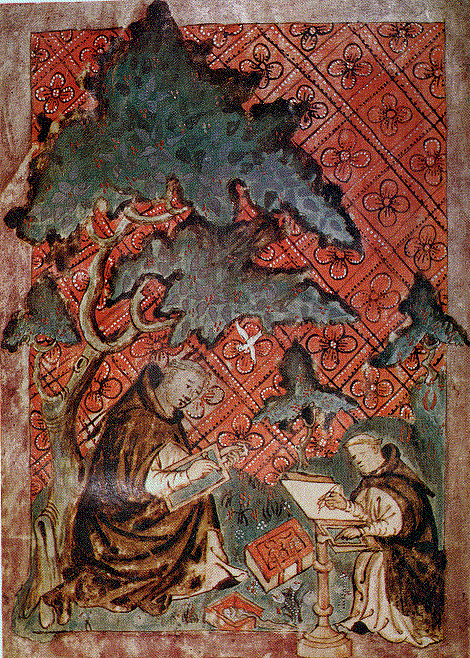
Jan van Ruusbroec in the Sonian Forest

The Mystic of the Sonian Forest

In the quiet solitude of the Sonian Forest near Brussels, a 14th-century mystic named Jan van Ruusbroec (1293–1381) mapped the landscape of the human soul with a precision that rivals modern psychoanalysis. Known as the “Admirable Doctor,” Ruusbroec was not an academic theologian but a contemplative who wrote in the vernacular Middle Dutch, making the deepest truths of the spirit accessible to the common person.

Ruusbroec’s work is a vital bridge between medieval mysticism and modern depth psychology. He conceptualized God not as a static being, but as a “flowing, ebbing tide”—a dynamic process that mirrors the Jungian understanding of the Self. His description of the “Common Life” (Gemeyne Leven) challenges the modern tendency to split spirituality from daily existence, offering a path to integration that is as relevant today as it was 700 years ago.

Biography & Timeline: Jan van Ruusbroec (1293–1381)

Born in the village of Ruisbroek, Jan entered the priesthood at age 24. Disillusioned by the corruption and superficiality of city life in Brussels, he retreated to a hermitage in Groenendaal (Green Valley) at the age of 50. There, he founded a community based on the Augustinian rule, but focused intensely on the inner life.

Ruusbroec was a fierce critic of the “Free Spirit” heresy (a distortion of mysticism that claimed one could become perfect and thus above morality). Instead, he taught that true union with God leads to *more* service to the world, not less. His writings influenced the *Devotio Moderna*, the movement that produced Thomas à Kempis and the Imitation of Christ.

Key Milestones in the Life of Ruusbroec

Year Event / Publication
1293 Born in Ruisbroek, near Brussels.
1317 Ordained as a priest; serves as chaplain at St. Gudula.
c. 1335 Writes The Spiritual Espousals (Die Geestelike Brulocht), his masterpiece on the stages of the mystical life.
1343 Leaves Brussels to found the hermitage at Groenendaal.
1350 Groenendaal becomes a priory; Ruusbroec serves as its first prior.
1381 Dies at the age of 88. Beatified by Pope Pius X in 1908.

Major Concepts: The Sparkling Stone and the Abyss

The Three Stages of Life

Ruusbroec structured the spiritual journey into three phases, which parallel the Jungian process of individuation:

  1. The Active Life: The development of the ego, moral virtue, and external service. (Jung’s First Half of Life).
  2. The Interior Life: The turning inward, facing the darkness, and cultivating “yearning” for God. (The Confrontation with the Shadow).
  3. The Contemplative Life: The “God-seeing” life where the distinction between subject and object dissolves in the “Abyss.” (The realization of the Self).

The Abyss (Afgront)

Ruusbroec describes God as an “Abyss” or “Wild Sea.” This is not a comforting image, but a terrifying and awe-inspiring one. Psychologically, this is the Collective Unconscious—the source of all psychic energy that is far greater than the individual ego. To enter the Abyss is to lose the rigid boundaries of the self.

The Conceptualization of Trauma: Fragmentation vs. The Common Life

Ruusbroec offers a profound antidote to the fragmentation caused by trauma: the concept of the Common Life.

Trauma as “Resting in Oneself”

Ruusbroec criticized false mystics who sought a “natural rest” or a dissociative state where they felt nothing. He called this “spiritual gluttony.” In clinical terms, this is spiritual bypassing or dissociation. The traumatized person often seeks to “check out” to avoid pain.

Healing through “Living Without Why”

True healing, for Ruusbroec, is not escaping pain, but entering a state of “living without why” (sonder waerom). This means acting not out of a desperate need for validation (ego-defenses) but out of the flow of the Self.

In therapy, this looks like moving from a rigid, trauma-based identity (“I must be perfect to be safe”) to a fluid, integrated identity (“I am inherently worthy”).

The “Sparkling Stone” of Resilience

In his work The Sparkling Stone, Ruusbroec uses the metaphor of a white stone given to the initiate. This stone represents the indestructible core of the personality. Trauma may shatter the ego, but it cannot touch the “Sparkling Stone” of the Self. Reconnecting the patient to this inner resilience is the primary goal of depth work.

Legacy: The Integration of Action and Contemplation

Ruusbroec’s greatest legacy is his insistence that the highest state of consciousness is not withdrawing from the world, but returning to it with new eyes. He taught that the true mystic “exhales” love into the world just as they “inhale” the spirit of God.

For the modern patient, this is a message of hope. It suggests that the goal of therapy is not just to feel better in the consulting room, but to engage with life, relationships, and work from a place of deep, “common” wholeness. The mystic and the merchant, the therapist and the patient, are all called to the same essential integration.


Further Reading & Resources

Explore More on Mysticism & Psychology

Explore the Other Articles by Categories on Our Blog 

Hardy Micronutrition is clinically proven to IMPROVE FOCUS and reduce the effects of autism, anxiety, ADHD, and depression in adults and children without drugsWatch Interview With HardyVisit GetHardy.com and use offer code TAPROOT for 15% off

Fractal Fluency: Why Your Nervous System Hates Minimalism

Fractal Fluency: Why Your Nervous System Hates Minimalism

Discover fractal fluency—the neuroscience of why natural patterns calm the brain while minimalist architecture stresses it. Learn how to create a “visual diet” for trauma recovery by designing environments with the right fractal dimension (D=1.3-1.5) to passively regulate the nervous system.

David Bohm: The Physicist Who Saw Mind in Matter

David Bohm: The Physicist Who Saw Mind in Matter

The Heretic of Copenhagen David Bohm (1917-1992) committed what many physicists considered an unforgivable sin: he took quantum mechanics seriously as a description of reality, not just a calculation tool. While the Copenhagen interpretation (Bohr, Heisenberg)...

Insights into Therapy Through Quantum Neuroscience

Insights into Therapy Through Quantum Neuroscience

Something extraordinary is happening in consciousness research right now. After decades of incremental progress and philosophical stalemate, 2025—designated by the United Nations as the International Year of Quantum Science and Technology—has delivered a cascade of...

The Metamorphosis of the Sufferer: From Neurotic Soul to Digital User

The Metamorphosis of the Sufferer: From Neurotic Soul to Digital User

From “neurotic soul” to “digital user”: How insurance companies, Big Pharma, and Silicon Valley systematically dismantled the depth of psychotherapy—and why the BetterHelp scandal was just the beginning. A critical history for therapists who refuse to become technicians.

Who Is Gerald Edelman?

Who Is Gerald Edelman?

Discover Nobel Laureate Gerald Edelman’s Neural Darwinism, a revolutionary theory applying evolutionary principles to the brain’s development and consciousness.

Manly P. Hall and the Psychological Resurrection of Ancient Wisdom

Manly P. Hall and the Psychological Resurrection of Ancient Wisdom

Explore the life and legacy of Manly P. Hall, author of The Secret Teachings of All Ages, examining his prescient influence on depth psychology, Jungian analysis, Gnostic trauma frameworks, and contemporary therapeutic approaches to psychological transformation and archetypal symbolism.

Paul Tillich and the Soul’s Depth: The Enduring Relevance of an Existentialist Theologian for Depth Psychology and Psychotherapy

Paul Tillich and the Soul’s Depth: The Enduring Relevance of an Existentialist Theologian for Depth Psychology and Psychotherapy

Paul Tillich’s profound influence on depth psychology and psychotherapy through his concepts of ultimate concern, existential anxiety, and the courage to be. This comprehensive guide examines how this existentialist theologian’s work on meaning, faith, and human existence continues to shape therapeutic practice, pastoral counseling, comparative religion, and philosophy. Includes timeline and analysis of psychotherapists influenced by Tillich including Rollo May, Carl Rogers, and Irvin Yalom.

The Psychological Engineering of Mountain Brook: How Policy Became Identity in Alabama’s Wealthiest Enclave

The Psychological Engineering of Mountain Brook: How Policy Became Identity in Alabama’s Wealthiest Enclave

An in-depth psychological examination of Mountain Brook, Alabama—America’s most deliberately exclusive suburb—exploring how calculated planning, policy decisions, and social engineering created extraordinary wealth while generating a youth mental health crisis, environmental degradation, and regional inequality. A comprehensive analysis of the costs and contradictions of engineered perfection.

Karl Friston and Carl Jung: The Unnoticed Rehabilitation

Karl Friston and Carl Jung: The Unnoticed Rehabilitation

An exploration of how Karl Friston’s Free Energy Principle and Eugene Gendlin’s Process Model provide mathematical and philosophical validation for Carl Jung’s analytical psychology, revealing that Jung’s supposedly mystical insights actually captured fundamental principles of consciousness architecture that modern neuroscience is only now beginning to understand.

Eugene Gendlin: A Biographical Timeline

Eugene Gendlin: A Biographical Timeline

In the landscape of contemporary psychotherapy, a quiet revolution has been unfolding—one that moves us away from the primacy of thoughts and verbal processing toward the wisdom held in the body's deeper knowing. At the heart of this shift stands Eugene Gendlin, a...

Holy Wood: The Intersection of Forestry and Mythology

Holy Wood: The Intersection of Forestry and Mythology

The Sacred Species and Their Archetypal Meanings In the depths of the human psyche, trees stand as primordial witnesses to our spiritual evolution. They are the axis mundi, the world pillars that connect heaven, earth, and the underworld in virtually every...

In Remembrance of Leon Krier

In Remembrance of Leon Krier

All experience is past by definition. Tradition is transmission of past experience which has become knowledge and know-how. Thus, we can with reason conclude that without tradition, there can be no language, no philosophy, no science, no technique, art, or industry....

The Psychology of Architecture:

The Psychology of Architecture:

Washington D.C.'s Sacred Geometry and the Revolutionary Transformation of Divine Authority  A Capital Born from Enlightenment When Pierre Charles L'Enfant stood upon Jenkins Hill in March 1791, surveying the wilderness that would become America's capital, he carried...

0 Comments

Submit a Comment

Your email address will not be published. Required fields are marked *