
The Metamodern Oscillation: Faith, Doubt, and the Digital Soul
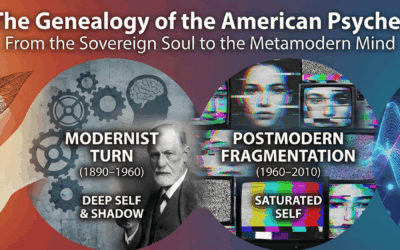
We are living in a moment of cultural vertigo. The old maps of the 20th century—the rigid certainty of Modernism and the cynical deconstruction of Postmodernism—no longer describe the territory. We have entered the Metamodern era.
Metamodernism is defined not by a stable position, but by an oscillation. It is a constant swinging between irony and sincerity, hope and despair, naiveté and knowingness. It is the feeling of watching a cat video and feeling profound existential dread simultaneously. For the depth psychologist, this cultural shift presents a unique crisis: How do we find meaning when all the “Grand Narratives” have been deconstructed?
This article explores how Transformative Gameplay and the concept of the Post-Secular Sacred offer a path through the noise. By engaging with the work of philosopher Peter Sloterdijk, we can learn to build new “spheres” of meaning in a fragmented world.
Peter Sloterdijk: The Philosopher of Bubbles and Globes
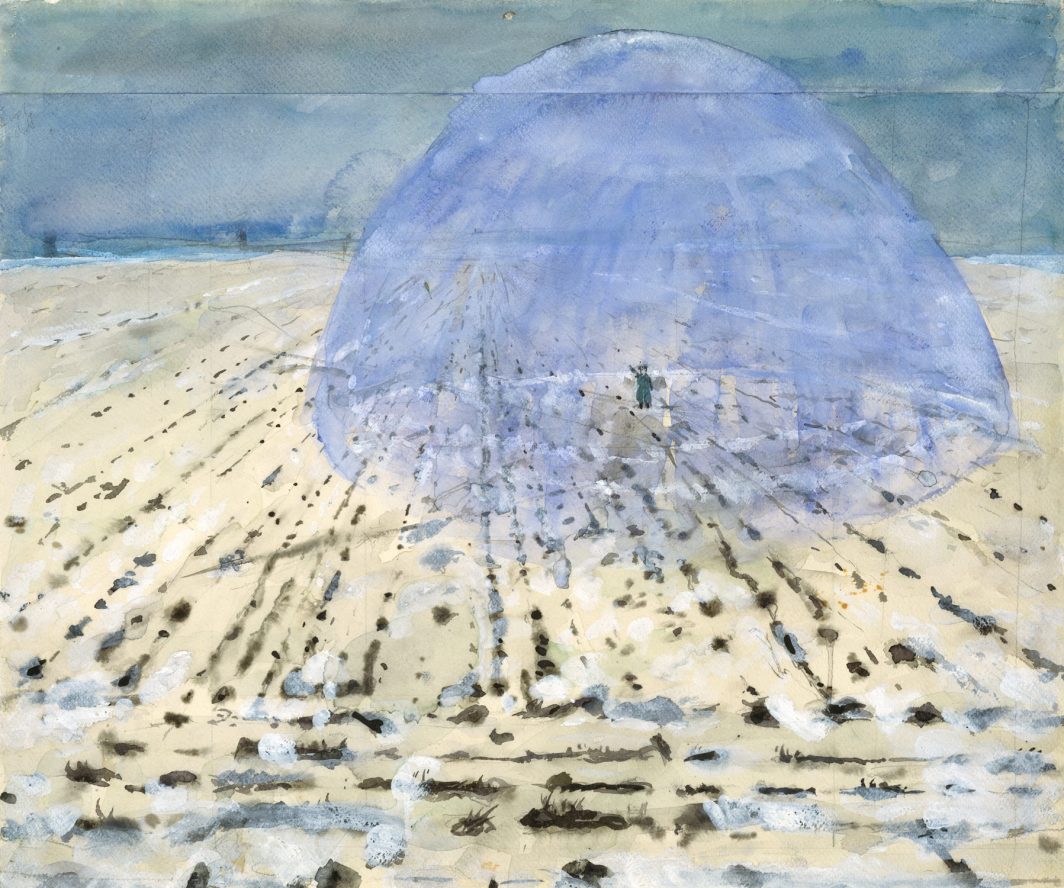
To understand the Metamodern condition, we must turn to the German philosopher Peter Sloterdijk (b. 1947). Sloterdijk argues that humans are “sphere-building animals.” We cannot survive in the raw exposure of nature; we must create “immunological systems”—psychological bubbles that protect us from the void.
In his Spheres trilogy, Sloterdijk traces the history of human containment:
- Microspherology: The intimate bubble of the womb and the mother-child dyad.
- Macrospherology: The creation of “Globes”—nations, religions, and empires that provide a shared roof for millions.
- Plural Spherology (Foams): The modern condition. The great Globes have burst, leaving us living in “foam”—billions of isolated, individual bubbles (apartments, social media feeds) that touch but do not connect.
Key Milestones in the Metamodern Shift
| Era | Dominant Feeling | Psychological Structure |
| Modernism (1890–1945) | Optimism, Faith in Progress | The Ego is the master of the house. We can engineer a perfect world. |
| Postmodernism (1945–2010) | Irony, Skepticism, Deconstruction | The Ego is a construct. Truth is relative. All narratives are power plays. |
| Metamodernism (2010–Present) | Oscillation, “Informed Naiveté” | We know the narrative is fake, but we choose to believe it anyway because we need it to survive. |
Transformative Gameplay: Rehearsing for Reality
If we live in “foam,” how do we connect? Sloterdijk suggests we must become anthropotechnicians—engineers of our own humanity. One of the most potent tools for this is Transformative Gameplay.
In a world where “expertise” has eroded and “truth” is contested, games offer a bounded space where rules still apply. But transformative games go further. They are not just escapism; they are simulations of the sacred.
The Magic Circle as Sacred Space
In game design, the “Magic Circle” is the boundary that separates the game from the real world. Inside the circle, the rules of the game are absolute. This mirrors the sacred space (temenos) of ritual.
By entering a game (whether a video game, a therapeutic role-play, or a ritual), the player enters a space where meaning is restored. For the duration of the play, there is a clear goal, a clear enemy, and a clear path to growth. This allows the Metamodern subject to “practice” meaning-making without the cynicism of the outside world.
The Conceptualization of Trauma: The Bursting of the Sphere
From a Sloterdijkian perspective, trauma is not just a painful event; it is the rupture of the immunological sphere.
The Loss of Protection
Trauma occurs when the “bubble” bursts. The individual is suddenly exposed to the “Outside”—the chaotic, unmediated reality of the universe. This leads to a state of existential exposure.
In the Metamodern age, we suffer from “information trauma.” The digital world punctures our protective spheres constantly, flooding us with global suffering that we have no capacity to process. We are “connected” to everything, but protected from nothing.
Healing through Sphere-Building
Therapy, in this model, is an act of re-insulation. The therapist and client co-create a new, temporary sphere (the therapeutic alliance) where the client can repair their immunological defenses. We cannot return to the naive “Globe” of religious certainty, but we can build “Raoms” of shared meaning.
The Post-Secular Sacred
Metamodernism allows for the return of the spiritual, but with a twist. This is the Post-Secular Sacred. It is a spirituality that has passed through the fire of postmodern critique.
We know that myths are “just stories,” but we also know that we die without them. Therefore, we choose to engage with the archetypes not as literal facts, but as pragmatic necessities. We play the “game” of religion or spirituality with deep seriousness, knowing it is a game, because it is the only game worth playing.
Further Reading & Resources
- Peter Sloterdijk: Bubbles: Spheres Volume I (Semiotext(e), 2011).
- Luke Turner: The Metamodernist Manifesto.
- Jane McGonigal: Reality Is Broken: Why Games Make Us Better and How They Can Change the World (Penguin Press, 2011).





0 Comments