
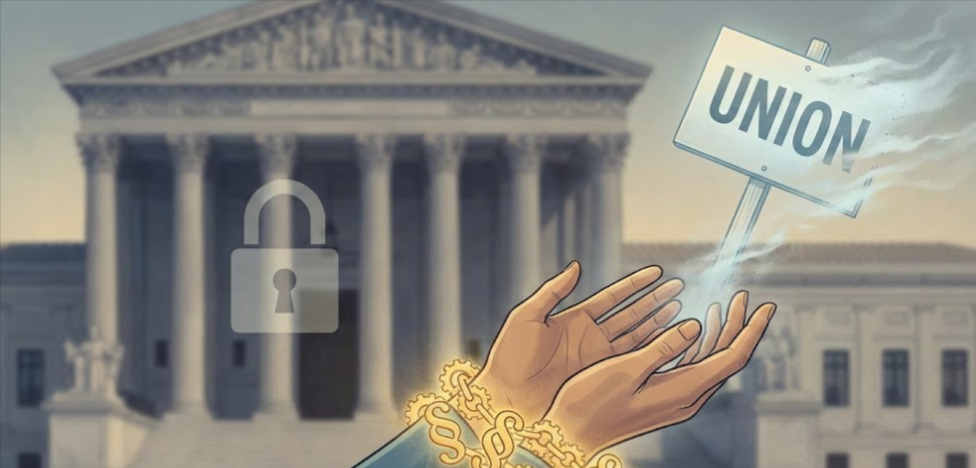
Can Therapists Start a Union? The Antitrust Trap, the Shadow Committee, and the Economic Strangulation of American Psychotherapy
Analyzing America’s Healthcare Regulations and Their Effect on Us: Why the Law Prevents Therapists from Organizing While Allowing a Private Committee to Fix Prices for the Entire Medical System
The Monthly Rage Thread
If you hang around therapist forums long enough, you will see it happen. It operates with the regularity of the tides. Someone posts a thread, usually after receiving a contract from an insurance company offering 1998 rates for 2025 work, and asks the obvious question:
“We are the ones providing the care. The system collapses without us. Why don’t we just all go on strike? Why don’t we form a union and demand fair pay?”
It is a logical question. In almost every other sector of the economy, workers who feel exploited band together to negotiate better terms. Screenwriters shut down Hollywood to get paid for streaming residuals. Auto workers walk off the line. Teachers fill the state capitol. Nurses at major hospital systems have successfully unionized and won significant concessions. So why, in the midst of a national mental health crisis, does the mental health workforce remain so politically impotent?
The answer is not that we lack will. It is not that we lack organization. The answer is that for private practice therapists, forming a union is a federal crime.
This is not a political manifesto. It is an analysis of the bizarre regulatory environment that governs American healthcare, a system of antitrust laws, shadow committees, and bureaucratic classifications that effectively strips clinicians of their bargaining power while empowering the corporations that pay them. If you want to understand why corporate tech monopolies are ruining therapy, or why the corporatization of healthcare feels so suffocating, you have to understand the legal straitjacket we are all wearing. And you have to understand the one group that is allowed to set prices, the one group exempt from the rules that bind the rest of us.
Part I: You Are Not a Worker, You Are a Standard Oil Tycoon
The primary reason therapists cannot unionize dates back to the era of oil barons and railroad tycoons. The Sherman Antitrust Act of 1890 was designed to prevent massive corporations like Standard Oil from colluding to fix prices and destroy the free market. It prohibits “every contract, combination… or conspiracy, in restraint of trade.” The law was a response to genuine abuses: companies buying up competitors, dividing territories, and coordinating prices to gouge consumers who had no alternatives.
Here is the catch: In the eyes of the federal government, a private practice therapist is not a “worker.” You are a business entity. Even if you are a solo practitioner struggling to pay rent in a subleased office, seeing clients between crying in your car and eating lunch at your desk, the law views you as the CEO of a micro-corporation. You are classified as a 1099 independent contractor, not a W-2 employee, and that distinction makes all the difference in the world.
If two workers at Starbucks talk about their wages and agree to ask for a raise, that is “collective bargaining,” which is protected by the National Labor Relations Act. But if two private practice therapists talk about their reimbursement rates and agree to ask Blue Cross for a raise, that is “price-fixing.” It is legally indistinguishable, in the eyes of the Federal Trade Commission, from gas stations conspiring to raise the price of unleaded.
It sounds absurd, but the FTC takes it deadly seriously. When independent contractors organize to demand higher rates, when they share information about what they are being paid and coordinate their responses, they are engaging in horizontal price-fixing, one of the most serious violations of antitrust law. The Sherman Act provides for criminal penalties, including fines and imprisonment. The law that was meant to break up monopolies is now used to prevent social workers from asking for a cost-of-living adjustment.
The irony is crushing. The same regulatory framework that prevents two therapists from discussing their rates allows massive insurance conglomerates to merge repeatedly, concentrating buyer power in fewer and fewer hands. UnitedHealth Group, for example, has acquired dozens of companies over the past two decades, becoming the largest healthcare company in the United States. When they offer a “take it or leave it” contract to providers, they do so with the full knowledge that fragmented, legally prohibited from organizing therapists have no counter-leverage. The antitrust laws, designed to prevent monopoly power, have created a system where sellers are atomized and buyers are consolidated. Economists call this “monopsony,” and it is precisely the market distortion the Sherman Act was supposed to prevent.
Part II: The Day the “Learned Profession” Died
For a long time, doctors and lawyers thought they were exempt from these laws. They argued that they were “learned professions,” not mere tradespeople, and therefore above the grubby laws of commerce. They believed that their ethical obligations to patients and clients set them apart from the rules that governed steel mills and meatpacking plants. Medicine was a calling, not a business, and surely the government would not regulate the sacred doctor-patient relationship as if it were a commercial transaction.
That illusion was shattered in 1975 by the Supreme Court case Goldfarb v. Virginia State Bar. The case involved lawyers, not doctors, but its implications cascaded through every licensed profession in America. The Goldfarbs were purchasing a home and needed a title examination. The Virginia State Bar had established a minimum fee schedule for such services, and every lawyer they contacted quoted the exact same price. They sued, arguing that this fee schedule was illegal price-fixing.
The Supreme Court agreed. In a unanimous decision, the Court ruled that professional services, including legal and medical advice, are “trade or commerce” subject to antitrust laws. The “learned profession” exemption, which had been assumed but never explicitly established in law, was declared a myth. “The nature of an occupation, standing alone,” the Court wrote, “does not provide sanctuary from the Sherman Act.”
This ruling was intended to lower prices for consumers by preventing lawyers from setting minimum fees, and in that narrow sense it was a good thing. But in healthcare, it had a catastrophic side effect: it made it illegal for doctors and therapists to band together to resist the pricing power of insurance companies. The “learned profession” exemption is dead. We are now just businesses, and businesses are not allowed to hold hands.
This creates the illusion of progress: we have “free market” competition among providers, but monopsony power among payers. It is a market where the sellers are forbidden from organizing, but the buyers are allowed to merge until they are too big to fail. The result is not a free market at all. It is a market designed to transfer wealth from one class (providers) to another (insurers and administrators), with the law itself serving as the enforcement mechanism.
Part III: The Cartel in the Basement
If therapists cannot collude to set prices, surely nobody else can, right? Wrong.
There is one group in American healthcare that is allowed to meet in a room, decide what every doctor’s time is worth, and set prices for the entire industry. It is called the RUC, the AMA/Specialty Society Relative Value Scale Update Committee. And understanding the RUC is the key to understanding why talk therapy is dying in the medical model, why psychiatrists abandoned the couch for the prescription pad, and why your insurance company offers you a ghost network of providers who never answer the phone.
The Birth of a Shadow Government
To comprehend the current crisis in mental health economics, one must excavate the foundations of the physician payment system. Prior to 1992, Medicare reimbursed physicians based on a system known as “Customary, Prevailing, and Reasonable” charges. Under this system, physicians were paid based on their historical billing charges. It was inherently inflationary; it rewarded those who raised their fees most aggressively and created wide geographic disparities for identical services.
In response to spiraling costs, Congress passed the Omnibus Budget Reconciliation Act of 1989, mandating a transition to a fee schedule based on the resources required to provide a service. This birthed the Resource-Based Relative Value Scale. The intellectual architecture for this system was developed by a team of economists at Harvard University, led by William Hsiao. Hsiao’s team sought to create a “unified theory” of medical value, attempting to quantify the “work” involved in disparate medical acts, comparing the cognitive intensity of a psychiatric evaluation with the technical skill of a hernia repair.
The Harvard study was revolutionary. It promised to level the playing field, suggesting that cognitive services, the thinking and talking that comprises primary care and mental health, were vastly undervalued relative to surgical procedures. Had Hsiao’s original recommendations been implemented purely, the income gap between generalists and specialists might have narrowed significantly. But the administrative complexity of assigning values to over 7,000 Current Procedural Terminology codes overwhelmed the Health Care Financing Administration.
Into this administrative vacuum stepped the American Medical Association. The AMA, fearing that the government would unilaterally set prices, proposed a “partnership.” They would convene a committee of experts to maintain and update the relative values, providing this labor-intensive service to the government at no cost. The government accepted. Thus, in 1991, the RUC was born, not as a government agency, but as a private advisory body with unparalleled influence over public funds.
The Architecture of Control
The RUC’s claim to legitimacy rests on its status as an “expert panel.” But a structural analysis of its composition reveals a profound bias that mimics the governance of a cartel designed to protect incumbent interests.
The committee consists of 32 members, but power is concentrated in the 29 voting seats. Of these, 21 seats are appointed by major national medical specialty societies. The distribution is not proportional to the volume of services provided to Medicare beneficiaries, nor is it proportional to the physician workforce. Instead, it is frozen in a historical moment that favored high-technology specialties. Primary care physicians, who perform roughly 45 to 50 percent of Medicare work, hold approximately 4 to 5 seats, giving them about 17 percent of the vote. Procedural and surgical specialties, including surgery, radiology, and anesthesiology, hold 15 to 18 seats, giving them roughly 60 percent of the vote despite performing only 35 to 40 percent of Medicare work.
The American Psychiatric Association holds a single seat. One seat. This lone representative must negotiate with a supermajority of specialists, neurosurgeons, cardiothoracic surgeons, radiologists, and ophthalmologists, whose financial interests are often diametrically opposed to the valuation of cognitive work.
The cartel dynamic is enforced by a statutory requirement of budget neutrality. The Medicare Physician Fee Schedule is a zero-sum game. If the total relative value units projected for a given year exceed the budget, a “scaler” is applied to reduce the conversion factor, effectively cutting everyone’s pay. Therefore, any proposal to increase the value of psychotherapy, which would increase the total RVU spend, effectively asks every surgeon in the room to take a pay cut to fund the raise for psychiatrists. Given that a two-thirds majority is required to pass a recommendation, the procedural bloc holds absolute veto power over any redistribution of wealth.
The Secret Chamber
A hallmark of cartel behavior is the restriction of information. For nearly two decades, the RUC operated in near-total secrecy. While recent years have seen minor concessions to transparency, such as the publication of vote totals, the core deliberative process remains opaque.
RUC meetings are private. The public, the press, and even non-RUC physicians are largely barred from attending the deliberations where billions of tax dollars are allocated. Participants, including the specialty advisors who present data, must sign strict non-disclosure agreements. These agreements prevent them from discussing the specific tradeoffs, deals, or arguments made within the chamber. A former RUC participant described these agreements as “draconian,” designed to insulate the committee from public accountability.
The Government Accountability Office and the Center for American Progress have noted the inherent conflict of interest. The individuals setting the prices are the same individuals who receive the payments. Unlike a regulatory agency, where officials are salaried and divested of industry assets, RUC members are practicing physicians whose personal incomes are directly tied to the decisions they make.
This secrecy serves a functional purpose: it allows for “logrolling.” A representative from Orthopedics might support an inflated value for a Cardiology code in exchange for Cardiology’s support on a Knee Replacement code. This “I’ll scratch your back” dynamic creates an upward pressure on procedural values that excludes those outside the dominant coalition, specifically primary care and mental health.
The Antitrust Shield
Why has the Department of Justice not broken up this cartel? The legal shield is the Noerr-Pennington Doctrine. This Supreme Court doctrine establishes that private entities are immune from antitrust liability when they are petitioning the government. Because the RUC technically only “recommends” values to CMS (that is petitioning), and CMS “decides” (that is government action), the RUC is protected by the First Amendment right to petition.
This legal loophole allows the RUC to operate with monopolistic characteristics without fear of prosecution, provided CMS continues to go through the motions of “reviewing” the recommendations. And CMS accepts those recommendations over 90 percent of the time. Because private insurance companies generally base their rates on Medicare, this private committee effectively sets the price of healthcare for the entire country.
If independent therapists did this, if they gathered in a room and agreed on what their services should cost, they would face criminal prosecution. But because the RUC operates under the fiction of “advising” the government, it is protected. The same regulatory framework that criminalizes therapist solidarity provides cover for industry-wide price coordination by the most powerful medical specialties.
Part IV: The Mechanics of Suppression
To control a market, one must control its currency. In American medicine, that currency is the Relative Value Unit. Every medical service, from a 15-minute therapy session to a heart transplant, is assigned a total RVU value. This value is the sum of three components: the Work RVU, which accounts for physician time, technical skill, mental effort, and judgment; the Practice Expense RVU, which covers overhead costs like rent, staff, and equipment; and the Malpractice RVU, which reflects professional liability insurance costs.
The Work RVU, which comprises roughly 50 to 55 percent of the total value, is determined by RUC surveys. When a code is flagged for review, the relevant specialty society distributes a survey to a sample of its members. These respondents are asked to estimate the time and intensity of the service compared to a “reference service.”
This methodology violates several principles of statistical validity. The surveys are voluntary and distributed by the specialty societies themselves. The respondents are typically those most active in the society and most invested in maximizing reimbursement, advocates rather than neutral observers. The sample sizes are often shockingly small; RUC surveys frequently rely on fewer than 50 or 70 respondents to set the price for services performed millions of times annually. A sample of 30 orthopedic surgeons might determine the value of a procedure costing Medicare billions.
The Time Arbitrage
The most critical variable in the RUC equation is time. The Work RVU is conceptually derived from the formula: Work equals Time multiplied by Intensity. Therefore, inflating the time estimate is the most direct route to inflating the price.
Independent studies by RAND and the Urban Institute, often using objective data like Operating Room logs, have consistently shown that the RUC overestimates the time required for surgical procedures. A procedure valued by the RUC as taking 60 minutes may, in reality, take 30 minutes. This creates an arbitrage opportunity. If a gastroenterologist can perform a “60-minute” colonoscopy in 20 minutes, they can effectively perform three procedures in the time allotted for one. They bill for three hours of work in one hour of real time. This “efficiency gain” is captured entirely by the physician as profit.
Psychotherapy cannot utilize this arbitrage. CPT codes for psychotherapy are explicitly time-based in their definition. Code 90832 requires 16 to 37 minutes. Code 90834 requires 38 to 52 minutes. Code 90837 requires 53 minutes or more. A psychiatrist cannot perform a 60-minute therapy session in 20 minutes; doing so constitutes fraud. Therefore, the revenue of a psychotherapist is capped by the linear passage of time. They can sell, at maximum, roughly 8 to 10 units of labor per day. A proceduralist, aided by RUC-inflated time assumptions, can sell 20 or 30 units of “RUC time” in the same day.
This structural discrepancy creates a widening income gap that no amount of “hard work” by the therapist can close. It is not a market failure. It is market design.
The “Thinking” Penalty
The RUC’s bias is not merely structural; it is philosophical. The committee, dominated by surgeons and proceduralists, consistently values “doing things to people,” cutting, scanning, injecting, far more highly than “talking to people,” diagnosing, counseling, managing complex chronic conditions. This creates a regulatory environment that functions as a de facto wealth transfer from cognitive care to procedural care.
In 2013, a major revision of psychiatry codes exposed this bias in stark relief. Previously, psychiatrists used codes that bundled the medical evaluation with the psychotherapy. The new system required psychiatrists to bill an E/M code for the medical management plus an “add-on” code for psychotherapy. While intended to improve transparency, this change exposed psychotherapy to the raw mechanics of the RUC’s valuation bias. By isolating the “therapy” component, the committee could subject it to rigorous cross-specialty comparison. And the committee, dominated by surgeons, views “talking to a patient” as low-intensity work compared to “operating on a patient.”
The economic signal was clear. This created the 15-minute med check culture not because psychiatrists stopped caring, but because the regulatory environment made relational care financial suicide. It effectively “illegalized” the practice of deep, slow psychiatry for anyone who wanted to take insurance.
Part V: The “Messenger Model” and Other Legal Fictions
When therapists ask about collective bargaining, lawyers will often point them to the only legal loophole available: the “Messenger Model.”
In this model, a third party (the messenger) acts as an intermediary between a group of providers and an insurance company. The messenger takes the insurance company’s offer and conveys it to each therapist individually. Each therapist must then make a unilateral, independent decision to accept or reject it.
The messenger is strictly forbidden from negotiating. They cannot say, “The group rejects this.” They cannot say, “We want 10% more.” They cannot advise the therapists on what to do. They can only carry messages.
This is why “Independent Practice Associations” are often toothless. In the 2008 case North Texas Specialty Physicians v. FTC, the Fifth Circuit Court of Appeals made clear that if an IPA actually tries to leverage its numbers to demand better rates, it violates antitrust laws. If it follows the messenger model, it has no leverage. It is a “heads I win, tails you lose” regulatory structure designed to protect payers, not providers.
The only exception is “clinical integration,” where providers genuinely merge their practices, share infrastructure, and accept joint financial risk. But this requires substantial capital investment and essentially means ceasing to be an independent practitioner. It is a legal pathway available mainly to large physician groups and hospital systems, not to solo therapists working out of rented offices.
Part VI: Market Distortions and the Flight to Cash
When a cartel sets a price below the market equilibrium, suppliers exit the formal market. This is precisely what has happened in psychotherapy.
Mental health providers generally have lower overhead than surgeons. They do not need MRI machines or sterile surgical suites. And they face high consumer demand; the national mental health crisis ensures a steady stream of people seeking services. This gives them an “exit option” that proceduralists do not have. They can refuse to accept insurance and operate as cash-only businesses.
The statistics are stark. Nearly 50 percent of psychiatrists do not accept commercial insurance, compared to less than 10 percent of other specialists. A 2023 survey indicated that 64 percent of private practice therapists planned to increase their cash-pay rates. Research published in Health Affairs Scholar found that patients are 10.6 times more likely to go out-of-network for mental health care than for medical/surgical care.
This mass exodus is a rational economic response to RUC-suppressed rates. If the RUC says an hour of therapy is worth $100 via the RVU-to-dollar conversion, but the market demand is willing to pay $250, the provider will leave the RUC-controlled sector. They are not abandoning their profession; they are abandoning a pricing regime that values their work at less than half its market rate.
Ghost Networks
The RUC’s pricing failure creates “Ghost Networks,” directories filled with providers who are ostensibly “in-network” but are functionally inaccessible. They are either full, not accepting new patients, retired, have moved, or simply do not respond to inquiries from insurance-based patients because the administrative burden of prior authorizations and clawbacks outweighs the suppressed fee.
This is not a “shortage” of providers in the absolute sense. There is no shortage of therapists in private practice. There is a shortage of therapists willing to work at the RUC-determined price point. The insurance directories are graveyards of phantom availability, creating the illusion of access where none exists.
The Cost Paradox
The central thesis of the RUC’s defenders is that they “control costs.” By strictly managing RVUs, they claim to save taxpayer money.
In psychotherapy, this logic backfires catastrophically. By suppressing reimbursement rates to a level that drives providers out of the network, the RUC forces patients into the cash market. The theoretical in-network cost might be a $20 copay with the insurer paying $100. The actual out-of-network cost is $250 cash out-of-pocket, paid in full by the patient.
Thus, the “cost of therapy” for the consumer skyrockets. Therapy becomes a luxury good, accessible only to those with disposable income. For the poor and middle class, the “cost” is effectively infinite, because the service becomes inaccessible. The RUC’s cost-control measure for the system becomes a cost-multiplier for the patient. It shifts the financial burden from the risk pool, where it belongs, to the individual, where it causes maximum harm.
The Signal to Students
The RUC sends powerful economic signals to medical students making career decisions. When a student observes that a dermatologist or radiologist can earn $500,000 working regular hours, while a psychiatrist earns $240,000 handling emotional trauma and on-call emergencies, while a primary care doctor earns even less, the choice is clear for those motivated by financial security.
The undervaluation of cognitive codes discourages the best and brightest from entering mental health and primary care. The cartel’s pricing structure creates a perpetual labor shortage in the fields most needed for public health, while creating a surplus in high-margin procedural specialties. We then wonder why there are not enough psychiatrists, why primary care is in crisis, why mental health access is collapsing. The answer is in the price signal, and the price signal is set by a committee of proceduralists meeting behind closed doors.
The Hands Are Tied
The question “Why can’t therapists start a union?” is not just a labor question. It is a window into the broken soul of American healthcare.
We have built a system where a secret committee of proceduralists can legally fix prices to favor surgery over therapy, but a group of social workers cannot band together to ask for a living wage. We have utilized laws meant to break up Standard Oil to break up the solidarity of caregivers. The same regulatory framework that criminalizes therapist coordination provides legal cover for industry-wide price coordination by the most powerful medical specialties.
The result is a regulatory environment that drives doctors crazy, burns out therapists, and leaves patients navigating a fragmented, assembly-line system that was never designed to heal them. It was designed to process them.
Until we confront the legal architecture of this system, the RUC, the Sherman Act, the 1099 trap, we will remain powerless to change it. And the reality of therapy is that quick fixes, whether in treatment or in policy, usually end up costing us more in the end.
Some states are beginning to push back. New York and California have implemented strict network adequacy standards requiring mental health appointments within 10 business days. These regulations force insurers to expand their networks, which means they must attract providers, which means they must raise reimbursement rates above the RUC/Medicare floor. It is effectively a state-level override of the RUC cartel, forcing capital back into the mental health labor market. The Medicare Payment Advisory Commission has long advocated for stripping the RUC of its power, proposing the use of empirical data, tax returns, payroll records, practice invoices, to set values automatically.
But these are patchwork solutions to a systemic problem. The fundamental issue remains: we have created a healthcare system that knows the price of everything and the value of nothing. We have engineered a system where the only way to survive is to stop acting like a healer and start acting like a factory. And we have wrapped this system in a legal framework that criminalizes resistance while protecting the status quo.
The hands are tied. But at least now we can see the ropes.
Bibliography
For those interested in the primary sources and legal texts that underpin this analysis, the following external resources provide high-trust verification of the claims made above:
- Goldfarb v. Virginia State Bar, 421 U.S. 773 (1975): The Supreme Court decision that ended the “learned profession” exemption from antitrust laws. Read the Oyez Summary.
- The Sherman Antitrust Act (15 U.S.C. §§ 1–7): The foundational text of US antitrust law prohibiting restraint of trade. Read the Document at the National Archives.
- North Texas Specialty Physicians v. Federal Trade Commission (5th Cir. 2008): A key ruling establishing that independent physicians cannot collectively bargain on fees without financial integration. Read the Court Opinion.
- FTC/DOJ Statements of Antitrust Enforcement Policy in Health Care (1996): The federal guidelines explaining the “Messenger Model” and the narrow exceptions for clinical integration. Read the Guidelines (PDF).
- The RUC (AMA/Specialty Society RVS Update Committee): The AMA’s own description of the committee structure and its role in valuing physician work. Visit the AMA RUC Page.
- “Special Deal” by Haley Sweetland Edwards (Washington Monthly, 2013): An investigative deep-dive into how the RUC operates and its impact on primary care vs. specialty pay. Read the Investigation.
- The National Labor Relations Act (NLRA): The law governing the right to unionize, which specifically excludes independent contractors. Read the NLRA.
- Laugesen, Miriam J. Fixing Medical Prices: How Physicians Are Paid. Harvard University Press, 2016. The definitive scholarly analysis of the RUC’s history, structure, and influence on American healthcare pricing.
- Government Accountability Office. “Medicare Physician Payment Rates: Better Data and Greater Transparency Could Improve Accuracy.” 2015. GAO’s critical analysis of RUC methodology and conflicts of interest.
- Center for American Progress. “Rethinking the RUC.” 2015. Policy analysis of the RUC’s structural bias against primary care and cognitive services.
- Health Affairs Scholar. “Insurance Acceptance and Cash Pay Rates for Psychotherapy in the US.” 2023. Empirical research on out-of-network utilization in mental health care.
- Medicare Payment Advisory Commission (MedPAC). “Report to the Congress: Medicare and the Health Care Delivery System.” 2024. Annual policy recommendations including proposals for reforming physician fee schedule methodology.
Joel Blackstock, LICSW-S, is the Clinical Director of Taproot Therapy Collective in Hoover, Alabama. He specializes in complex trauma treatment and writes at GetTherapyBirmingham.com.


















0 Comments