

Drive through Mountain Brook on any given afternoon and you’ll see what appears to be the American Dream made manifest: Tudor Revival mansions nestled among ancient oaks, winding roads that preserve the natural topography, and children walking to schools that consistently rank among the state’s best. It is, by design, a place that seems to exist outside of history—a haven of privilege suspended in perpetual tranquility.
But every landscape holds memory. And the ground beneath Mountain Brook’s manicured lawns carries a particularly haunting inheritance—one that connects Alabama’s wealthiest zip code to the state’s darkest chapters in mental healthcare, slavery, and segregation.
The Jemison Legacy: From Plantation to Asylum to Estate
The name Jemison is woven into the fabric of both Mountain Brook and Alabama’s mental health history—though you won’t find this connection on any historical marker.
Robert Jemison Jr. (1878–1974), the real estate visionary who planned and developed Mountain Brook in the 1920s, was the grandnephew of another Robert Jemison Jr. (1802–1871)—a Confederate senator, slaveholder, and one of the most powerful men in antebellum Alabama.
The elder Jemison was a titan of industry and agriculture:
-
He owned six plantations totaling over 11,000 acres.
-
His land was worked by hundreds of enslaved people.
-
He built toll roads, bridges, mills, and hotels.
But perhaps his most consequential contribution to Alabama history was his role in establishing the state’s first psychiatric institution. Jemison used his position on the State Board of Finance to advocate for funding mental healthcare and personally corresponded with Dorothea Dix, the legendary reformer who revolutionized the treatment of the mentally ill across America.
The Rise of Bryce Hospital
In 1861, the Alabama Insane Hospital—later renamed Bryce Hospital—opened in Tuscaloosa. It was built using the Kirkbride Plan, an architectural philosophy designed to promote healing through natural light, fresh air, and dignified living conditions.
The hospital’s architect, Samuel Sloan, called it the finest realization of Kirkbride’s vision he had ever produced. For a brief moment, it represented the cutting edge of compassionate psychiatric care. What happened next would echo through generations.
Cherokee Place: When Healing Became Horror
When the elder Robert Jemison died in 1871, his largest plantation—a 4,000-acre property called Cherokee Place—was bequeathed to the State of Alabama Board of Mental Health. The land that had been worked by enslaved people would now serve another purpose.
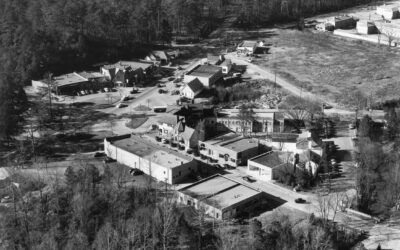
By the 1920s, Bryce Hospital was severely overcrowded. Alabama’s solution was to build a satellite facility on the former Jemison plantation: the Jemison Center, originally called the State Colony Farm for Negroes.
The original plantation house was razed, and in its place rose a three-story neoclassical building designed to house African American patients who had been excluded from the main Bryce campus during the Jim Crow era.
The Plantation Economy of the Asylum
The approach to “treatment” at the Jemison Center followed a grim logic: patients worked the fields surrounding the property, producing food for the hospital system. It was, in effect, a continuation of the plantation economy under a different name. Able-bodied Black patients labored in the same soil their ancestors might have tilled—not as slaves, technically, but as psychiatric patients whose labor was deemed “therapeutic.”
By 1970, conditions at both Bryce Hospital and the Jemison Center had deteriorated into what a Montgomery Advertiser reporter compared to “Nazi concentration camps.”
-
Patient Capacity: Patients numbered over 5,200 at Bryce alone—far beyond capacity.
-
Living Conditions: Journalists found “human feces caked on the toilets and walls, urine-soaked aging floors, many beds lacking linens, and patients sleeping on the floor.”
This neglect triggered one of the most important mental health lawsuits in American history: Wyatt v. Stickney. This landmark case established federal minimum standards for the care of people with mental illness—standards born directly from Alabama’s failures at the Jemison facilities.
The Same Family, A Different Mountain
While the Jemison Center deteriorated, the other branch of the Jemison family was building something very different. In 1923, the younger Robert Jemison Jr. purchased 2,500 acres in Shades Valley, on the other side of Red Mountain from industrial Birmingham.
He hired the renowned landscape architect Warren H. Manning to design an automobile suburb that would preserve the natural beauty of the land while providing every modern amenity.
Mountain Brook was explicitly designed as an escape—from the noise, smoke, and diversity of Birmingham. The original property deeds contained racial covenants:
“Property shall be used by white persons only, except that any servant or servants employed on the premises may occupy servants’ quarters or house.”
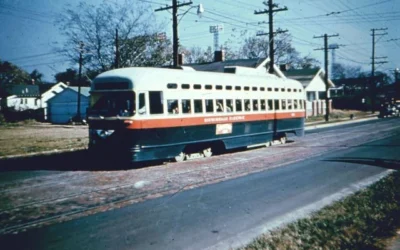
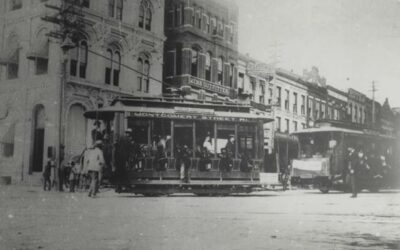
Without access to Birmingham’s streetcar network, the community was accessible only by automobile, further ensuring its exclusivity.
The wealth that built Mountain Brook had deep roots in the Jemison family’s Tuscaloosa empire—the same fortune accumulated through plantations, enslaved labor, and business ventures that included advocacy for the asylum that would later be named for Dr. Peter Bryce. The families were connected not just by blood but by the accumulation of capital across generations.
The Sanatorium Before the Suburb: English Village
There is another layer to this story. Before Mountain Brook’s English Village became home to boutiques and cafes, it housed the Jefferson County Tuberculosis Camp.
Starting in 1910, canvas tents on Cahaba Road sheltered patients suffering from the disease that was then a leading cause of death. The Anti-Tuberculosis Association treated both white and Black patients at the Red Mountain Sanitarium—one of the few integrated medical facilities in early 20th-century Birmingham.
By 1921, the sanatorium relocated to Montgomery Highway, clearing the way for Jemison’s vision of exclusive estates. The sick were moved so the wealthy could move in. The geography of healing was transformed into the geography of privilege.
What the Land Remembers: A Therapeutic Perspective
As a therapist practicing in the Birmingham area, I find myself returning to these histories not to indict anyone living in Mountain Brook today, but because the past lives in us whether we acknowledge it or not. The landscapes we inhabit carry memory. The institutions our ancestors built—whether plantation, asylum, or suburb—shape the possibilities of the present.
In trauma therapy, we talk about how “the body keeps the score”—how unprocessed experiences live in our nervous systems long after the events themselves have passed. Communities keep score too.
-
The same impulse that built Bryce Hospital as a place of moral treatment eventually curdled into the horrors of the Jemison Center.
-
The same family that advocated for compassionate psychiatric care also accumulated wealth through slavery.
-
The same land that once housed the dying was cleared to house the thriving.
None of this is simple. The elder Robert Jemison genuinely worked to establish mental healthcare in Alabama, collaborating with Dorothea Dix in ways that were progressive for his era. The younger Robert Jemison genuinely loved the natural beauty of the land he developed, spending “four or five days just trying to save a big tree.” Good intentions and harmful systems coexist within families, within institutions, and within ourselves.
Toward Integration and Healing
In therapeutic terms, healing requires integration—bringing into awareness what has been split off, denied, or forgotten. This is true for individuals processing trauma, and it may be true for communities reckoning with history.
Mountain Brook doesn’t need to apologize for existing. But perhaps there is value in knowing what the land remembers:
-
The patients at the Jemison Center, working fields their ancestors worked as slaves.
-
The tuberculosis patients in canvas tents where English Village now stands.
-
The architect’s dream of moral treatment, betrayed by generations of underfunding and neglect.
-
The racial covenants written into deeds that shaped who could belong and who could not.
When we understand how the present grew from the past, we gain the freedom to shape the future differently. The Jemison Center stands abandoned now, overtaken by vines and graffiti, deemed too dangerous to enter. But its story—and its connection to one of Alabama’s most affluent communities—deserves to be remembered.
The same family. The same wealth. Two very different mountains. And underneath both, the complicated inheritance of a state that has never fully reckoned with its treatment of the mentally ill, the enslaved, and the excluded.
That reckoning, like all healing, begins with telling the truth about where we come from.
Processing Generational Trauma
If you are processing difficult histories—personal, familial, or collective—therapy can provide a space for integration and healing. Taproot Therapy Collective offers trauma-informed care in Hoover, Alabama, serving clients throughout the Birmingham metro area.
Contact us to begin your journey toward wholeness.











0 Comments