
The Hidden Psychology of Mountain Brook’s Missing Sidewalks: How Infrastructure Designs Isolation
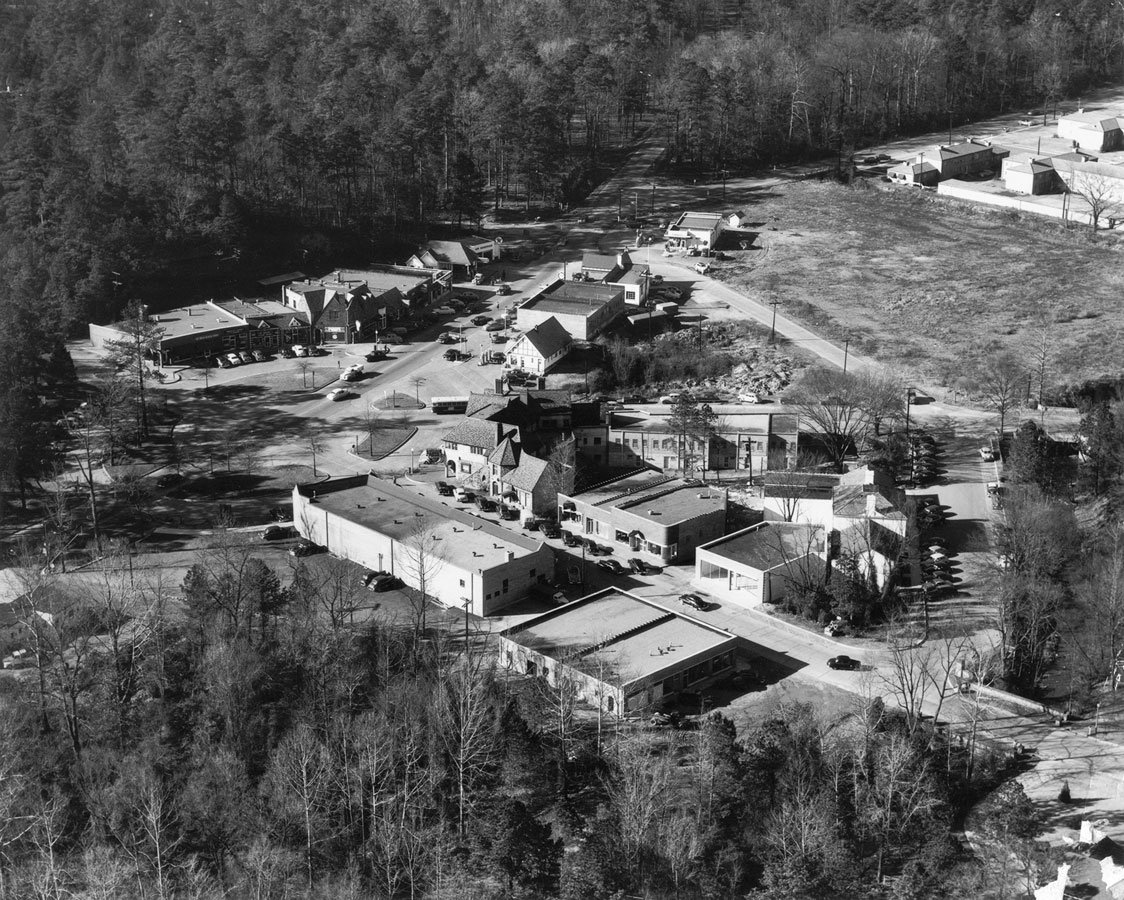
If you’ve ever tried to walk in Mountain Brook, you’ve noticed something odd: there are no sidewalks. Or very few. You might assume this is just wealthy people preferring pristine lawns, or perhaps an aesthetic choice to maintain a certain “estate” feeling.
You’d be wrong.
The absence of sidewalks in Mountain Brook wasn’t an accident or an oversight. It was intentional, planned, and part of a deliberate psychological vision of how humans should live. And as a therapist in Birmingham, I find the mental health implications fascinating—and troubling.
Robert Jemison’s Automobile Utopia
 In the 1920s and 1930s, developer Robert Jemison Jr. was designing what would become Mountain Brook. He had studied the “garden suburb” movement in England but made one crucial modification: he designed exclusively for automobile transportation.
This wasn’t pragmatic. It was ideological.
Jemison believed the automobile represented modernity, freedom, and—crucially—class distinction. Sidewalks were for the working class who couldn’t afford cars. His vision of Mountain Brook was a place where every resident would arrive by private vehicle. Walking was for other people, in other places.
So he simply didn’t build sidewalks.
The few that exist today were added later, often after resident deaths from pedestrian accidents forced the issue. But the original design remains: a suburb where walking is not just discouraged but made physically difficult or dangerous.
The Psychology of Designed Isolation
Here’s what nobody told Jemison in the 1920s, but what we know now from decades of research: walkable neighborhoods are better for mental health.
Study after study shows that communities designed for walking create:
- More spontaneous social interaction (“sidewalk encounters”)
- Stronger neighborhood bonds (you recognize people you see regularly)
- Lower rates of loneliness and isolation
- Better mental health outcomes, particularly for older adults and adolescents
Mountain Brook’s design does the opposite. When every trip requires getting in a car, you lose the casual encounters that build community. You don’t wave to neighbors while checking the mail. You don’t chat with someone walking their dog. You don’t spontaneously run into a friend and catch up.
You get in your car in your garage, drive to another garage, and get out. Human contact is scheduled, not spontaneous.
The New Urbanist Critique: When Architecture Kills Community
What happened in Mountain Brook is part of a larger pattern that urbanist thinkers have been warning about for decades. In a recent conversation on our podcast, architect and theorist Leon Krier—one of the founders of the New Urbanist movement—described this phenomenon with surgical precision: car-dependent suburbs don’t just make walking difficult. They make community structurally impossible.
Krier and the New Urbanists argue that traditional neighborhoods—the kind humans built for thousands of years before the automobile—have certain features that aren’t decorative but functional:
The Five-Minute Walk: Everything you need for daily life should be within a five-minute walk. Not because people can’t travel farther, but because spontaneous community only forms when encountering neighbors is effortless.
Mixed Use: Homes, shops, workplaces, and civic buildings should intermingle. When residential areas are separated from everything else, every errand becomes a commute, and public space disappears.
Connected Streets: A grid or connected network of streets creates multiple routes and encourages walking. Cul-de-sacs and disconnected streets—like those throughout Mountain Brook—force everyone onto the same arterial roads and require cars.
Buildings That Address the Street: When buildings face the street with entrances, porches, and windows, they create “eyes on the street” and opportunities for interaction. When buildings face away—toward private yards and garages—they create isolation.
Public Space as Living Room: Squares, parks, and sidewalks should function as outdoor living rooms where community happens naturally.
Mountain Brook violates almost every one of these principles. And the violation isn’t accidental—it’s definitional.
The Myth of Rugged Individualism and Intimate Atomization
Here’s what Jemison sold, and what Mountain Brook still sells: freedom. Independence. Privacy. The ability to retreat into your castle, insulated from the chaos and demands of community.
This is the myth of rugged individualism applied to suburban design. You don’t need neighbors. You don’t need spontaneous interaction. You have your car, your house, your private space. You’re self-sufficient.
But humans aren’t self-sufficient. We’re social primates who evolved in groups, who regulated our nervous systems through proximity and connection, who built cities specifically to be near each other despite the logistical costs.
Car-dependent suburbs like Mountain Brook promise independence but deliver what we might call “intimate atomization”—the breakdown of the casual, repeated, low-stakes social bonds that historically formed the fabric of community. You’re not isolated in the sense of being alone. You’re isolated in the sense of being surrounded by people you never encounter except by appointment.
And that distinction matters psychologically.
New Urbanists understand that the issue isn’t just aesthetics or nostalgia for small-town life. It’s neuroscience. Our brains are wired for what anthropologists call “Dunbar’s number”—roughly 150 meaningful relationships, but many more casual acquaintances. We need the shopkeeper who knows our order, the neighbor we wave to daily, the mail carrier we chat with. These aren’t deep relationships, but they’re stabilizing. They tell us we exist in a community, that we’re known, that we belong.
Car-dependent design eliminates most of these micro-relationships. And in their absence, we’re left with either intimate family relationships or total anonymity. There’s no middle ground, no gradual spectrum of connection.
The Therapeutic Cost of Automotive Isolation
In my practice, I see the downstream effects of this design philosophy constantly. Clients—particularly teenagers and older adults—describe feeling profoundly isolated despite living in a wealthy, “desirable” area.
Teenagers can’t independently access their community. They can’t walk to a friend’s house, to a store, to anywhere. They’re dependent on parental driving until they get their own car. This creates a specific developmental problem: delayed autonomy and increased dependency right at the age when independence is psychologically crucial.
But there’s a deeper issue: teenagers in car-dependent suburbs never learn to navigate public space. They go from private space (home) to private vehicle (car) to private space (school, friend’s house, mall). They never develop the social skills that come from moving through shared space, from casual encounters with strangers, from learning to be part of a community they can’t control.
This produces a strange paradox: young adults who are technically independent (they can drive) but socially underdeveloped (they’ve never had to negotiate shared public space or build casual community relationships).
Older adults face the inverse problem. When driving becomes difficult or impossible, they’re effectively trapped. Without sidewalks or public transit, losing the ability to drive means losing access to community, to social connection, to the basic errands that provide structure and purpose.
And for everyone in between, there’s the subtle psychological impact of never encountering your neighbors by chance. Community becomes something you have to schedule and plan, not something that happens organically. This is exhausting. It means every social interaction requires intentionality, energy, advance planning. There’s no spontaneity, no serendipity, no easy maintenance of weak ties.
The irony is that we moved to suburbs for “quality of life,” but we designed out the very features that make life feel qualitatively good: casual connection, spontaneous encounter, the sense of being part of something larger than your household.
What Robert Jemison Got Wrong
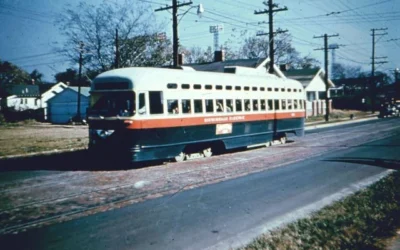
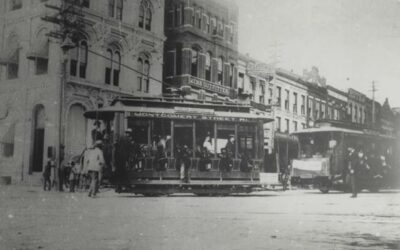
Jemison thought he was designing for freedom. The automobile meant you could go anywhere, anytime. No fixed routes. No waiting for streetcars. Personal mobility.
But he confused individual freedom of movement with collective freedom of connection.
Yes, cars let you travel farther. But car-dependent design also means you must travel farther for everything. The neighborhood store, the neighbor’s house, the local park—all require automotive transportation. What feels like freedom becomes a different kind of constraint.
And psychologically, that matters. Research on “ambient community”—the sense that you’re part of a neighborhood you can access and navigate on foot—shows it’s protective against depression, anxiety, and social isolation. Mountain Brook’s design eliminates ambient community almost entirely.
Leon Krier puts it more bluntly: “A city that can only be navigated by car is not a city at all. It’s a storage facility for cars with attached housing.”
The Irony of Exclusive Isolation
Here’s the darkest irony: Mountain Brook was designed as an exclusive community. Jemison wanted it to be special, set apart, desirable.
And it worked—but perhaps too well.
The exclusivity that made it desirable also makes it isolating. The same infrastructure that keeps “others” out also keeps residents boxed in. The walls aren’t literal, but they’re effective: no sidewalks means no walking, which means no casual mixing, which means no community formed through spontaneous encounter.
You get beautiful houses, excellent schools, low crime—and profound loneliness.
New Urbanists would argue this is inevitable. When you design a place around exclusion and privacy, you shouldn’t be surprised when people feel excluded and private. The architecture isn’t neutral—it’s determinative.
What This Means for Mental Health
When clients come to me from Mountain Brook, Vestavia Hills, or Homewood, they often describe a paradox: they live in a “great” area but feel disconnected, lonely, like something’s missing.
That something is often ambient community—the web of casual social connections that sidewalks and walkable neighborhoods naturally create.
This doesn’t mean car-dependent suburbs cause mental illness. But it does mean the built environment shapes our psychological reality in ways we rarely consider. Jemison’s 1920s vision of automobile utopia created a 21st-century landscape where connection requires constant intentional effort.
And for many people, that’s exhausting.
The New Urbanist insight is that this exhaustion isn’t personal weakness—it’s fighting against your environment. Humans naturally form communities when the infrastructure supports it. When infrastructure opposes it, maintaining connection becomes a second job.
Redesigning Connection (Or Working Against the Design)
The good news: awareness helps. When you understand that isolation isn’t a personal failing but partially a design problem, it changes how you approach solutions.
For parents of teenagers: Recognize that your child’s dependence and isolation isn’t just “kids these days”—it’s infrastructure. Actively facilitate connections. Consider carpooling not as inconvenience but as necessary compensation for missing walkability. Create opportunities for your teenagers to navigate shared space, even if you have to drive them there.
For older adults: Plan for the loss of driving before it happens. Build social connections that don’t require you behind the wheel. Consider how you’ll maintain autonomy and community access. If possible, advocate for sidewalks, crosswalks, and pedestrian infrastructure in your neighborhood.
For everyone: Make deliberate effort to create the spontaneous encounters that walkable neighborhoods provide automatically. Host front-yard gatherings instead of backyard privacy. Walk when you can, even if it’s inconvenient. Make yourself visible and available to neighbors. Consider forming walking groups or neighborhood book clubs—creating the third places that used to exist naturally.
You’re working against the design, but that doesn’t mean you can’t succeed. It just means recognizing that what feels like individual failure is actually structural challenge.
The Broader Pattern
Mountain Brook’s missing sidewalks aren’t unique. Across Birmingham’s over-the-mountain suburbs, you’ll find similar patterns: Vestavia Hills, Homewood, Hoover—all designed primarily for cars, all struggling with similar issues of isolation masked by affluence.
And across America, we’re finally reckoning with the psychological cost of car-dependent suburban design. Cities are adding sidewalks, bike lanes, mixed-use development. They’re trying to retrofit connection into infrastructure designed for isolation.
The New Urbanist movement has been advocating for this shift for decades. Communities like Seaside, Florida, and Kentlands, Maryland, prove it’s possible to build places where people naturally encounter each other, where children can walk to school, where errands happen on foot, where public space feels like everyone’s living room.
But in Mountain Brook, Jemison’s vision remains largely intact: a beautiful, exclusive, carefully designed community where connecting with your neighbor requires getting in your car.
When Place and Psychology Collide
As a therapist working in Birmingham, I’ve learned to ask clients not just about their relationships, their work, their family—but about their neighborhood. About whether they can walk anywhere. About whether they know their neighbors. About whether they feel part of a community or just housed near other houses.
Because sometimes the problem isn’t in your head. Sometimes it’s in the pavement.
Robert Jemison built a suburb without sidewalks because he thought walkability was obsolete, something for the working class, incompatible with modernity and automobiles. He believed he was designing for independence, for freedom, for the future.
He was wrong. And a century later, residents of Mountain Brook are still living with the psychological consequences of his mistake.
The rugged individualism he promised turned out to be intimate atomization. The freedom he designed turned out to be constraint. The modernity he embraced turned out to eliminate something ancient and essential: the casual, repeated, low-stakes encounters that make us feel human.
If you’re struggling with loneliness, isolation, or feeling disconnected despite living in a “great” area, therapy can help. Sometimes recognizing that your environment is working against connection is the first step toward building it anyway. And sometimes we need to grieve what our neighborhoods can’t provide before we can figure out how to compensate. Contact me to discuss how individual therapy can address the very real challenge of creating community in places not designed for it.
















0 Comments