
The Emperor of Shades Mountain: The Complete History of George Ward and the Vestavia Estate
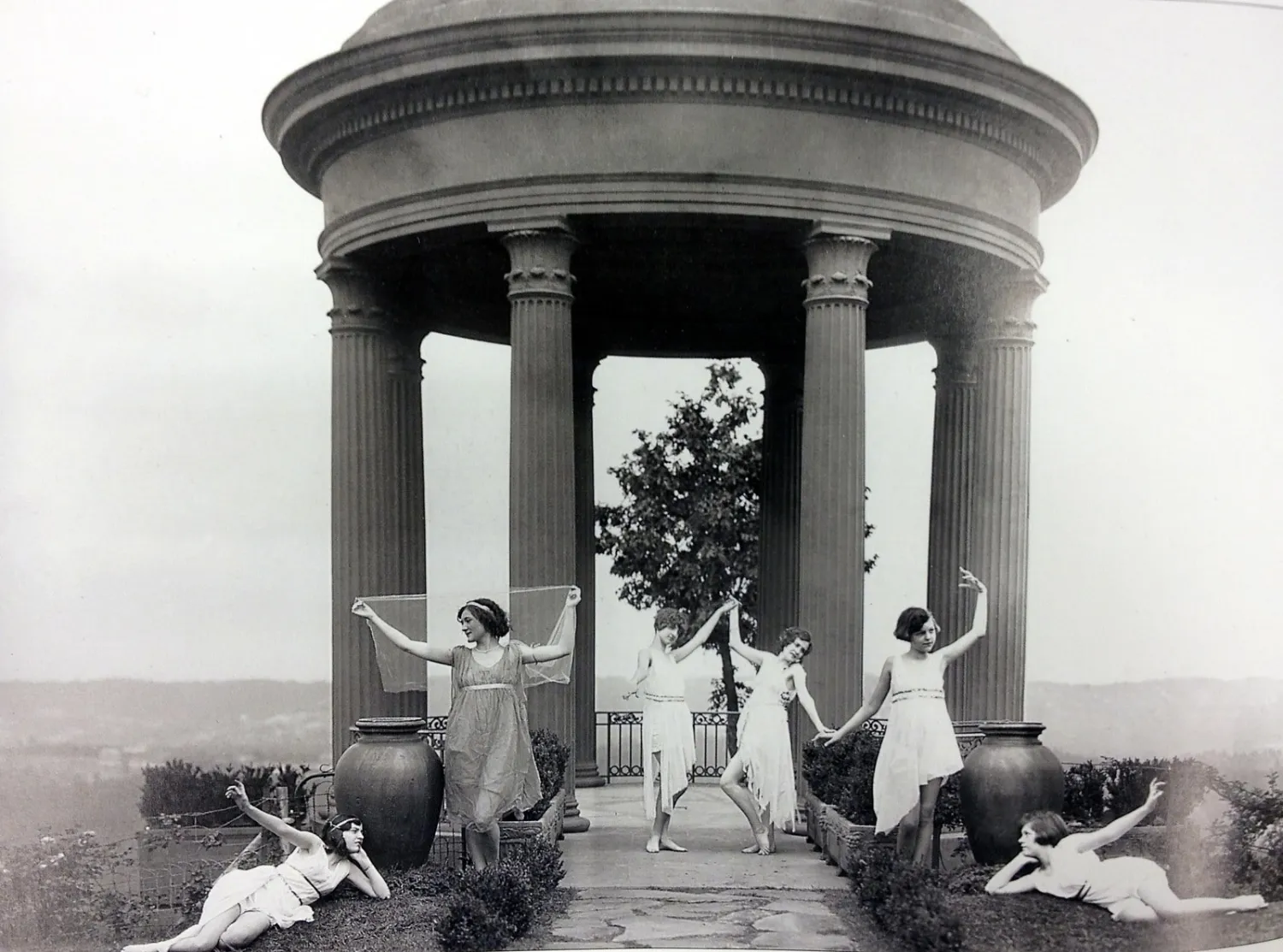
Drive up Highway 31 in Vestavia Hills, Alabama, and you’ll pass beneath a curious monument: a miniature Roman temple perched on a limestone promontory, watching over the traffic like a displaced deity. This is the Sibyl Temple, the city’s official logo, its secular icon, and its proud gateway.
What most drivers don’t know is that this structure was designed as a tomb. Specifically, George B. Ward’s intended mausoleum, complete with a cave excavated 15 feet beneath the solid rock for his body. He never made it in because Jefferson County law at the time strictly prohibited burial outside of consecrated cemeteries.
This empty tomb is more than a roadside curiosity. It is the architectural residue of a man who tried to superimpose the glory of ancient Rome onto the industrial grit of Birmingham. To understand Vestavia Hills—a community that today embodies the tension between Southern tradition and aggressive perfectionism—we must exhume the life of George Battey Ward in its entirety.
The Iron Crucible: 1867–1900
George Battey Ward was born March 1, 1867, in Atlanta, Georgia, but his soul was forged in the red dust of Birmingham. He arrived in 1871, the same year the city was incorporated, carried in the arms of his parents, George R. Ward and Margaret Ketcham Ward. His parents were the proprietors of the Relay House, a hotel that sat at the intersection of the two rail lines that gave Birmingham its existence. Growing up in the Relay House meant growing up at ground zero of the industrial boom. Ward didn’t just see the city grow; he saw the raw, violent, chaotic energy of miners, speculators, and carpetbaggers passing through the lobby. This chaotic upbringing instilled in him a lifelong obsession with order.
Ward’s education was typical for the elite, attending the Powell School and later a prep school, but his real education occurred on December 8, 1888. Ward, then a 21-year-old runner for Charles Linn’s National Bank, stood in the crowd outside the Jefferson County Courthouse. Inside, the sheriff was holding Richard Hawes, a man accused of murdering his wife and two daughters in a sensational case that had whipped the city into a frenzy. A mob of 2,000 men stormed the building, and the sheriff ordered his deputies to fire. A bullet whizzed past George Ward’s head, missing him by inches, and struck the postmaster standing beside him, killing the man instantly. Ward was dragged to safety, but the trauma of the Hawes Riot left a permanent scar. It crystallized his political philosophy that without strong, authoritarian leadership and enforced civic beauty, society would devolve into a murderous mob.
Ward channeled his energy into commerce. He rose from a runner to a paying teller, eventually founding the investment banking firm Ward, Sterne & Company. He was successful, meticulous, and known for his sharp tongue. In 1899, he entered politics, winning a seat on the Board of Aldermen. He resigned briefly, disgusted by the inefficiency, only to return in 1901, determined to force the city into modernity.

The Autocrat of the City Beautiful
In 1905, Ward was elected Mayor of Birmingham. He didn’t just want to govern; he wanted to curate. He was a disciple of the national City Beautiful Movement, which posited that grand architecture and clean streets created moral citizens. Ward’s approach to governance was paternalistic and intrusive. He issued a famous pamphlet, “Compliments of G. Ward,” which acted as a manifesto for the city. His command to the citizens was direct, instructing them to paint their houses, or at the very least whitewash them, and to clean up their backyards, asserting that civic pride began at home. He didn’t just ask; he enforced. He established “Clean-Up Days” where city wagons would haul away refuse for free, but he also publicly shamed neighborhoods that failed to comply.
Ward’s tenure was defined by a vicious war with the Birmingham Railway, Light & Power Company. He demanded they bury their wires, pave the spaces between their tracks, and lower their rates. When they refused, he threatened to revoke their franchise. This populism endeared him to the working class, even as his aesthetic snobbery alienated them. However, Ward’s arrogance made him enemies on the Board of Aldermen. In 1907, while Ward was on a six-week tour of Europe—studying the Roman architecture that would later obsess him—his political rivals staged a coup. They reorganized the city government and stripped the Mayor of most of his powers. In a calculated insult, they assigned Ward, the man who wanted to build parks and museums, to the Committee on Cemeteries. Ward, with characteristic wit, remarked that it was appropriate, as he intended to bury his opposition.
Ward was a key figure in the “Greater Birmingham” movement, which annexed surrounding suburbs in 1910, turning Birmingham into a major metropolitan area overnight. However, this victory sowed the seeds of his downfall. The annexation brought in thousands of conservative, working-class voters from the industrial fringes who did not share Ward’s Episcopal, aristocratic sensibilities.
The 1917 election was one of the ugliest in Birmingham’s history. Ward, then President of the City Commission, ran against Nathaniel Barrett. Barrett was the candidate of the “True Americans,” a nativist organization that was a precursor to the revived Ku Klux Klan. The campaign was viciously sectarian. Ward was painted as a “tool of the Pope”—despite being Episcopalian—because he refused to fire Catholic city employees. Barrett campaigned on banning Sunday movies and baseball, while Ward believed in cosmopolitan liberty. Ward lost, and the rejection was total. The city he had beautified had chosen a nativist populist over him.
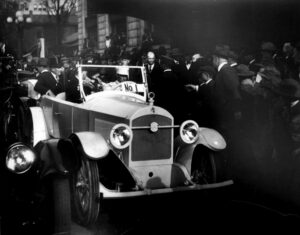
Ward returned to public life briefly to help welcome President Warren G. Harding in 1921. In a moment that shocked the segregated South, Ward arranged for the President’s motorcade to include prominent African American leaders. Ward himself rode in the lead car with Frank McQueen, a black barber and community leader. It was a deliberate provocation and a final act of defiance against the “True Americans” who had ended his career.
The Roman Dream
Rejected by the city below, Ward looked up. He decided to build a world where his authority was absolute. In 1923, he bought 20 acres of scrubland on the crest of Shades Mountain. He showed his architect, William Leslie Welton, a souvenir model of the Temple of Vesta (historically the Temple of Hercules Victor) he had bought in Rome and instructed him to replicate it.
The resulting house, named “Vestavia” (a combination of Vesta and Via), was not a revival style but a literal recreation with exacting specifications. Ward rejected marble as too cold, insisting instead on local pink sandstone quarried directly from the mountain property to tie the temple to the Alabama earth. The building featured twenty Doric columns, each 28 feet high and 4 feet in diameter. The exterior walls were two feet thick, providing natural insulation.
The interior layout was equally unique. The ground floor was a single 60-foot diameter circular living room. Ward faced a problem with flat artwork on curved walls, so he installed a rail system near the ceiling, suspending bookcases and paintings on heavy iron chains that allowed them to hang flush against the curve. Ward’s bedroom was located on the second floor in the clerestory, accessed by a wrought-iron spiral staircase. It was Spartan, decorated with prints from the Louvre and a single bed, resembling a captain’s quarters.

Life on the Mountain: The Strange and Interesting
From 1925 until his death, Ward lived in a carefully constructed fantasy where Vestavia served as a stage. He employed a full staff of African American servants, but he stripped them of their identities to fit his tableau. His chauffeur, Wallace, was renamed “Catiline” after the Roman conspirator and was required to wear a gladiator-style tunic and breastplate while driving Ward’s Packard. His cook was renamed “Lucullus” after the Roman general famous for his banquets. The staff was even trained to salute Ward with the Roman salute, a gesture that later became problematic due to the rise of Fascism, a movement Ward naievly admired for its aesthetics, before its post war infamy.
Ward’s obsession with Rome led him to admire Benito Mussolini’s efforts to restore imperial grandeur. In a detail often scrubbed from local histories, Ward hosted Arnaldo Mussolini, the dictator’s brother, at Vestavia. He saw in Italian Fascism a mirror of his own desire for enforced order and beauty, blinding him to its brutality.
Ward also installed a high-fidelity public address system throughout the 20-acre estate, which served as a panopticon. Ward would sit on his porch with a microphone, watching the gardens which were open to the public. If a visitor picked a flower, Ward’s voice would boom from the trees commanding them to put it down. At sunset, he would announce over the speakers that the sun was setting and it was time for all good citizens to return to their homes.
Ward’s companions were largely animals. He kept dozens of peacocks whose screams echoed off the canyon walls, and guinea fowl used as alarm systems. He had a pack of dogs, including a favorite named “Caesar,” and built them a kennel complex modeled after the Temple of Mars, which he dubbed “Villa Cleopatra.” Ward also attempted to force the Alabama soil to be Italian. He planted Italian grapevines in a “Vineyard of Bacchus,” intending to make wine. When they died of Pierce’s Disease, he replanted them. In a fit of madness, he even imported tons of actual soil from Italy, believing the “sacred earth” would support the vines, but the Alabama climate killed them anyway.
The Sibyl Temple and the Death Wish
In 1929, Ward built the Sibyl Temple, the smaller structure that survives today. Modeled after the temple at Tivoli, it was purely ornamental, framing the view of the highway below. But beneath it lay Ward’s darkest secret. Ward hired miners to blast a cavern 15 feet into the sandstone cliff directly beneath the Sibyl Temple. He installed electric lights and a ventilation system, writing in his will that he was to be buried in this cave, sealed behind a bronze door to eternally watch over Birmingham.
When he died on September 11, 1940, after a long battle with throat cancer, his executors moved to fulfill his wish. However, the Jefferson County Health Department intervened, citing that burial on private, unconsecrated ground was illegal. Consequently, George Ward was buried in a standard plot at Elmwood Cemetery. The cave was left empty and was later filled with concrete in the 1970s to prevent teenagers from using it as a party spot.

The Afterlife: Orange Rolls and Baptists
After rotting in probate, the estate was bought by developer Charles Byrd in 1947. He turned it into a restaurant called the Vestavia Roman Rooms. The atmosphere was theatrical, with waiters wearing togas and the menu featuring items like “Caesar Steaks.” The true culinary legacy of this era is the Orange Roll. Pastry chef Mrs. Ewing Steele baked these sweet, citrus-infused rolls daily. They became so popular that when the restaurant closed, the recipe was published in the newspaper, and they remain a staple of Birmingham holiday dinners to this day.
The Vestavia Hills Baptist Church bought the property in 1958. For years, children learned about Jesus in a library built to honor Vesta, and the irony of a Baptist congregation inhabiting a pagan temple was lost on no one. However, sandstone is porous, and the roof leaked. The upkeep was costing the church a fortune, and by 1970, they needed a new building, and the temple was in the way.
The Destruction
The demolition of Vestavia in April 1971 is considered one of the greatest architectural tragedies in Southern history. The Alabama Historical Association and local garden clubs begged the church to save it, and the church even offered the building for free to anyone who could move it. But the structure weighed thousands of tons, and no one could afford the move. Ward’s treasures were sold for scrap; the statues of Caesar and Augustus went to private gardens, and the massive iron chains were melted down.
The demolition itself was violent. The 28-foot columns were too strong to be knocked over by impact, so construction crews had to wrap steel cables around them. Heavy earthmovers drove in opposite directions, pulling until the sandstone snapped. Witnesses described the sound of the columns hitting the ground as earthquakes that shook the mountain. The church did not haul the debris away but instead crushed the pink sandstone columns into gravel, using them as the foundation backfill for the new church parking lot. If you park at Vestavia Hills Baptist Church today, you are parking on top of George Ward’s dream.
The Survivor
Only the Sibyl Temple was saved. The Vestavia Hills Garden Club raised the funds to slice the concrete gazebo from its foundation. In 1976, it was trucked down the mountain to its current location on US Highway 31, where it stands today as a small, white ghost.
George Ward was a man of contradictions: a progressive who believed in authoritarian control; a nature lover who tried to pave paradise with Italian marble; a man who loved his city but felt too good for its citizens. He named his estate “Vestavia” after Vesta, the goddess of the hearth and the eternal flame, believing that as long as the flame burned, the city was safe. By building his temple, he was trying to keep the flame of civilization burning in a place he felt was slipping into darkness. Today, Vestavia Hills is a thriving city, but it is a city built on a paradox: it is a conservative, modern suburb named after a pagan fantasy, guarded by the empty tomb of a man who watched the world from above, terrified to join the chaos below.















0 Comments