
What Birmingham’s Greatest Architectural Loss Reveals About Self-Sabotage
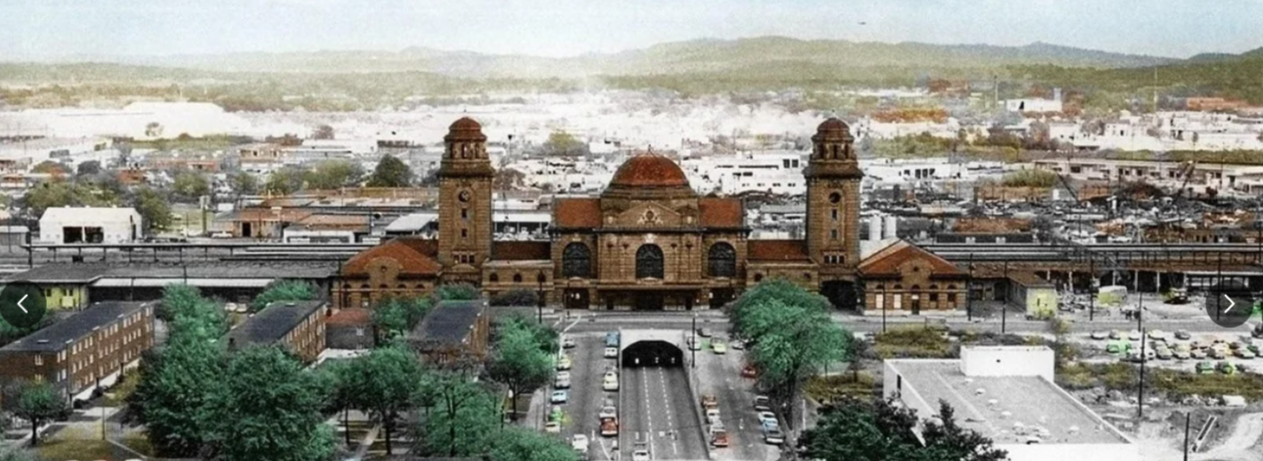
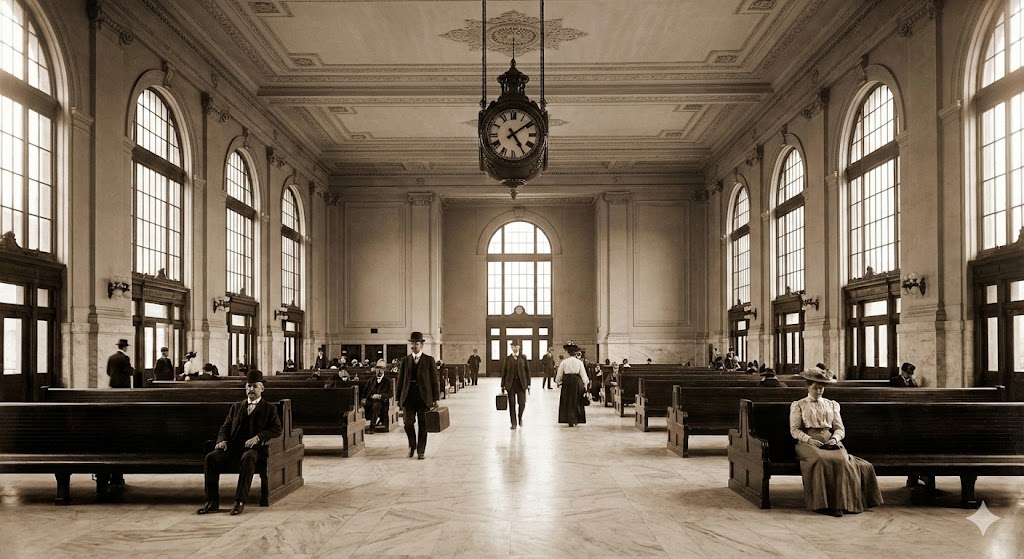
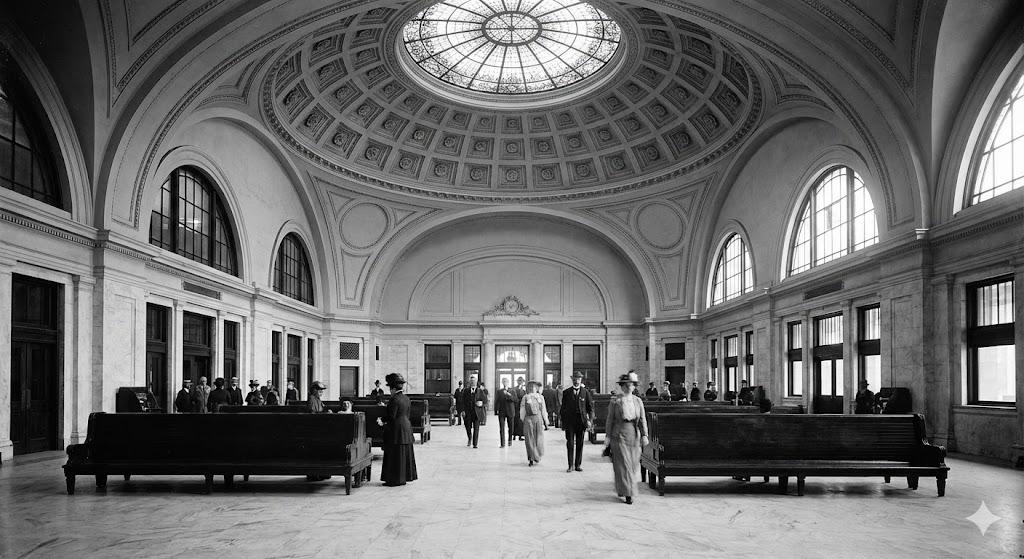
In 1969, Birmingham tore down the most beautiful building it had ever constructed. Terminal Station was a Beaux-Arts masterpiece that had welcomed travelers to the city for sixty years, a soaring cathedral of arrival and departure with vaulted ceilings, ornate ironwork, and a grandeur that announced to every visitor that Birmingham was a city worth arriving in.
They demolished it to build a parking garage.
The parking garage was itself torn down decades later. Today the site sits as an unremarkable patch of urban landscape, holding no memory of what once stood there. Most Birmingham residents under fifty have never seen a photograph of Terminal Station. They do not know what was lost.
For those of us living in Birmingham, Homewood, Vestavia Hills, and Mountain Brook, this history is more than a cautionary tale about historic preservation. It is a window into something darker and more universal: the human capacity to destroy the things we value most, often while fully aware of what we are doing.
A Building That Meant Something
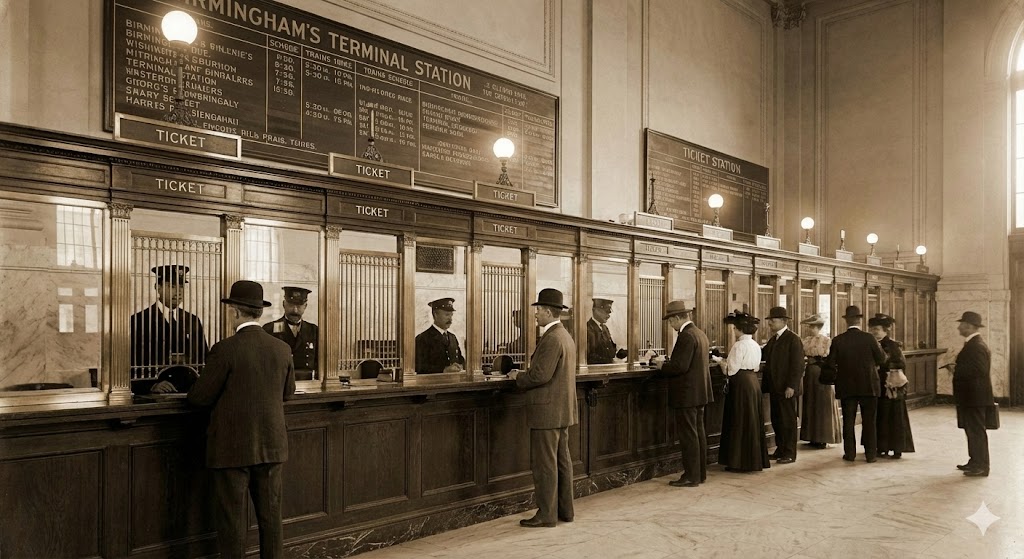
Terminal Station opened in 1909 at a moment when Birmingham was still proving itself to the world. The city was barely forty years old, a industrial upstart built on iron and ambition. The station was designed to communicate permanence and legitimacy, to tell every passenger stepping off the train that they had arrived somewhere that mattered.
The architects delivered. The building featured a massive arched entrance, intricate terra cotta detailing, and an interior waiting room that soared toward a coffered ceiling. Natural light flooded through enormous windows. The scale was deliberate, meant to inspire a sense of awe that would linger long after the visitor had collected their luggage and stepped outside.
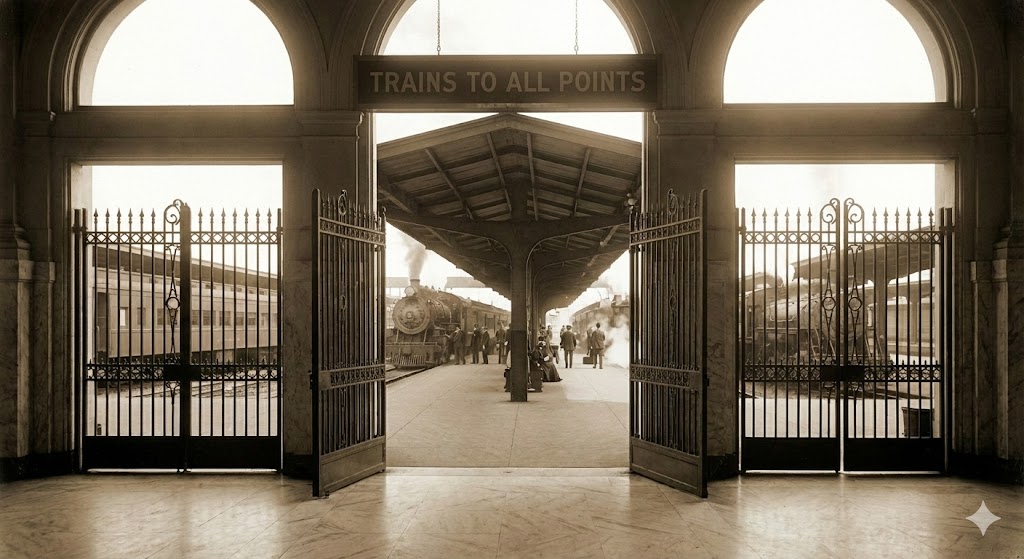
For sixty years, Terminal Station served as Birmingham’s front door. Soldiers departed for two world wars and returned through its arches. Families said goodbye and hello beneath its vaulted ceilings. The building witnessed the full sweep of the city’s twentieth century, from industrial boom to civil rights struggle.
By the late 1960s, passenger rail had declined and the station had fallen into disuse. But the building itself remained structurally sound, architecturally significant, and beloved by many who remembered what it had meant to walk through its doors.
None of that saved it.
The Demolition Everyone Saw Coming
Here is what makes Terminal Station’s destruction psychologically fascinating: it was not a secret. There was no cover of night, no sudden announcement that caught the city off guard. The demolition was planned, publicized, and debated. People knew it was going to happen. Preservationists objected. Citizens expressed dismay. Newspaper editorials questioned the wisdom of erasing such a landmark.
And then they tore it down anyway.
The wrecking ball swung in 1969 while Birmingham watched. Photographs from the demolition show the building coming apart in stages, its ornate facade crumbling, its grand interior exposed to the sky before collapsing into rubble. The destruction took weeks, long enough for anyone who wanted to bear witness to do so.
This is the detail that haunts: the collective awareness paired with collective paralysis. Birmingham did not accidentally destroy Terminal Station. The city did not wake up one morning to discover that someone had secretly demolished its greatest building overnight. The destruction happened in plain sight, with full knowledge of what was being lost, and no one could summon the will or the power to stop it.
Urban Renewal as Civic Self-Harm
The 1960s were the era of urban renewal, a nationwide movement that promised to revitalize American cities by clearing away the old and building the new. Across the country, historic buildings, established neighborhoods, and functioning communities were demolished in the name of progress. The federal government provided funding. Local leaders provided enthusiasm. The wrecking balls provided the rest.
Urban renewal was sold as improvement, as healing, as the surgical removal of blight to make way for healthy growth. The language was medical and optimistic. We were renewing our cities, making them better, preparing them for a brighter future.
The reality was often closer to self-mutilation. Cities destroyed irreplaceable architecture and displaced established communities to build highways, parking structures, and modernist developments that frequently failed to attract the vitality they promised. The patient did not heal. The patient lost something that could never be recovered.
Birmingham’s demolition of Terminal Station fits this pattern precisely. The building was not replaced with something better. It was replaced with a parking garage, a structure so unremarkable that the city eventually tore that down too. The net result was subtraction: less beauty, less history, less of whatever made Birmingham distinctive and worth caring about.
Why We Destroy What We Value
The question that Terminal Station poses is not really about historic preservation or urban planning. It is about psychology. Why do people, and the communities they form, destroy the things they value most?
This is not a rare phenomenon. Therapists see it constantly. The person who finally achieves the relationship they always wanted and then sabotages it. The professional who works for years toward a goal and then undermines their own success just as it becomes attainable. The family that cannot stop repeating the patterns that cause them pain even when everyone involved can clearly see what is happening.
Self-destruction often operates in plain sight, just like the demolition of Terminal Station. The person engaging in it frequently knows, on some level, exactly what they are doing. Friends and family can see the wrecking ball swinging. Everyone watches. No one can seem to stop it.
Understanding why requires looking beneath the surface behavior to the psychological forces driving it.
The Psychology of Self-Sabotage
Self-destructive behavior rarely emerges from a simple desire to suffer. More often, it serves a function, protecting against something that feels even more threatening than the destruction itself.
Sometimes we destroy good things because we do not believe we deserve them. The unconscious logic runs something like this: if this relationship or achievement or beautiful thing is going to be taken from me eventually, better to destroy it myself than to wait for the inevitable loss. At least then I am in control. At least then I am not surprised.
Sometimes we destroy good things because they remind us of pain. Terminal Station witnessed Birmingham’s entire twentieth century, including the parts the city might have preferred to forget. A building that has seen your worst moments carries that memory in its walls. Tearing it down can feel like erasing the past, even though the past remains stubbornly present regardless of what we demolish.
Sometimes we destroy good things because maintaining them requires a kind of ongoing attention and care that feels exhausting. It is easier to let the wrecking ball swing than to continually show up for the work of preservation. This is true for buildings and for relationships and for our own mental health.
And sometimes we destroy good things simply because we can, because the power to destroy is one of the few powers we feel certain we possess. When everything else feels out of control, destruction offers a terrible kind of agency.
The Paralysis of Watching
Perhaps the most painful aspect of Terminal Station’s demolition was not the destruction itself but the experience of those who watched it happen while feeling powerless to intervene.
This paralysis is familiar to anyone who has watched someone they love engage in self-destructive behavior. You can see what is happening. You can name it. You can beg and plead and reason and threaten. And still the wrecking ball swings, because ultimately you cannot save someone who is not ready to be saved, and you cannot preserve a building when the forces aligned against it are stronger than your objections.
The grief of watching is its own particular suffering. You carry the weight of having seen, of having known, of having tried and failed. The loss is compounded by the awareness that it did not have to happen this way.
Many people in Birmingham, Homewood, Vestavia Hills, and Mountain Brook carry similar grief from their personal lives. They watched a parent’s addiction progress. They saw a marriage dissolve in slow motion. They witnessed their own descent into depression or anxiety while some observing part of themselves stood helplessly by. The demolition happens in plain sight, and the watching is its own wound.
What Remains When the Building Is Gone
Terminal Station no longer exists, but its absence continues to shape Birmingham. Every city carries the ghost weight of what it has destroyed, the empty spaces where something meaningful once stood. These absences influence how a city sees itself, what it believes it deserves, whether it trusts itself with beautiful things.
The same is true for individuals. The relationships we have sabotaged, the opportunities we have squandered, the versions of ourselves we have demolished, these losses do not simply disappear. They become part of our psychological landscape, shaping how we approach new possibilities and whether we believe we can be trusted with them.
This is not an argument for endless guilt or permanent self-recrimination. The past cannot be rebuilt any more than Terminal Station can be reconstructed from its rubble. But the past can be understood, grieved, and integrated in ways that make future destruction less likely.
Preservation as Practice
Historic preservation emerged as a serious movement partly in response to the devastation of urban renewal. Cities that had watched their architectural heritage disappear began to recognize that some things, once destroyed, cannot be replaced. They created historic districts, landmark designations, and legal frameworks designed to make demolition more difficult.
Personal preservation requires similar intentionality. If you recognize patterns of self-sabotage in your own life, waiting for those patterns to resolve themselves is like waiting for the wrecking ball to voluntarily stop swinging. It does not happen. Preservation requires active intervention, structures and supports that make destruction more difficult even when part of you wants to let it happen.
Therapy can serve as one such structure. The regular appointment, the ongoing relationship, the commitment to showing up even when showing up is hard, these create a framework of accountability that can interrupt self-destructive momentum. You are not trying to stop the wrecking ball alone. You have someone standing with you, helping you understand why the demolition feels necessary and what might be preserved instead.
Learning from What Birmingham Lost
The site where Terminal Station once stood is now occupied by a Red Roof Inn and assorted commercial development. There is nothing wrong with these buildings, but there is nothing remarkable about them either. They could be anywhere. They communicate nothing about Birmingham’s history or aspirations or identity.
This is the cost of self-destruction: not just the loss of what was destroyed but the replacement of the irreplaceable with the generic. When we sabotage our relationships, we do not get better relationships. We get emptiness where intimacy once stood. When we undermine our achievements, we do not get greater achievements. We get parking garages where cathedrals used to be.
For those of us living in the Birmingham area, Terminal Station’s ghost offers a daily reminder that preservation is not passive. It requires intention, effort, and sometimes the willingness to fight against forces, internal and external, that would prefer to see beautiful things demolished.
Finding Support in the Birmingham Area
At Taproot Therapy Collective, we work with individuals throughout Birmingham, Homewood, Vestavia Hills, Mountain Brook, and the surrounding communities who are struggling with patterns of self-sabotage and self-destruction. We understand that these patterns are not moral failures or character flaws. They are psychological strategies that developed for reasons, often compelling reasons, and that continue because they serve functions that have not yet been addressed.
Our approach integrates contemporary neuroscience with depth psychology, recognizing that self-destructive patterns often have roots in early experiences and relationships. We work to understand not just what you are destroying but why the destruction feels necessary, and what might become possible if you could trust yourself to preserve what you value.
If you are watching the wrecking ball swing in your own life, whether toward relationships, career, health, or sense of self, know that the paralysis of watching can be interrupted. The demolition is not inevitable. And even when precious things have already been lost, the work of understanding and grieving can prevent future losses and create space for something new to be built.
Birmingham cannot bring back Terminal Station. But you can still preserve what matters most in your own life. We are here to help.
Taproot Therapy Collective provides psychotherapy services to individuals in Birmingham, Homewood, Vestavia Hills, Mountain Brook, and throughout Jefferson County and Shelby County, Alabama. To learn more about our approach or to schedule a consultation, visit our website or contact our office directly.
















0 Comments