
There’s a peculiar truth about Birmingham’s most famous pastry: the building where it was born no longer exists, yet the roll itself has become more iconic than the four-story Roman temple that housed its creation. As a therapist, I find this fascinating. What makes a simple combination of yeast, butter, and citrus zest outlast marble columns? Why does a breakfast roll carry more emotional weight than neoclassical architecture?
The answer lies in the psychology of comfort, memory, and what objects—even edible ones—mean to us.
When Food Becomes a Transitional Object
In the 1950s, British psychoanalyst D.W. Winnicott introduced the concept of “transitional objects”—those security blankets and beloved stuffed animals that help children navigate anxiety and change. These objects, Winnicott argued, exist in the space between our inner emotional world and external reality. They provide comfort precisely because they’re reliable, consistent, and always available when we need them.
But transitional objects aren’t just for children. Adults carry them too, and sometimes they come glazed in orange juice and powdered sugar.
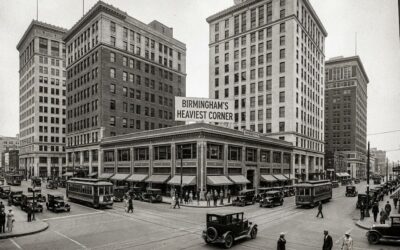
Consider Birmingham’s history: a city born from industrial violence in 1871, perpetually shrouded in furnace smoke, marked by profound racial tension, economic volatility, and constant reinvention. In this context, the Birmingham Orange Roll functions as an edible anchor—a sensory constant in a landscape of change.
The Vestavia estate that birthed these rolls? Demolished in 1971. The Roman Rooms restaurant where Mrs. Ewing Steele first baked them? Closed in the late 1950s. Even The Club’s modernist building on Red Mountain has been renovated multiple times. But the roll itself—the exact taste, the sticky glaze, the pillowy texture—remains unchanged. When members of The Club eat an orange roll in 2024, they’re tasting the same thing their grandparents tasted in 1951.
This is the psychological power of food: it provides sensory permanence in an impermanent world.
The Olfactory Time Machine
There’s a neurological reason why the smell of orange zest and baking yeast can transport you instantly to your grandmother’s table or a Sunday brunch from 1987. Our olfactory bulb connects directly to the hippocampus (memory) and amygdala (emotion)—a pathway called the “olfactory-emotional” connection. Unlike visual or auditory memories, which get processed through several brain regions first, smells bypass the logical brain entirely and hit emotional memory like a freight train.
Mrs. Ewing Steele, who created the Birmingham Orange Roll at the Vestavia Roman Rooms in the late 1940s, understood this intuitively. She had learned to cook at scale at the Officers’ Club at Fort McClellan—a high-pressure environment where food had to signal “occasion” and “care.” When she was hired to create a bread service worthy of a circular dining room surrounded by Roman columns, she didn’t just make dinner rolls. She created a sensory event.
Fresh yeast rising. Butter caramelizing. Orange oil releasing from the zest. These aren’t just smells—they’re emotional triggers. They signal safety, abundance, celebration. They tell your nervous system: You are cared for. You belong here.
The Ritual of Unspoken Provision
Here’s where the psychology gets really interesting. At The Club, orange rolls aren’t ordered from a menu. They simply appear with every meal—breakfast, lunch, or dinner. This “unspoken provision” is psychologically profound.
In attachment theory, secure attachment forms when a caregiver consistently meets a child’s needs without the child having to demand or beg. The child learns: I am worthy of care. My needs will be met. The Club’s orange rolls operate on this same principle. You don’t have to ask for them. You don’t have to earn them. They just arrive, warm and abundant, a ritual of institutional care.
Mrs. Jessie, who has been baking these rolls since the 1980s, starts her shift at 3:00 AM to produce over 1,000 rolls daily. This labor—occurring in darkness while the city sleeps—has an almost spiritual consistency. The members never see the work, but they trust it’s happening. The rolls will be there. They always are.
This is comfort operating at a primal level.
Why Birmingham (and North Dakota) Needed Oranges
Here’s a curious parallel: Birmingham, Alabama and Bismarck, North Dakota both developed intense orange roll traditions in the mid-20th century. Neither place grows oranges. So what’s going on?
The answer is both economic and psychological. In the 1910s and 1920s, the California Fruit Growers Exchange (later Sunkist) faced a crisis of overproduction. They hired advertising genius Albert Lasker, who launched the revolutionary “Drink an Orange” campaign in 1916. Suddenly, oranges weren’t luxury items—they were health necessities. They represented sunshine, vitality, and escape from the industrial (Birmingham) or frozen (North Dakota) landscape.
In both regions, the orange became a psychological transplant—a bright, fragrant promise that you weren’t trapped in smoke or snow forever. When you ate an orange roll in Birmingham’s soot-darkened valley or in a North Dakota winter, you were consuming elsewhere. You were eating California sunshine, exotic warmth, a world beyond your immediate circumstances.
This is why comfort food is never just about taste. It’s about what the food means.
The Mayor’s Temple and the Baker’s Legacy
George Battey Ward built his Roman temple on Shades Mountain in 1925 as an escape from Birmingham’s industrial chaos. He held toga parties with vestal virgins dancing on the lawn and renamed his servants after Roman figures. He was trying to impose order, beauty, and classical permanence on a city he found degrading.
He failed. The temple rotted in probate after his death, was sold, converted to a restaurant, sold again to a Baptist church, and finally demolished. Ward’s attempt at permanence—his literal monument to the goddess of the hearth—crumbled into memory.
But Mrs. Ewing Steele succeeded where Ward failed. She didn’t build in stone. She built in muscle memory, in recipe cards shared between church ladies, in the ritual of 3 AM baking, in the scent of orange oil released from zest. She created something people needed, not just admired.
This is the paradox: the most enduring monuments aren’t made of marble. They’re made of habit, ritual, and shared sensory experience.
What We’re Really Hungry For
As a therapist working with trauma in Birmingham, I see this dynamic constantly. People seek what therapists call “continuity of being”—the sense that despite change and loss, something essential about who you are persists. In a city that has weathered so much transformation—economic, racial, architectural—food becomes one of the few reliable carriers of identity.
When you eat an orange roll at The Club, you’re not just eating a pastry. You’re participating in a ritual that connects you to Mrs. Steele, to the Roman Rooms, to Sunday brunches with grandparents who are now gone, to a version of Birmingham that existed before you were born. You’re eating continuity.
And perhaps that’s why the roll outlasted the temple. Ward’s vision was about escaping Birmingham—about creating otherness, elevation, difference. But Steele’s orange rolls were about belonging. They said: You are part of this community. You are cared for. You will be fed.
That’s a hunger no amount of Doric columns can satisfy.
Ewing Steele’s Alabama Orange Rolls
From “Secrets of Cooking” by Ewing Steele (1973), as published in “Baking in the American South” by Anne Byrn (2024). This is the original published recipe WITHOUT coconut.
FOR DOUGH:
- 2 cups whole milk
- ½ cup vegetable shortening
- ½ cup granulated sugar
- 1¾ tsp. dry yeast
- 4 cups all-purpose flour, plus 4-5 tablespoons more
- 1 tsp. baking soda
- 1 tsp. baking powder
- 1 tsp. salt
- 1 large egg
- ½ cup (1 stick) unsalted butter, melted, for brushing
FOR FILLING:
- ⅓ cup granulated sugar
- 1 Tbsp. grated orange zest (from 2 small oranges)
FOR ICING:
- 1 cup confectioners’ sugar
- Pinch of salt
- 3 Tbsp. fresh orange juice
DIRECTIONS:
- Make the dough: Scald the milk (heat until bubbles form around edges, 3-4 minutes). Place shortening and sugar in stand mixer bowl, cut into coarse pieces. Pour hot milk over and stir until shortening melts. Cool to lukewarm (115-120°F), then whisk in yeast.
- Whisk together 4 cups flour, baking soda, baking powder, and salt. Add egg to yeast mixture and beat until smooth. Fold in flour mixture and beat on low until incorporated. Increase to medium and beat until dough pulls away from sides but is still sticky, 4-5 minutes. Add 2-3 tablespoons more flour if needed. Cover with plastic wrap and refrigerate overnight. OR cover with towel and let rise in warm spot until doubled, about 1½ hours.
- Punch down dough. Turn out onto floured surface with remaining 2 tablespoons flour. Press into long rectangle, flip so it doesn’t stick. Roll into rectangle about 24 inches long and 10-12 inches wide.
- Brush two 12-cup muffin pans with melted butter. Brush dough with remaining melted butter.
- Make filling: Toss sugar and orange zest together. Sprinkle evenly over dough. Beginning with long side, roll into jellyroll. Cut into 1-inch slices with serrated knife. Place cut side up in muffin cups. Cover and let rise until doubled, 40-45 minutes (1 hour if dough is cold).
- Heat oven to 350°F. Bake until lightly golden brown, 15-20 minutes. Cool slightly on wire rack.
- Make icing: Whisk confectioners’ sugar, salt, and orange juice until smooth. Drizzle over warm rolls still in pans. Let cool 20 minutes, then serve.
Yields: 24 rolls
The next time you bite into an orange roll—whether at The Club, from Millie Ray’s operation, or pulled from your own oven using a Sunkist pamphlet from 1916—pay attention. Notice what memories surface. Notice who you’re remembering. Notice what the taste promises you about permanence, care, and home.
That’s not just a pastry. That’s psychology you can taste.














0 Comments