
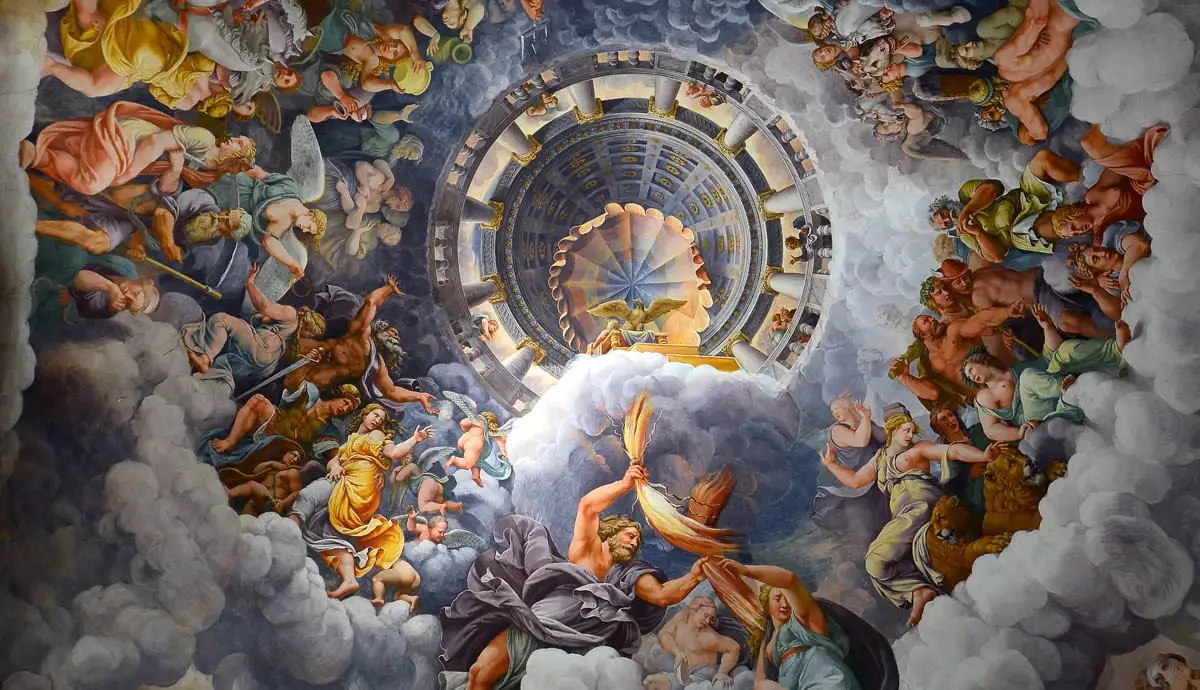
The Psychology of Politics: Exploring Complexes, Trauma, and the Shadow of the Electorate
In the modern era, political discourse has largely abandoned the realm of policy debate and entered the domain of pathology. We no longer disagree; we demonize. To understand why our political landscape has become a battlefield of existential anxiety, we must look beyond economics and sociology and peer into the depths of the unconscious mind. As Carl Jung famously noted, “The world hangs on a thin thread, and that is the psyche of man.”
Unresolved trauma and psychological complexes are the invisible architects of one’s political orientation. Developing an authentic and individual political compass is a crucial developmental milestone of adulthood. However, the vast majority of the electorate fails to achieve this differentiation. Instead, they allow their own unconscious vulnerabilities, shame, and childhood wounds to manifest as political fanaticism. When we have not healed our internal world, we project our chaos onto the external world, demanding that the government fix the brokenness we refuse to face in ourselves.
I. The Shadow and the Ballot Box
The most significant concept in understanding political hatred is the Shadow. In depth psychology, the Jungian Shadow represents the hidden, repressed, and denied aspects of the personality. It is the repository for everything we deem unacceptable in ourselves—our aggression, our weakness, our greed, and our perversions.
Projecting the Enemy
The psychological mechanism at play in partisan polarization is Projection. Because the ego cannot bear to acknowledge its own capacity for evil or error, it ejects these traits and plasters them onto a convenient “Other.”
In the political sphere, this looks like the Right projecting their own desire for control onto the Left, or the Left projecting their own intolerance onto the Right. The intensity of your hatred for a political opponent is often a precise measure of how much they embody a trait you have repressed in yourself. We do not just disagree with the opposition; we need them to exist so we can carry the burden of our own shadow.
The Golden Shadow: Worshipping the Politician
While the dark shadow leads to demonization, the Golden Shadow leads to deification. The Golden Shadow contains our unexpressed potential—our latent leadership, our courage, our ability to articulate truth. When we feel small and powerless, we project this potential onto a charismatic leader.
This explains the cult-like devotion seen in populist movements. The supporter is not just voting for a candidate; they are handing over their own agency to a figure who embodies the strength they feel they lack. As discussed in our exploration of the Golden Shadow, this is a dangerous abdication of responsibility. It prevents the individual from doing the hard work of actualizing their own potential, preferring instead to live vicariously through a “Great Man.”
II. The Trauma Responses of the Left and Right
It is a reductionist error to assume that political ideology is purely rational. Often, our political stance is a codified trauma response—a way of managing a dysregulated nervous system on a societal scale.
The Authoritarian Personality: The Fight Response
Research into the Authoritarian Personality, pioneered by Theodor Adorno, suggests that right-wing extremism often stems from a Fight Response to deep-seated shame and fear. Individuals who grew up in environments that punished vulnerability may develop a “contempt for weakness.”
This manifests politically as:
- Hyper-Independence: A rejection of social safety nets because needing help is associated with shame.
- Scapegoating: Attacking marginalized groups (the poor, immigrants) because they represent the “weakness” the individual has had to kill within themselves.
- Order vs. Chaos: A rigid adherence to hierarchy and tradition as a defense against the terrifying ambiguity of life.
When we learn to hate our own weakness, we become political reactionaries. We claim that “God” or “The Market” is justified in crushing the vulnerable, because deep down, we believe we deserved to be crushed when we were vulnerable.
Pathological Altruism: The Fawn Response
Conversely, the political Left is not immune to pathology. Much of modern progressivism can be analyzed as a Fawn Response (or “Please and Appease”). This often stems from a childhood where the individual had to take care of a volatile parent to survive—parentification.
This manifests politically as:
- Lack of Boundaries: A refusal to enforce borders or social norms, mirroring an inability to say “no” in personal relationships.
- Identification with the Victim: A compulsive need to “save” others, often stripping them of their agency in the process. This can lead to the enabling of destructive behaviors under the guise of compassion.
- The Devouring Mother: A state that promises safety but demands total dependence, suffocating individual competence in exchange for security.
III. The Parent Complex in Governance
George Lakoff, a cognitive linguist, argued that our political metaphors are derived from our internal model of the family. We unconsciously view the State as a Parent.
The Strict Father vs. The Nurturing Parent
- The Strict Father (Conservative): The world is dangerous. The father’s job is to protect the family and teach the children discipline through punishment. If you are poor, it is because you lacked discipline. To help you would be to make you weak.
- The Nurturing Parent (Progressive): The world is a community. The parent’s job is to nurture the children and ensure they are fulfilled. If you are poor, it is because the system failed you. To punish you would be cruel.
Both models, when taken to the extreme, are pathological. The Strict Father becomes abusive and tyrannical; the Nurturing Parent becomes enmeshed and enabling. A healthy polity, like a healthy human, requires the integration of both: the masculine capacity for structure and defense, and the feminine capacity for care and inclusion. This aligns with the Anima/Animus integration required for individuation.
IV. Political Cults and the Escape from Freedom
Why do we cling to these ideologies even when they contradict reality? Because freedom is terrifying. As the psychoanalyst Erich Fromm articulated in Escape from Freedom, the modern individual is isolated and anxious. To alleviate this anxiety, we surrender our individuality to a mass movement.
Political parties increasingly function as high-control groups (cults). They utilize tactics such as:
- Demand for Purity: Canceling or purging members who deviate slightly from the dogma.
- Loading the Language: Using thought-terminating clichés (“Woke,” “Fascist”) to stop critical thinking.
- Us vs. Them: Creating a binary world where the out-group is not just wrong, but evil/sub-human.
This dynamic utilizes the DARVO tactic (Deny, Attack, Reverse Victim and Offender) on a societal level. Political leaders deny reality, attack the press or the opposition, and claim that they are the true victims of a conspiracy, engaging the base’s protective instincts. Read more on how this tactic works in our article on DARVO in Politics.
V. Healing the Political Psyche
There is no political solution to a psychological problem. We cannot vote our way out of collective trauma. The only path forward is the withdrawal of projections.
1. Re-owning the Shadow: We must admit that the greed we see in the capitalist is in us. The intolerance we see in the activist is in us. When we accept our own capacity for malevolence, we lose the need to crusade against it in others.
2. Healing the Wound: We must address the pre-verbal trauma that drives our need for a “Strongman” or a “Savior.” This often requires somatic work to regulate the nervous system so we can tolerate the ambiguity of democracy without fleeing into authoritarianism.
3. The Golden Mean: We must move from “Either/Or” thinking to “Both/And” thinking. We need borders and bridges. We need responsibility and compassion. This is the “Transcendent Function” that Jung spoke of—the ability to hold the tension of opposites until a new, higher solution emerges.
Bibliography
- Adorno, T. W., et al. (1950). The Authoritarian Personality. Harper & Row.
- Fromm, E. (1941). Escape from Freedom. Farrar & Rinehart.
- Haidt, J. (2012). The Righteous Mind: Why Good People Are Divided by Politics and Religion. Pantheon.
- Jung, C. G. (1946). “The Fight with the Shadow.” Essays on Contemporary Events.
- Lakoff, G. (1996). Moral Politics: How Liberals and Conservatives Think. University of Chicago Press.










0 Comments