
What clinicians need to know about the biggest algorithm shift in a decade—and why your website may be invisible to the people who need you most.
The Ground Has Shifted
If you’re a therapist in private practice, you’ve probably noticed something troubling: your website traffic has dropped. Fewer new client inquiries are coming through your contact form. The blog posts you spent hours writing seem to be reaching no one. Meanwhile, that massive corporate therapy platform with the $50 million marketing budget is ranking above you for searches in your own city.
You’re not imagining it. Something fundamental has changed.
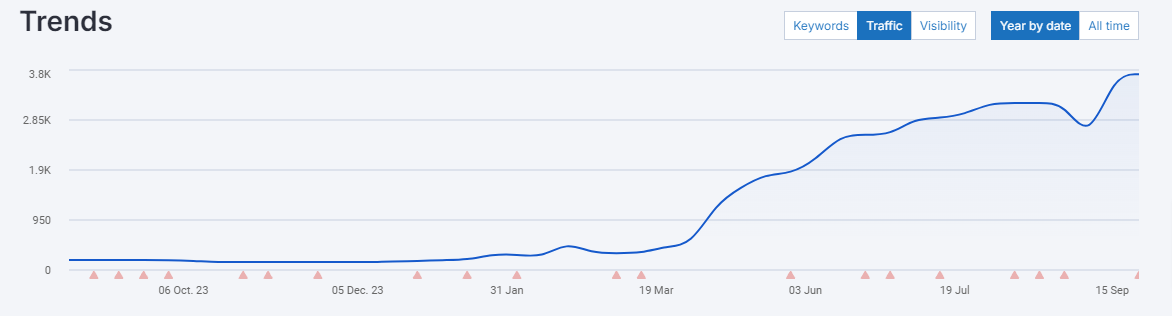
In late 2024 and throughout 2025, Google implemented the most significant series of algorithm updates in its history. These changes—with names like the “Helpful Content Update,” the “March 2024 Core Update,” and the ongoing “E-E-A-T refinements”—have completely rewritten the rules of online visibility. Websites that thrived for years have seen their traffic collapse by 80% or more.
For therapists, the stakes couldn’t be higher. You’re not selling widgets. You’re trying to connect with people in crisis—people searching for help at 2 AM, people whose lives may depend on finding the right support. If Google buries your website on page seven of search results, you effectively don’t exist to those people.
This guide will explain, in plain language, exactly what has changed, why it matters for mental health professionals specifically, and what you can do about it.
Part One: Understanding What Changed (And Why Google Did It)
The Problem Google Was Trying to Solve
For years, the internet was flooded with what the industry calls “content farms”—websites that churned out thousands of shallow articles designed to game search algorithms. You’ve seen these sites. You search for “how to cope with anxiety” and get a 500-word article that says nothing useful, surrounded by ads, written by someone with no expertise in mental health.
Google’s users hated this. People searching for health information were getting garbage. People in genuine distress were finding predatory websites. The corporatization of healthcare information was degrading the search experience.
So Google declared war on low-quality content. The weapons they deployed were a set of evaluation criteria that would fundamentally change what it takes to rank well online.
The New Acronyms You Need to Know
Let’s decode the alphabet soup, because understanding these concepts is essential to everything that follows.
E-E-A-T: Experience, Expertise, Authoritativeness, Trustworthiness
This is the framework Google now uses to evaluate whether your content deserves to rank. According to Google’s official documentation, each letter represents a critical quality signal:
Experience (the newest addition): Does the content creator have first-hand, lived experience with the topic? Google now distinguishes between someone who has actually done something versus someone who merely researched it. For therapists, this means your clinical experience matters. Have you actually worked with clients dealing with the issues you write about? Google wants evidence of that.
Expertise: Does the content creator have relevant credentials, training, or demonstrated knowledge? For mental health content, this means: Are you a licensed clinician? Did you receive graduate-level training? Do you have specialized certifications (EMDR, Brainspotting, trauma training)? Google wants to see that real experts are creating the content people rely on.
Authoritativeness: Is the content creator or website recognized as a go-to source in their field? This is about reputation beyond your own website. Do other credible sources link to you? Are you cited by professional organizations like the American Psychological Association? Have you been quoted in reputable publications?
Trustworthiness: Is the content accurate, honest, safe, and reliable? This encompasses everything from factual accuracy to website security (HTTPS) to transparency about who owns the site and why they created it.
E-E-A-T is not a single algorithm. It’s a framework that Google’s human quality raters use to evaluate websites, and that evaluation informs how the algorithms are trained.
YMYL: Your Money or Your Life
This acronym refers to topics where low-quality content could genuinely harm people. According to Google Search Central, “Your Money or Your Life” content includes:
Health and medical information (absolutely includes mental health)
Financial advice and transactions
Legal information
Safety information
News and current events about important topics
Why does this matter for you? Therapy and mental health content is classified as YMYL by Google. This means your website is held to a higher standard than websites about gardening tips or restaurant reviews. The reasoning is obvious: bad advice about planting tomatoes is annoying; bad advice about managing suicidal ideation could kill someone.
The practical implication: everything in this guide is more important for you than it would be for someone running a hobby blog. Google applies stricter scrutiny to mental health content because the stakes are higher.
The “Helpful Content” Standard
Beyond E-E-A-T and YMYL, Google has articulated a simpler principle: content should be created to help people, not to manipulate search rankings.
According to Google’s helpful content guidelines, signs of “unhelpful” content include:
Articles that rehash what other sites have already said without adding new value
Content that targets keywords people search for but doesn’t actually answer their questions
Writing that demonstrates surface-level knowledge without genuine expertise
Pages that exist primarily to attract search traffic rather than serve a clear user need
For therapists, this should actually be good news. You do know what you’re talking about. The challenge is demonstrating that expertise in ways that Google’s algorithms can recognize.
Part Two: Why These Changes Hit Therapists Especially Hard
The Double Bind
Here’s the cruel paradox facing therapists in 2026:
Requirement 1: Google demands high E-E-A-T signals—evidence that you’re a credentialed expert with real clinical experience.
Requirement 2: Most therapists are trained to be invisible. Clinical training emphasizes the client’s experience, not self-promotion. As Carl Rogers taught, we were trained to be a neutral presence, not a personal brand.
These requirements are in direct tension. Google wants you to prominently display your credentials, your experience, your authority. Your training taught you to minimize yourself and center the client.
Additionally:
Requirement 3: YMYL content needs high-trust signals—links from authoritative sources, citations in reputable publications, recognition from professional organizations.
Reality: Most therapists in private practice have no PR strategy, no media connections, and no time to pursue external recognition.
Requirement 4: Google rewards websites regularly updated with substantial, helpful content.
Reality: You’re a clinician with a full caseload. You don’t have 10 hours a week to write blog posts.
This is why so many therapy websites have seen their rankings collapse. It’s not that you’re doing anything wrong—it’s that the new rules require things most therapists were never trained to do.
The Corporate Competition Problem
Making matters worse, you’re now competing against extremely well-funded corporate platforms that have entire teams dedicated to SEO. As I’ve written about in Corporate Tech Monopolies are Going to Ruin Therapy, these companies have content departments producing dozens of articles per week. They have PR teams securing media mentions. They have development teams implementing the latest technical optimizations.
You have… you. Maybe a website you built five years ago and haven’t touched since.
This isn’t a fair fight. But it is a fight you can win in your local market, if you understand the rules.
Part Three: The High-Trust Link Problem (And What to Do About It)
What Are “High-Trust” Links and Why Do They Matter?
One of the most important signals Google uses to assess authority is who links to your website. Not just how many links, but who is doing the linking.
A link from a random blog nobody reads is nearly worthless. A link from the American Psychological Association, Psychology Today, a major university, or a respected news outlet is extremely valuable. These are “high-trust” links—votes of confidence from sources Google already recognizes as authoritative.
The logic is straightforward: if Harvard Medical School links to your article about trauma treatment, that’s evidence you know what you’re talking about.
For YMYL content like mental health information, this matters even more. Google is extremely cautious about ranking health content from sources it can’t verify.
Where Therapists Can Realistically Get High-Trust Links
Let’s be practical. You’re not going to get the New York Times to write about your private practice. But there are achievable sources of authoritative links:
Professional Directories (Yes, They Still Matter)
Psychology Today Therapist Directory: Still the gold standard. Make sure your profile is complete, current, and links to your website.
GoodTherapy.org: Another respected directory with high domain authority.
Your state licensing board’s public database (if it includes website links)
Professional Organizations
If you’re a member of professional organizations, check whether they have member directories that include website links:
National Association of Social Workers (NASW)
American Psychological Association (APA)
American Association for Marriage and Family Therapy (AAMFT)
American Counseling Association (ACA)
Training Organizations
If you’ve completed specialized training, many training organizations list certified practitioners:
EMDRIA (EMDR International Association) has a therapist directory
Brainspotting.com lists certified practitioners
Somatic Experiencing International
IFS Institute (Internal Family Systems)
Government and Institutional Resources
The National Institute of Mental Health (NIMH), SAMHSA, and similar organizations maintain resource pages. While getting directly linked is difficult, citing these sources in your content signals you’re drawing from authoritative knowledge.
Contributing to Reputable Publications
Some publications accept contributor articles from qualified professionals:
PsychCentral: Sometimes accepts expert contributions
Verywell Mind: Has published therapist-written content
Local newspapers and magazines often welcome expert commentary on mental health topics
Links to Avoid
Be aware that many “SEO services” will offer to get you hundreds of links quickly. This is almost always a scam that will hurt you. Google explicitly penalizes “link schemes”—attempts to manipulate rankings through artificial link building.
Avoid:
Paid link placements on low-quality sites
“Link farms” or private blog networks
Reciprocal link exchanges (“I’ll link to you if you link to me”)
Irrelevant directory submissions
The new Google algorithm is remarkably good at detecting artificial link patterns. When caught, your site won’t just lose the benefit of those links—it may be penalized across the board.
Part Four: Building E-E-A-T Into Your Website
The Author Profile: Your Most Important Page
In the E-E-A-T era, your “About” page is arguably more important than your home page. This is where you establish your credentials, experience, and trustworthiness.
Your author/about page should include:
Credentials and Licenses: List every relevant credential. Include license numbers and links to verification where possible. Example: “Licensed Clinical Social Worker (LICSW), Alabama License #12345.”
Education: Graduate programs, relevant undergraduate work, specialized post-graduate training.
Clinical Experience: How many years in practice. Types of clients you’ve worked with. Settings you’ve worked in. Specific populations and issues you’ve focused on.
Specialized Training: EMDR certification, Brainspotting training, Somatic Experiencing, trauma certifications, etc. Include dates and certifying organizations.
Professional Memberships: Active memberships in professional organizations.
Publications and Media: Any articles you’ve written, interviews you’ve given, presentations you’ve made.
A Professional Photo: Not optional. A real, professional headshot communicates trustworthiness.
Personal Statement: Write in first person. Explain your approach to therapy. What drew you to this work. This demonstrates the “Experience” component of E-E-A-T.
Schema Markup: Speaking Google’s Language
“Schema markup” is code added to your website that explicitly tells Google what the content is. Instead of Google having to guess that you’re a licensed therapist in Birmingham, Alabama, you can tell it directly.
According to Schema.org, relevant schema types for therapists include:
Person schema: Your name, credentials, affiliation, education
LocalBusiness schema (specifically “MedicalBusiness” or “Physician”): Your practice name, address, phone, hours
Article schema: For blog posts (including author information, date published, date modified)
If you’re using WordPress, plugins like Yoast SEO or Rank Math can add schema markup without coding.
Content That Demonstrates Expertise
Every piece of content on your site should reinforce your E-E-A-T. Here’s what that looks like in practice:
Write from clinical experience: Instead of “Anxiety is a common condition that affects many people,” write “In my fifteen years of practice, I’ve worked with hundreds of clients experiencing anxiety, and I’ve noticed that…” The first sentence could be written by anyone. The second demonstrates lived professional experience.
Cite credible sources: When making factual claims, link to primary research and professional organizations:
National Institute of Mental Health
American Psychological Association
PubMed/NCBI for research citations
Cochrane Library for systematic reviews
Share your clinical perspective: Generic content doesn’t demonstrate expertise. Your unique clinical philosophy, your integration of different modalities, your perspective developed through years of practice—that’s what sets you apart.
Update regularly: Outdated content damages trust. Review older posts annually and update statistics, research citations, and any information that’s become dated.
Part Five: Local SEO—Where Therapists Can Actually Win
Here’s the good news: as a local service provider, you’re not actually competing with BetterHelp for most searches. When someone in Birmingham searches for “trauma therapist near me,” Google prioritizes local results. You can absolutely outrank national platforms for local searches—if you optimize for local SEO.
Google Business Profile: Non-Negotiable
Your Google Business Profile (formerly Google My Business) is free and essential. This is what powers the “map pack”—the local business results that appear at the top of local searches.
Make sure your profile is:
Complete: Fill out every field. Business name, address, phone, website, hours, services offered, business description, appointment links.
Accurate: Your name, address, and phone number (NAP) must be exactly the same everywhere it appears online. “123 Main Street” and “123 Main St” are different in Google’s eyes.
Categorized correctly: Choose “Psychotherapist,” “Mental Health Service,” “Marriage or Family Therapist,” or whatever category best fits your practice.
Photo-rich: Upload photos of your office, your waiting room, yourself. Businesses with photos get significantly more engagement.
Active: Respond to reviews. Post updates occasionally. Google rewards businesses that actively manage their profiles.
Local Content Strategy
Write content that serves your local community. This signals to Google that you’re a genuine local resource:
“Finding a Trauma Therapist in [Your City]: What to Look For”
“Mental Health Resources in [Your County]”
“How [Local University] Students Can Access Therapy”
Content addressing local community issues
Part Six: Content Strategy for Busy Clinicians
Quality Over Quantity (More Than Ever)
The old SEO advice was to publish constantly—volume was key. The new algorithm explicitly penalizes “thin” content and rewards depth. One excellent, comprehensive article per month is worth more than four superficial posts.
A high-quality article for E-E-A-T purposes:
Is at least 1,500-2,000 words (for substantive topics)
Thoroughly answers the question it’s addressing
Includes your clinical perspective and experience
Cites credible sources from organizations like the APA and NIMH
Is original—not rehashing what every other therapy website says
Has clear author attribution with credentials
The “Helpful Content” Test
Before publishing anything, ask:
Would a client reading this come away with useful information they couldn’t easily find elsewhere?
Does this demonstrate genuine expertise or just surface-level knowledge?
Is this written for humans first, search engines second?
Would I be proud to show this to colleagues?
If you can’t answer yes to all four, don’t publish. Unhelpful content actively hurts your site under the current algorithm.
Leveraging Your Existing Expertise
You have thousands of hours of clinical experience. That’s your content goldmine. Consider:
FAQ content: What questions do clients ask you constantly? Those are articles waiting to be written.
Misconceptions: What do people get wrong about your specialty that you’re always correcting? Consider writing about myths and misconceptions in your area of expertise.
Deep dives on modalities: Your training in EMDR, Brainspotting, Somatic Experiencing, etc.—explain what you actually do and why.
Clinical perspective pieces: Your thoughts on developments in the field, informed by your experience with evidence-based practice.
Part Seven: Technical Foundations
Some technical elements are non-negotiable. If your website fails these basics, content quality won’t save you.
Site Security (HTTPS)
Your website must use HTTPS (indicated by the padlock icon in the browser). According to Google Search Central, this has been a ranking factor for years, but for YMYL content it’s especially critical.
Mobile Responsiveness
More than 60% of searches happen on mobile devices. Google uses “mobile-first indexing,” meaning they primarily evaluate the mobile version of your site. Test your site using Google’s Mobile-Friendly Test.
Page Speed
Slow-loading websites frustrate users and rank poorly. Use Google’s PageSpeed Insights to test your site.
Part Eight: Resources and Further Learning
For therapists who want to go deeper, here are the most trustworthy resources:
Google’s Official Resources:
Google Search Central (Google’s official resource for webmasters)
Google’s Search Quality Evaluator Guidelines (PDF—the actual document Google’s human raters use)
Reputable SEO Learning Resources:
Moz’s Beginner’s Guide to SEO (comprehensive, accessible guide)
Search Engine Journal (ongoing SEO news and updates)
Ahrefs Blog (data-driven SEO insights)
Professional Organizations for Therapists:
American Psychological Association
National Association of Social Workers
American Association for Marriage and Family Therapy
American Counseling Association
The Path Forward
The new SEO landscape is demanding. The burden on therapists who want to be found online is genuinely higher than ever before. But the underlying principles are actually aligned with what good clinicians already value:
Experience: Your clinical work is your credibility. Write from that place.
Expertise: You have it. Now document and display it.
Authoritativeness: Build connections with credible institutions and publications.
Trustworthiness: Be transparent, accurate, and current.
The therapists who will thrive in the post-2024 SEO landscape aren’t necessarily the ones with the biggest marketing budgets. They’re the ones who translate genuine clinical expertise into content that serves people searching for help.
As clinicians who understand the depth of human experience, who have studied the history of our field, who bring real clinical experience to our work—we have exactly what Google now rewards. The challenge is simply learning to communicate that expertise in the digital realm.
That’s not a marketing trick. That’s an extension of the work you already do.




















0 Comments