
How the Psychology of Role Reversal Shaped a Movement and Still Echoes in Birmingham Families Today
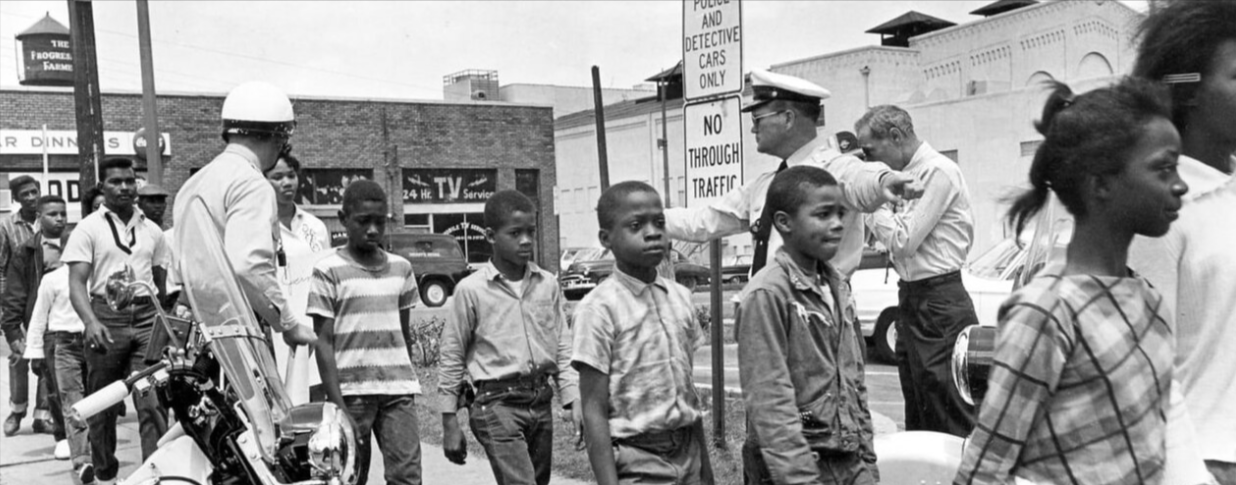
On May 2, 1963, something unprecedented happened in Birmingham, Alabama. Thousands of children, some as young as six years old, walked out of their schools and into history. They marched from Sixteenth Street Baptist Church toward downtown Birmingham, singing freedom songs and facing fire hoses, police dogs, and arrest. By the end of what became known as the Children’s Crusade, more than 2,500 young people had been jailed.
But there is a secret history beneath the triumphant narrative, one that families in Homewood, Vestavia Hills, Mountain Brook, and throughout greater Birmingham still grapple with in different forms today. It is the story of what happens when children must carry burdens that belong to adults. It is the story of parentification, family systems under impossible pressure, and the complex guilt that emerges when the natural order of protection becomes inverted.
The Paralysis of Birmingham’s Adults
The Children’s March 1963 did not emerge from nowhere. It arose from a painful reality that the adults of Birmingham’s Black community understood intimately. For months, the Southern Christian Leadership Conference had struggled to mobilize adult demonstrators for the Birmingham Campaign. The reason was not a lack of courage or conviction. It was survival.
Adults who marched risked losing their jobs. Many worked for white employers who had made clear that participation in civil rights activities would result in immediate termination. Homeowners risked foreclosure. Parents risked their ability to feed their children. The economic terrorism of Jim Crow Birmingham had created a system designed specifically to paralyze adults through their responsibilities.
James Bevel, a young SCLC organizer, recognized this bind and proposed a controversial solution. If the adults were frozen by their obligations to protect and provide for their children, then perhaps the children themselves could step forward. The children had less to lose economically. Their arrest would not cost families their income. And the jails of Birmingham, Bevel calculated, could not hold them all.
When Children Become Protectors: Understanding Parentification Trauma
What unfolded in Kelly Ingram Park during those May days in 1963 represents one of the most dramatic examples of role reversal in American history. Children took on the burden of social transformation that adults felt unable to carry. They absorbed violence meant for their parents. They sat in jail cells so that their fathers could keep their jobs and their mothers could keep their homes.
In family systems theory, we call this dynamic parentification. It occurs when children are placed in positions where they must function as caregivers, protectors, or emotional supports for the adults in their lives. While the Birmingham children’s sacrifice was noble and historically necessary, the psychological weight of that role reversal did not simply evaporate when the cameras stopped rolling.
Parentification trauma develops when children consistently take on responsibilities that exceed their developmental capacity. The child learns that their own needs are secondary. They develop an overdeveloped sense of responsibility for others and an underdeveloped relationship with their own emotional life. They become hypervigilant to the needs and moods of adults around them, often at the expense of their own development.
The Guilt That No One Discussed
One of the least examined aspects of the Children’s Crusade is the profound guilt experienced by Birmingham’s Black parents. Imagine watching your twelve year old daughter march toward Bull Connor’s police dogs while you stand on the sidewalk, knowing that economic reality has made it impossible for you to take her place. Imagine the complexity of pride mixed with shame, gratitude mixed with grief.
This guilt did not disappear when segregation officially ended. It was passed down through families, sometimes spoken and sometimes not. It shaped parenting styles in subsequent generations. Some parents became overprotective, determined that their children would never have to carry such burdens again. Others unconsciously recreated the dynamic, continuing to rely on their children for emotional support in ways that perpetuated the pattern.
For families now living in Birmingham’s suburbs, in communities like Vestavia Hills, Homewood, and Mountain Brook, these intergenerational patterns often appear in disguised forms. The specific historical context may have changed, but the underlying family systems dynamics persist. Children still find themselves carrying emotional burdens that belong to their parents. Adults still sometimes lean on their children in ways that reverse the natural flow of support and protection.
Family Systems Theory and the Legacy of 1963
Family systems theory, developed by psychiatrist Murray Bowen, helps us understand how patterns established in one generation ripple forward into subsequent generations. A family is not simply a collection of individuals but an interconnected emotional unit. When one part of the system is under stress, other parts compensate. When adults cannot function in their expected roles, children often step in to fill the gap.
The Birmingham of 1963 placed extraordinary stress on family systems. The economic terrorism of segregation was specifically designed to exploit the parental instinct to protect and provide. When adults were paralyzed by this system, children stepped forward. This was heroic, but it was also traumatic in ways that families are still processing.
Today, a therapist working with families in greater Birmingham might see descendants of those 1963 marchers without ever knowing the connection. They might see a high achieving teenager from Homewood who cannot say no to any request, who feels responsible for everyone’s emotional wellbeing, who has never learned to identify their own needs. They might see a Mountain Brook parent who unconsciously expects their children to provide emotional support that should come from peers or a spouse. They might see a Vestavia Hills family where the roles between parent and child have become confused and reversed.
Recognizing Parentification in Birmingham Families Today
Parentification does not require a historical crisis to develop. It can emerge in any family where adults are overwhelmed, whether by mental health challenges, substance abuse, marital conflict, economic stress, or simply the accumulated weight of unprocessed intergenerational trauma.
Children who have been parentified often grow into adults who struggle with several characteristic patterns. They may have difficulty identifying their own emotional needs because they learned early that their needs were not the priority. They may feel guilty when they are not taking care of someone. They may attract relationships where they are cast in the caretaker role. They may struggle with boundaries, finding it nearly impossible to say no to requests for help.
These adults often appear highly functional from the outside. They are reliable, responsible, and capable. Employers love them. Friends depend on them. But internally, they may feel empty, exhausted, and unclear about who they actually are when they are not being useful to someone else.
The Path Toward Healing
Healing from parentification trauma requires first recognizing the pattern. This recognition can be painful because it often involves seeing beloved parents in a more complex light. The child who was parentified typically does not want to view their experience as harmful. They want to see their sacrifice as meaningful, their parents as doing their best, their family as normal.
This is where the history of the Children’s March 1963 becomes therapeutically valuable. It provides a framework for understanding that children can be heroic and still be harmed by their heroism. The young people who marched in Birmingham did something extraordinary and necessary. And they also carried a weight that children should not have to carry. Both things are true.
Therapy for parentification often involves what family systems theorists call differentiation, the process of developing a clear sense of self that is distinct from one’s role in the family system. This means learning to identify one’s own needs, establishing boundaries, and tolerating the discomfort that comes when we stop automatically caretaking and allow others to manage their own emotional lives.
For families in Birmingham, Homewood, Vestavia Hills, and Mountain Brook, this work often involves engaging with family history in new ways. Understanding the pressures that shaped previous generations can create compassion while also breaking the cycle. We can honor our parents’ struggles while also choosing to parent differently. We can acknowledge the heroism of the children who marched while also committing to protect our own children from carrying burdens that belong to adults.
Birmingham’s Unique Therapeutic Landscape
There is something particular about doing this therapeutic work in Birmingham, in the very city where the Children’s Crusade unfolded. The history is not abstract here. Kelly Ingram Park is a short drive from Homewood. The Sixteenth Street Baptist Church still stands in the heart of downtown. The children who marched, now in their seventies and eighties, still live in our community.
This proximity to history creates both challenges and opportunities for healing. The challenges include the ways that unprocessed collective trauma can make certain conversations feel dangerous or disloyal. The opportunities include the possibility of integrating historical understanding with personal healing, of seeing one’s own family patterns within a larger context that makes them more understandable and less shameful.
For families in Mountain Brook and Vestavia Hills, the relationship to this history may feel more distant. The communities that developed in Birmingham’s suburbs during and after the civil rights era have their own complex relationships with the city’s past. Yet parentification and family systems dynamics transcend any single historical moment. Every family, regardless of its particular history, can benefit from examining the ways that roles and responsibilities are distributed between generations.
Finding Support in Greater Birmingham
If you recognize yourself or your family in these patterns, you are not alone. Many families in Birmingham and its surrounding communities carry the weight of role reversal and parentification without having language for what they have experienced. Naming the pattern is often the first step toward changing it.
Therapy that addresses parentification typically involves both individual and relational work. The individual work focuses on developing self awareness, learning to identify and express needs, and grieving the childhood that was lost to premature responsibility. The relational work may involve family therapy, where patterns can be examined and restructured with the support of a trained clinician.
The children who marched in 1963 changed Birmingham and changed America. They showed what becomes possible when young people step into their power. But they also remind us of our obligation to the children of today, to protect them from burdens they should not carry, to ensure that they can be children before they are asked to be heroes.
In the end, this may be the deepest lesson of the Children’s Crusade for families in Birmingham, Homewood, Vestavia Hills, and Mountain Brook. Our children are capable of extraordinary things. And our job as adults is to create a world where that capability can unfold in its proper time, where children can develop and grow and gradually take on adult responsibilities rather than having those responsibilities thrust upon them by systems that have broken the adults around them.
If your family is struggling with patterns of parentification or role reversal, reaching out for professional support can be the beginning of a new chapter. Birmingham has a rich community of therapists trained in family systems approaches who understand both the universal dynamics of these patterns and the particular historical context that shapes families in our region.
The children who marched in 1963 carried a burden so that future generations might be free. Part of honoring their sacrifice is ensuring that the children of today are allowed to simply be children, protected and nurtured by adults who have done their own healing work.
Taproot Therapy Collective provides trauma informed psychotherapy for individuals and families throughout greater Birmingham, including Homewood, Vestavia Hills, and Mountain Brook. Our clinicians specialize in family systems approaches, intergenerational trauma, and the treatment of parentification and role reversal dynamics. Contact us to learn how therapy might support healing in your family.
















0 Comments