

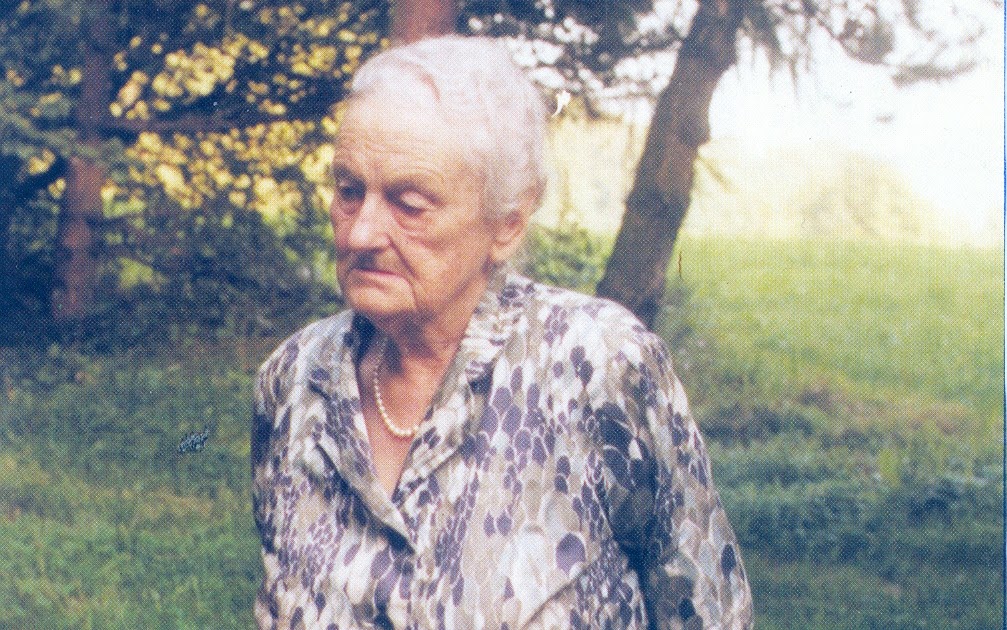
The Artist of the Unconscious
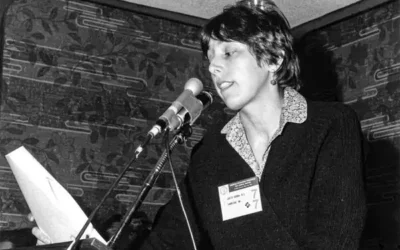
In the inner circle of Carl Jung, there were theoreticians who built complex intellectual systems, and there were practitioners who lived the psychology in their bones. Barbara Hannah (1891–1986) belonged firmly to the latter group. A British artist who traveled to Zurich to meet Jung in 1929, she became one of his closest collaborators and a foundational figure in the development of Active Imagination.
While analysts like Marie-Louise von Franz focused on the objective history of archetypes, Hannah focused on the subjective experience of the psyche. She taught that the unconscious is not just a repository of symbols to be analyzed, but a living landscape to be traversed. For the modern seeker, her work offers a practical, grounded guide to engaging with the figures of the collective unconscious without getting lost in them.
Biography & Timeline: From Art to Analysis
Born in Brighton, England, to a clerical family, Hannah’s early life was defined by the arts. She studied painting in London and Paris, developing an aesthetic sensitivity that would later serve her well in decoding dream imagery. Like many early Jungians, she did not come to psychology through medicine, but through a personal crisis. Seeking relief from a creative block and a sense of meaninglessness, she went to Zurich.
She intended to stay for a few months; she stayed for the rest of her life. Hannah became a lecturer at the C.G. Jung Institute in Zurich and a prolific author. Her biography of Jung, Jung: His Life and Work, remains one of the most intimate and accessible accounts of the man behind the myth.
Key Milestones in the Life of Barbara Hannah
| Year | Event / Publication |
| 1891 | Born in Brighton, England. |
| 1929 | Travels to Zurich to meet C.G. Jung; begins analysis. |
| 1948 | Becomes a founding lecturer at the C.G. Jung Institute Zurich. |
| 1971 | Publishes Striving Towards Wholeness, exploring the lives of the Brontë sisters through a Jungian lens. |
| 1976 | Publishes Jung: His Life and Work. |
| 1981 | Publishes Encounters with the Soul: Active Imagination. |
Major Concepts: The Practice of the Soul
Active Imagination
Hannah is best known for demystifying Active Imagination. While Jung discovered the technique, Hannah systematized it for students. She described it as a middle ground between dreaming and waking—a state where the ego lowers its defenses just enough to let the unconscious speak, but stays awake enough to record the dialogue.
She emphasized that this is not “guided imagery” (where you imagine a peaceful beach) but a confrontation. If a demon appears in your mind, you do not banish it; you ask it what it wants. This dialogue integrates the split-off energy of the complex back into the personality.
The Anima and Animus
Hannah wrote extensively on the problem of the Anima and Animus—the contra-sexual soul images. She was particularly astute regarding the Animus in women. She observed that when a woman is possessed by the negative Animus, she becomes opinionated, rigid, and cut off from her own feelings. The goal of therapy is to transform the Animus from a critical inner voice into a bridge to the spirit.
The Symbolism of Animals
Perhaps due to her artistic background, Hannah had a profound understanding of animal symbolism in dreams. She taught that animals represent the instinctive libido—the energy of life that has not yet been humanized. To dream of a cat, a horse, or a snake is to encounter a specific frequency of one’s own vitality. Healing often involves “taming” these animals—not crushing the instinct, but bringing it into relationship with the ego.
The Conceptualization of Trauma: The Fragmented Soul
In her book Striving Towards Wholeness, Hannah examined the lives of the Brontë sisters to illustrate how the psyche attempts to heal itself. She argued that trauma (or “neurosis,” in the language of her time) creates a split in the personality. One part of the soul remains trapped in the past, often guarded by a terrifying figure (a dragon, a tyrant, a witch).
The “cure” is not merely insight; it is a quest. The patient must go into the inner world (through dreams or active imagination) and rescue the lost part of themselves. This aligns with modern views on structural dissociation, where the “Going On With Normal Life” part of the self is separated from the “Traumatized” part.
Legacy: The Teacher of the Image
Barbara Hannah’s legacy is one of accessibility. She took the lofty, often obscure concepts of Analytical Psychology and showed how they work in practice. She taught us that the unconscious is not a scary basement to be locked, but a studio where the art of the self is created.
For the contemporary therapist, her work is a reminder that the image is primary. Before we interpret a dream, we must honor the image itself. We must let the cat be a cat and the storm be a storm before we reduce them to psychological concepts.
Bibliography
- Hannah, B. (1971). Striving Towards Wholeness. C.G. Jung Foundation Books.
- Hannah, B. (1976). Jung: His Life and Work. G.P. Putnam’s Sons.
- Hannah, B. (1981). Encounters with the Soul: Active Imagination as Developed by C.G. Jung. Sigo Press.
- Hannah, B. (1992). The Cat, Dog, and Horse Lectures. Chiron Publications.













0 Comments