
The Ontological Crisis of the Moving Image
There is a moment in Paddy Chayefsky’s Network where Howard Beale, the mad prophet of the airwaves, screams about the dehumanization of experience itself. Written in 1976, Chayefsky was already seeing what we have only recently begun to understand: the transformation of authentic human expression into metrics, the reduction of story to stimulus, the conversion of art into what Martin Scorsese now calls simply “content.” This linguistic shift signals something far deeper than business jargon. When The Godfather and a ten-second TikTok clip become functionally equivalent units of streaming inventory, we have crossed a threshold from which there may be no return.
I write this as someone who has spent decades studying the intersection of psychology and culture, who has witnessed firsthand how narrative shapes consciousness. What we are experiencing is not merely the evolution of entertainment but its fundamental dissolution. The films and shows that once served as our culture’s dreaming mind have been replaced by algorithmic productions designed not to transform but to tranquilize, not to challenge but to commodify.
Consider what we have lost. Mad Men was not entertainment in the conventional sense. It was a seven-season excavation of the American shadow, using the advertising industry of the 1960s as a lens through which to examine our collective lies about identity, success, and the promises we make to ourselves. Don Draper was not a hero to root for but a void in a suit, a man who had literally stolen another’s identity and built an empire on that theft. The show forced viewers to sit with long silences, with characters thinking or smoking, with the unbearable weight of meaninglessness that underlies consumer culture. Today’s algorithms would flag these silences as “dead air,” as moments where viewers might drift away to another tab.
The Sopranos performed an even more radical surgery on the American psyche. David Chase created a protagonist who was simultaneously a suburban father attending his daughter’s soccer games and a sociopathic killer who would strangle his nephew with his bare hands. Tony Soprano was not offered a redemption arc because Chase understood that some shadows cannot be redeemed, only witnessed. The show’s infamous cut-to-black ending was the ultimate refusal to provide closure, to satisfy the audience’s need for resolution. It forced viewers to sit with ambiguity, with the anxiety of not knowing, with the reality that life does not provide neat endings.
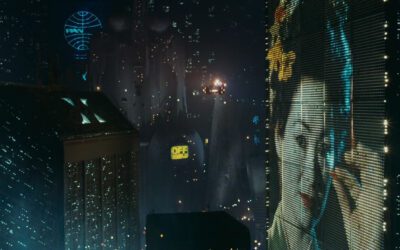
Blade Runner asked the most fundamental question possible: what does it mean to be human when authenticity itself becomes commodified? The film’s Voight-Kampff test, designed to detect replicants through their emotional responses, has become our reality. We now live in a world where algorithms analyze our every click, pause, and scroll, building profiles of our desires more accurate than our own self-knowledge. The irony is exquisite and terrifying: the machines have learned to simulate humanity so well that we have begun to behave like machines.
These works were not products designed to maximize engagement metrics. They were acts of creative aggression, forcing viewers to confront uncomfortable truths about themselves and their society. They trusted their audience’s intelligence, their capacity for complexity, their hunger for meaning over mere stimulation. They emerged from what psychoanalyst D.W. Winnicott called “potential space,” the psychological territory between inner and outer reality where genuine creativity occurs. But potential space requires trust, risk, the possibility of failure. Algorithms eliminate potential space, replacing it with predictive modeling that forecloses possibility before it can emerge.
The Psychology of the Ziploc Soul
The defining metaphor of our age is what I call the “Ziploc bag.” In the twentieth century, mass media forced diverse populations to inhabit the same cultural space. Everyone watched MASH or Roots because that was what was on. This forced exposure to different narratives and perspectives fostered a baseline of shared reality, what we might call a collective unconscious that was genuinely collective.
Today, streaming services utilize advanced data analytics to fracture the audience into thousands of taste communities or clusters. Netflix does not see a human being; it sees a collection of vectors: Romantic Comedy Lover, True Crime Addict, 80s Nostalgist. The platform then constructs a reality for that user that reinforces these vectors, creating what amounts to Confirmation Bias as a Service. The viewer is never confronted with the Other, never challenged by difference, never forced to expand their psychological boundaries.
This represents what Jung would identify as a catastrophic failure of individuation. The individuation process requires encounters with the shadow, with aspects of ourselves and our culture that we would prefer not to acknowledge. It requires what Jung called the transcendent function, the psyche’s ability to hold opposites in tension until a new synthesis emerges. The algorithm prevents this tension from ever arising. If you enjoy action movies, the contemplative dramas that might crack open your soul remain forever hidden. The thumbnail image for Pulp Fiction literally changes depending on whether the algorithm thinks you respond better to Uma Thurman or Samuel L. Jackson.
The psychological consequence is a kind of cultural narcissism that breeds fragility rather than resilience. When art does manage to challenge these sealed consumers, when it presents an unlikable protagonist or an ambiguous ending, the reaction is often hostility. The viewer, trained to be the center of a universe carefully curated to their preferences, experiences the challenge as a breach of contract. They have been promised comfort and been given complexity instead.
This destruction of serendipity represents a profound loss. Serendipity is not merely finding something unexpected; it is finding something you did not know you needed. In the analog world of video stores and broadcast television, you might stumble upon a foreign film that changed your life, might accidentally encounter a documentary that shifted your worldview. The algorithm, by definition, cannot provide this because it is based on calculations that treat the viewer as a consumer and nothing else. It lacks the capacity for what Scorsese calls curation, which is fundamentally an act of generosity and human connection. A curator says, “I love this, and I think you might too, even if you don’t know it yet.” The algorithm says, “You liked this, so here is more of exactly the same thing.”
The Commodification of Attention and the Dopamine Economy
What cultural analyst Ted Gioia terms “Dopamine Culture” represents a fundamental rewiring of human consciousness. The modern digital ecosystem is engineered to exploit the brain’s reward pathways, creating what amounts to addiction by design. The Distraction Economy does not trade in the slow, cumulative satisfaction of a narrative arc but in the rapid-fire delivery of stimuli designed to arrest attention just long enough to prevent the user from leaving.
This has created a state of anhedonic consumption, watching without pleasure, scrolling without finding. The capacity for delayed gratification, essential for appreciating complex art, atrophies like an unused muscle. High art often requires a period of boredom, confusion, or discomfort. It asks the viewer to invest effort before yielding a return. Think of the first hour of 2001: A Space Odyssey, with its wordless prehistory, or the deliberate pacing of an Andrei Tarkovsky film. In Dopamine Culture, this friction is viewed as a design flaw to be eliminated through autoplay and algorithmic recommendations.
The concept of the audience commodity, first proposed by Dallas Smythe, has been hypercharged by digital media. In the linear TV era, the audience was sold to advertisers in demographic blocks. In the streaming era, the audience’s behavior itself becomes the product. Every pause, rewind, and skip is data that feeds the production of future content. If data shows that forty percent of viewers stop watching a movie at the twenty-minute mark if there isn’t an explosion, the studio mandates an explosion at minute nineteen. The audience becomes trapped in a prison of their own aggregate impulses, unknowingly directing the creation of art through their collective tics and habits.
This creates what we might call algorithmic movies or mockbusters, films like Red Notice or The Gray Man that are not birthed from a singular creative vision but assembled from the scrapings of user data. They contain the overfamiliar, flashy signifiers of big-screen filmmaking without the narrative soul. They function like digital gruel, providing the aesthetic markers of a movie without the transformative potential. No one quotes The Gray Man ten years later; it evaporates from the collective memory the moment the credits roll. This ephemerality is intentional, clearing the palate for the next unit of content, keeping the consumer on the treadmill of subscription.
The Industrial Logic of Creative Destruction
The tension between art and commerce has always existed in Hollywood, but the balance of power has shifted decisively to what we might call the technocratic mindset. Robert Altman’s 1992 film The Player offered a prophetic satire of this transformation. The protagonist, Griffin Mill, is a studio executive who listens to fifty thousand pitches a year and makes twelve movies. He is the gatekeeper, cynical and detached, who eventually murders a screenwriter who represents the creative force itself.
The film outlined the ingredients for a commercial hit: stars, suspense, laughter, violence, hope, heart, nudity, sex, and above all, a happy ending. In 1992, this was a critique of formulaic thinking. Today, it is literally the programming being explored for generative AI tools that studios hope will write scripts. The Player of 2025 is not even a person but a corporate entity that views the writer not just as a nuisance but as an inefficiency to be eliminated. The writers’ strikes of 2023 were essentially a battle against this Griffin Mill logic, the desire to reduce the artist to a gig worker feeding a machine.
Netflix Co-CEO Ted Sarandos’s declaration that Netflix is a tech company rather than a media company reveals the fundamental shift in how these entities conceive of themselves. A media company’s asset is its library of art; a tech company’s asset is its user base and data. When Sarandos describes the business as competing for “time,” viewing YouTube and Fortnite as primary competitors, he reveals a worldview in which all human attention is fungible, where watching The Irishman and playing a mobile game are equivalent uses of time that must be optimized for retention rather than meaning.
The consolidation of the media landscape has created oligopolies that are too big to fail but also too big to risk. Amazon’s acquisition of MGM for 8.45 billion dollars was not a cultural investment but a customer acquisition cost for Amazon Prime. The four thousand films in the MGM library became mere value adds to a retail subscription, decontextualized from their artistic heritage. More disturbing still is Warner Bros. Discovery’s introduction of a new logic: the destruction of art for tax purposes. The cancellation and vaulting of completed films like Batgirl and Coyote vs. Acme to claim tax losses signals that to the modern conglomerate, art can have negative value if released. It is more profitable to destroy a movie than to show it, the ultimate expression of the Ziploc mentality, sealing art away forever to preserve the bottom line.
Historical Precedents: When Art Dies, Civilizations Follow
The decline of artistic vitality has historically served as a canary in the coal mine for broader civilizational collapse. The parallels between our current moment and previous cultural deaths are striking and instructive.
During the Pax Romana, Roman art was characterized by verism, a hyperrealistic style that unflinchingly depicted the wrinkles, warts, and age of its subjects. It was an art of confidence, rooted in careful observation of the real world. As the Empire declined in the third and fourth centuries, art shifted toward abstraction. The distinct, individualistic portraits of early emperors gave way to the identical, staring, symbolic faces of the Tetrarchs and early Christian icons. While some argue this was a stylistic choice reflecting spiritual concerns, it correlated directly with a loss of technical knowledge, economic networks that supported skilled artisans, and the confidence to confront reality as it actually existed.
The parallel to our moment is unmistakable. We are moving from the verism of New Hollywood’s gritty realism to the abstraction of CGI spectacle. Just as Rome retreated into symbolism as its physical reality crumbled, we retreat into the Metaverse and superhero fantasies as our institutions fray. The art becomes less about observing the world and more about escaping it, a symptom of a culture that has lost faith in its ability to confront and transform reality.
The decline of the British Empire offers another instructive parallel. The grand patronage systems that funded the Royal Academy and great portraitists dissolved as the aristocracy lost its wealth and power. Local government revenue funding of culture in England decreased by forty-eight percent between 2010 and 2023. The result is not just fewer galleries and theaters but a fundamental shift in national identity. British art history became a defensive action, cataloging fading glory rather than creating new works. When Bristol proposed cutting its cultural funding by 635,000 pounds over three years, local artists warned it would make the arts “a venture for the super rich,” destroying the democratic access to culture that defines a healthy society.
The American example offers both warning and hope. Morris Berman argues that the United States has always been a “hustler culture,” obsessed with material gain at the expense of spiritual development. The Ziploc consumer represents the ultimate expression of this hustler mentality, maximizing personal utility while minimizing shared obligation. Yet the Works Progress Administration of the 1930s proved that cultural decline is not inevitable but a policy choice.
The WPA employed more than five thousand artists at its peak, producing 2,566 murals, more than 100,000 easel paintings, and about seventeen thousand sculptures. More importantly, it established more than one hundred community art centers in regions where art and artists were almost unknown. The project operated on the principle articulated by its director, Holger Cahill: “It is not the solitary genius but a sound general movement which maintains art as a vital, functioning part of any cultural scheme.” The WPA put art in post offices, schools, and public squares, forcing it into the daily life of citizens, creating not just employment but a shared cultural vocabulary that helped define American identity for generations.
When the WPA ended, something fundamental shifted in American consciousness. Art gradually returned to being either elite commodity or mass-produced product, with little space between. The artists who had experienced the possibility of art as public good, as democratic birthright, watched that possibility evaporate. Many, like Jackson Pollock and Mark Rothko, channeled their disillusionment into Abstract Expressionism, turning inward as the public sphere that had supported them collapsed.
The Death of Risk and the Cancellation of the Future
When a society replaces the inefficiency of human creativity with the efficiency of algorithmic prediction, it enters what Mark Fisher called “capitalist realism,” a state where alternative futures become literally unimaginable. We experience the slow cancellation of the future, where the new becomes impossible and culture feeds on its own corpse through endless reboots, sequels, and algorithmic variations of proven formulas.
The mockbuster phenomenon exemplifies this creative death spiral. Films are no longer created but assembled from data points, designed to be bland, easy to follow, and appeal to fans of everything while challenging no one. They represent the opposite of what Jung called the transcendent function, the psyche’s ability to unite opposites and generate new consciousness. Instead of synthesis, we get averaging; instead of transformation, we get confirmation; instead of art that changes us, we get content that simply occupies us.
The shift from “cinema” to “content” represents an ontological reclassification that strips moving images of their specific cultural weight. When everything becomes content, nothing is special. The psychological effect is a loss of reverence. We do not attend a screening; we consume it. We do not witness; we scroll. The active engagement required by art is replaced by passive absorption, creating viewers who are present but not conscious, entertained but not transformed.
This transformation has been enabled by what Robert Altman predicted in The Player: the total victory of the executive over the creative. But today’s executive is not even human. It is an algorithm that views the artist as an inefficiency to be eliminated, the audience as data to be harvested, and art itself as merely another asset class to be optimized for shareholder value. The human element, with all its messiness, unpredictability, and capacity for both genius and failure, has been systematically removed from the equation.
The French Exception and the Possibility of Resistance
France offers a potential model for resistance through its CNC (Centre national du cinéma et de l’image animée), which operates on a simple principle: those who profit from attention must fund the artists who create meaning. France taxes every cinema ticket, TV broadcaster, and streaming subscription to fund a pool that subsidizes French film production based on artistic merit rather than algorithmic viability. This Cultural Exception policy creates a firewall between market forces and creative expression, ensuring that films can be made that challenge, disturb, and transform rather than simply pacify and retain.
The United States could adopt a similar Digital Arts Tax, skimming a small percentage of streaming and tech revenues to fund a new WPA-scale investment in public art. This would not be charity but infrastructure investment, rebuilding the cultural commons that have been enclosed by private platforms. Artists could be employed to create works that exist outside the digital enclosure: murals that confront communities with their shadows, theater that builds collective meaning, community cinema that forces diverse audiences to share the same emotional space.
Beyond funding, we need structural reform. The consolidation of production and distribution represents an antitrust failure that stifles creative freedom. When Amazon owns the studio, the platform, and the marketplace, it has the power to make non-Amazon art invisible. We need something like a Glass-Steagall Act for the attention economy, preventing platforms from privileging their own content and requiring algorithmic transparency. Users should have the right to understand why they are seeing what they are seeing and to opt out of Ziploc segmentation in favor of human curation or randomized exposure.
The Rebellion of the Viewer
The death of movies as art is ultimately a symptom of a civilization that has chosen comfort over meaning, stimulation over transformation, the safety of the known over the danger of discovery. We have allowed ourselves to be sealed in Ziploc bags of our own biases, fed a diet of algorithmic gruel that keeps us sedated but malnourished. The algorithm has made us complicit in our own diminishment, using our aggregated impulses to build walls around our imagination.
But the seal can be broken. The survival of culture depends on what we might call the Rebellion of the Viewer. This rebellion begins with refusal: refusing to be users, rejecting the label of consumer, resisting the comfort of algorithmic curation. It means actively seeking out the Cinema of Discomfort, the films that bore us, confuse us, and haunt us. It means supporting the Blade Runners and Sopranos of the future not by waiting for the algorithm to recommend them but by hunting them down with the fervor of someone seeking medicine for a disease they have only just begun to recognize.
From a Jungian perspective, this rebellion is nothing less than the work of individuation on a collective scale. It requires us to confront our shadow, both personal and cultural. It demands that we sit with discomfort, ambiguity, and complexity rather than immediately reaching for the next unit of content. It asks us to value transformation over entertainment, meaning over metrics, depth over data.
The choice before us is stark but clear. We can continue down the path of algorithmic optimization, allowing our culture to become an endless feedback loop of our own aggregate preferences, a hall of mirrors that reflects nothing but our current limitations. Or we can insist that art retain its sacred function: to disturb our sleep, to force encounters with the Other, to imagine futures that the present cannot yet conceive.
This is not nostalgia for a golden age that never existed. The films and shows I have discussed were not perfect, and the systems that produced them were often exploitative and exclusionary. But they maintained space for what psychoanalyst Christopher Bollas calls the “unthought known,” the aspects of experience that have not yet found conscious expression. They allowed for what Winnicott termed “potential space,” where new forms of consciousness could emerge.
The algorithm cannot dream. It can only recombine existing elements based on past behavior. It cannot imagine what has never been; it can only optimize what already is. This is why its dominance represents not just cultural stagnation but a kind of death, a foreclosure of possibility that leaves us trapped in an eternal present of our own making.
Yet the very extremity of our situation contains seeds of hope. History shows that cultural renewal often emerges from moments of apparent death. The WPA arose from the Depression. The French New Wave emerged from the ruins of World War II. The New Hollywood of the 1970s grew from the collapse of the studio system. Each renewal required not just new artists but new audiences, viewers who demanded more than comfort, who hungered for transformation even when it hurt.
We stand at such a moment now. The streaming bubble is beginning to show cracks. The strikes of 2023 revealed the human cost of algorithmic efficiency. Audiences are beginning to recognize the emptiness of endless content, the way it leaves them simultaneously overstimulated and undernourished. The Ziploc seal is not yet permanent. Air can still get in.
The Sacred Function of Story
In the end, this is about more than movies or television. It is about the stories we tell ourselves about who we are and who we might become. Every culture needs its myths, its shared narratives that provide meaning and direction. When those myths become mere products, when stories become content, when art becomes algorithm, we lose access to the very thing that makes us human: the ability to imagine ourselves otherwise.
Jung understood that the psyche requires symbols to process experience, that without adequate symbolic expression, energy becomes symptom. Our culture’s symptoms are everywhere: the epidemic of anxiety and depression, the rise of conspiracy theories that provide the meaning that art no longer supplies, the retreat into virtual worlds that offer the transformation that reality no longer promises. These are not separate crises but aspects of a single crisis: the death of our capacity to dream collectively.
The works I have celebrated here succeeded because they understood that their audience was not consumers but humans in search of meaning. Mad Men knew that beneath the perfect surfaces of American prosperity lay an existential void that no amount of consumption could fill. The Sopranos understood that the American dream had become a nightmare from which we could not wake. Blade Runner saw that our machines would eventually become more human than we were, not because they evolved but because we devolved.
These were not comfortable messages, but they were necessary ones. They held up mirrors that showed us not who we wanted to be but who we actually were. They forced us to confront the gap between our self-image and our reality. They made us uncomfortable, and in that discomfort, they created space for growth.
The algorithm cannot do this because it is designed to eliminate discomfort, to smooth over contradictions, to give us exactly what we want before we even know we want it. It creates a frictionless experience that feels like freedom but is actually a prison, a cell whose walls are made of our own preferences reflected back at us infinitely.
Breaking free requires not just better content or more diverse algorithms but a fundamental shift in how we understand the role of art in human life. Art is not entertainment, though it can entertain. It is not education, though it can teach. It is not therapy, though it can heal. Art is the process by which a culture dreams, and without dreams, we are already dead, we just haven’t noticed yet.
The rebellion begins with recognition: recognizing that we have been robbed, that something essential has been taken from us and replaced with a simulation. It continues with resistance: refusing the comfort of the algorithm, seeking out difficulty and difference, supporting artists who risk failure rather than studios that guarantee success. It culminates in renewal: the creation of new forms, new venues, new possibilities for collective dreaming.
This is not a call for everyone to become cinephiles or to fetishize difficulty for its own sake. It is a recognition that a culture that cannot imagine different futures cannot create them, that a people who cannot dream together cannot build together, that a society that has replaced art with algorithm has begun the process of forgetting what it means to be human.
The Ziploc bags are not yet sealed permanently. We can still breathe. We can still dream. We can still rebel. But the window is closing, and with each passing day, each algorithmic optimization, each piece of art transformed into content, the seal gets tighter. The question is not whether we will have entertainment in the future, we will have more than ever. The question is whether we will have art, whether we will maintain the capacity for transformation, whether we will preserve the sacred function of story that makes us more than biological machines responding to stimuli.
The choice is ours, but it will not remain ours for long. The algorithm is patient. It does not sleep. It learns from every click, every pause, every moment of attention we give it. It is building a world in its own image: efficient, predictable, optimized, and dead. Against this, we have only the ancient human capacities: imagination, courage, the willingness to be disturbed, the hunger for meaning that no amount of content can satisfy.
These may not seem like much against the power of the platforms and the logic of the market. But they are what we have always had, what has carried us through every previous crisis of meaning, what has allowed us to survive and sometimes even to flourish. They are what make us human, and they are what we must fight to preserve.
The death of art is not inevitable. Cultural stagnation is not our destiny. The algorithm is not our master unless we choose to make it so. The rebellion begins the moment we recognize that we have been choosing, unconsciously, to trade meaning for comfort, transformation for stimulation, art for content. It begins the moment we choose otherwise.
That moment is now. The question is whether we will seize it or let it pass, whether we will break the seal or suffocate in our own preferences, whether we will insist on art that challenges and changes us or accept content that merely occupies us. The stakes could not be higher. This is not about preserving some elite cultural practice but about maintaining the very capacity for human consciousness to evolve, for culture to progress, for the future to remain open rather than foreclosed.
The mad prophet Howard Beale was right: we need to get mad. But anger alone is not enough. We need to get creative, to get critical, to get communal. We need to remember what it feels like to be transformed by a story, to be changed by an image, to be haunted by a question that a film poses but does not answer. We need to remember that we are more than consumers, more than users, more than data points. We are humans, and humans need art like they need air. Without it, we suffocate, slowly and without quite realizing what we have lost until it is too late to recover it.
The time for choosing is now. The algorithm or the archetype. Content or cinema. Comfort or transformation. Death or life. Choose wisely. Choose quickly. Choose as if the future depends on it, because it does.




0 Comments