
Executive Summary: The Blueprint of Connection
The Core Mechanism: Attachment is not just a personality trait; it is a biological survival strategy wired into the autonomic nervous system during the first 18 months of life.
The Four Styles:
- Secure: The nervous system is regulated; intimacy feels safe.
- Anxious-Preoccupied: The nervous system is hyper-activated; separation feels like a life threat.
- Dismissive-Avoidant: The nervous system is de-activated; intimacy triggers a shutdown response to preserve autonomy.
- Disorganized (Fearful-Avoidant): The source of safety is also the source of terror; typical of complex trauma.
The Good News: Attachment is plastic. Through relationships and therapy, we can develop “Earned Security” by rewiring the brain’s limbic response to connection.
How to Know Your Attachment Style: The Neuroscience of Love and Safety

Why do you text your partner ten times when they don’t reply? Why do you shut down and withdraw when someone gets too close? Why do you find yourself bored by stable partners but obsessed with unavailable ones?
These are not character flaws. They are Attachment Styles. Developed by British psychologist John Bowlby and expanded by Mary Ainsworth, Attachment Theory is the most researched framework in the history of psychology. It posits that the way we were cared for as infants creates an internal “blueprint” for how we perceive safety and love as adults.
This article goes beyond the basic quizzes to explore the neurobiology of attachment. We will examine how early bonding shapes the amygdala, how trauma disrupts it, and how therapies like Somatic Experiencing and Internal Family Systems can help you achieve “Earned Security.”
Part I: The Strange Situation (How It Starts)
In the 1970s, Mary Ainsworth conducted the famous “Strange Situation” experiment. She observed infants as their mothers left the room and then returned. The infants’ physiological and behavioral reactions to the reunion defined their style.
The Biological Imperative
For an infant, proximity to the caregiver is not a preference; it is a matter of life and death. If the caregiver is inconsistent or dangerous, the infant must develop a strategy to survive.
* If crying works, they amplify it (Anxious).
* If crying pushes the parent away, they suppress it (Avoidant).
* If the parent is terrifying, the system collapses (Disorganized).
Part II: The Four Attachment Styles (A Clinical Deep Dive)
Understanding your style requires looking at how your nervous system handles two things: Intimacy and Autonomy.
1. Secure Attachment (The Anchor)
The Origin: Caregivers were consistent, responsive, and attuned. They practiced “Repair” after conflict.
The Nervous System: Regulated. They can co-regulate with others (calm down together) and self-regulate when alone.
Adult Behavior: They view themselves as worthy of love and others as capable of loving them. They do not play games. They are comfortable with closeness and independence.
2. Anxious-Preoccupied Attachment (The Wave)
The Origin: Caregivers were inconsistently responsive—sometimes warm, sometimes distracted or intrusive. The child learned they had to “perform” or scream to get attention.
The Nervous System: Hyper-activated. The Amygdala is on high alert for signs of abandonment.
Internal Monologue: “If I don’t hold on tight, they will leave. I am too much for people.”
The Trap: They often attract Avoidant partners, creating a cycle where their anxiety triggers the partner’s withdrawal, confirming their fear of abandonment.
3. Dismissive-Avoidant Attachment (The Island)
The Origin: Caregivers were distant, rejecting, or cold. The child learned that expressing needs led to rejection, so they “deactivated” their attachment system to avoid the pain of disappointment.
The Nervous System: De-activated. They have high physiological arousal (stress) but mask it with a calm exterior. They auto-regulate rather than co-regulate.
Internal Monologue: “I don’t need anyone. Feelings are messy. Independence is safety.”
The Trap: They mistake their suppression for strength. When a partner demands intimacy, they feel “suffocated” and pull away.
4. Disorganized (Fearful-Avoidant) Attachment
The Origin: Caregivers were frightening or frightened (abuse, neglect, or unresolved trauma). The parent was the source of safety and the source of terror. This creates a biological paradox: “I want to flee to you, but I must flee from you.”
The Nervous System: Chaotic oscillation between Hyper-activation (Anxiety) and De-activation (Collapse/Dissociation).
Internal Monologue: “Come here. No, go away. I want you, but you will hurt me.”
Clinical Note: This style is highly correlated with Complex PTSD and often requires trauma-focused therapy.
Part III: The Anxious-Avoidant Trap
Why do Anxious and Avoidant people attract each other? It is a chemical addiction known as the Anxious-Avoidant Trap.
- The Anxious person seeks the Avoidant person to “fix” their unavailability (replaying the childhood wound).
- The Avoidant person seeks the Anxious person because the Anxious person carries the emotional load for both of them.
This creates a roller coaster of high highs and low lows. The Anxious person pursues (protest behavior), the Avoidant person withdraws (stonewalling), and the cycle reinforces both their insecurities.
Part IV: Neuroplasticity and “Earned Security”
The most important discovery in modern attachment research is Earned Security. Because of Neuroplasticity, we can rewire our attachment system in adulthood.
1. Co-Regulation in Therapy
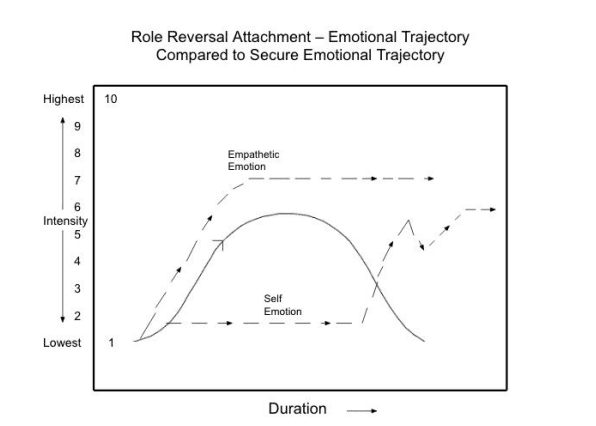
A good therapist acts as a “Secure Base.” Through the therapeutic alliance, the client learns what it feels like to be seen, heard, and validated without judgment. This repeated experience of safety physically rewires the brain’s expectations of relationships.
2. Somatic Experiencing & Regulation
Since attachment trauma lives in the body (the nervous system), we must work somatically.
* For Anxious Styles: Learning to self-soothe and tolerate space without panic.
* For Avoidant Styles: Learning to tolerate the sensation of connection without dissociation.
3. Internal Family Systems (IFS)
In IFS Therapy, we view the attachment styles not as “us” but as “parts” of us.
* The Anxious part is an “Exile” carrying the wound of abandonment.
* The Avoidant part is a “Protector” trying to prevent that wound from being touched.
By healing these parts, the “Self” can lead with confidence and clarity.
Conclusion: From Survival to Connection
Knowing your attachment style is not a diagnosis; it is a map. It shows you the terrain of your own heart. By understanding the biological roots of your behavior, you can stop shaming yourself for your needs and start building the security you deserved all along.
Explore Attachment-Focused Therapies
Taproot Therapy Collective Podcast
Healing the Nervous System
Somatic Experiencing: Regulating the Body
Polyvagal Theory: The Science of Safety
Neurofeedback: Rewiring Anxiety
Processing Relational Trauma
Internal Family Systems (IFS): Healing Parts
Lifespan Integration: Repairing the Timeline
EMDR: Processing Abandonment Wounds
ETT: Emotional Transformation Therapy
Bibliography
- Bowlby, J. (1969). Attachment and Loss: Vol. 1. Attachment. Basic Books.
- Levine, A., & Heller, R. (2010). Attached: The New Science of Adult Attachment and How It Can Help You Find—and Keep—Love. Penguin.
- Siegel, D. J. (2012). The Developing Mind: How Relationships and the Brain Interact to Shape Who We Are. Guilford Press.
- Wallin, D. J. (2007). Attachment in Psychotherapy. Guilford Press.
- Johnson, S. M. (2008). Hold Me Tight: Seven Conversations for a Lifetime of Love. Little, Brown Spark.

















0 Comments