
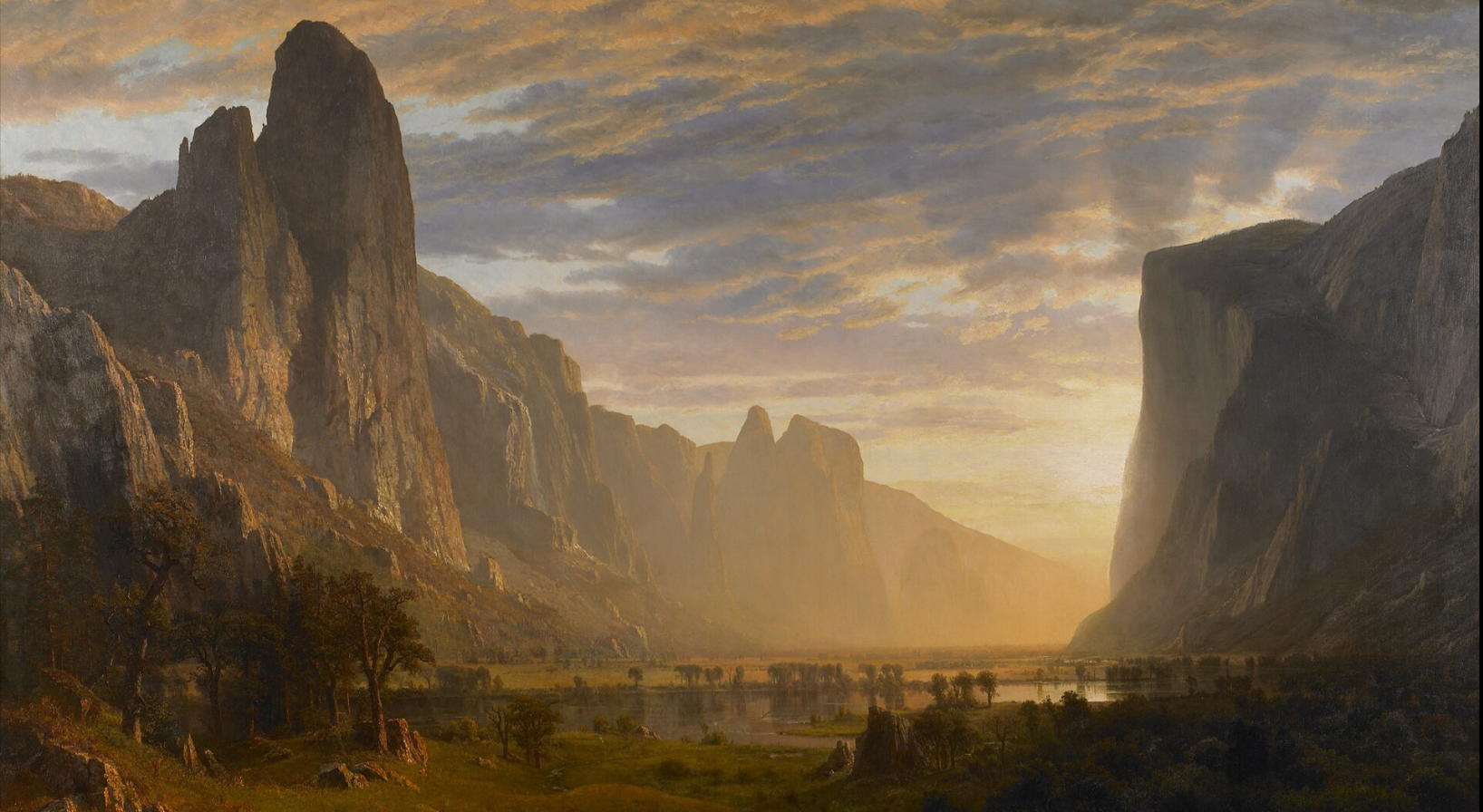
This article is dedicated to all the millenials that watched Yellowstone with their Dad.
A young man sits across from me and tells me he has watched all of Yellowstone four times. He is not a rancher. He has never owned an animal larger than a dog. He works a job that exists mostly inside a screen, and he describes that job the way you would describe a low-grade fever you cannot shake. What he wants to talk about is the episode where Kayce Dutton goes into the wilderness alone, sits with the cold and the silence, and comes back with something he cannot name. The young man wants that. He does not want a vacation. He wants the vision quest. He wants the part where the world goes quiet enough that a person can finally hear whether there is anyone left inside himself.
I have had some version of this conversation a dozen times now, almost always with men under forty, and it has taught me to take Taylor Sheridan seriously even though, by the end, he is a genuinely bad writer. I want to be precise about that, because it is the whole point. I am perpetually fascinated by bad writers who are smart, the ones with real ideas and real instincts who keep producing work that does not hold together, because the failure is usually more honest than the polish. A clumsy myth tells you what a culture actually needs more reliably than a well-made one. And what Sheridan has built, accidentally and on purpose, is the most-watched myth in America about the thing my patients cannot stop grieving: the sense that the world they were promised is being repossessed by forces they will never get to see, let alone fight.
Cultural Jurisdiction
Sheridan started as an actor, and by his own account he was tired of being cast as the handsome heavy, the pretty face you bring in to be menacing in the background. He did not think he could write. He decided that if he could not, he would quit and become a cattle rancher, which is the kind of fallback plan a person only has if the fantasy is already running the show. He gave himself three scripts. If none of them landed, he was out.
Before that, he had spent years on cop shows, and the thing that caught his attention in all of them was jurisdiction. Not the gunfights, not the interrogations, but the arbitrary lines. Who owns this crime. Who owns this body. Who owns this land. The FBI shows up, finds one clue, and suddenly the case belongs to a different agency and the people who were the law a moment ago are now spectators. Sheridan kept circling the same buried question underneath all of it, which is whether the line between wealth and crime is a line at all, or whether wealth is simply crime that has been around long enough to draw its own borders and hire its own police.
All three scripts landed, and they were good, which still surprises people who only know him from the soap opera he turned into later. Sicario was the most successful. Hell or High Water is the best, and it is my favorite. Wind River he directed himself, and it is the least assured of the three but still completely competent. What unites them is that they are all, secretly, films about jurisdiction, which is to say films about who gets to decide what counts as theft. Also how the difference in murder and execution is the people who write the rules.
In Hell or High Water the question is debt. Two brothers rob the branches of the bank that is about to foreclose on their dead mother’s land, using the bank’s own stolen money to pay the bank back, and the film never once lets you pretend the brothers are the criminals in the room. The bank is the older, slower, more patient robbery. Sicario is a jurisdictional nightmare staged as a sensory one, a film built so that the audience shares the protagonist’s vertigo about where she is, whose operation this is, and which laws are in effect on which side of which fence, until the revelation lands that the United States is not fighting the cartel so much as it is a larger cartel with better paperwork. And Wind River puts the whole apparatus on a reservation, where jurisdiction is a literal trap, and braids it together with the invisibility of the blue-collar people who keep the physical world running and die without anyone counting them. Across all three, Sheridan is working the same nerve. The lines we draw around property are not natural facts. They are violence that has cooled into law, and the cooling is the only thing that separates the man with the deed from the man with the gun.
That is a serious idea, held by a serious mind. Keep it in view, because the tragedy of Yellowstone is the spectacle of that idea being slowly buried under the man’s own success.
Transitioning Jurisdictions
When the films hit, Sheridan had cachet, and Paramount was standing up a network and effectively handed him the keys. He became the creative engine of a whole channel, the rare figure who actually writes his shows rather than supervising a room, and he used that position to spin up an entire universe. The first season of Yellowstone was supposed to be a real thing, a cinematic neo-Western about three roughly equal forces grinding against each other along those same arbitrary lines. There were the Native nations with the oldest claim to the land. There were the Duttons, the cattle barons, settler money pretending to be permanence. And there were the encircling forces of modernity, the developers and the funds and the agencies, coming to convert all of it into yield. Underneath the three was a fourth presence that never speaks, which is the land itself, indifferent, older than the fight, the thing that survives if every human party simply leaves.
You can still see the bones of that show in the early episodes. There are scenes that were clearly planted to pay off later and never do. Two men switch barrels in a way that only matters if a jurisdictional dispute about a crime is about to turn on which side of a line it happened on. Dinosaur bones get unearthed, and I am convinced, knowing what Sheridan cares about, that those bones were a seed for a fight about federal antiquities law, about who owns what is found in the ground, the deepest version of the ownership question the show keeps circling. None of it pays off. The barrels are forgotten. The bones go nowhere. The Native characters, who were set up to face the same impossible double bind that Beth and Jamie face inside the family, the choice between loyalty and the machine, are quietly sidelined before they ever get to choose.
What happened is not mysterious, and it is not really a betrayal of vision so much as a demonstration of the show’s own thesis. Sheridan started running something like fifteen projects, writing films on the side, feuding with Kevin Costner over what the show even was, and watching his own incentives drift until they lined up with the network’s. The prestige budget migrated to the prequels, 1883 and 1923, which inherited the helicopters and the grandeur, while Yellowstone itself got shot like a soap opera, the aerials reduced to drone footage or leftovers from the first season. The jurisdictional architecture collapsed into red state versus blue state, NIMBY versus YIMBY, a fight Sheridan clearly considers himself to be hovering above. And the show began, with no apparent embarrassment, to function as a long advertisement for the ranching life, the horses, the whiskey, the steak, the brand. By the end he wrapped it with Elsa narrating something soft about how once you turn land into a parking lot it stops being land and nobody really owns it anyway, and he was, as the saying goes, laughing all the way to the bank. In 2025 he announced he was leaving Paramount entirely, reportedly after clashing with the studio’s new ownership following the Skydance merger, taking a deal worth roughly a billion dollars to NBCUniversal and leaving the Dutton franchise behind him like a depleted well, since Paramount keeps the rights to the thing he built.
And the prestige the prequels do carry turns out to be borrowed prestige, which is its own quiet confession. The spectral narration that Elsa Dutton speaks across the universe is pure Terrence Malick, the director as god installed in the mouth of a character, a dead girl whispering cosmic benedictions over the landscape the way the disembodied voices drift over the wheat in Days of Heaven or the prayers float through The Tree of Life, except Malick earns that register by building whole films as liturgy while Sheridan bolts it onto a Western to lend the proceedings a gravity the script has not generated. 1923 reaches even further afield, sending Spencer Dutton on a globe-trotting strand through Africa and across the ocean and into Europe to grieve the loss of the American dream before it is born. This plays in the key of 70s international art cinema, all texture and movement and beautifully photographed wandering, and arrives nowhere, with no climax and no point, a journey that exists mostly because the visual grammar of the prestige series seems to require one. I dunno, maybe Sheridan thinks history is cyclical; albeit worse every cycle; and that we are families of creatures incapable of going anywhere. Maybe characters just say things like “The wheel of history can only role onward because the trajectory of history is a declining slope” because Sheridan wants to play cool while gesturing at depth. This isn’t a line from the show but it might as well be one. The borrowing is not theft so much as a tell. A universe that has to keep importing the surfaces of better filmmakers in order to feel like it means something is a universe that has quietly lost track of what it meant, and that is exactly the condition of a smart writer who has stopped being able to finish his own thoughts.
So yes, by the end Yellowstone is a bad show. I watched all of it. It is entertaining and it is interesting, and the fact that it is bad is part of why it is interesting, because the badness is where you can see the machine working on the man who built it.
The People who Write the Rules
It is worth dwelling on the other fascinating Sheridan show whose big ideas do not work, because it makes the diagnosis unmistakable. Mayor of Kingstown is built on a premise that only a writer with real instincts would reach for. The town of Kingstown exists because of its prisons. Incarceration is the economy, the base on which everything else sits, and Jeremy Renner plays the fixer who stands in the gap between the inmates and the gangs and the guards and the police, holding the whole carceral machine in a fragile equilibrium through nothing but personal force and a ledger of favors. That is a serious idea. The American prison as the actual industrial engine of a dying town, the carceral state as the only remaining product of a community that has nothing else to sell, is close to the truest thing anyone has put on television about how this country launders its surplus people into somebody’s paycheck.
And the show cannot do anything with it. It feels the horror exactly, and then it turns out to have no idea how the horror works, so it dissolves, the way Yellowstone dissolves, into the mythology of the lone man holding chaos together with his hands. A faceless system the writer can sense but cannot take apart, and a single battered individual thrown against it as the only answer he can imagine.
This is the thing about Sheridan that I think matters most, and it is precisely what the writers of Dallas were doing forty years before him. He feels these systems, and he reacts to them with real emotional accuracy, and he does not understand how they actually work. He knows the military-industrial complex is a problem; that animates Lioness. He knows finance capital and Wall Street are predatory; that is most of Yellowstone. But the knowledge never drops below the level of feeling. There is no mechanism in it, no account of how the money moves, no theory of the institution, and, fatally, no honest solution. The only solution Sheridan can ever offer is the same one: go put your hands on the land, and you will be a better man than the person who does not.
Which is to say his politics are Thomas Jefferson’s, and they fail for Jefferson’s reason. Jefferson dreamed of a republic of noble independent farmers and despised the city as a sink of corruption and dependency, and he never quite reckoned with the fact that his yeoman is not independent at all. The only thing propping up the entire agrarian fantasy is the existence of cities to buy the produce. The farmer is a supplier to the metropolis he imagines himself morally superior to, and without that despised city he is not a free man on his own land, he is a subsistence peasant. It does not cohere. It is not an economic model, and it is not even really a critique. It is a vibe, a feeling about virtue and dirt and independence that collapses the instant you ask it how the food gets sold. Sheridan is full of vibes, and the danger of a vibe is that it can be emotionally true and analytically worthless at the same time. The land that supposedly makes you a better man is being farmed for a market the show refuses to look at, defended by ranchers who are landed capital, mourned by a writer who became landed capital, and the whole structure floats on a feeling that everyone involved has mistaken for an argument. Do any cowboys actually watch this show? Who is it for again?
Who Shot JFK?
I cannot watch any of this without thinking about the sappy soap opera of my parents generation Dallas, and I have come to believe the resemblance is not a coincidence of genre but a recurrence of function. These shows are doing the same psychic labor, separated by forty years and pointed in opposite emotional directions.
Remember what Dallas was actually metabolizing. The Ewings of the show Dallas were selfish antiheros just like the Duttons. Before 1978 the city of Dallas was a wound. After the Kennedy assassination the national press branded it the City of Hate, the place whose feverish right-wing atmosphere had supposedly made the murder thinkable, and the city carried that stigma like a contamination, tourism collapsing, the name itself becoming a synonym for the violent end of the mid-century American story. The show never mentioned any of it. It never said Dealey Plaza, never said Kennedy. It simply replaced the association. Where the city had meant a dead president and the abrupt end of the East Coast, Ivy League, public-service idea of power, the show offered J.R. Ewing, oil money, ten-gallon hats, and the gorgeous spectacle of people getting rich by extracting things from the ground and ruining each other in boardrooms.
And then it performed something close to an exorcism. When the country gathered for “Who Shot J.R.,” one of the most-watched broadcasts in human history, it was, on a level no one had to articulate, restaging the unbearable question it could never resolve about Dealey Plaza, except this time the famous Texan survives and the shooter turns out to be a jealous relative, a private grievance, a thing the family melodrama can absorb. The grief that had been stuck to a real street got transferred to a fictional ranch, and the transfer worked. Southfork replaced the School Book Depository as what the name Dallas conjured.
Underneath the exorcism was an economic transfer the show was also making palatable, the great drain of wealth and power out of the Frostbelt and into the Sunbelt, out of manufacturing and managerial respectability and into oil, real estate, and wildcat extraction. Dallas told the country that the new aristocracy would not be the Kennedys. It would be the Ewings, unapologetic, ruthless, allergic to East Coast modesty, deriving prestige purely from raw capital rather than lineage or service. The show did not argue for this. It made the inheritors of the new order into people you could not stop watching, which is a far more effective form of persuasion than argument. It anesthetized the displacement by making the displacers glamorous. They were wealthy based on the arbitrary rules of ownership and what was Under the land.
Here is where the literary scholar Peter Brooks becomes useful, because he gives us the reason melodrama is the genre that always shows up for this job. Brooks traced the melodramatic imagination to the years after the French Revolution, when the old religious and aristocratic certainties had been torn down and Western life found itself in what he called a post-sacred world, a place with no agreed-upon moral order underwriting daily existence. Melodrama, with its excess and its stark good and evil and its emotions cranked past realism, is what rushes in to fill that void. It hunts for what Brooks named the moral occult, the scattered, desacralized remnants of the old sacred meaning, and it stages them as heightened conflict so that a society without a shared cosmology can at least locate good and evil somewhere, even if only on a screen. Once capital replaced God as the organizing principle of modern life, the family melodrama narrowed its focus to the one value system that still binds everyone, which is money, and the dynastic soap became our way of turning the invisible machinery of the economy into a feud we can follow.
The Dutch scholar Ien Ang gave us the other half, studying why people around the world loved Dallas even while admitting the plots were absurd. Her answer was emotional realism. Nobody believed the kidnappings and the resurrections and the amnesia, but everybody recognized the feelings underneath: the sting of being betrayed by your own family, the terror of losing control of your legacy, the crushing sense of being moved around by forces larger than yourself. The show was a description of the macabre everyone know was lurking beneath the norma. Ang argued the show activated what she called a tragic structure of feeling, the lived intuition that wealth does not buy goodness or peace and that relationships under capitalism are structurally rigged for conflict. The melodrama was never escapism from real life. It was a stylized rehearsal space for the anxieties of real life, a place to feel the powerlessness safely.
This is exactly what Sheridan is doing, and it is why I trust the Dallas comparison even though it sounds grand. But the emotional polarity has flipped completely. Dallas was triumphalist. It was the myth of an ascending class, the energy of new money arriving. Yellowstone is elegiac. It is the myth of a class that knows it is finished. The Duttons are theoretically billionaires in land and chronically broke in cash, perpetually one lawyer or one developer or one season from extinction, and that terminal precarity is the entire emotional engine. Dallas helped a grieving country fall in love with the people inheriting the dead king’s power. Sheridan is helping a country that no longer believes in its institutions fall in love with the people who own the land and the water and the oil underneath, the people positioned to inherit whatever is left after the managerial order finishes collapsing. He is, to borrow a phrase that fits him uncomfortably well, the court mythographer of a new land aristocracy, and like every good court mythographer, he has made himself one of them.
Who is the Cowboy?
“Only the powerful always know with great clarity who their true enemies are.”
-Umberto Ecco
The part I find clinically important, the part that explains why my patients are reaching for this and not for something better made.
The forces that actually govern my patients’ lives are unseeable. Perhaps no more so than at any other time in history. They feel this and they feel this reflected pathos from Sheridan. Not hidden in the sense of conspiracy, which would at least give you a villain, but genuinely structural and faceless: the credit-scoring model, the pricing algorithm, the private-equity roll-up that bought the company that bought the company they work for, the housing market that prices them out of the town they grew up in by mechanisms no single person decided. You cannot punch any of it. You can’t shoot it. You cannot even point at it. The defining experience of economic life now is being acted upon by an agent that has no body.
Umberto Eco put his finger on this in The Name of the Rose. The poor man’s real curse, in the world of that novel, is not poverty as such but the inability to know who his enemy actually is, while the rich at least possess the grim privilege of being able to name theirs. Blessedness, in this dark inversion, belongs to the wealthy because only they can see the face of the thing destroying them. That is precisely the condition Sheridan is dramatizing, and precisely the wish his show grants. He takes the faceless machine, the inflation and the supply chains and the funds, and he gives it a face. He gives it a name, Market Equities, and a CEO who can be argued with, and developers who can be thrown in a horse trough, and hedge-fund men Beth Dutton can verbally and financially eviscerate. The fantasy is not really wealth or land. The fantasy is legibility. It is the unbearable longing to finally see your enemy clearly enough to fight him.
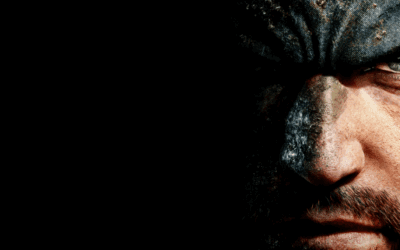
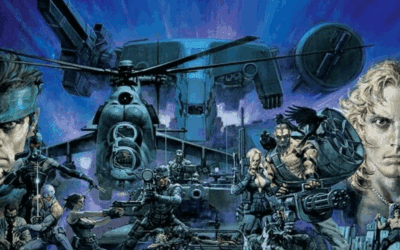
I am going to make a comparison that sounds insane, and I am going to make it anyway, because I think it is right. Sheridan is playing with the same forces Hideo Kojima plays with in Metal Gear Solid, even though Kojima is a vastly better and more self-aware writer. The whole arc of that series is the slow horror of discovering that the enemy is not a person but a system, the Patriots, an arrangement of incentives and information that has outlived everyone who made it and now runs itself, controlling reality without anyone at the wheel. Kojima’s genius is that he refuses to give that machine a satisfying face, because the truth of the metamodern condition is that you cannot know the enemy, cannot locate it, cannot kill it, and the most a person can do is choose what to pass on. Sheridan reaches for the same theme and then, because he is the weaker and more compromised artist, flinches. He gives the machine a face after all, because a face is what the audience is starving for. The flinch is the commercial decision and it is also the consolation, and the consolation is the whole reason the show outdrew everything else on television.
This is also why the show keeps insisting that the only thing capable of resisting the faceless machine is radical, almost pathological individualism. The atomizing forces in Sheridan’s world are exactly the things that used to bind people into collective power, the banks and the unions and the political coalitions, all of them rendered as solvents of the self. And the only answer the show can imagine is the singular, unbreakable person who throws his own body, or her own ruined psyche, into the gears. Beth Dutton is the purest version of this. By the later seasons she has degraded from a brilliant strategist into a cartoon of borderline organization and alcoholism, but the show needs her to be that damaged, because the fantasy requires that the cost of being able to fight the machine is a self that has been partly destroyed in the forging. Sheridan also needs you to think it is cool, or at least the coolest version of the hero myth we can have right now. You have to be a little personality-disordered to win, the show keeps telling us, because a person with normal attachments and normal limits gets metabolized. The men around her are the same, self-immolating, contemptuous of institutions, effective precisely to the degree that they have given up on being whole.
And don’t forget all the Duttons are bad people. They are oligarchs. The show does not seriously pretend otherwise. But it makes a quieter and more disturbing argument, which is that the oligarch with an intact personality structure and a coherent vision is somehow preferable to the radical atomization that is the only available alternative. Better the baron who at least believes in something, who has a self that coheres around a piece of ground, than the depersonalized scramble of everyone else being slowly dissolved by forces with no inside. That is a genuinely dangerous idea, and I think it is the real ideological payload of the show, more than any of the surface politics. It is also, I suspect, why Sheridan can say with a straight face that he finds it funny when people call his work right-wing. He is not, I think, lining up behind a party or a movement. He is mourning. He is saying there used to be an older way to be a person, rooted in land and labor and the refusal to be liquidated, and that the politics people argue about are a transient surface over that deeper loss. The trouble is that the only model of the rooted, coherent self he can actually offer is the oligarch, and so the grief comes pre-loaded with a prescription that happens to be the disease.
The cruelest and most clarifying detail is what happened to Sheridan himself. He wanted, on some level, to be a cattle rancher, and the show’s royalties made him a cattle baron. The money from Yellowstone let him buy a large stake in the Four Sixes, one of the legendary working ranches in Texas, and then he wrote himself into his own show as a character whose function is essentially to deliver monologues about the nobility of the cowboy on the very property he now owns, while charging Paramount rent to film there. The myth-critiquer became the myth. The shows became tax structures for the cattle operation and the cattle operation became the set for the shows, a closed loop in which the story about the disappearing rancher funds the purchase of the ranch and the ranch validates the story. Oh and Paramount as has to pay Sheridan to film on his ranch.
It would be easy to read this as hypocrisy, and the gossip economy reads it that way. I think it is something stranger and more honest. Sheridan lived out the exact lesson his own work keeps gesturing toward, which is that under these conditions the only escape from being processed by the machine is to become a node in the machine large enough to have a face. He could not beat the unseeable forces, so he became one, a man you can actually name and point to, with land and water and a brand and a billion-dollar deal. He demonstrated the thesis on his own body. The transfer of power that Dallas announced and that Sheridan is mourning does not, in the end, have an exit marked for the rest of us. The only door it shows you leads to becoming an oligarch yourself, ideally one who keeps his personality intact. As a Jungian therapist the weirder attention to me is that the man who said that this same process destroys stories let that process destroy the story of his own TV show.
Dinosaur Bones as History
So I come back to the young man in my office who wants the vision quest, and I try to hold two things at once without collapsing either.
The packaging is silly. The notion that you can solve a meaning crisis by buying twenty acres and walking into the woods, that city people are simply too corrupted to understand the wisdom of the dirt, that politics is a passing weather over the eternal truth of the land, is sentimental and at points reactionary and frequently just dumb. Sheridan indulges all of it. The reverence for the cowboy curdles into the bizarre spectacle of characters thanking burger ranchers for their service as though they were soldiers, the romance of self-reliance papering over the fact that the Duttons are landed wealth defending landed wealth.
And yet the grief underneath the packaging is completely real, and it is connecting with an enormous number of people for the same reason Dallas did, because the emotional realism is exact even when the plot is absurd. The longing for contact with the earth, for work whose results you can see with your hands, for a self that is anchored in something older and slower than the market, for the feeling that you are not simply being moved around a board by an unseen hand, these are not delusions. They are accurate readings of a genuine deprivation. The grief that the characters carry, the shared knowledge that they are living at the end of an era and that the way of life on screen is vanishing as you watch it, is the precise grief my patients carry about their own lives, and they are right to carry it. Something is in fact being repossessed. The anger belongs to the structures, not to the people feeling it.
The clinical danger is not that people feel the grief. The danger is the prescription smuggled inside the myth, the quiet suggestion that the only intact way to be a self in this world is to become a baron, that wholeness is a privilege of capital, that the choice is between being an oligarch with a coherent identity and being dissolved into the faceless crowd. That is the lie, and it is a seductive one precisely because it sits on top of a truth. The work, when one of these young men brings me Kayce Dutton’s silence in the woods, is not to mock the longing and it is not to validate the politics. Hell I watch Sheridan’s shows too and feel the same ache he wants me too. It is to separate the real hunger from the fantasy solution. The hunger for rootedness, for embodied work, for a self that coheres around something, that hunger is the most honest thing about him and it deserves to be taken at full weight. The fantasy that this can only be purchased, that you become a person by becoming a landowner large enough to have visible enemies, is the thing that needs to be gently and persistently questioned, because it ends, every time, in the loop Sheridan is living, where you become the thing you were grieving and call it freedom.
Are these forces really unstoppable? I do not know. The honest answer in the room is that I cannot promise anyone the machine can be beaten, and the metamodern condition is partly the loss of even being able to see it well enough to try. But I am increasingly sure that the choice the myth offers, dissolve or become an oligarch, is a false binary that the genre needs in order to function and that a person does not need in order to live. There are intact selves that are not barons. There are forms of rootedness that do not require a deed. There are ways to keep a coherent vision that do not demand you throw your body, or your daughter’s psyche, into the gears. The melodrama cannot show us those, because the melodrama runs on the very polarization that forecloses them. That is what the melodrama is for, and it is also its limit.
Dallas helped a country fall in love with the people who inherited the dead king’s power, and it worked so well that we elected several versions of them. Sheridan is helping a country that has stopped believing in its institutions fall in love with the people who own the land and the oil, at the precise moment that coalition has taken the government, and it is working just as well. Yellowstone is an elegy for the privatization of the public park system the show is named after. The genre endures because it tells a real and terrible truth, that in the face of overwhelming economic and ecological force the grand tragic spectacle of the soap opera is sometimes the only thing that makes the experience legible. But legible is not the same as true, and the most important work I do with the young men who bring me this show is the slow labor of helping them grieve what is actually being lost without buying the only future the myth is willing to sell them. The land, as Elsa says in her sappy and not entirely wrong way, will outlast all of it. The question is whether the self can find a way to outlast it too without first agreeing to become a baron. Can the ego, like America resist the urge to become an Empire?




0 Comments