

PTSD feels like the past refusing to stay in the past. A smell, a sound or a tone of voice can bring back the fear, the pounding heart and the braced muscles of the worst moment as if it were happening now. Between those moments it often feels like living on guard, sleeping badly, and being cut off from other people and from your own feelings.
That sense of “now” is the center of the disorder, not a side effect. In PTSD the worst moments of a trauma tend to be held as sensations and alarm responses, with weak links to the date, the place and what happened afterward. When a reminder sets that memory off, the body reacts as if the danger is current, because nothing in the memory says it is over. The best-supported treatments look different from one another, but in my reading they work toward the same thing: putting the memory back in time, so the body can register then as then and now as now.
An earlier version of this page overstated what brain mapping, neurofeedback and Brainspotting have been shown to do. This one says where the evidence is thin. The lines in italics are my own composite phrasings of things people commonly say in trauma therapy, not quotes from any client.
The past arrives in the present tense
A flashback is not always the dramatic movie version. DSM-5 and ICD-11 both treat it as a continuum, from a fleeting sense of reliving the event in the present to losing contact with your surroundings for minutes at a time.1 Painful, intrusive memories show up in many conditions. What marks PTSD is “nowness,” the sense of the event occurring in the present, and that quality separates its intrusions from those of people with depression and of trauma survivors who did not develop PTSD.1
Anke Ehlers and colleagues in London described these intrusions as mostly sensory impressions and emotional responses that “appear to lack a time perspective and a context.” Most of them replay warning signals: whatever came just before the trauma, such as headlights, footsteps or the look on a face, or the moment its meaning changed for the worse. Triggers are often cues that perceptually resemble what was present at the time.2 That helps explain why people so often cannot say what set them off. In one study of 22 patients, each had only one to four distinct intrusive memories, about two on average, which repeated in the same form each time, were vivid, and seemed to be happening in the here and now.3
“I know I’m standing in my kitchen. My body thinks I’m back on the interstate.”
“Nothing happened. Somebody closed a car door, and I lost the next ten minutes.”
None of this is new to literature. In Shakespeare’s Henry IV, Part 1, first printed in 1598, Lady Percy asks her husband Hotspur what has taken from him “Thy stomach, pleasure and thy golden sleep,” and why he starts “so often when thou sit’st alone.” She tells him she has watched him in his “faint slumbers” and “heard thee murmur tales of iron wars,” with “beads of sweat” standing on his brow.4 He is at home in Warkworth Castle, yet, as she puts it, “Thy spirit within thee hath been so at war.” Jonathan Shay, a psychiatrist who worked with combat veterans at the VA outpatient clinic in Boston, pointed to this speech in Achilles in Vietnam (1994) as an unusually accurate picture of the symptoms.5
What PTSD feels like in the body
Many people describe PTSD as a body that will not stand down, and research backs part of that up. A 2007 meta-analysis by Nnamdi Pole pooled 58 resting-baseline studies, 25 startle studies and 39 studies that exposed people to trauma reminders. Adults with PTSD had higher resting heart rates, bigger startle responses, and stronger heart-rate and facial-muscle reactions to reminders of their own trauma. The effects were real but modest in size, and the studies leaned heavily on male veterans.6
In daily life that looks like jumping at a dropped pan, choosing the seat that faces the door, scanning a parking lot before getting out of the car, and sleep that is light, broken or full of nightmares. Over time the body pays for it. A meta-analysis of 62 studies linked PTSD with more health complaints and medical conditions, including pain, heart and breathing symptoms and gastrointestinal problems. The links were strongest for self-reported PTSD and show association, not proof of cause.7 New physical symptoms deserve a medical workup in their own right.
“I’m exhausted all the time, and I still can’t come down.”
Numbness, distance and the flat days
Not everyone with PTSD is keyed up all the time. Ruth Lanius and colleagues described two patterns of emotional dysregulation. In the more common one, emotion is undermodulated: reliving and hyperarousal dominate. In the dissociative subtype, emotion is overmodulated: people feel detached, unreal or far away, and the brain appears to damp down its own alarm. The two can alternate in the same person.8 DSM-5 recognizes this as a specifier, PTSD with dissociative symptoms, meaning persistent depersonalization or derealization.9 Dissociation runs on a spectrum, and at its far end are conditions covered in our guide to dissociative identity disorder.
“I know I love my kids. I just can’t feel it right now. It’s like watching my life through glass.”
The flat days come with a change in what a person believes. DSM-5 lists persistent, exaggerated negative beliefs about oneself, other people or the world; distorted blame of oneself or others for the trauma; a persistent state of fear, horror, anger, guilt or shame; loss of interest; feeling estranged from others; and an inability to feel positive emotions.9 The psychologist Ronnie Janoff-Bulman called this the shattering of the “assumptive world,” the ordinary, mostly unspoken optimism a person carries about how the world works.10 In a prospective study of college students, an objectively traumatic event during an eight-week window lowered optimism about the world, compared with students who had no adverse event.11
How PTSD is diagnosed, and how common it is
Only a clinician can diagnose PTSD. Under DSM-5-TR, it requires exposure to actual or threatened death, serious injury or sexual violence, whether directly, as a witness, by learning it happened to someone close, or through repeated exposure to grim details, as first responders face. Symptoms fall into four clusters: intrusion, avoidance, negative changes in thinking and mood, and changes in arousal and reactivity. They must last more than a month and cause real distress or impairment.9 The earlier version of this page listed numbness and loss of interest under avoidance. In DSM-5 they belong to the mood cluster; DSM-IV had grouped avoidance and numbing together, and DSM-5 split them after factor-analytic studies pointed to four clusters.12
ICD-11, the World Health Organization’s system, boils PTSD down to three elements: re-experiencing in the present, avoidance, and a persistent sense of current threat. Its sibling diagnosis, complex PTSD, adds lasting problems with emotion regulation, self-worth and relationships, and it identifies a group who have more often lived through multiple or sustained traumas and who are more impaired.13 If that sounds closer to your history, our guide to complex PTSD goes further.
Trauma is common and PTSD is not the usual outcome. In the WHO World Mental Health Surveys, 70.4% of respondents across 24 countries reported at least one lifetime trauma.14 Across 26 surveys and 71,083 adults, lifetime PTSD was 3.9% overall and 5.6% among people exposed to trauma, and about half of those cases were persistent.15 Many people also recover without specific treatment: across 42 long-term studies, an average of 44% of people with PTSD no longer met criteria at follow-up, though the range ran from 8% to 89%.16
PTSD also differs from general anxiety. Chronic worry, covered in our post on living with anxiety and chronic worry, is mostly about what might happen. PTSD intrusions are about what already happened, replayed as if it were happening again.
Why a memory can feel like now
One of the most influential explanations is the 2000 cognitive model of Ehlers and David Clark. They proposed that PTSD persists when the trauma is processed in a way that produces a sense of serious, current threat. It comes from harsh appraisals of the trauma and its aftermath, and from a memory that is poorly elaborated and placed in context yet strongly primed, so small perceptual cues trigger it. Coping strategies meant to keep the memory at bay then stop it from being updated.17 Chris Brewin’s review of memory research makes a related case: PTSD shows enhanced perceptual memory for the trauma alongside weaker episodic memory, the kind that carries time, place and sequence.18
Not everyone agrees that trauma memory is special. David Rubin, Dorthe Berntsen and Malene Bohni argued that ordinary memory processes are enough to explain PTSD, and that symptoms depend on how the event is remembered now, not on the event itself.19 The two camps disagree about mechanism. Both put the weight on the memory as it is held today, and that is the hopeful part: if the current form of the memory drives the symptoms, changing that form can change the symptoms.
This is the defensible core of the popular phrase “the body keeps the score,” the title of Bessel van der Kolk’s 2014 book.20 The research does not show that trauma is literally stored in muscles. What it does support, with the caveats above, is that the part of memory that holds sensations and alarm can run ahead of the part that holds the story and the date.
What this looks like in therapy
Good trauma therapy rarely starts with the worst memory. It starts with safety, pacing and some ability to come back to the room: noticing the chair, the light and the sounds of the present while a reminder is active. Lanius and colleagues argue for screening people with PTSD for dissociation and, where it is present, treating it within a stage-oriented approach.8 Some people find that sitting still with eyes closed and attention on the body floods them instead of calming them, which is why we wrote about why meditation can sometimes make trauma worse.
From there, the work follows the thesis. One piece is learning the triggers: noticing which sensation in the present matched the past, and then noticing what is different now. Ehlers’ group calls this discriminating “then” from “now.” Another piece is updating the worst moments of the memory with what the person knows now, that they survived, that help came, that it was not their fault.2 In the 22-patient study mentioned above, the frequency, vividness, distress and nowness of intrusions faded gradually over cognitive behavioral treatment, and deliberately reliving the memory in session did not make them worse.3
Body-based and parts-based work come at the same target from other directions. Somatic Experiencing, for example, works directly with the internal body sensations and the sense of posture and movement tied to the trauma, approaching the memory gradually and with deliberate attention to resources, the things in the body and the room that feel steady.21 Parts-based approaches give language to the experience of one part of you still living in the event while another part keeps you numb so you can function. The title of the 2021 book by the psychiatrist Bruce Perry and Oprah Winfrey, What Happened to You?, names the stance behind all of it: symptoms make more sense once you know what they were adapting to.
When it works, people rarely say the memory is gone. They say it has become a memory.
“It happened. It was terrible. It’s over.”
What the evidence says about treatment
First-line therapies. A 2020 systematic review of 114 randomized trials with 8,171 participants found robust evidence for trauma-focused cognitive behavioral therapy and for EMDR. Among the trauma-focused CBT approaches, the strongest evidence was for cognitive processing therapy, cognitive therapy for PTSD and prolonged exposure.22 We offer EMDR therapy in Hoover. Whether its eye movements add anything has been argued over. An earlier meta-analysis found no added effect; a 2013 meta-analysis found a moderate added effect in clinical trials and a larger one in laboratory studies.23 The “bilateral” explanation has fared worse: in experiments by Marcel van den Hout and Iris Engelhard, vertical eye movements and tasks with no eye movement at all worked, as long as they taxed working memory.24
Medication. A 2022 Cochrane review of 66 trials found that SSRI antidepressants improved PTSD symptoms in 58% of people compared with 35% on placebo, based on moderate-certainty evidence.25 Whether medication makes sense for you is a conversation for your prescriber.
Somatic and parts-based therapy. Somatic Experiencing has a handful of randomized trials, with mixed results. In the first, 63 people with PTSD were randomized to 15 weekly sessions or a waitlist, and the treated group showed large effects on PTSD symptoms and moderate to large effects on depression.26 Two Danish trials enrolled people with chronic low back pain and PTSD symptoms. In the first, adding Somatic Experiencing to usual care reduced PTSD symptoms, though the authors questioned how clinically important the effect was.27 In the second, larger trial it added no benefit on any outcome.28 A scoping review of 16 studies called the results promising but the study quality mixed.21 For Internal Family Systems, the studies in people with PTSD are small and uncontrolled. A pilot of 17 adults with PTSD and histories of multiple childhood traumas found large symptom reductions, with no comparison group.29 An online group version tried with 15 people was feasible and reduced symptoms, again without a control group.30 Our somatic therapy in Birmingham draws on these approaches, and we present them as promising, not proven.
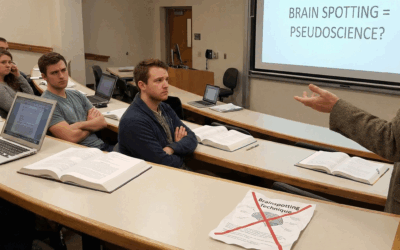
Brainspotting and Lifespan Integration. The earlier version of this page said Brainspotting processes trauma “stored in the subcortical brain” and often works in fewer sessions. I found no study that tests either claim. The main mechanism paper proposes midbrain pathways as hypotheses for future testing.31 Beyond that, the peer-reviewed evidence I could verify is a case report on a survivor of the 2015 Bataclan attack in Paris32 and a single-session study in a non-clinical sample of 40 psychologists and physicians, in which EMDR and Brainspotting eased distress about upsetting memories more than body-scan meditation or reading did.33 Neither tests Brainspotting as a treatment for diagnosed PTSD, and the evidence base is far thinner than for EMDR or trauma-focused CBT. The only controlled trial of Lifespan Integration I found is a small waitlist-controlled pilot of a modified single-session version for women with PTSD after one sexual assault. Three weeks later, 72% of those treated no longer scored in the PTSD range in the per-protocol analysis, against 6% on the waitlist. The authors say the result needs replicating.34
Brain mapping and neurofeedback. A qEEG brain map is not a validated diagnostic test for PTSD. A 2026 evidence map of brain-imaging and EEG biomarkers for mental disorders found only 39 PTSD studies, against 320 for depression. Across disorders most studies were small, and nearly all the diagnostic ones were cross-sectional. The authors concluded that using such tests in clinical settings is likely premature.35 Neurofeedback is more promising but still uncertain. A 2020 meta-analysis of four randomized trials with 123 participants found consistently favorable results and rated the certainty of evidence very low.36 A 2023 meta-analysis of seven trials with 215 participants found a significant pooled reduction in PTSD symptoms, from studies the authors described as mostly small, with varied populations and quality.37 Reviews disagree about how much weight these trials can bear. A 2024 meta-analysis funded by a neurofeedback device company rated the evidence moderate to high quality.38 A 2025 review led by researchers at the US Defense Health Agency found moderate to large effects for EEG neurofeedback against passive controls such as waitlists, smaller relative effects in trials with active or sham controls, no improvement in two sham-controlled trials of fMRI neurofeedback, and low to very low confidence overall.39 If you are curious about our brain mapping and neurofeedback services, think of them as an add-on to trauma-focused therapy, not a replacement for it.
If this page describes your days, it is worth talking to someone who treats trauma for a living. A first appointment is a conversation about what is happening now, not a demand to tell the whole story. You can contact Taproot Therapy Collective in Hoover to ask questions or set up a time. If you are in crisis or thinking about suicide, call or text 988, or see our crisis resources for the Birmingham area.
References
- Brewin, C. R. (2015). Re-experiencing traumatic events in PTSD: New avenues in research on intrusive memories and flashbacks. European Journal of Psychotraumatology, 6(1), 27180. https://doi.org/10.3402/ejpt.v6.27180
- Ehlers, A., Hackmann, A., & Michael, T. (2004). Intrusive re-experiencing in post-traumatic stress disorder: Phenomenology, theory, and therapy. Memory, 12(4), 403–415. https://doi.org/10.1080/09658210444000025
- Hackmann, A., Ehlers, A., Speckens, A., & Clark, D. M. (2004). Characteristics and content of intrusive memories in PTSD and their changes with treatment. Journal of Traumatic Stress, 17(3), 231–240. https://doi.org/10.1023/B:JOTS.0000029266.88369.fd
- Shakespeare, W. (n.d.). The first part of King Henry the Fourth (Act 2, Scene 3). The Complete Works of William Shakespeare, MIT. (Original work published 1598). https://shakespeare.mit.edu/1henryiv/1henryiv.2.3.html
- Shay, J. (1994). Achilles in Vietnam: Combat trauma and the undoing of character. Atheneum.
- Pole, N. (2007). The psychophysiology of posttraumatic stress disorder: A meta-analysis. Psychological Bulletin, 133(5), 725–746. https://doi.org/10.1037/0033-2909.133.5.725
- Pacella, M. L., Hruska, B., & Delahanty, D. L. (2013). The physical health consequences of PTSD and PTSD symptoms: A meta-analytic review. Journal of Anxiety Disorders, 27(1), 33–46. https://doi.org/10.1016/j.janxdis.2012.08.004
- Lanius, R. A., Vermetten, E., Loewenstein, R. J., Brand, B., Schmahl, C., Bremner, J. D., & Spiegel, D. (2010). Emotion modulation in PTSD: Clinical and neurobiological evidence for a dissociative subtype. American Journal of Psychiatry, 167(6), 640–647. https://doi.org/10.1176/appi.ajp.2009.09081168
- American Psychiatric Association. (2022). Diagnostic and statistical manual of mental disorders (5th ed., text rev.). American Psychiatric Association Publishing.
- Janoff-Bulman, R. (1992). Shattered assumptions: Towards a new psychology of trauma. Free Press.
- Schuler, E. R., & Boals, A. (2016). Shattering world assumptions: A prospective view of the impact of adverse events on world assumptions. Psychological Trauma: Theory, Research, Practice, and Policy, 8(3), 259–266. https://doi.org/10.1037/tra0000073
- Friedman, M. J., Resick, P. A., Bryant, R. A., & Brewin, C. R. (2011). Considering PTSD for DSM-5. Depression and Anxiety, 28(9), 750–769. https://doi.org/10.1002/da.20767
- Brewin, C. R., Cloitre, M., Hyland, P., Shevlin, M., Maercker, A., Bryant, R. A., Humayun, A., Jones, L. M., Kagee, A., Rousseau, C., Somasundaram, D., Suzuki, Y., Wessely, S., van Ommeren, M., & Reed, G. M. (2017). A review of current evidence regarding the ICD-11 proposals for diagnosing PTSD and complex PTSD. Clinical Psychology Review, 58, 1–15. https://doi.org/10.1016/j.cpr.2017.09.001
- Kessler, R. C., Aguilar-Gaxiola, S., Alonso, J., Benjet, C., Bromet, E. J., Cardoso, G., Degenhardt, L., de Girolamo, G., Dinolova, R. V., Ferry, F., Florescu, S., Gureje, O., Haro, J. M., Huang, Y., Karam, E. G., Kawakami, N., Lee, S., Lepine, J.-P., Levinson, D., . . . Koenen, K. C. (2017). Trauma and PTSD in the WHO World Mental Health Surveys. European Journal of Psychotraumatology, 8(sup5), 1353383. https://doi.org/10.1080/20008198.2017.1353383
- Koenen, K. C., Ratanatharathorn, A., Ng, L., McLaughlin, K. A., Bromet, E. J., Stein, D. J., Karam, E. G., Meron Ruscio, A., Benjet, C., Scott, K., Atwoli, L., Petukhova, M., Lim, C. C. W., Aguilar-Gaxiola, S., Al-Hamzawi, A., Alonso, J., Bunting, B., Ciutan, M., de Girolamo, G., . . . Kessler, R. C. (2017). Posttraumatic stress disorder in the World Mental Health Surveys. Psychological Medicine, 47(13), 2260–2274. https://doi.org/10.1017/S0033291717000708
- Morina, N., Wicherts, J. M., Lobbrecht, J., & Priebe, S. (2014). Remission from post-traumatic stress disorder in adults: A systematic review and meta-analysis of long term outcome studies. Clinical Psychology Review, 34(3), 249–255. https://doi.org/10.1016/j.cpr.2014.03.002
- Ehlers, A., & Clark, D. M. (2000). A cognitive model of posttraumatic stress disorder. Behaviour Research and Therapy, 38(4), 319–345. https://doi.org/10.1016/S0005-7967(99)00123-0
- Brewin, C. R. (2014). Episodic memory, perceptual memory, and their interaction: Foundations for a theory of posttraumatic stress disorder. Psychological Bulletin, 140(1), 69–97. https://doi.org/10.1037/a0033722
- Rubin, D. C., Berntsen, D., & Bohni, M. K. (2008). A memory-based model of posttraumatic stress disorder: Evaluating basic assumptions underlying the PTSD diagnosis. Psychological Review, 115(4), 985–1011. https://doi.org/10.1037/a0013397
- van der Kolk, B. A. (2014). The body keeps the score: Brain, mind, and body in the healing of trauma. Viking.
- Kuhfuß, M., Maldei, T., Hetmanek, A., & Baumann, N. (2021). Somatic experiencing: Effectiveness and key factors of a body-oriented trauma therapy: A scoping literature review. European Journal of Psychotraumatology, 12(1), 1929023. https://doi.org/10.1080/20008198.2021.1929023
- Lewis, C., Roberts, N. P., Andrew, M., Starling, E., & Bisson, J. I. (2020). Psychological therapies for post-traumatic stress disorder in adults: Systematic review and meta-analysis. European Journal of Psychotraumatology, 11(1), 1729633. https://doi.org/10.1080/20008198.2020.1729633
- Lee, C. W., & Cuijpers, P. (2013). A meta-analysis of the contribution of eye movements in processing emotional memories. Journal of Behavior Therapy and Experimental Psychiatry, 44(2), 231–239. https://doi.org/10.1016/j.jbtep.2012.11.001
- van den Hout, M. A., & Engelhard, I. M. (2012). How does EMDR work? Journal of Experimental Psychopathology, 3(5), 724–738. https://doi.org/10.5127/jep.028212
- Williams, T., Phillips, N. J., Stein, D. J., & Ipser, J. C. (2022). Pharmacotherapy for post traumatic stress disorder (PTSD). Cochrane Database of Systematic Reviews, 2022(3), CD002795. https://doi.org/10.1002/14651858.CD002795.pub3
- Brom, D., Stokar, Y., Lawi, C., Nuriel-Porat, V., Ziv, Y., Lerner, K., & Ross, G. (2017). Somatic Experiencing for posttraumatic stress disorder: A randomized controlled outcome study. Journal of Traumatic Stress, 30(3), 304–312. https://doi.org/10.1002/jts.22189
- Andersen, T. E., Lahav, Y., Ellegaard, H., & Manniche, C. (2017). A randomized controlled trial of brief Somatic Experiencing for chronic low back pain and comorbid post-traumatic stress disorder symptoms. European Journal of Psychotraumatology, 8(1), 1331108. https://doi.org/10.1080/20008198.2017.1331108
- Andersen, T. E., Ellegaard, H., Schiøttz-Christensen, B., Mejldal, A., & Manniche, C. (2020). Somatic Experiencing for patients with low back pain and comorbid posttraumatic stress symptoms: A randomised controlled trial. European Journal of Psychotraumatology, 11(1), 1797306. https://doi.org/10.1080/20008198.2020.1797306
- Hodgdon, H. B., Anderson, F. G., Southwell, E., Hrubec, W., & Schwartz, R. (2022). Internal Family Systems (IFS) therapy for posttraumatic stress disorder (PTSD) among survivors of multiple childhood trauma: A pilot effectiveness study. Journal of Aggression, Maltreatment & Trauma, 31(1), 22–43. https://doi.org/10.1080/10926771.2021.2013375
- Comeau, A., Smith, L. J., Smith, L., Soumerai Rea, H., Ward, M. C., Creedon, T. B., Sweezy, M., Rosenberg, L. G., & Schuman-Olivier, Z. (2024). Online group-based internal family systems treatment for posttraumatic stress disorder: Feasibility and acceptability of the program for alleviating and resolving trauma and stress. Psychological Trauma: Theory, Research, Practice, and Policy, 16(Suppl. 3), S636–S640. https://doi.org/10.1037/tra0001688
- Corrigan, F., & Grand, D. (2013). Brainspotting: Recruiting the midbrain for accessing and healing sensorimotor memories of traumatic activation. Medical Hypotheses, 80(6), 759–766. https://doi.org/10.1016/j.mehy.2013.03.005
- Masson, J., Bernoussi, A., & Moukouta, C. S. (2017). Brainspotting therapy: About a Bataclan victim. Global Journal of Health Science, 9(7), 103. https://doi.org/10.5539/gjhs.v9n7p103
- D’Antoni, F., Matiz, A., Fabbro, F., & Crescentini, C. (2022). Psychotherapeutic techniques for distressing memories: A comparative study between EMDR, Brainspotting, and body scan meditation. International Journal of Environmental Research and Public Health, 19(3), 1142. https://doi.org/10.3390/ijerph19031142
- Rajan, G., Wachtler, C., Lee, S., Wändell, P., Philips, B., Wahlström, L., Svedin, C. G., & Carlsson, A. C. (2022). A one-session treatment of PTSD after single sexual assault trauma. A pilot study of the WONSA MLI project: A randomized controlled trial. Journal of Interpersonal Violence, 37(9–10), NP6582–NP6603. https://doi.org/10.1177/0886260520965973
- Sowerby, C., Landsteiner, A., Ullman, K., Anthony, M., Kalinowski, C., Spoont, M. R., Sponheim, S., Lim, K., Pardo, J. V., Wilt, T. J., & Duan-Porter, W. (2026). Neuroimaging and neurophysiologic biomarkers for diagnosis and prognosis of depressive disorders, bipolar disorder, anxiety disorders, obsessive compulsive disorder, posttraumatic stress disorder, and substance use disorder: An evidence map. BMC Psychiatry, 26, 375. https://doi.org/10.1186/s12888-025-07429-4
- Steingrimsson, S., Bilonic, G., Ekelund, A.-C., Larson, T., Stadig, I., Svensson, M., Vukovic, I. S., Wartenberg, C., Wrede, O., & Bernhardsson, S. (2020). Electroencephalography-based neurofeedback as treatment for post-traumatic stress disorder: A systematic review and meta-analysis. European Psychiatry, 63(1), e7. https://doi.org/10.1192/j.eurpsy.2019.7
- Askovic, M., Soh, N., Elhindi, J., & Harris, A. W. F. (2023). Neurofeedback for post-traumatic stress disorder: Systematic review and meta-analysis of clinical and neurophysiological outcomes. European Journal of Psychotraumatology, 14(2), 2257435. https://doi.org/10.1080/20008066.2023.2257435
- Voigt, J. D., Mosier, M., & Tendler, A. (2024). Systematic review and meta-analysis of neurofeedback and its effect on posttraumatic stress disorder. Frontiers in Psychiatry, 15, 1323485. https://doi.org/10.3389/fpsyt.2024.1323485
- Berman, D. E., Cowansage, K. P., Bellanti, D. M., Nair, R., Boyd, C. C., Beech, E. H., Reddy, M. K., Recker, R. S., Belsher, B. E., & Kelber, M. S. (2025). Systematic review and meta-analysis of neurofeedback training efficacy and neural mechanisms in the treatment of posttraumatic stress disorder. Frontiers in Neuroscience, 19, 1658652. https://doi.org/10.3389/fnins.2025.1658652


















0 Comments