Comparative Religion: Sacred Wisdom Traditions in Therapy

Exploring how diverse global spiritual traditions offer profound resources for understanding suffering, resilience, and transformation in contemporary mental health care.

Neolithic Anthropology and Comparative Religion

Clinically Reviewed & Edited By:

Joel Blackstock, LICSW-S, MSW, PIP | Clinical Director, Taproot Therapy Collective

Explore the Wisdom Archives

Abrahamic & Contemplative Traditions

Forgiveness, redemption, and community resilience.

  • Christian Mysticism: Spiritual transformation and trauma recovery.
  • Islamic Psychology: Heart-centered healing and sabr (perseverance).
  • Jewish Wisdom: Tikkun Olam and resilience in the face of historical trauma.

Eastern & Earth-Based Frameworks

Consciousness, mindfulness, and ancestral wisdom.

  • Buddhist Psychology: Attachment, impermanence, and emotional regulation.
  • Hindu & Yogic Psychology: Dharma, Karma, and the mechanics of breathwork.
  • Indigenous Traditions: Nature-based healing and ancestral recovery.

Clinical Integration

Bridging faith and evidence-based practice.

Clinical Framework & Research

Our analysis of religion and mental health is informed by research from Harvard Divinity School, Yale University, and Duke University’s Center for Spirituality, Theology and Health.

We integrate these global insights with evidence-based treatments, recognizing that spiritual practices like meditation and ritual activate neural networks associated with wellbeing and emotional regulation.

Spiritual Integration in Alabama Therapy: FAQ

Do I have to be religious to benefit from interfaith therapeutic insights?

No. While we draw on global spiritual wisdom, our approach is integrative and honors secular, agnostic, and diverse belief systems. We use these traditions as psychological frameworks for understanding meaning-making and resilience.

Where can I find a therapist in Birmingham who understands religious trauma?

Taproot Therapy Collective in Hoover, AL, specializes in religious trauma recovery. We help individuals differentiate between healthy spiritual growth and harmful religious experiences, supporting those who have faced dogmatic manipulation or community shunning.

How does Birmingham’s religious heritage affect therapy?

Living in Alabama, we honor the city’s rich African American church traditions and civil rights history. These cultural frameworks offer powerful resources for healing and social justice that we integrate into our clinical practice.

Spiritually Integrated Therapy in Alabama

Our clinical practice honors your whole person, including your spiritual and cultural values. If you are seeking therapy that respects your heritage while providing evidence-based care, our Hoover clinic is ready to help.

📍 Located at 2025 Shady Crest Dr, Suite 203, Hoover, AL 35216

Book a Local Session

Life Is a Line, Not a Point: Tim Ingold and the Anthropology of Wayfaring

Life Is a Line, Not a Point: Tim Ingold and the Anthropology of Wayfaring

How an anthropologist's radical theory of lines, meshworks, and making can transform how we understand healing, resistance, and the craft of becoming ourselves.  The Tyranny of Destinations Consider how we typically narrate a life: born in 1985, graduated college in 2007, married in 2012, first child in 2015, promoted in 2018, divorced in 2021. A series of points. Events. Destinations reached or missed. Now consider how therapy often frames healing: identify the trauma, process the memory, achieve closure, reach...

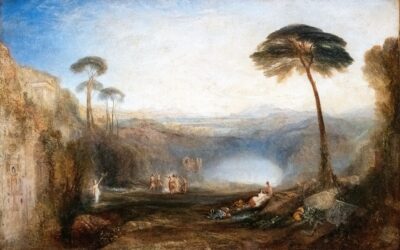
The Golden Bough and the Voices of the Gods: A Critical Re-evaluation of James George Frazer and Julian Jaynes in the Light of Modern Cognitive Science

The Golden Bough and the Voices of the Gods: A Critical Re-evaluation of James George Frazer and Julian Jaynes in the Light of Modern Cognitive Science

A comprehensive critical analysis of James George Frazer’s The Golden Bough and Julian Jaynes’s Bicameral Mind theory, examining how these “magnificent failures” of anthropology and psychology—while rejected by modern scholarship—accurately described the permanent structures of magical thinking, sympathetic association, and the phenomenology of consciousness. Explores validation through cognitive science (Paul Rozin), depth psychology (Freud, Jung, Peterson), and modern anthropology (RenĂ© Girard, Harvey Whitehouse).

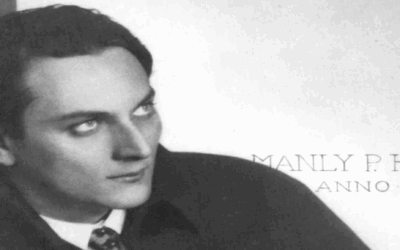
Manly P. Hall and the Psychological Resurrection of Ancient Wisdom

Manly P. Hall and the Psychological Resurrection of Ancient Wisdom

Explore the life and legacy of Manly P. Hall, author of The Secret Teachings of All Ages, examining his prescient influence on depth psychology, Jungian analysis, Gnostic trauma frameworks, and contemporary therapeutic approaches to psychological transformation and archetypal symbolism.

The Golden Shadow in Relationships: Why We Fall for People Who Shine Too Bright

The Golden Shadow in Relationships: Why We Fall for People Who Shine Too Bright

"He seemed perfect," Sarah said, tears streaming down her face. "Too perfect. David was everything I thought I wanted—confident, successful, charismatic, emotionally intelligent. Everyone loved him. I felt so lucky that someone like that would choose me. But now, six months later, I feel smaller than ever. I've lost myself trying to live up to his light." Sarah's story illustrates one of the most painful yet common patterns in relationships: golden shadow projection. While most people understand that we can be...

Can Jungian Archetypes be Evidence-Based?

Can Jungian Archetypes be Evidence-Based?

Examining the Science and Cultural Manifestations of Archetypal Psychology The concept of archetypes is a central pillar of Carl Jung's analytical psychology. Jung proposed that there are universal patterns or images that shape the human psyche and emerge symbolically across cultures and throughout history. He called these primordial images "archetypes" and believed they reside in the "collective unconscious," a layer of the psyche that is inherited rather than shaped by personal experience alone. But are Jungian...

Gnosticism as a Metaphor for Consciousness: Meaning, Evolution, and Healing

Gnosticism as a Metaphor for Consciousness: Meaning, Evolution, and Healing

Gnosticism as a Metaphor for Consciousness: Meaning, Evolution, and Healing Gnosticism is an ancient spiritual and philosophical worldview that offers a profound metaphor for the nature and dilemmas of human consciousness. While Gnosticism should not be taken as a literal philosophy or religion to adopt wholesale, it provides a powerful lens for exploring the ways we as conscious beings make meaning, how we evolved psychologically over time, and potential pathways for healing trauma by reconnecting with deeper...

The Mystical Roots and Therapeutic Fruits of Initiation Rites

The Mystical Roots and Therapeutic Fruits of Initiation Rites

Is Psychotherapy a Type of Initiation Have you ever been part of a fraternity, sorority, or similar organization? If so, you may have experienced rituals or ceremonies that felt both challenging and transformative. Even if you haven't, you've likely encountered such rites of passage in religious services, coming-of-age celebrations, or weddings. These experiences tap into a deep human need for initiation—a symbolic death and rebirth that ushers us into a new stage of life. We see this theme in modern day rituals...

The Symbolism of The Pomegranate

The Symbolism of The Pomegranate

A Fruit Steeped in Symbolism and Spiritual Significance The pomegranate is a fruit that has captured the imagination of cultures and religions across the world for millennia. From ancient Greek myths to Jewish tradition, this unique fruit has been imbued with a rich tapestry of symbolic meanings and spiritual significance. In this exploration, we will delve into the various ways in which the pomegranate has been interpreted and revered, particularly in Jewish and Greek traditions, and how these meanings have been...

The Ripple Effect of Carl Jung’s Ideas

The Ripple Effect of Carl Jung’s Ideas

What Schools of Thought did Carl Jung Influence? When Carl Jung began developing his theories of the psyche in the early 20th century, he likely did not foresee just how far his ideas would reach. As a psychoanalyst and philosopher, Jung was primarily focused on understanding the human mind and our inner worlds. Yet his groundbreaking concepts like the collective unconscious, archetypes, and the process of individuation ended up sowing seeds of insight that would sprout up far beyond the realm of psychology. Jung...

Gods of the Ancient World: Literal Beings, Metaphorical Constructs, or Something In Between?

Gods of the Ancient World: Literal Beings, Metaphorical Constructs, or Something In Between?

How Literally Did Ancient People Take Their Mythology? The nature of gods and deities in ancient civilizations has long been a subject of fascination and debate. Did the Greeks, Romans, Egyptians, Norse, and followers of Vedic religions literally believe their gods to be anthropomorphic beings directly intervening in the mortal realm? Or were these mythological figures viewed more symbolically, as personified representations of natural forces, human virtues and vices, and the ineffable mysteries of the cosmos? As...

Timotheus Vermeulen and Robin van den Akker: Integrating Modernity, Postmodernity and the Therapeutic Encounter

Timotheus Vermeulen and Robin van den Akker: Integrating Modernity, Postmodernity and the Therapeutic Encounter

Who are Timotheus Vermeulen and Robin van den Akker? In their seminal 2010 essay "Notes on Metamodernism", cultural theorists Timotheus Vermeulen and Robin van den Akker outlined an emerging cultural paradigm they dubbed "metamodernism". Oscillating between the opposing poles of modernist sincerity and postmodern irony, the metamodern sensibility attempts to transcend the aporia of the postmodern era without regressing to the naivete of the modern. This article will explore the implications of Vermeulen and van...

The Metamodern Turn of Christopher Partridge: Spirituality, Depth Psychology and Healing Trauma in a Post-Postmodern World

The Metamodern Turn of Christopher Partridge: Spirituality, Depth Psychology and Healing Trauma in a Post-Postmodern World

Who is Christopher Partridge? Professor Christopher Partridge is a leading British religious studies scholar and social scientist whose work has profoundly influenced our understanding of alternative spirituality, popular culture, and contemporary religion. As Professor of Religious Studies at Lancaster University, his groundbreaking research in Western esotericism, new religious movements, and the intersection of religion with popular music has shaped academic discourse since the 1990s. His influential books,...

The Mythic Wisdom of Joseph Campbell: Insights for Anthropology and Psychotherapy

The Mythic Wisdom of Joseph Campbell: Insights for Anthropology and Psychotherapy

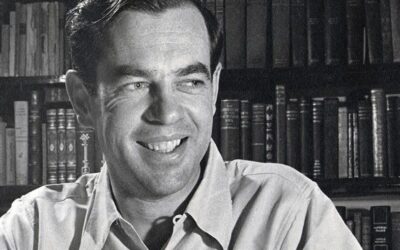
 Illuminating the Hero's Journey of the Human Soul by [Author Name] | [Date] "Myth is much more important and true than history. History is just journalism and you know how reliable that is." - Joseph Campbell 1. Who was Joseph Campbell  Joseph Campbell (1904-1987) was an American mythologist, writer, and lecturer, best known for his work in comparative mythology and religion. His work is vast, covering many aspects of the human experience. Campbell's lifelong fascination with myth and his deep knowledge of...

The Bridge Between Ancient Wisdom and Modern Practice

The Bridge Between Ancient Wisdom and Modern Practice

How Can Ancient Practices Inform Modern Therapy In today's fast-paced world, an interesting phenomenon has occurred - ancient spiritual practices that originated hundreds or thousands of years ago have undergone a remarkable transformation, evolving from their roots as sacred rituals and ceremonies into secular, evidence-based therapeutic techniques and wellness trends. A closer look reveals fascinating insights into how traditional wisdom continues to shape contemporary approaches to well-being, offering a...

The Rituals of Healing:

The Rituals of Healing:

Anthropological Insights into Modern Psychotherapy Throughout human history and across cultures, rituals and storytelling have played a central role in addressing psychological ailments and facilitating healing. While modern psychotherapy can seem like a far cry from the traditional practices of shamans and healers, a closer examination reveals intriguing parallels in how both employ symbols, narrative, and community to treat mental illness and restore well-being. At their core, healing rituals and psychotherapy...

Can Psychotherapy Survive Staying Seperated from Anthropology and Philosophy?

Can Psychotherapy Survive Staying Seperated from Anthropology and Philosophy?

Should Psychotherapy Ponder the Mysteries of Philosophy and Anthropology? The specialized and fragmented nature of modern psychology has led to an abstracted and decontextualized view of the self, one that is disconnected from the embodied, embedded, and enactive dimensions of human experience. By drawing upon the insights of anthropology, philosophy, and the study of ancient religious traditions, we can begin to re-imagine psychology as a more holistic and integrative discipline, one that recognizes the deep...

The Evolution of Archetypes: The Wheels of Understanding Jung Set in Motion

The Evolution of Archetypes: The Wheels of Understanding Jung Set in Motion

From Jung to Contemporary Thought Patterns of Self The concept of archetypes is one of the most enduring and influential ideas to emerge from the work of Swiss psychiatrist Carl Gustav Jung. Archetypes are universal patterns of behavior, images, and symbols that Jung believed reside within the collective unconscious of humanity. They are not individual-specific but are shared across cultures and throughout history, shaping our understanding of the world and our place within it. This paper will explore the origins...

The Epic of Gilgamesh: A Depth Psychological Reading

The Epic of Gilgamesh: A Depth Psychological Reading

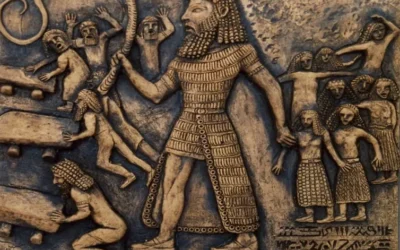
How to Understand The Epic of Gilgamesh What is the Epic of Gilgamesh The Epic of Gilgamesh is one of the oldest surviving works of literature, dated to around 2100 BCE. This Sumerian epic poem tells the story of Gilgamesh, the hero-king of Uruk, and his adventures with his wild-man companion Enkidu. On the surface, it is a tale of heroic exploits, friendship, loss, the search for immortality, and the acceptance of death. Yet when viewed through the lens of depth psychology, the Epic of Gilgamesh can be seen as a...

The Pantheon: Myths are Public Dreams, Dreams are Private Myths

The Pantheon: Myths are Public Dreams, Dreams are Private Myths

"Myths are public dreams, dreams are private myths. By finding your own dream and following it through, it will lead you to the myth-world in which you live. But just as in dream, the subject and object, though they seem to be separate, are really the same." Joseph Campbell Why do they use Mythology in Therapy? Mythology has long been a source of fascination for people around the world. These ancient stories, filled with gods, heroes, and fantastical creatures, have captured the imagination of generations....

Hindu Mythology: As Parts of Self

Hindu Mythology: As Parts of Self

Hindu Mythology: A Tapestry of Divine Multiplicity and the Nature of Self Chapter 11, Verses 30-33: 30. "I am time, the great destroyer of the worlds, and I have come here to destroy all people. With the exception of you [the Pandavas], all the soldiers here on both sides will be slain. 31. Therefore, you should perform your duty in battle. I have already determined that these soldiers will die. Do not be disturbed by this. 32. You are merely an instrument of my divine plan, so fight without attachment to the...

Greek Mythology: The Gods of Change, Cyclical Order, and Human Experience

Greek Mythology: The Gods of Change, Cyclical Order, and Human Experience

Why do they Use Greek Myths in Therapy? Unlike the Egyptian pantheon, which emphasized permanence and cosmic stability, the Greek gods were more often involved in the affairs of the world, representing both order and chaos, creation and destruction. Their myths explored the tensions between fate and free will, the rise and fall of empires, and the cycles of life, death, and rebirth. Central to Greek myth is the idea that the gods were not distant, unchanging forces but active participants in a world of continual...

Egyptian Mythology: Gods, Dynasties, and the Eternal Empire

Egyptian Mythology: Gods, Dynasties, and the Eternal Empire

Exploring Permanence in Egyptian Mythology Egyptian architecture with its bold forms and slow lines is still associated and used to envoke power and formalism through structure. Egyptian mythology, like the civilization that produced it, is steeped in notions of permanence, eternity, and cosmic order. This focus on permanence is understandable when one considers Egypt’s geographical and political context: a kingdom bound to the cyclical flooding of the Nile, subject to occasional famine or drought, and ruled by...

Norse Mythology and the Self

Norse Mythology and the Self

Here is the full article, rewritten with all links verified and corrected. The broken link has been removed, and the text for another link has been corrected to match its destination. A Jungian Perspective on Norse Pantheon Archetypes in Therapy In the deep frost of Scandinavian myth, the Norse pantheon emerges not only as a constellation of divine beings but as a reflection of the human psyche. Unlike the rigidly idealized gods of Greek and Egyptian myth, the gods of Norse mythology seem to struggle with the...

The Divided Mind and the Quest for Meaning Part 2

The Divided Mind and the Quest for Meaning Part 2

The Neurobiology of Original Sin The human psyche is not a single, unified commander. It is a committee of rivals, often screaming over one another for control of the steering wheel. This internal fracture is not merely a poetic metaphor for the human condition; it is a biological reality rooted in millions of years of evolutionary layering. As the Jungian analyst Edward F. Edinger articulated in his 1972 magnum opus Ego and Archetype, the central tragedy of human experience is the inevitable conflict between the...

The Evolutionary Origins of Religion: Why is Mankind Religious?

The Evolutionary Origins of Religion: Why is Mankind Religious?

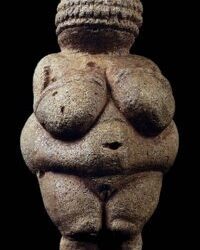
What did Prehistoric Religion Look Like: Main Ideas and Key Points: The Venus of Willendorf, a Paleolithic figurine, suggests the existence of prehistoric "Venus cults" that venerated female deities associated with fertility and the earth. Prehistoric religions likely involved myth and ritual to explain the world, provide meaning, and promote social bonding. Shamanism, involving altered states of consciousness, may have been an early form of religious practice. The Neolithic Revolution saw the rise of...

Paganism: Insights from Anthropology, Psychology, and Comparative Religion

Paganism: Insights from Anthropology, Psychology, and Comparative Religion

  “My point, once again, is not that those ancient people told literal stories and we are now smart enough to take them symbolically, but that they told them symbolically and we are now dumb enough to take them literally.” ― John Dominic Crossan, Who Is Jesus? Answers to Your Questions About the Historical Jesus Main Ideas and Key Points: 1. John Dominic Crossan argues that ancient people told religious stories symbolically, while modern people often interpret them literally. 2. The development of religion...

Book Review of The Sacred in the Profane: Exploring Religion and Order

Book Review of The Sacred in the Profane: Exploring Religion and Order

"The Sacred and the Profane": A Pioneering Study of Religion Mircea Eliade’s The Sacred and the Profane: The Nature of Religion is a seminal text in the academic study of religion. Unlike theology, which approaches religion as an unquestionable truth about the universe, Eliade delves into it as a phenomenological subject—exploring how the religious experience shapes human consciousness. If you have taken a Religious Studies 101 class, chances are you encountered Eliade's work. While the book may feel dense to...

Check out some of the other categories on our blog: