Joseph Henderson: Bridging Cultural Contexts and Analytical Psychology

by | Jul 8, 2024 | 0 comments

Who was Joseph Henderson?

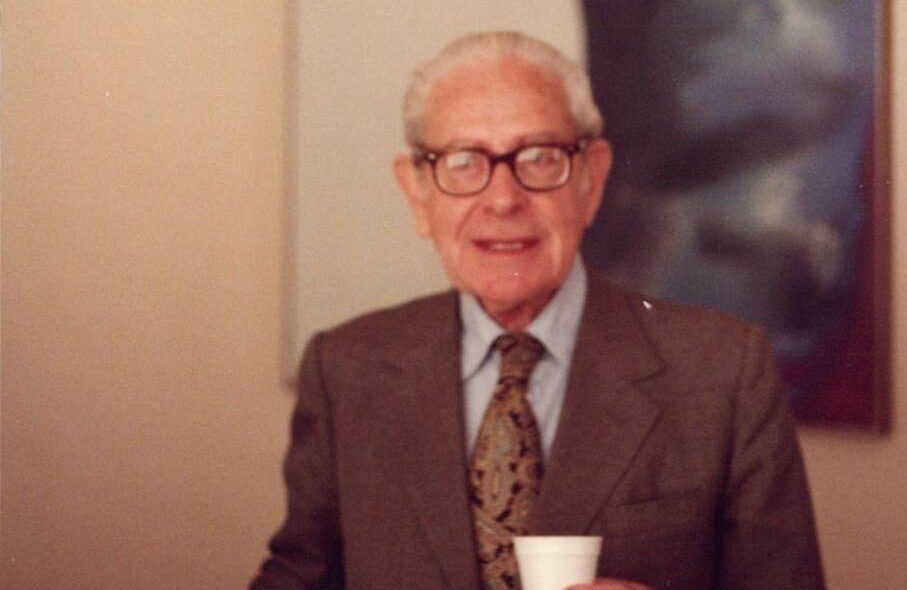
Joseph Henderson (1903-2007) was a prominent figure in the field of analytical psychology, best known for his work on cultural attitudes and the concept of the cultural unconscious. A key collaborator of Carl Jung and a founding member of the C.G. Jung Institute in San Francisco, Henderson’s contributions have had a lasting impact on both the theory and practice of analytical psychology. His work on the intersection of culture and the psyche has provided valuable insights into the ways in which cultural contexts shape individual development and psychological processes.

Early Life and Education

Joseph Lewis Henderson was born on August 31, 1903, in Elko, Nevada. His interest in psychology was sparked during his undergraduate studies at the University of California, Berkeley, where he initially pursued a degree in history. After graduating in 1925, Henderson went on to study medicine at St. Bartholomew’s Hospital in London. It was during his time in London that he encountered the works of Carl Jung, which deeply resonated with him and influenced his decision to pursue a career in analytical psychology.

Henderson trained as a Jungian analyst under Jung’s direct supervision in Zurich, Switzerland. This period of training solidified his commitment to Jungian psychology and laid the foundation for his future contributions to the field.

Relationship with Analytical Psychology

Henderson’s relationship with analytical psychology was profoundly shaped by his close association with Carl Jung. As one of Jung’s students and collaborators, Henderson was deeply influenced by Jung’s theories of the collective unconscious, archetypes, and individuation. However, Henderson also brought his unique perspective to Jungian psychology, particularly through his exploration of cultural and mythological themes.

Upon returning to the United States, Henderson played a pivotal role in establishing the C.G. Jung Institute in San Francisco in 1949, where he served as a training analyst and lecturer. His work at the institute helped to disseminate Jungian ideas in North America and fostered the growth of analytical psychology as a recognized discipline.

Key Ideas and Contributions

Cultural Attitudes and the Cultural Unconscious

One of Henderson’s most significant contributions to analytical psychology is his work on cultural attitudes and the cultural unconscious. He proposed that just as individuals have personal unconscious material, cultures also possess collective unconscious elements that influence the behavior and beliefs of their members. Henderson’s concept of the cultural unconscious extends Jung’s idea of the collective unconscious to encompass the shared symbols, myths, and attitudes of specific cultural groups.

In his book “Cultural Attitudes in Psychological Perspective,” Henderson explores how cultural myths and symbols shape the psychological development of individuals. He argues that understanding these cultural influences is crucial for effective psychological analysis and therapy. Henderson’s work highlights the importance of considering cultural context when interpreting psychological phenomena and underscores the interplay between individual and collective processes.

The Archetype of Initiation

Henderson made significant contributions to the understanding of archetypes, particularly the archetype of initiation. He viewed initiation as a fundamental psychological process that marks the transition from one stage of life to another, often accompanied by rituals and symbolic acts. Henderson’s exploration of initiation rituals across different cultures provided valuable insights into the universal patterns underlying these practices and their psychological significance.

His work on initiation is encapsulated in the book “Thresholds of Initiation,” where he examines the role of initiation in personal development and transformation. Henderson’s insights into the archetype of initiation have been influential in both clinical practice and the study of mythology and comparative religion.

The Concept of Cultural Renewal

Henderson was deeply interested in the idea of cultural renewal and the role of the individual in contributing to the transformation of society. He believed that individuals who undergo significant psychological growth and individuation can become agents of cultural change. This idea is closely linked to his work on the cultural unconscious, as he viewed the integration of personal and cultural unconscious material as essential for both personal and collective renewal.

Henderson’s perspective on cultural renewal emphasizes the interconnectedness of individual and societal transformation. He argued that meaningful cultural change requires individuals to engage with and integrate the unconscious elements of their culture, leading to a more conscious and holistic understanding of both themselves and their society.

Joseph Henderson’s Contributions to Dream Analysis

Henderson made significant contributions to the field of dream analysis, building upon the work of Carl Jung. He believed that dreams provided a window into both the personal and cultural unconscious, offering valuable insights into an individual’s psychological state and the broader cultural context in which they live.

In his approach to dream analysis, Henderson emphasized the importance of exploring the symbolic content of dreams and their relationship to cultural myths and archetypes. He argued that by understanding the cultural and mythological themes present in dreams, analysts could gain a deeper understanding of their patients’ psychological struggles and provide more effective therapeutic interventions.

Influence on Cross-Cultural Psychology

Henderson’s focus on the intersection of culture and psychology has made him an important figure in the development of cross-cultural psychology. His concept of the cultural unconscious has provided a theoretical foundation for understanding how cultural factors shape psychological processes and behavior.

Henderson’s work has inspired subsequent research into the ways in which cultural contexts influence mental health, identity formation, and interpersonal relationships. His ideas have been particularly influential in the study of cultural differences in self-concept, emotion, and social cognition.

By highlighting the importance of cultural context in psychological analysis, Henderson’s contributions have helped to promote a more inclusive and culturally sensitive approach to mental health treatment and research.

The Henderson Archive

The Joseph L. Henderson Archive, housed at the C.G. Jung Institute of San Francisco, contains a wealth of materials related to Henderson’s life and work. The archive includes personal correspondence, manuscripts, lectures, and other documents that provide insight into Henderson’s intellectual development and his relationships with key figures in the field of analytical psychology.

The archive is an invaluable resource for scholars and researchers interested in the history of Jungian psychology and the contributions of Joseph Henderson. It offers a unique glimpse into the personal and professional life of one of the most influential figures in the development of analytical psychology in the United States.

Major Works and Publications

Cultural Attitudes in Psychological Perspective

In this seminal work, Henderson explores the influence of cultural myths and symbols on psychological development. He examines the ways in which cultural attitudes shape individual beliefs and behaviors, offering a framework for understanding the interplay between cultural and personal unconscious material. This book is a key text for anyone interested in the intersection of culture and psychology.

Thresholds of Initiation

“Thresholds of Initiation” delves into the archetype of initiation and its significance in psychological development. Henderson analyzes initiation rituals from various cultures, highlighting the universal patterns and psychological processes underlying these practices. The book provides valuable insights into the role of initiation in personal transformation and individuation.

Shadow and Self

In “Shadow and Self,” Henderson explores the concept of the shadow and its relationship to the self. He examines the role of the shadow in psychological development and the process of individuation, offering practical guidance for working with shadow material in therapy. This work is essential reading for anyone interested in the dynamics of the shadow and its integration into the self.

Published Works and Timeline

  1. 1948Ancient Myths and Modern Man (co-authored with others)
  2. 1967Thresholds of Initiation
  3. 1974The Wisdom of the Serpent: The Myths of Death, Rebirth, and Resurrection (co-authored with Maud Oakes)
  4. 1984Cultural Attitudes in Psychological Perspective
  5. 1990Shadow and Self

Influence and Legacy

Joseph Henderson’s contributions to analytical psychology have had a profound and lasting impact on the field. His work on cultural attitudes and the cultural unconscious has provided valuable insights into the ways in which cultural contexts shape psychological development and individual behavior. Henderson’s emphasis on the interplay between individual and collective processes has enriched the practice of analytical psychology, offering a more comprehensive understanding of the psyche.

His exploration of the archetype of initiation and the concept of cultural renewal has influenced both clinical practice and the study of mythology and comparative religion. Henderson’s ideas continue to inspire and inform the work of psychologists, therapists, and scholars, highlighting the importance of considering cultural context in psychological analysis.

If you liked this read the articles on other Jungian topics:

Bibliography

  • Henderson, Joseph. Cultural Attitudes in Psychological Perspective. Toronto: Inner City Books, 1984.
  • Henderson, Joseph. Thresholds of Initiation. Middletown, CT: Wesleyan University Press, 1967.
  • Henderson, Joseph. Shadow and Self. Wilmette, IL: Chiron Publications, 1990.
  • Henderson, Joseph, and Maud Oakes. The Wisdom of the Serpent: The Myths of Death, Rebirth, and Resurrection. New York: George Braziller, 1974.
  • Kirsch, Thomas B. The Jungians: A Comparative and Historical Perspective. London: Routledge, 2000.
  • Samuels, Andrew, Bani Shorter, and Fred Plaut. A Critical Dictionary of Jungian Analysis. London: Routledge, 1986.
  • Shamdasani, Sonu. Jung Stripped Bare by His Biographers, Even. London: Karnac Books, 2004.

Explore the Other Articles by Categories on Our Blog 

Hardy Micronutrition is clinically proven to IMPROVE FOCUS and reduce the effects of autism, anxiety, ADHD, and depression in adults and children without drugsWatch Interview With HardyVisit GetHardy.com and use offer code TAPROOT for 15% off

The Giants of Behavioral Psychology Lives Legacies and Clinical Foundations

The Giants of Behavioral Psychology Lives Legacies and Clinical Foundations

Explore the lives discoveries and lasting influence of the six giants of behavioral psychology including Pavlov Thorndike Watson Skinner Wolpe and Bandura. Learn how their groundbreaking research on classical conditioning operant conditioning systematic desensitization and social learning theory shaped modern evidence-based psychotherapy and continues to inform clinical practice today.

Albert Bandura: The Psychologist Who Revealed the Power of Observation and Belief

Albert Bandura: The Psychologist Who Revealed the Power of Observation and Belief

Explore the life and transformative contributions of Albert Bandura, the Canadian-American psychologist whose Bobo doll experiments and self-efficacy theory revolutionized our understanding of how people learn and change. Discover how his research on observational learning, social cognitive theory, and beliefs about personal capability continues to shape psychotherapy, education, health behavior, and our understanding of human potential.

Joseph Wolpe: The Pioneer Who Taught Us How to Unlearn Fear

Joseph Wolpe: The Pioneer Who Taught Us How to Unlearn Fear

The history of psychotherapy is filled with discoveries that emerged from unusual circumstances, and few are more striking than the origins of systematic desensitization. During World War II, a young South African physician named Joseph Wolpe was assigned to treat...

B.F. Skinner: The Architect of Operant Conditioning and Modern Behavioral Science

B.F. Skinner: The Architect of Operant Conditioning and Modern Behavioral Science

Explore the life and revolutionary contributions of B.F. Skinner, the psychologist who developed operant conditioning and transformed our understanding of how consequences shape behavior. Learn how his research on reinforcement schedules, the Skinner box experiments, and behavioral principles laid the foundation for Applied Behavior Analysis, educational technology, and evidence-based behavioral interventions that continue to help millions of people today.

John B. Watson: The Revolutionary Who Transformed Psychology

John B. Watson: The Revolutionary Who Transformed Psychology

Discover the revolutionary life and controversial legacy of John B. Watson, the American psychologist who founded behaviorism and transformed psychology from a philosophical discipline into an experimental science. Learn about the famous Little Albert experiment, Watson’s radical vision for psychology, and how his work laid the foundations for modern behavior therapy despite profound ethical concerns that continue to shape research standards today.

Edward Thorndike: The Architect of Consequence

Edward Thorndike: The Architect of Consequence

Explore the lives discoveries and lasting influence of the six giants of behavioral psychology including Pavlov Thorndike Watson Skinner Wolpe and Bandura. Learn how their groundbreaking research on classical conditioning operant conditioning systematic desensitization and social learning theory shaped modern evidence-based psychotherapy and continues to inform clinical practice today.

Ivan Pavlov: The Accidental Revolutionary

Ivan Pavlov: The Accidental Revolutionary

It is one of the great ironies of scientific history that the father of behavioral psychology never considered himself a psychologist at all. Ivan Petrovich Pavlov was a physiologist consumed by the mechanical workings of the digestive system. He viewed the body as an...

The Iron Consul: George B. Ward, the Psychology of Order, and the Roman Dream of Birmingham’s Mountain Prophet

The Iron Consul: George B. Ward, the Psychology of Order, and the Roman Dream of Birmingham’s Mountain Prophet

Explore the extraordinary life of George B. Ward (1867-1940), Birmingham’s visionary mayor who built a Roman temple on Shades Mountain. This comprehensive psychological analysis examines Ward’s trauma-driven obsession with order, his City Beautiful movement, his flirtation with fascism, and the mystery of his burned papers—revealing how one man’s battle between chaos and control shaped a city’s identity.

Who is Mark Turner?

Who is Mark Turner?

The Literary Mind: Mark Turner's Cognitive Science and Its Implications for Understanding Trauma and Consciousness in Psychotherapy In the quest to understand the complexities of human consciousness and the impact of trauma on the psyche, the work of cognitive...

Who is Cliford Geertz?

Who is Cliford Geertz?

Weaving the Web of Meaning: Clifford Geertz's Cultural Anthropology and Its Implications for Trauma and Consciousness in Psychotherapy In the realm of psychotherapy, understanding the intricate tapestry of human experience is paramount. To truly grasp the complexities...

In Remembrance of Leon Krier

In Remembrance of Leon Krier

All experience is past by definition. Tradition is transmission of past experience which has become knowledge and know-how. Thus, we can with reason conclude that without tradition, there can be no language, no philosophy, no science, no technique, art, or industry....

The Enduring Relevance of Alice Miller’s Drama of the Gifted Child

The Enduring Relevance of Alice Miller’s Drama of the Gifted Child

Why Therapists Must Consciously Embrace Their Wounded Healer Role Four decades after its publication, Alice Miller's "The Drama of the Gifted Child" remains one of the most important texts for understanding both the psychology of the helping professions and the hidden...

Who was Mesmer and WHat is Animal Magnetism?

Who was Mesmer and WHat is Animal Magnetism?

From Mesmerism to Modern Psychotherapy: The Enduring Legacy of Franz Anton Mesmer and the Importance of Empirical Validation Franz Anton Mesmer, the 18th-century German physician, is often considered the father of modern hypnosis. His theory of animal magnetism, or...

0 Comments

Submit a Comment

Your email address will not be published. Required fields are marked *