
The Watercourse Way: Lao Tzu, The Tao, and the Healing Power of Non-Resistance
By The Clinical Team at GetTherapyBirmingham.com
Introduction: The Frantic Architecture of the Modern Mind
In the frantic architecture of the modern psyche, there is a pervasive, almost structural belief that force is the only mechanism of change. We are culturally conditioned from childhood to believe that to succeed, we must strive; to heal, we must fight; and to survive, we must control. We wage war on our anxiety, we battle our depression, and we build dykes against the currents of our own emotions.
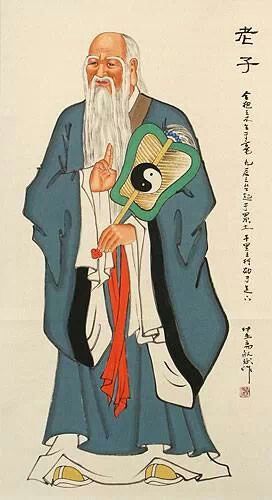
Yet, in the quiet corners of depth psychology and in the stillness of the therapeutic encounter, a different voice emerges from the ancient past. It is the voice of Lao Tzu, the legendary keeper of the archives and the founder of philosophical Taoism. His message is as radical today as it was twenty-five centuries ago: the hardest grasp is the one that lets go, and the most powerful action is the one that forces nothing.
To engage with Lao Tzu is to step outside the linear progression of Western thought and enter a world where the soft overcomes the hard and the empty is more useful than the full. For the clinician and the seeker alike, the Tao Te Ching serves not just as a philosophical text, but as a manual for what we might call “Psychological Hygiene.”
Just as we wash our hands to prevent physical illness, Taoism offers a cleansing of the psychic system—a way to wash away the accumulated grit of social expectation, ego-inflation, and the chronic rigidity that characterizes so much mental illness. In a world drowning in cortisol and chronic stress, the “Watercourse Way” offers a return to the parasympathetic ease of simply being.
The Archetype of the Old Master: The Legend of Hanku Pass
From Persona to Self
The biography of Lao Tzu is a tapestry interwoven with myth and history, making him more of a psychological archetype than a mere flesh-and-blood man. The name itself is an honorific title translating to “Old Master” or “Old Child,” implying a wisdom that is both ancient and eternally new—a concept echoed in the Jungian archetype of the Puer Aeternus and the Senex.
Historians place him in the 6th century BCE during the crumbling twilight of the Zhou Dynasty. This was a time of moral decay and political corruption, not unlike the social fragmentation and polarization we witness in our own era. As an archivist in the royal court, Lao Tzu would have been the ultimate observer, surrounded by the recorded history of human folly, witnessing the endless cycles of rise and fall.
The Great Departure
The legend says that he grew weary of the artifice of court life. Seeing that the kingdom was beyond repair, he chose not to fight it, but to withdraw. He mounted a water buffalo—an animal representing the untamed, instinctual nature—and headed west toward the wilderness.
At the Hanku Pass, the gatekeeper Yinxi recognized the sage and refused to let him pass until he had written down his wisdom. In a single night, Lao Tzu inscribed five thousand characters onto bamboo slips. He handed the manuscript to the gatekeeper and then rode off into the mist, never to be seen again.
Psychologically, this act of leaving is profound. It represents the transition from the Persona—the mask we wear for society—to the Self, the authentic center of our being. This is the journey of midlife individuation. Lao Tzu abandoning the court is the soul abandoning the need for external validation. The text he left behind famously begins with a paradox:
“The Tao that can be told is not the eternal Tao. The name that can be named is not the eternal name.”
In therapy, this is the pivotal moment a client realizes that their narrative about their life is not the life itself. The map is not the territory. Lao Tzu points us toward an experiential reality that exists before language and before the categorizing mind splits the world into “good and bad” or “self and other.”
The Neuroscience of Wu Wei: Why “Doing Nothing” Heals
The Uncarved Block (P’u)
Central to Taoist psychology is the concept of P’u, or the Uncarved Block. This metaphor describes the natural state of humanity—the wood before it is cut into a tool, the mind before it is shaped by trauma and social conditioning. In our natural state, we possess potential and simplicity. Over time, the demands of parents, teachers, and culture “carve” away at us. We become “useful” to society, but we lose our wholeness. We develop neuroses, which are essentially rigid patterns of behavior that keep us trapped in a specific shape.
Wu Wei and the Polyvagal Nervous System
To navigate the return to the Uncarved Block, one must practice Wu Wei. Often translated as “non-action,” this term is frequently misunderstood as passivity or laziness. A better clinical translation might be “effortless action” or “friction-less flow.”
From a neurobiological perspective, Wu Wei is the activation of the Ventral Vagal state of the Polyvagal Nervous System. When we are in a state of high anxiety, we are in sympathetic mobilization (fight or flight). When we are depressed, we may drop into dorsal vagal shutdown (freeze). Wu Wei represents the “Social Engagement System” where we are safe, connected, and capable of responding to the environment without panic.
Modern neuroscience supports Lao Tzu’s intuition. When we force action (striving), we activate the prefrontal cortex’s error-detection machinery, often leading to “paralysis by analysis.” Conversely, Wu Wei is analogous to what psychologist Mihaly Csikszentmihalyi calls the Flow State. In this state, the critical chatter of the default mode network quiets down, and we act with seamless efficiency.
Somatic Experiencing and the River of Trauma
This philosophy finds its element in water. Lao Tzu frequently uses water as the ultimate symbol of the Tao:
“Water is the softest thing, yet it can penetrate mountains and earth. It seeks the lowest places, which men abhor.”
In Somatic Experiencing and trauma therapy, this water logic is a powerful antidote to rigidity. Trauma freezes energy in the body. If we try to “break” the trauma with force, we often retraumatize the system. However, if we adopt the nature of water—gentle, persistent, and fluid—we can help the nervous system discharge that trapped energy naturally. Resilience is not about being tough (like a rock); it is about being fluid (like water).
Jung and the Golden Flower: The Union of Opposites
Enantiodromia: The Reversal of Opposites
The Taoist worldview is built on the dynamic interplay of Yin and Yang. These are not opposing forces in conflict, but complementary aspects of a single whole. There is no light without shadow, and no action without rest. Western psychology has often fallen into the trap of pathologizing the “dark” side of human experience. We want to be happy without being sad; we want to be productive without resting.
Carl Jung found a kindred spirit in Lao Tzu. Jung’s concept of Enantiodromia refers to the tendency of things to turn into their opposites—a purely Taoist insight. Jung saw that when a psychological force is pushed to its extreme, it inevitably flips.
- The person who works themselves to exhaustion will eventually be forced into depression (extreme Yang becomes extreme Yin).
- The person who suppresses all anger will eventually explode in rage.
Shadow Work as Taoist Practice
Jung wrote the famous commentary for Richard Wilhelm’s translation of The Secret of the Golden Flower, a Taoist alchemical text. He recognized that the ancient Chinese masters had mapped the unconscious long before Freud or himself.
The reconciliation of the Jungian Shadow is perhaps the most practical application of this. In the Tao Te Ching, Lao Tzu advises us to “Know the masculine, but keep to the feminine” and to “Know the white, but keep to the black.” This is a call for psychological wholeness.
We must acknowledge our strength and our aggression, but we must remain grounded in our receptivity and our darkness. A therapy that ignores the dark aspects of the self is merely a cosmetic fix. True healing requires us to descend into the valley of the spirit where the fertile ground lies. This also relates to the balance of the Anima and Animus—the inner feminine and inner masculine figures that must be balanced for a personality to be complete.
Clinical Application: The Tao of Therapy
The Therapist as the Hollow Vessel
For the modern therapist, the teachings of Lao Tzu offer a stance rather than a technique. It is the stance of the hollow vessel. The therapist must empty themselves of the need to “fix” or “cure” the client. This sounds counterintuitive, but it is the essence of holding space.
If the therapist is full of their own agenda, there is no room for the client’s truth to emerge. By practicing Wu Wei, the therapist listens without judgment and intervenes without force. They become a mirror, reflecting the client’s own wisdom back to them. This mirrors the person-centered approach where we believe the client possesses the internal resources for their own healing.
DBT and Radical Acceptance
In more directive therapies like Dialectical Behavior Therapy (DBT), the influence of Lao Tzu is explicit. Marsha Linehan integrated the concept of Radical Acceptance directly from Eastern thought. Radical Acceptance is the refusal to fight reality. It is the acknowledgment that this moment is exactly as it should be, given all the causes and conditions that led up to it.
This does not mean approval of abuse or bad behavior; it means ending the war with “what is.” This cessation of hostilities releases the energy that was bound up in denial, allowing for genuine change to occur. This is essential for treating emotional dysregulation.
ACT and Creative Hopelessness
Similarly, Acceptance and Commitment Therapy (ACT) uses the concept of “creative hopelessness,” which mirrors the Taoist idea of giving up the struggle. When a client realizes that their attempts to control their anxiety are actually causing their anxiety, they reach a point of surrender. In that surrender—stopping the tug-of-war with the monster—they find the flexibility to move toward their values.
Timeline of Taoism and Psychology
The journey from the Hanku Pass to the modern clinic spans millennia. Here is how the stream has flowed:
- c. 604 BCE: Traditional birth year of Lao Tzu during the Spring and Autumn Period.
- 551 BCE: Birth of Confucius, establishing the rigid social counterpart to Taoist fluidity.
- 475–221 BCE: The Warring States Period; the chaos inspires the need for the Tao Te Ching.
- c. 369–286 BCE: Life of Zhuangzi, the second great sage who expanded Taoism with humor and parable.
- 1931 CE: Carl Jung writes the commentary for The Secret of the Golden Flower, launching Western depth psychology’s interest in Taoism.
- 1950s: The Beat Generation (Kerouac, Watts) brings Taoist concepts to the American consciousness.
- 1975 CE: Fritjof Capra publishes The Tao of Physics, linking Eastern mysticism with quantum mechanics.
- 1993 CE: Marsha Linehan publishes the manual for DBT, formalizing Taoist acceptance in evidence-based clinical psychology.
- Present Day: Somatic Experiencing and Polyvagal Theory provide the biological basis for ancient Taoist practices.
Annotated Bibliography for Further Reading
- Lao Tzu. (1988). Tao Te Ching (S. Mitchell Trans.). Harper Perennial.
The most accessible and poetic translation for the modern reader, stripping away heavy esoteric language to reveal the psychological core. - Wilhelm R. & Jung C. G. (1962). The Secret of the Golden Flower. Harcourt Brace & World.
Essential reading for understanding the link between Taoist alchemy and Jungian individuation. - Le Guin, U. K. (1998). Lao Tzu: Tao Te Ching: A Book about the Way and the Power of the Way. Shambhala.
A brilliant translation by the famed sci-fi author, emphasizing the feminine/Yin aspects of the text. - Linehan M. M. (2014). DBT Skills Training Manual. The Guilford Press.
The clinical manual that operationalizes “Radical Acceptance” for the treatment of severe mental health disorders. - Hoff, B. (1982). The Tao of Pooh. Penguin Books.
While whimsical, this book provides one of the best introductions to the concept of the Uncarved Block (P’u) for beginners.
Final Thoughts: Returning to the Source
The legacy of Lao Tzu teaches us that we do not need to become something other than what we are. We do not need to add more to our lives; we need to subtract. We need to chip away the layers of fear, expectation, and trauma until we reveal the masterpiece that was there all along.
In the silence of that realization, we find that the river of life knows where it is going, and we can finally stop rowing against the current and let it carry us home.
Are you struggling to let go of control? Are you feeling “carved up” by the demands of life? Contact GetTherapyBirmingham.com today to schedule a consultation with a therapist who understands the power of non-resistance.





0 Comments