
How a Greek Immigrant’s Restaurant Reveals the Hidden Architecture of Human Connection
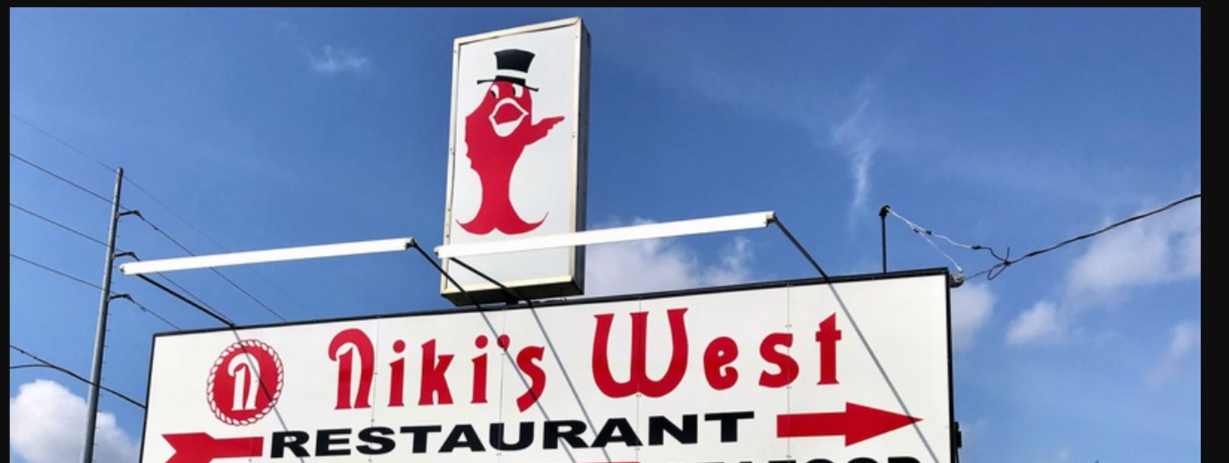
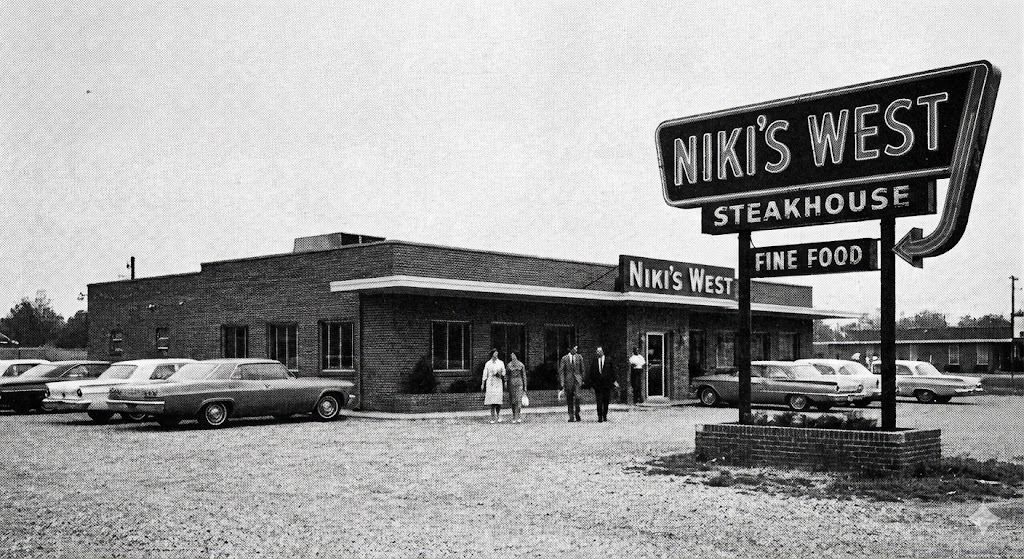
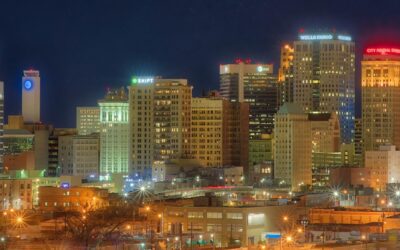
There is a squat brick building on Finley Avenue in Birmingham that has been serving meat and three plates since 1957. Niki’s West Cafeteria does not look like a place where history happened. There are no plaques on the wall commemorating its significance. No historical markers stand in the parking lot. The fluorescent lights buzz the same way they always have, and the steam tables still hold the same fried chicken, turnip greens, and congealed salads that have drawn Birmingham residents for nearly seven decades.
But something remarkable occurred in this building during the darkest years of segregation, and almost nobody knows about it.
For residents of Birmingham, Homewood, Vestavia Hills, and Mountain Brook who drive past Niki’s West without a second thought, this hidden history offers a profound lesson about how the spaces we inhabit shape the people we become and the connections we are able to form.
The Greek Immigrant’s Gamble
Gus Hontzas arrived in Birmingham from Greece with the same dreams that have drawn immigrants to America for generations. He wanted to build something, to feed people, to create a life. In 1957, he opened Niki’s West Cafeteria on the west side of Birmingham, naming it after his daughter.
Hontzas chose the cafeteria format for practical reasons. Cafeterias were popular in the South, they moved customers through efficiently, and they required fewer staff than table service restaurants. The business model made sense.
What Hontzas may not have fully anticipated was how his practical choice would interact with the social architecture of Jim Crow Birmingham.
The Accidental Democratic Dining Room
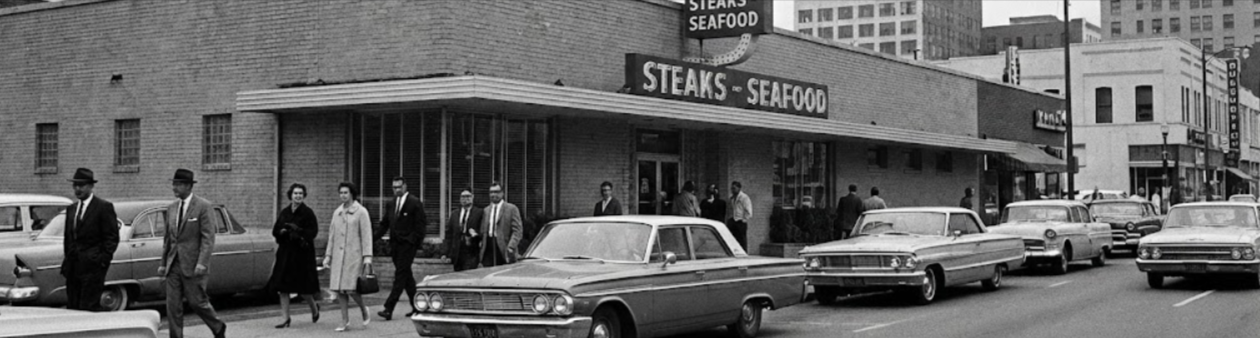
In 1957, Birmingham was one of the most rigidly segregated cities in America. The rules governing where Black and white residents could eat, sit, drink, and exist were enforced with legal authority and extralegal violence. Restaurants were firmly divided. The social order was maintained through a thousand daily interactions in which servers, hosts, and owners performed the rituals of separation.
But Niki’s West operated differently. The cafeteria format meant there were no servers. Customers picked up a tray, walked along the steam tables, pointed to what they wanted, paid at the register, and found their own seats. The entire transaction could occur with minimal human gatekeeping.
This structural feature created something unusual for its time: a space where Black and white Birmingham residents ate in the same room, even if they sat at different tables. The cafeteria format had accidentally short-circuited one of the primary mechanisms of segregation, the human enforcer who decided who got served and who did not.
Niki’s West was not integrated in the full sense. The social pressures of the era meant that Black and white customers generally self-sorted into different sections of the dining room. But they were in the same room, eating the same food, participating in the same ritual of nourishment. In the Birmingham of the late 1950s and early 1960s, this was quietly revolutionary.
The Psychology of Space and Permission
What happened at Niki’s West illustrates a principle that psychologists and architects have studied extensively: the physical structure of our environments shapes our behavior in ways we rarely consciously recognize.
When a space is designed with gatekeepers, with people whose job it is to grant or deny access, we become acutely aware of hierarchy and permission. We wait to be seated. We hope to be acknowledged. We feel the power differential in every interaction. This is true in restaurants, but it is also true in workplaces, schools, healthcare settings, and families.
When those gatekeepers are removed, something shifts. The cafeteria format at Niki’s West did not require anyone to grant permission. You could simply walk in, get food, and sit down. The architecture of the space communicated a message that the explicit social rules of Birmingham contradicted: you are allowed to be here.
This principle has profound implications for how we think about healing and human connection. Sometimes the barriers between people are not attitudes or beliefs that need to be changed through argument or persuasion. Sometimes the barriers are structural, built into the design of our spaces and institutions in ways that make certain kinds of connection impossible regardless of anyone’s intentions.
Shared Tables and Shared Humanity
There is something psychologically significant about eating in the presence of others. Anthropologists have documented the importance of communal meals across virtually every human culture. Breaking bread together is one of the oldest rituals of trust and belonging. When we eat with someone, we are implicitly saying that we are safe enough in their presence to be vulnerable, to nourish ourselves, to let our guard down in one of our most basic animal acts.
The customers at Niki’s West in the 1950s and 1960s may not have been sharing tables, but they were sharing a meal in a deeper sense. They were participating in the same human ritual, in the same space, eating food prepared in the same kitchen. In a city determined to enforce absolute separation, this shared participation was a crack in the wall.
For those of us in the Birmingham area today, whether we live in Mountain Brook or Ensley, Vestavia Hills or Woodlawn, this history invites reflection on the spaces where we encounter each other and the spaces where we do not. The architecture of our lives, where we shop, where we worship, where we send our children to school, shapes the range of human connection available to us.
What Niki’s West Can Teach Us About Therapy
The accidental integration of Niki’s West Cafeteria offers a useful metaphor for understanding how therapy works.
Many people come to therapy hoping to change their thoughts and feelings directly, to argue themselves out of depression or rationalize their way past anxiety. This is understandable. It feels like the thoughts and feelings are the problem, so changing them should be the solution.
But often the more powerful intervention is structural. Rather than trying to force yourself to feel differently, you change the environment, the relationships, the daily patterns that create the conditions for those feelings to arise. You remove the gatekeepers, internal and external, that have been controlling your access to nourishment and connection.
A person struggling with isolation does not necessarily need to become more outgoing. They may need to find or create spaces, like Niki’s West, where connection can happen without the usual barriers. A person struggling with shame may not need more positive self-talk. They may need environments where their full humanity is welcomed without having to ask permission.
This is why therapy itself is designed as a particular kind of space. The therapy room is structured to remove certain barriers to honest self-examination. The confidentiality, the lack of social reciprocity, the explicit permission to focus entirely on yourself, these are not incidental features. They are the architecture that makes certain kinds of psychological work possible.
The Steam Tables Are Still Warm
Niki’s West Cafeteria still operates today. You can still walk in, grab a tray, and load up on fried catfish and macaroni and cheese. The format has not changed. The building looks much the same.
Most of the customers passing through have no idea that they are participating in a tradition that once represented a quiet defiance of the social order. The history has been largely forgotten, crowded out by more dramatic stories of Birmingham’s civil rights era.
But there is something appropriate about this forgetting. Niki’s West never set out to make history. Gus Hontzas was not trying to integrate Birmingham. He was trying to run a restaurant. The democracy of his dining room emerged from the structure of the space rather than from any ideological program.
Sometimes the most profound changes happen this way, not through grand declarations but through the quiet accumulation of shared meals and incidental encounters. Sometimes the revolution is a steam table and a cafeteria tray.
Creating Democratic Space in Your Own Life
For those of us living in Birmingham, Homewood, Vestavia Hills, Mountain Brook, and the surrounding communities, the story of Niki’s West invites a question: what are the spaces in our lives where connection is possible, and what are the spaces where invisible barriers prevent it?
This is not just a social or political question. It is a psychological one. The environments we inhabit shape our mental health, our sense of belonging, and our capacity for authentic relationship. Choosing those environments wisely, and working to change the ones we cannot leave, is part of the work of building a life.
If you are struggling with isolation, disconnection, or a persistent sense that you do not quite belong, it may be worth examining not just your thoughts and feelings but the structures of your daily existence. Where are the gatekeepers in your life? What permissions are you waiting for that you might not actually need? What would it mean to simply pick up a tray and find your own seat?
Finding Support in the Birmingham Area
At Taproot Therapy Collective, we work with individuals throughout Birmingham, Homewood, Vestavia Hills, Mountain Brook, and the wider metro area who are navigating questions of belonging, connection, and identity. Our approach recognizes that psychological struggles are never purely internal. They emerge from the intersection of our inner lives and the environments we inhabit.
Therapy can help you examine both dimensions: the thoughts and feelings that cause suffering and the structural patterns that perpetuate it. Sometimes the path forward requires changing your mind. Sometimes it requires changing your space. Often it requires both.
If you would like to explore how therapy might help you create more room for connection and belonging in your life, we invite you to reach out. Like Niki’s West, our door is open. No permission required.
Taproot Therapy Collective provides psychotherapy services to individuals in Birmingham, Homewood, Vestavia Hills, Mountain Brook, and throughout Jefferson County and Shelby County, Alabama. To learn more about our approach or to schedule a consultation, visit our website or contact our office directly.




0 Comments