

While the Mother Wound is often associated with the ability to connect and feel nourished, the Father Wound is deeply tied to our ability to trust and feel safe in our vulnerability. The father is the first “other” the child encounters—the first figure outside the primary mother-infant bond. How he steps into that space sets the template for how we relate to the world beyond ourselves, particularly in romantic partnerships.
When a father is emotionally absent, shaming, or unsafe, the child learns a devastating lesson: vulnerability is dangerous. To show weakness, need, or tender emotion is to invite ridicule or rejection from the very person meant to protect you. In response, the child constructs psychological and somatic armor. They learn to lead with their head, to despise their own neediness, and to view intimacy as a battlefield where one must either dominate or be dominated. This is the **Father Wound in relationships**.
The Shaming of the Heart: Where the Wound Begins
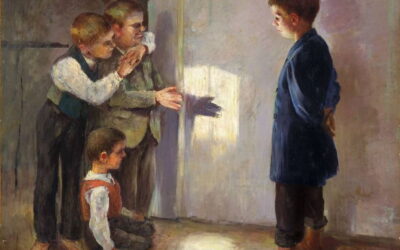
In many cultures, the father’s traditional role is to “toughen up” the child, particularly sons, to prepare them for a harsh world. This often involves the systematic shaming of “softer” emotions—sadness, fear, tenderness. Phrases like “big boys don’t cry” or “don’t be such a sissy” are not harmless; they are acts of psychological violence that sever the child from their own emotional reality.
This creates a Shadow Self where all vulnerable emotions are exiled. As discussed in our article on Childhood Trauma and the Unconscious, these exiled parts do not disappear. They go underground. The adult child becomes phobic of their own heart. They may become hyper-rational, dismissing emotions in themselves and others as “irrational” or “weak.” They may become performatively stoic, unable to shed a tear even at a funeral. Inside, however, is a terrified child who is desperately lonely but terrified of letting anyone close enough to see their need.
Manifestations in Relationships: The Distant Fortress and The Approval Seeker
Just as with authority, the Father Wound manifests in relationships through polarized extremes. These often map onto the shadow archetypes of the “Detached Manipulator” or the “Addicted Lover.”
1. The Distant Fortress (The Avoidant Partner)
This individual (often male, but not exclusively) has built an impenetrable wall around their heart. They may be successful, responsible, and good providers, but they are emotionally unreachable. They view intimacy as a threat to their autonomy and control.
- The Dynamic: When a partner asks for emotional connection, they feel engulfed or criticized and withdraw further. They may use work, hobbies, or addictions as shields against connection.
- The Pain: Their partners often feel lonely, uncherished, and like they are banging their heads against a wall, trying to get a drop of emotional vulnerability. The “Fortress” feels safe behind the wall, but also profoundly isolated.
2. The Approval Seeker (The Anxious Partner)
Conversely, the person with a Father Wound may become desperately anxious for male approval and validation, which they then project onto romantic partners. They are terrified of rejection and will contort themselves into whatever they think the partner wants them to be.
- The Dynamic: They have no solid sense of self, so they rely on the partner to define their worth. They may tolerate abusive or emotionally unavailable behavior because it feels familiar—it echoes the dynamic with the distant father they are still trying to win over.
- The Pain: They live in a state of chronic anxiety, constantly scanning the partner’s face for signs of disapproval. They are trying to retroactively heal the wound with the father by being “good enough” for the partner.
The Wound in Men vs. Women
While the Father Wound affects everyone, its cultural manifestations often differ by gender due to socialization and archetypal projection, specifically regarding the Anima and Animus.
For Men: The Wound to Masculinity
The Father Wound is often a wound to their own masculinity. If their father was weak, abusive, or absent, they have no model for what it means to be a healthy man. They may oscillate between toxic masculinity (aggression, dominance) and a collapsed, passive state. They often feel a deep, secret shame about not being “man enough,” and they project this onto their partners, fearing that if they show vulnerability, they will be unmanned. They reject their own Anima (inner feminine), leaving them cut off from intuition and feeling.
For Women: The Wound to the Animus
The Father Wound often shapes their Animus, or internal image of the masculine. If their father was untrustworthy or dangerous, they may instinctively distrust all men, viewing them as potential perpetrators. They may choose partners who are “safe projects” (men they can fix or control) rather than equals, or they may find themselves repeatedly drawn to emotionally unavailable “bad boys” in an unconscious attempt to finally win the love of the difficult father.
Somatic Healing: Melting the Armor
You cannot talk a person out of their armor. The armor is a physiological response to a perceived threat. Healing the relational Father Wound requires a somatic approach that helps the nervous system relearn safety in vulnerability. Robin Taylor, LICSW-S uses somatic therapy to help clients slowly, safely dismantle these defenses.
Somatic Pathways to Intimacy:
- Titrating Vulnerability: Learning to tolerate small amounts of emotional exposure without collapsing into shame or flying into a rage. This is about widening the Window of Tolerance. We practice sharing a small truth and noticing that we are not attacked.
- Reconnecting Heart and Gut: Many people with a Father Wound live entirely in their heads. Somatic work helps them drop their awareness down into their chest (the center of connection) and their gut (the center of instinct and truth), bridging the gap between thinking and feeling.
- Safe Touch and Containment: For those whose fathers were physically abusive or distant, safe, non-sexual therapeutic touch or exercises that create a sense of physical containment can be profoundly healing. It rewires the body’s association between touch and danger.
Opening to Love
Healing the Father Wound is the work of opening the armored heart. It is the terrifying but liberating realization that true strength is not about invulnerability; it is about the capacity to be open, to be affected, and to connect without losing oneself.
It involves grieving the validation and protection you didn’t receive and learning to provide it for yourself. Only then can you enter a relationship as a whole person, ready to give and receive love not as a desperate child, but as an adult capable of true intimacy.
If you recognize these patterns in your own relationships and are ready to do the deep work of healing, contact Robin Taylor to schedule a consultation.












0 Comments