

The Moment Reality Refuses to Cooperate
We’ve all been there. That moment when our carefully constructed understanding of how things should work collides head-on with how they actually work. The project that should have succeeded fails spectacularly. The person who should have understood completely misses the point. The pattern that seemed so clear dissolves into chaos.
What happens next, that split-second emotional response, may tell us more about personality structure than we realize.
Bridging Neuroscience and Depth Psychology
Recent developments in neuroscience, particularly Karl Friston’s free energy principle, suggest that our brains are essentially prediction machines, constantly trying to minimize the difference between what we expect and what we encounter. When reality violates our predictions, we experience what Friston calls “prediction error”: a fundamental dissonance that demands resolution.
But here’s where it gets interesting for therapists: the way we resolve that dissonance appears to be personality-dependent.
By combining Friston’s neuroscientific framework with John Beebe’s archetypal model of cognitive functions, we can begin to map how different personality types deploy specific emotional defenses when their internal model of reality is threatened. Think of it as each type having its own signature way of saying, “That’s not my failure; that’s reality being ridiculous.”
The Architecture of Dismissal
When our dominant cognitive function, our primary lens for understanding the world, encounters contradictory evidence, we face a choice: update our model or defend it. More often than we’d like to admit, we choose defense. And that defense often takes the form of dismissive laughter, contempt, or declarations of absurdity.
This isn’t weakness; it’s self-preservation. Our dominant function represents our most fundamental way of organizing reality. Threatening it threatens our very sense of self.
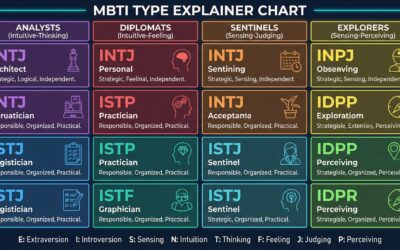
Complete Type Deflection Chart
| Personality Type | Dominant Function | Typical Dismissal Response | Core Defensive Phrase | What They’re Protecting | Emotional Signature |
|---|---|---|---|---|---|
| INTJ | Ni (Introverted Intuition) | Dry existential absurdism | “Reality doesn’t deserve my vision” | Their strategic foresight and pattern recognition | Disillusioned amusement, fatalistic detachment |
| INFJ | Ni (Introverted Intuition) | Melancholic ironic laughter | “Of course that’s how it happens” | Their sense of meaning and purpose | Spiritual disappointment, resigned humor |
| ENTJ | Te (Extraverted Thinking) | Contemptuous irritation | “This is inefficient nonsense” | Their sense of competence and control | Frustrated disbelief, aggressive dismissal |
| ENFJ | Fe (Extraverted Feeling) | Moralistic disbelief | “People are just insane” | Their vision of social harmony | Righteous exasperation masked as humor |
| INTP | Ti (Introverted Thinking) | Detached ironic amusement | “Well, that’s just illogical” | Their internal logical framework | Intellectual superiority, bemused distance |
| ISTP | Ti (Introverted Thinking) | Dry contemptuous smirk | “That’s just stupid” | Their mechanical understanding | Cool disdain, technical dismissal |
| ENTP | Ne (Extraverted Intuition) | Playful provocative laughter | “How absurdly predictable” | Their innovative possibilities | Amused chaos, intellectual mischief |
| ESTP | Se (Extraverted Sensing) | Quick dismissive shrug | “That’s not what’s really happening” | Their grasp on immediate reality | Kinetic irritation, physical dismissal |
| INFP | Fi (Introverted Feeling) | Self-deprecating bitter irony | “Ha! I’m ridiculous” | Their authentic values and identity | Melancholic amusement, defensive vulnerability |
| ISFP | Fi (Introverted Feeling) | Quiet sarcastic withdrawal | “This doesn’t even matter” | Their personal integrity | Gentle mockery, aesthetic dismissal |
| ENFP | Ne (Extraverted Intuition) | Enthusiastic absurdist humor | “Reality is hilarious!” | Their sense of possibility | Energetic deflection, creative reframing |
| ESFP | Se (Extraverted Sensing) | Immediate laughing it off | “Whatever, that’s crazy” | Their spontaneous engagement | Light amusement, momentum preservation |
| ISTJ | Si (Introverted Sensing) | Methodical disapproval | “This violates all precedent” | Their reliable systems | Procedural contempt, historical dismissal |
| ISFJ | Si (Introverted Sensing) | Worried dismissive concern | “This isn’t how it’s supposed to be” | Their careful preparations | Anxious humor, protective deflection |
| ESTJ | Te (Extraverted Thinking) | Authoritative rejection | “This is unacceptable chaos” | Their executive effectiveness | Managerial disdain, systematic dismissal |
| ESFJ | Fe (Extraverted Feeling) | Social indignation humor | “People don’t act right anymore” | Their relational order | Gossipy dismissal, collective eye-rolling |
Case Studies in Defensive Absurdity
The ISTP: Engineering Reality’s Failures Away
Consider the ISTP, whose dominant introverted thinking (Ti) constructs elegant internal models of how things work. When their mechanical understanding fails, when the fix doesn’t fix, when the logic doesn’t compute, they often respond with dry, contemptuous amusement.
“Well, that’s just stupid.”
This isn’t mere frustration. It’s a sophisticated psychological maneuver that preserves the integrity of their logical framework by declaring the contradiction meaningless noise. The world is broken, not their thinking. Their characteristic stillness followed by a smirk communicates: “I’m not invested enough to be wrong.”
In therapy, this presents as a client who intellectualizes failures, maintaining emotional distance through ironic detachment. The therapeutic task becomes helping them recognize when “that’s ridiculous” is actually code for “I’m protecting something vital.”
The INFJ: When Meaning Itself Becomes Absurd
The INFJ operates from a fundamentally different model. Their dominant introverted intuition (Ni) seeks patterns, meaning, and teleological coherence. Reality should unfold like a story with purpose and direction.
When it doesn’t, when randomness intrudes, when people act without meaning, when the pattern breaks, the INFJ experiences metaphysical shock. Their defense? Melancholic, fatalistic laughter.
“Of course. Of course that’s how it happens.”
This isn’t mockery of others but mockery of existence itself for failing to follow the script. Their wry smile and inward gaze signal a retreat into symbolic reinterpretation, weaving chaos back into meaning.
In therapy, this manifests as clients who respond to life’s disappointments with existential resignation, protecting their sense of meaning by casting reality itself as the problem.
The Clinical Implications
Understanding these type-specific defenses offers several therapeutic advantages:
1. Recognition Before Intervention
When a client dismisses something as “absurd” or “ridiculous,” we can now ask: What model is being protected? Which cognitive function is under threat? This shifts us from seeing dismissal as simple avoidance to recognizing it as identity preservation.
2. Type-Aware Challenging
Different types need different approaches to examining their defenses:
- For Ti-dominants: “What would need to be true for this to make logical sense?”
- For Ni-dominants: “What if the pattern is different than you thought?”
- For Fe-dominants: “What if everyone is doing their best with what they have?”
- For Te-dominants: “What if effectiveness looks different here?”
- For Fi-dominants: “What if your values are still intact despite this?”
- For Ne-dominants: “What new possibilities does this create?”
- For Se-dominants: “What are you actually sensing right now?”
- For Si-dominants: “How is this similar to what has worked before?”
3. Integrating Shadow Material
In Beebe’s model, these defensive reactions often involve the “Opposing Personality,” the shadow version of our auxiliary function. The ISTP’s contempt for emotional chaos (shadow Fe) and the INFJ’s dismissal of raw facts (shadow Se) point toward underdeveloped aspects of personality that therapy can help integrate.
Beyond Defense: The Path to Flexibility
The goal isn’t to eliminate these defenses since they serve important protective functions. Rather, it’s to develop what we might call “cognitive flexibility” or “model fluidity.” This means:
- Recognizing the defense when it arises
- Understanding what’s being protected and why it matters
- Developing capacity to temporarily suspend the model
- Building resilience to tolerate prediction error without fragmenting
The Cost of Chronic Dismissal
When dismissal becomes chronic, when “that’s absurd” becomes our default response to challenge, we pay profound psychological costs:
1. Reality Testing Deteriorates
Each time we dismiss contradictory evidence as “ridiculous,” we train ourselves to ignore feedback. The INTP who constantly dismisses emotional data as “illogical” loses access to crucial interpersonal information. The ENFJ who repeatedly labels difficult people as “insane” stops learning how to navigate complex social dynamics.
2. The World Shrinks
As we dismiss more and more of reality as absurd, our functional world becomes smaller. We can only operate in contexts that confirm our model. The ISTJ retreats into ever-more rigid routines. The INFJ withdraws into increasingly abstract symbolic interpretations. What began as selective dismissal becomes comprehensive avoidance.
3. Relationships Suffer
Partners, friends, and colleagues become tired of being told their experiences are “ridiculous” or “absurd.” The emotional signature that protects our model alienates the very people who might help us expand it. The ENTJ’s contemptuous efficiency drives away collaborative partners. The ISFP’s quiet sarcastic withdrawal leaves loved ones feeling shut out.
4. The Energy Cost Escalates
Maintaining denial requires increasing psychological energy. Like holding a beach ball underwater, the effort needed to keep reality at bay grows exhausting. The ENTP’s playful deflection becomes manic. The INFP’s gentle self-mockery turns into harsh self-criticism. The defense mechanism becomes more draining than the reality it was meant to protect against.
5. Growth Stops
Perhaps most tragically, when we automatically dismiss violations of our model as absurd, we stop learning. The very mechanism meant to preserve our psychological coherence prevents our psychological development. We become fossils of our own defensive patterns, perfectly preserved but no longer alive to new possibility.
The Moment of Breakdown: Crisis as Opportunity
There comes a moment in therapy (and in life) when the emotional signature simply stops working. The client can no longer laugh off the failure, dismiss the feedback, or mock the absurdity. This is terrifying and exactly where transformation becomes possible.
In these moments, we see:
- The INTP’s cool detachment crack into genuine confusion: “I don’t understand anything anymore”
- The INFJ’s meaningful universe collapse into raw grief: “None of it meant anything”
- The ESTJ’s controlled world dissolve into chaos: “I can’t make anything work”
- The ENFP’s playful possibilities freeze into paralysis: “Nothing feels possible”
These breakdowns feel like death because, psychologically, they are. The ego structure supported by the defensive emotional signature is dying. But as depth psychology has long understood, psychological death can precede psychological rebirth.
From Rigidity to Resilience
The therapeutic task isn’t to prevent these breakdowns but to midwife them into breakthroughs. This involves helping clients:
1. Recognize the Defense Without Judgment
“I notice I’m calling this ridiculous. That’s my Ti defending itself. That’s okay.”
2. Feel the Underlying Threat
“What am I afraid will happen if this isn’t ridiculous? What if it’s actually real?”
3. Tolerate the Dissonance
“Can I sit with both my model AND this contradictory evidence without immediately choosing?”
4. Experiment with New Responses
“What if instead of dismissing this as absurd, I got curious about why it seems absurd to me?”
5. Integrate the Learning
“My model was incomplete, not wrong. Reality is bigger than my understanding, and that’s okay.”
When Defenses Become Prisons: The Failure of Emotional Signatures
Each type’s emotional signature (that characteristic blend of dismissal, contempt, or ironic distance) serves as a temporary buffer against overwhelming prediction error. But these emotional defenses are ultimately doomed to fail when reality persistently refuses to conform. Understanding this failure is crucial for therapeutic work.
The Escalation Pattern
When reality first violates our model, the emotional signature works: the INTP’s detached amusement, the INFJ’s fatalistic humor, the ESTJ’s authoritative rejection. These responses discharge the immediate tension of prediction error. But when reality keeps violating the model, when the same failures repeat, when the world stubbornly refuses to be what we need it to be, these defenses begin to crack.
What starts as “That’s ridiculous” evolves through predictable stages:
- Initial Defense: “This is absurd” (dismissal works, tension discharged)
- Repetition Strain: “Why does this keep happening?” (dismissal requires more energy)
- Defense Fatigue: “I can’t keep laughing this off” (the emotion loses its protective power)
- Breaking Point: “Maybe I’m the one who’s wrong” (the model threatens to collapse)
- Crisis or Growth: Either rigid fortification or genuine model revision
Type-Specific Breakdown Patterns
The Thinking Types’ Trap (Ti/Te dominants) The INTP’s intellectual superiority and ISTP’s cool disdain eventually exhaust themselves against persistent illogic. When reality keeps being “stupid,” the defense morphs into bitter isolation. The contempt that once protected them becomes a wall that prevents new information from entering. They end up in an echo chamber of their own logic, increasingly disconnected from the messy, illogical world where actual life happens.
The Intuitive Types’ Dissolution (Ni/Ne dominants) The INFJ’s spiritual disappointment and INTJ’s fatalistic detachment work until the meaninglessness becomes too heavy to bear. Their ironic distance from absurdity gradually becomes genuine alienation from life itself. The pattern-seeking mind, unable to find patterns it can trust, begins to fragment. What started as “Of course reality is absurd” becomes “Nothing means anything,” a kind of psychological free fall.
The Feeling Types’ Exhaustion (Fe/Fi dominants) The ENFJ’s righteous exasperation and INFP’s self-deprecating irony can only sustain so much violation of their values. When people consistently fail to act right, when harmony never arrives, when authenticity is repeatedly punished, these types face emotional burnout. Their defensive humor becomes increasingly hollow until they’re left with raw, unprocessed grief about the world’s failure to be good.
The Sensing Types’ Disorientation (Se/Si dominants) The ESTP’s kinetic dismissal and ISTJ’s procedural contempt work as long as they can keep moving or maintain their systems. But when immediate reality keeps contradicting their experience, when precedent becomes useless, these types lose their grounding. Their typically robust connection to concrete reality becomes a liability when that reality won’t stabilize.
The Therapeutic Relationship as Laboratory
The therapy room itself becomes a space where prediction errors can be experienced safely. When the therapist doesn’t respond as expected, when insights don’t arrive on schedule, when change doesn’t follow the anticipated pattern, these moments become opportunities to observe and work with type-specific defenses in real time.
The therapist’s task is to provide enough safety that the client can notice their dismissive response, become curious about it, and eventually experiment with staying present with the dissonance rather than immediately discharging it through contempt or absurdity.
Embracing the Absurd
Perhaps the ultimate therapeutic goal isn’t to eliminate our experience of life’s absurdity but to develop a more playful, flexible relationship with it. When we can laugh at our own defensive laughter, when we can be fondly amused by our attempts to preserve our models, that’s when real growth becomes possible.
After all, in a universe where both quantum mechanics and consciousness exist, perhaps a little absurdity is not a bug but a feature. The question isn’t whether reality will violate our expectations (it will). The question is whether we’ll let those violations teach us something new about ourselves and the irreducibly complex world we’re trying to navigate.
Understanding our type-specific defenses doesn’t make them disappear, but it does give us choice. And in that choice between rigid defense and curious exploration lies the possibility of growth.
















0 Comments