
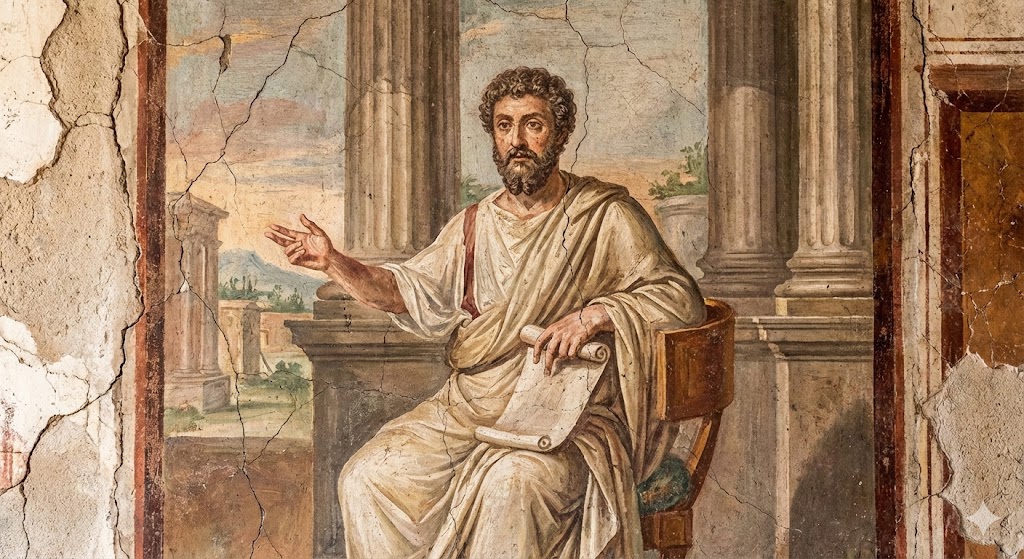
A Philosopher-King Writing to Himself in the Dark
In the final decade of his life, along the frozen banks of the Danube River, surrounded by the chaos of military campaigns against Germanic tribes, the most powerful man in the ancient world sat alone in his tent and wrote letters to himself. These were not memoirs intended for publication. They were not philosophical treatises designed to impress future generations. They were private exhortations, a man attempting to hold himself together through the practice of writing, to metabolize his suffering and maintain his humanity while governing an empire that stretched from Britain to Mesopotamia.
Marcus Aurelius Antoninus never gave his private writings a title. The name Meditations was assigned centuries later. The original Greek manuscripts bear the heading Ta eis heauton, meaning “things to oneself” or “to himself.” This distinction matters profoundly for understanding what we encounter when we read these fragments. We are not consuming a polished philosophical system but eavesdropping on the interior monologue of a man engaged in what we might now recognize as a form of cognitive self-therapy.
The relevance of Marcus Aurelius to contemporary psychotherapy is neither accidental nor superficial. His work represents one of the earliest and most sophisticated documented examples of what we would today call psychological self-regulation, cognitive restructuring, and meaning-making under conditions of extreme stress. For clinicians working with trauma, existential anxiety, and the challenges of finding purpose in suffering, Meditations offers both historical precedent and practical wisdom.
The Accidental Emperor: Historical Context and the Crucible of Character
Understanding why Marcus Aurelius wrote what he wrote requires understanding the extraordinary circumstances that shaped his life. Born in 121 CE into a prominent Roman family, Marcus was never destined for the throne. His path to power was a series of adoptions, a peculiar Roman practice of the era whereby capable men were selected and legally adopted to ensure competent succession.
The Emperor Hadrian, recognizing something exceptional in the young Marcus, arranged for his eventual succession by first adopting Antoninus Pius, on the condition that Antoninus would in turn adopt Marcus. This meant that from the age of seventeen, Marcus knew he would one day bear the weight of the Roman world. He spent the next twenty-three years preparing, studying rhetoric, law, and most importantly, philosophy, before ascending to power at age thirty-nine.
The historical context is essential. Marcus came to rule at the height of the Roman Empire’s territorial extent, yet his reign was defined not by expansion but by desperate defense. The Antonine Plague, likely smallpox, swept through the empire, killing millions. The Parthians invaded from the east. Germanic tribes poured across the northern frontiers. Economic crisis followed demographic collapse.
For nearly two decades, Marcus spent more time in military camps than in Rome. He watched close friends and family members die. He buried several of his children. He dealt with the betrayal of his most trusted general. And through it all, he was expected to project calm authority, to make decisions affecting millions of lives, and to maintain the administrative machinery of the ancient world’s most complex civilization.
It was in this crucible, not in the comfort of a philosopher’s garden but in the mud and blood of frontier warfare, that Marcus wrote his reflections. This context illuminates why Meditations resonates with those experiencing their own forms of overwhelming stress, moral injury, and existential confrontation. Marcus was not philosophizing in the abstract. He was trying to survive psychologically while facing circumstances that would break most human beings.
The Architecture of Self-Examination: Structure and Method
Meditations is divided into twelve books, though these divisions may not reflect Marcus’s original organization. The first book stands apart as a gratitude list of sorts, an accounting of what Marcus learned from various figures in his life, from family members to teachers to predecessors. This opening section represents a remarkable early example of what positive psychology would millennia later emphasize: the deliberate cultivation of gratitude as a psychological resource.
The remaining books are less organized, reflecting their nature as journal entries written over years. They return obsessively to several themes: the impermanence of all things, the importance of focusing only on what lies within one’s control, the need to remember death as a constant companion, the obligation to serve others despite one’s own suffering, and the imperative to examine one’s thoughts and correct one’s judgments.
What emerges from this seemingly scattered collection is a coherent psychological method. Marcus is engaged in what Aaron Beck would later call cognitive restructuring, the deliberate identification and modification of dysfunctional thoughts. When Marcus writes, “If you are distressed by anything external, the pain is not due to the thing itself, but to your estimate of it; and this you have the power to revoke at any moment,” he articulates the central insight of cognitive behavioral therapy nearly two millennia before its formal development.
Stoicism as Proto-Psychotherapy: The Philosophical Foundation
Marcus Aurelius did not invent the philosophical framework he employed. He was a practitioner of Stoicism, a school of philosophy founded in Athens around 300 BCE by Zeno of Citium. By the time Marcus encountered it, Stoicism had evolved through centuries of refinement and had become the dominant philosophical orientation among educated Romans.
The Stoic framework rests on several psychological principles that have proven remarkably durable. The first is the dichotomy of control, the recognition that some things lie within our power (our judgments, impulses, desires, and aversions) while others do not (our bodies, reputations, positions, and external circumstances). Mental suffering, the Stoics argued, arises primarily from the failure to make this distinction clearly, from wanting what we cannot control or refusing to accept what we cannot change.
The second principle concerns the nature of emotional disturbance. The Stoics held that emotions arise not from events themselves but from our judgments about events. This cognitive theory of emotion, which Marcus articulates repeatedly throughout Meditations, holds that by changing our judgments we can change our emotional responses. We are not passive recipients of feeling but active participants in its construction.
The third principle involves the concept of living according to nature, which for the Stoics meant living according to reason. Human beings, in the Stoic view, are distinguished by their capacity for rational thought. To live well is to cultivate this capacity, to bring our judgments into alignment with reality, and to fulfill our social nature by serving the common good.
These principles find expression throughout Meditations in passages that read like cognitive therapy protocols. Marcus instructs himself to examine the judgments underlying his distress, to consider whether he is distressed by things outside his control, to remind himself of the transience of all circumstances, and to return his attention to the present moment and the task at hand.
Irvin Yalom and the Existential Embrace of Marcus Aurelius
Among contemporary psychotherapists, perhaps no one has championed Marcus Aurelius more consistently than Irvin Yalom, the Stanford psychiatrist whose work has shaped existential psychotherapy for over half a century. Yalom’s appreciation for Marcus is not merely historical or intellectual but deeply personal and clinically relevant.
In his writings, Yalom returns repeatedly to Marcus as an exemplar of confronting what Yalom identifies as the four ultimate concerns of human existence: death, freedom, isolation, and meaninglessness. These are the existential givens that, according to Yalom, underlie much of human anxiety and psychological suffering. Marcus Aurelius, writing from his military tent, engaged each of these concerns with remarkable directness.
On death, Marcus is relentless. “Think of yourself as dead,” he writes. “You have lived your life. Now take what’s left and live it properly.” This is not morbidity but what Yalom would call an “awakening experience,” a confrontation with mortality that paradoxically liberates one to live more fully. Marcus uses the contemplation of death not to induce despair but to clarify priorities, to strip away the trivial, and to focus attention on what genuinely matters.
Yalom appreciates Marcus precisely because the emperor did not flinch from these confrontations. Unlike philosophical systems that promise escape from existential reality through transcendence, afterlife, or cosmic meaning, Marcus faces the apparent indifference of the universe directly. “Soon you will have forgotten everything,” he writes. “Soon everything will have forgotten you.” This is existential honesty at its starkest.
Yet Marcus does not collapse into nihilism. Having faced the void, he turns toward engagement, toward duty, toward service. This movement, from confrontation with meaninglessness toward the creation of meaning through action and relationship, mirrors the trajectory Yalom describes in existential psychotherapy. The goal is not to deny existential reality but to live authentically within it.
Yalom has noted that Marcus represents a therapeutic stance that many modern practitioners have lost: the willingness to use oneself, one’s own struggles and mortality, as a therapeutic instrument. Marcus does not speak from a position of achieved wisdom but from the midst of ongoing struggle. His writings are not pronouncements from on high but working notes from someone engaged in the same fundamental human challenges his readers face.
The Position Life Placed Him In: Power, Responsibility, and the Therapy of Constraint
One of the most psychologically interesting aspects of Marcus Aurelius is the tension between his philosophical inclinations and his practical responsibilities. By temperament and training, Marcus was suited to be a scholar. He loved books, contemplation, and philosophical discussion. Yet fate, in the form of Roman adoption practices and imperial necessity, placed him in a role requiring constant action, decision, and engagement with violence.
This tension is therapeutically significant. Marcus could not retreat from the world. He could not, like Epicurus, withdraw to a garden with select friends. He could not, like later monks, seek contemplative solitude. He was forced to philosophize while governing, to seek inner peace while making war, to cultivate detachment while remaining utterly enmeshed in the demands of office.
This constraint, paradoxically, may have produced a more practically useful philosophy. Marcus had to develop techniques that worked in the midst of chaos, not in ideal conditions. His Stoicism is battle-tested in the most literal sense. When he writes about maintaining equanimity in the face of criticism, he is writing as someone who received criticism from senators, generals, and the Roman populace. When he writes about accepting what cannot be changed, he is writing as someone who watched plagues decimate his armies and could do nothing about it.
For contemporary clinicians, this aspect of Marcus’s situation is particularly relevant. Many of our clients cannot escape their circumstances. They cannot quit their jobs, leave their families, or abandon their responsibilities. They must, like Marcus, find a way to maintain psychological health while remaining embedded in difficult situations. The techniques Marcus developed speak directly to this common clinical reality.
There is also something therapeutic about Marcus’s relationship to his role. He did not choose to be emperor. He was, in a sense, conscripted into power. Yet he accepted this fate and attempted to fulfill his responsibilities with integrity. This acceptance of an unchosen situation, this commitment to doing well what one did not choose to do, represents a mature psychological stance that therapists often try to help clients develop.
Cognitive Behavioral Resonances: Marcus as Proto-CBT Practitioner
The parallels between Stoic practice and cognitive behavioral therapy are now well established in the clinical literature. Aaron Beck, the founder of cognitive therapy, acknowledged his debt to Stoic philosophy. Albert Ellis, who developed Rational Emotive Behavior Therapy, explicitly cited Epictetus, another Stoic philosopher, as a primary influence. The connection is not merely historical but structural: both approaches share a cognitive theory of emotion and a focus on modifying dysfunctional beliefs.
Reading Meditations through a CBT lens reveals Marcus engaged in recognizable therapeutic techniques. He practices cognitive restructuring when he writes, “Choose not to be harmed, and you won’t feel harmed. Don’t feel harmed, and you haven’t been.” He is identifying the cognitive mediation between events and emotional responses and asserting his power to modify that mediation.
Marcus employs what we might call decatastrophizing when he repeatedly reminds himself of the transience of all things. “How many after being celebrated by fame have been given up to oblivion,” he writes, “and how many who have celebrated the fame of others have long been dead.” By placing current difficulties in the context of cosmic time, he reduces their apparent magnitude, a technique CBT therapists use regularly with anxious clients.
He practices behavioral activation through his emphasis on duty and action. Despite his apparent depressive tendencies, visible in passages expressing world-weariness and disillusionment, Marcus consistently instructs himself to engage, to fulfill his responsibilities, to get up in the morning and do his work. This insistence on behavioral engagement regardless of mood state anticipates contemporary approaches to depression treatment.
Marcus also demonstrates sophisticated metacognitive awareness, the ability to observe one’s own thought processes. “The things you think about determine the quality of your mind,” he writes. “Your soul takes on the color of your thoughts.” This recognition that thoughts themselves can be objects of attention and modification is central to both CBT and mindfulness-based approaches.
Depth Psychology and the Jungian Reading of Marcus Aurelius
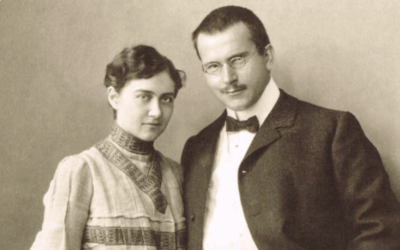
While the cognitive and behavioral dimensions of Marcus’s work are readily apparent, Meditations also rewards reading through the lens of depth psychology. Carl Jung never wrote extensively about Marcus Aurelius, but the Jungian framework illuminates aspects of Meditations that cognitive approaches may miss.
From a Jungian perspective, Marcus’s practice represents a form of shadow work. The shadow, in Jung’s terminology, comprises those aspects of the self that we reject, repress, or fail to acknowledge. Marcus repeatedly confronts his own shadow material, his irritability, his impatience, his tendency toward harsh judgment of others. “Begin the morning by saying to yourself, I shall meet with the busybody, the ungrateful, arrogant, deceitful, envious, unsocial,” he writes, then immediately adds, “All these things happen to them by reason of their ignorance of what is good and evil.”
This movement, from acknowledging negative reactions to reframing them through understanding, represents a sophisticated integration of shadow material. Marcus does not deny his irritation but uses philosophical understanding to metabolize it. He acknowledges the darkness while refusing to let it determine his actions.
The concept of individuation, Jung’s term for the lifelong process of psychological integration, also applies to Marcus’s project. Meditations can be read as a record of individuation in progress, an aging man attempting to integrate the various aspects of his experience into a coherent whole. The repeated themes, the returns to the same concerns from different angles, represent the spiral movement characteristic of individuation, circling back to core issues with incrementally greater understanding.
Marcus’s relationship to death also invites Jungian interpretation. Jung emphasized the importance of facing death consciously, of making it a psychological reality rather than an abstract concept. Marcus’s constant meditation on mortality serves this function. By keeping death present in awareness, he prevents it from operating as an unconscious force, a source of unexamined anxiety that distorts perception and behavior.
The archetypal dimension of Marcus’s situation is also significant. He embodies the archetype of the wise king, the ruler who governs not through force alone but through wisdom and self-mastery. This archetype carries tremendous psychological power, representing the mature masculine principle of ordered consciousness in service of the collective. That Marcus struggled to embody this archetype, that he often felt inadequate to its demands, makes his writings more rather than less valuable. He shows the archetype being lived by an actual human being with all the attendant difficulties.
Existential Therapy and the Confrontation with Ultimate Concerns
Beyond Yalom’s specific appreciation of Marcus, Meditations engages themes central to existential therapy as a broader tradition. The existential approach, drawing on philosophers like Kierkegaard, Heidegger, Sartre, and Camus, emphasizes the importance of confronting fundamental aspects of human existence rather than defending against awareness of them.
Death, the most obvious existential concern, pervades Meditations. Marcus returns to mortality with almost obsessive frequency, not out of morbidity but because he understands that death-awareness serves as a lens that brings life into focus. When we truly acknowledge that our time is limited, we are forced to consider what matters, what we want our lives to mean, how we wish to spend our remaining days.
Freedom, another existential given, presents itself in Marcus’s work as both opportunity and burden. The Stoic emphasis on what lies within our control is fundamentally an emphasis on freedom, on the domain in which we can exercise genuine choice. But with this freedom comes responsibility. Marcus cannot blame circumstances, other people, or fate for his psychological state. He must take ownership of his responses, a sometimes crushing responsibility that existential therapists help clients acknowledge and accept.
Isolation, the existential recognition that we are ultimately alone in our experience, appears in Marcus’s work in his awareness of the solitude of consciousness. No matter how many people surrounded him, Marcus knew that his inner experience was his alone, that no one else could make his choices or live his life for him. This acknowledgment of fundamental isolation did not lead Marcus to withdrawal but to renewed appreciation of human connection, even if that connection can never fully bridge the gap between selves.
Meaninglessness, the final existential concern, is perhaps the most interesting in Marcus’s case. The Stoic cosmos was not meaningless in the modern sense. Marcus believed in a rational order pervading the universe, a logos that structured reality. Yet his acceptance of this cosmic order was not naive or untested. He wrote as someone who had witnessed suffering that challenged any easy confidence in cosmic justice. His meaning-making was active, a choice to find or create significance rather than a passive reception of obvious purpose.
Meditations in Comparative Religion and Philosophy
The influence of Meditations extends well beyond psychology and psychotherapy into comparative religion, ethics, and philosophical study. The text occupies a unique position at the intersection of multiple traditions and has been claimed, interpreted, and adapted by diverse intellectual communities.
In comparative religion, Marcus Aurelius is often positioned as a bridge figure. His Stoicism shares elements with various religious traditions: the emphasis on acceptance with Buddhism, the focus on duty with Confucianism, the cosmic piety with certain forms of Hinduism, the ethical seriousness with Judaism and Christianity. Scholars of religion find in Marcus a point of comparison that illuminates what is distinctive about different traditions while also revealing common human concerns.
Early Christian writers had a complex relationship with Marcus. Despite his role in persecuting Christians (though the extent of his personal involvement is debated), many Christian thinkers found much to admire in his ethics. The emphasis on self-examination, the critique of worldly attachment, the call to virtue regardless of external reward, all resonated with Christian moral teaching. Marcus became an example of what natural reason, unaided by revelation, could achieve, a pagan saint of sorts whose virtues testified to truths Christians believed were more fully revealed in their own tradition.
In the Islamic philosophical tradition, particularly in the work of thinkers who engaged with Greek philosophy, Stoic ideas including those represented by Marcus found receptive audiences. The concept of acceptance of divine will, the emphasis on rational self-governance, the critique of passionate attachment to worldly goods, all found parallels in Islamic thought.
Modern secular philosophers have found in Marcus a model for ethical life without traditional religious support. If the cosmos is as indifferent as it sometimes appears, if there is no providence guiding events toward justice, how should we live? Marcus offers one answer: with integrity, with service to others, with acceptance of what cannot be changed, and with commitment to what lies within our power. This secular stoicism has found new audiences in an age of religious decline.
The philosophical study of Marcus extends to questions of methodology. How did he think? What logical structures underlie his reasoning? How does his approach to philosophical problems compare with other ancient thinkers? These questions engage scholars of ancient philosophy in technical debates that nonetheless illuminate the practical wisdom in his work.
Contemporary Applications: Marcus Aurelius in the Modern Therapy Room
The relevance of Marcus Aurelius to contemporary psychotherapy practice takes multiple forms. Most directly, his work has influenced the development of therapeutic approaches that explicitly draw on Stoic philosophy. Cognitive behavioral therapies, as already noted, trace part of their lineage to Stoic ideas. More recently, approaches like Acceptance and Commitment Therapy (ACT) have incorporated Stoic concepts alongside Buddhist-influenced mindfulness practices.
For therapists working with anxiety, Marcus offers techniques that remain clinically useful. His practice of distinguishing what lies within control from what does not directly addresses the worry that characterizes anxiety disorders. Teaching clients to identify what they can actually influence, and to work on accepting what they cannot, remains a core therapeutic intervention nearly two thousand years after Marcus articulated it.
Depression treatment also finds resources in Meditations. Marcus’s behavioral emphasis, his insistence on action despite lack of motivation, anticipates behavioral activation approaches to depression. His cognitive techniques for challenging distorted thinking apply directly to the negative cognitive biases characteristic of depressive disorders. His meaning-making in the face of suffering addresses the existential dimensions of depression that purely biological approaches may miss.
Trauma-informed care can draw on Marcus’s work as well. The emphasis on present-moment focus, on not adding to suffering through catastrophic thinking, on finding meaning in adversity, and on maintaining commitment to values despite painful experiences, all align with contemporary trauma treatment principles. Marcus’s own circumstances, writing in conditions of ongoing stress and threat, make his insights particularly credible for those currently experiencing difficult situations.
Grief counseling finds in Marcus both permission and technique for mourning. His acknowledgment of loss, combined with his practices for accepting what cannot be changed, models a grief process that honors pain while not being consumed by it. His realistic acceptance of mortality helps prepare for losses and provides a philosophical framework for understanding death as part of life rather than as a violation of expectations.
Character development and values clarification, increasingly important in positive psychology and third-wave behavioral approaches, find rich material in Marcus. His first book, cataloging the virtues learned from others, models an approach to identifying and cultivating valued qualities. His emphasis on integrity, on alignment between values and actions, addresses concerns central to contemporary meaning-focused therapies.
The Limits of Stoic Psychology: Critical Perspectives
Any honest assessment of Marcus Aurelius’s relevance to psychotherapy must also acknowledge limitations and criticisms. Stoicism, including Marcus’s version, has been critiqued on several grounds that clinicians should consider.
The first concern involves emotional suppression. Critics argue that Stoic practices, taken too literally, can lead to unhealthy denial or suppression of emotion rather than genuine regulation. The injunction not to be disturbed by external events can become an injunction not to feel, which contemporary psychology recognizes as maladaptive. Emotions serve important functions, providing information about our needs and situation, motivating appropriate action, and connecting us with others. A practice that eliminates emotion would not produce health but a kind of psychological deadening.
The response to this critique is that careful reading of Marcus reveals a more nuanced position. He does not advocate eliminating emotion but rather examining and regulating it. The goal is not to feel nothing but to not be controlled by feeling, to maintain the capacity for rational choice even in the presence of strong emotion. This distinction matters clinically. Emotion regulation differs from emotion suppression, and Marcus is better read as advocating the former.
A second critique concerns social engagement and justice. Stoic acceptance, critics argue, can slide into political quietism, into accepting unjust conditions that should be changed. If we focus only on what lies within our control, we might fail to engage in collective action that could alter external circumstances. This criticism has particular force given that Marcus was himself an emperor who maintained a system of slavery and imperial domination.
Again, the response is complex. Marcus himself was intensely engaged in social and political life. His acceptance was not passive resignation but accompanied by tireless effort to fulfill his responsibilities. The Stoic dichotomy of control does not preclude working to change external circumstances; it only requires recognizing that outcomes remain uncertain and that we should not stake our psychological well-being on results we cannot guarantee.
A third critique involves the adequacy of reason. The Stoic confidence in rational self-governance may underestimate the power of unconscious processes, trauma-related activation, and neurobiological constraints on rational control. Contemporary neuroscience reveals that much of mental life operates below the level of conscious access, and that certain psychological conditions involve disruptions to the very capacities Stoicism assumes.
This critique has force. Marcus’s approach is probably more applicable to what we might call the worried well, to those whose psychological struggles involve maladaptive thinking patterns rather than severe mental illness or deeply embedded trauma. For some conditions, purely cognitive approaches are insufficient, and somatic, relational, or other interventions are necessary. Stoicism is not a universal treatment but a resource with specific applications and limitations.
Reading Marcus Today: Practical Recommendations
For clinicians interested in incorporating Marcus Aurelius into their practice or personal development, several practical recommendations emerge from this exploration.
First, read Meditations in a good translation. The differences between translations are significant, with some rendering Marcus in archaic language that creates unnecessary distance and others modernizing to the point of losing philosophical precision. Gregory Hays’s translation is often recommended for its accessibility and accuracy. Pierre Hadot’s The Inner Citadel provides essential scholarly context for deeper engagement.
Second, approach the text not as a systematic treatise but as what it is: a collection of working notes. Reading Meditations in short segments, as one might read a devotional text, often proves more useful than attempting to consume it in continuous reading. The repetition that can seem tedious in extended reading serves a different function when encountered in daily contemplation.
Third, consider the text as a model for therapeutic journaling. Marcus’s practice of writing to himself, of examining his thoughts and challenging his judgments on paper, anticipates contemporary therapeutic writing practices. Clients might benefit from being introduced to Marcus as an example of written self-reflection.
Fourth, extract specific techniques and adapt them. The dichotomy of control can be taught directly. The practice of contemplating mortality can be introduced carefully with appropriate clients. The emphasis on present-moment awareness connects with mindfulness approaches. Marcus’s cognitive restructuring strategies can supplement standard CBT protocols.
Fifth, engage with the existential dimensions. For clients struggling with meaning, with acceptance of mortality, with the isolation of consciousness, or with the burden of freedom, Marcus provides companionship and perspective. He does not solve existential problems but demonstrates how one person, facing extreme circumstances, continued to engage with them.
Conclusion: The Enduring Voice from the Frontier
Nearly two thousand years after Marcus Aurelius wrote his private reflections in military camps along the Roman frontier, his voice continues to speak to those facing their own frontiers, their own battles, their own long nights of struggle. This durability is not accidental. Marcus addressed concerns that are not historically contingent but humanly universal: how to face death, how to manage suffering, how to maintain integrity under pressure, how to find meaning in a world that does not offer easy answers.
For psychotherapists, Marcus Aurelius represents both ancestor and colleague. He is an ancestor in the sense that modern therapeutic approaches have roots in the Stoic soil he cultivated. He is a colleague in the sense that his work remains clinically relevant, offering insights and techniques that complement contemporary practice. Reading him connects us to a tradition of psychological healing that extends far beyond the modern discipline of psychotherapy.
The emperor writing alone in his tent, trying to hold himself together through the practice of reflection, models something essential about the therapeutic enterprise. He demonstrates that wisdom is not a destination but a practice, not an achievement but an ongoing effort. He shows that even the most powerful and privileged face the same existential challenges as everyone else. And he reminds us that the work of psychological healing is never finished, that each day brings new occasions for struggle and new opportunities for growth.
In this sense, Marcus Aurelius is not merely a historical figure to be studied but a living presence to be encountered. His Meditations is not a museum piece but a working document, as relevant to the modern therapy room as to the ancient military camp. Those who engage with his work seriously will find not answers but company, not solutions but solidarity in the ongoing human project of living well in a difficult world.














0 Comments