

The way madness manifests itself tells us something profound about the age we live in. When James Tilly Matthews sat in the damp cells of Bethlem Hospital in 1810, sketching detailed diagrams of what he called the Air Loom, he was not merely documenting a personal delusion. He was creating the first blueprint for a phenomenon that would evolve across two centuries, transforming with each technological revolution while maintaining its essential psychological structure. The influencing machine, as psychoanalyst Victor Tausk named it in his seminal 1919 paper published in the Psychoanalytic Quarterly, represents the meeting point between the internal architecture of psychosis and the external architecture of the technological world.
What strikes me most about this phenomenon is not its strangeness but its consistency. The specific content changes with dizzying speed, from pneumatic chemistry to radar waves to algorithmic surveillance, yet the underlying structure remains remarkably stable. This stability suggests we are not simply looking at random delusions but at something more fundamental about how the human psyche responds to technological anxiety. The influencing machine is both symptom and mirror, reflecting back to us our deepest fears about what our creations might do to us.
Matthews was a Welsh tea merchant who had been involved in clandestine peace negotiations during the Napoleonic Wars. His delusion centered on a machine operated by a gang of Jacobin revolutionaries who used pneumatic chemistry to manipulate magnetic fluids and control his thoughts and bodily functions. The detailed account of his case, preserved by his physician John Haslam in the 1810 publication Illustrations of Madness, gives us an extraordinary window into the first fully documented case of what we now recognize as paranoid schizophrenia centered on technological persecution. The digitized version is available through the Wellcome Collection which houses extensive historical psychiatric materials.
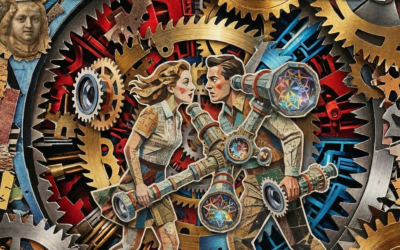
The Air Loom was not a vague magical curse but a technological apparatus described with engineering precision. Matthews provided detailed technical drawings showing how the machine wove airs and gases, manipulated magnetic fluids, and directed them at victims. The specific tortures he described reveal the profound anxiety of the early Industrial Revolution. He spoke of lobster-cracking, where circulation was stopped by magnetic fields, effectively shelling the human subject like a crustacean. He described apoplexy-working with the nutmeg grater, stomach-skinning, and other mechanized violations of the organic body. These terms suggest a deep fear that human beings were becoming raw material for industrial processing.
The machine was fueled by what Matthews called fetid effluvia, including spermatic-animal-seminal rays, putrid human breath, and gas from the anus of the horse. This grotesque admixture of the biological and mechanical signals something profound about the transformation happening in early 19th century consciousness. The boundary between the organic and the mechanical was dissolving, and Matthews’ delusion mapped this dissolution with horrifying clarity.
Understanding Matthews requires understanding the scientific context of his era. Mesmerism, or animal magnetism, had captivated European imagination with the theory that an invisible fluid connected all living things and could be manipulated to cure or control. Franz Anton Mesmer’s theories, while eventually discredited, shaped how people understood invisible forces acting on the body. The Royal Society’s archives contain extensive documentation of the scientific debates of this period. Simultaneously, pneumatic chemistry was revolutionizing science through the work of Joseph Priestley and Antoine Lavoisier. Priestley, who discovered oxygen, was a political radical whose laboratory was destroyed by a mob in 1791. Lavoisier was guillotined by French revolutionaries in 1794. In Matthews’ mind, the liberating potential of science had been weaponized by a shadowy cabal. This establishes a foundational pattern that persists in technological delusions to this day. The technology that promises enlightenment or progress becomes inextricably bound to persecution and control.
Victor Tausk’s interpretation of the influencing machine delusion remains foundational to psychoanalytic understanding. In his 1919 paper, Tausk argued that the machine is a projection of the patient’s own body. The complexity of the machine corresponds to the complexity of internal somatic sensations that the patient can no longer recognize as their own. The wires and rays represent nerves and sensory pathways, now perceived as external instruments of torture. The machine originates as a projection of the genitals or the entire physical self, which has become alienated from the ego. In this view, the Air Loom is Matthews’ own body, estranged and turned against him, operated by villains who represent hostile forces of the unconscious.
This psychoanalytic reading aligns with Jungian psychology, which understands projection as what happens when the ego is too weak to integrate unconscious content. Carl Jung’s collected works, available through Princeton University Press, extensively explore how the psyche externalizes what it cannot contain. The gang operating Matthews’ machine represents the shadow self, manipulating the autonomic nervous system that the conscious ego can no longer control. This interpretation gains additional depth when we consider it through the framework developed by Edward Edinger, one of Jung’s most important successors.
Edinger’s concept of the Ego-Self axis, detailed in his book Ego and Archetype published by Shambhala, provides a diagnostic lens for understanding technological delusions. The Self, in Jungian psychology, represents the archetype of wholeness and the center of the unconscious. The ego is the conscious sense of I. A healthy psyche maintains a dynamic relationship between these two poles. When this axis is damaged, two primary dysfunctions occur. In inflation, the ego identifies with the Self, leading to grandiose delusions of being God or possessing infinite power. In alienation, the connection is severed. The ego feels small, empty, and meaningless while the Self is projected outward onto external objects or forces.
The influencing machine represents extreme alienation leading to a negative restoration of the axis through projection. The psychotic individual, feeling utterly powerless, projects the omnipotence of the Self onto an external object. The Air Loom, later the CIA, later still the algorithm, are all manifestations of the objective psyche experienced as an external Other. Because the modern world lacks religious vessels to contain the archetype of the Self, the archetype gets projected onto technology. Technology possesses attributes we once ascribed to gods. It is omniscient like Google, omnipotent like nuclear weapons, omnipresent like the internet. When the ego cannot relate to the Self consciously, the Self overwhelms the ego, often resulting in psychosis. The machine becomes the face of the divine in a secular age, but unmediated by ritual or myth, it appears as a persecutory demon rather than a guiding presence.
The cultural context for understanding this shift cannot be separated from what T.S. Eliot diagnosed in The Waste Land. Written in 1922 while Eliot was recovering from a nervous breakdown, the poem serves as a primary document of psychological and cultural fragmentation. The full text is available through the Poetry Foundation which maintains extensive archives of modern poetry. Eliot’s famous phrase, “a heap of broken images,” captures the phenomenological experience of modernity. The connecting myths have dissolved. Traditional narratives that once scaffolded human experience have shattered, leaving fragments that cannot be reassembled into coherent meaning.
Eliot wrote part of the poem in a shelter on the seafront at Margate, a physical manifestation of his psychological state. He was sitting on the edge of the vast, chaotic ocean of the unconscious, trying to shore fragments of civilization against the incoming tide. The poem’s structure replicates aspects of psychotic experience. Its collage of disembodied voices, snippets of Dante, nursery rhymes, and Hindu scripture mirrors the word salad often observed in schizophrenia. The recurring line, “I can connect nothing with nothing,” speaks to the failure of the associative function of the psyche. When meaning-making breaks down, the mind cannot distinguish signal from noise, cannot weave experience into narrative.
Drawing on the anthropology of Mircea Eliade and Joseph Campbell helps us understand what has been lost. Eliade’s The Sacred and the Profane, published by Harcourt, argues that archaic humans lived in a world structured by sacred time and space, maintained through ritual. The sacred provided a center, an axis mundi, around which the psyche could organize itself. In modernity, these rituals have atrophied. The result is what Eliade calls desacralization, leaving the psyche vulnerable to raw, unmediated force from the unconscious.
Campbell’s work on mythology, particularly The Hero with a Thousand Faces available through New World Library, explicitly connects the psychotic break to the hero’s journey. In a frequently quoted observation, Campbell noted that the psychotic and the mystic swim in the same waters, but the mystic swims while the psychotic drowns. The difference is not the depth of the waters or the intensity of the experience. The difference is that the mystic has a map provided by myth and tradition, and a vessel provided by ritual and community. The schizophrenic has neither. When the numinous breaks through without a container, it does not arrive as beatific vision but as shattering of the mind.
The Fisher King myth that Eliot employs becomes crucial here. The wounded ruler whose infirmity blights the entire land represents the wounded ego of modern humanity, cut off from revitalizing waters of the collective unconscious. Without what Eliot called the “mythic method” to scaffold experience, the modern subject is left with only fragments. This creates what existential psychiatry calls ontological insecurity, a core feature of the psychotic experience. R.D. Laing’s work on this concept, documented in The Divided Self published by Penguin, explores how the sense of being a continuous, autonomous person can dissolve under certain conditions.
The content of schizophrenic delusions throughout the 20th century reveals a distinct evolution that parallels cultural and technological change. Research published in Schizophrenia Bulletin, the premier journal for schizophrenia research, documents these shifts. In the 1930s during the Great Depression, delusional themes frequently centered on scarcity, basic needs, and religious or animistic figures. Voices were often identified as spirits, ancestors, or God. While sometimes distressing, they often retained a human, relational quality. Patients heard voices begging for food or offering comfort in times of distress.
This represents a regression to more archaic layers of the psyche, a return to animism where the world is alive with spirits. When the technological infrastructure of society fails, the psyche appears to revert to pre-technological, magical modes of thinking. The machine recedes and the gods or ghosts return. Studies comparing delusions across cultures suggest that in non-Western societies and in earlier periods of Western history, delusions were less persecutory and more focused on family or supernatural entities. The National Institute of Mental Health maintains databases documenting cross-cultural variations in psychotic symptoms.
The post-World War II era introduced a dramatic new lexicon of terror. The atomic bomb, radar, and the Cold War created an environment of existential threat and invisible surveillance. Consequently, the influencing machine evolved from mechanical gears to invisible transmission of radio waves and radiation. In the 1950s, clinicians observed a surge in paranoid delusions involving the FBI, the CIA, and communist spies. The mathematician John Nash, whose story was told in Sylvia Nasar’s biography A Beautiful Mind published by Simon & Schuster, believed he was receiving coded messages from extraterrestrials and foreign governments via newspapers. This delusion perfectly hybridized geopolitical fear with the new reality of global information networks.
The operators of the machine were no longer Jacobin revolutionaries but government agencies, reflecting the individual’s growing sense of powerlessness against the monolithic state. The introduction of television further altered the landscape. Delusions began incorporating the idea that the television set was watching the patient or transmitting thoughts directly into the brain. Tausk’s influencing machine had become a household appliance. This era marked the transition from mechanical persecution, focused on physical torture, to informational persecution focused on mind control and surveillance. The fear was no longer that the machine would crush the body but that it would replace the mind.
Julian Jaynes offers a provocative framework for understanding the persistence of auditory hallucinations across these technological shifts. His 1976 book The Origin of Consciousness in the Breakdown of the Bicameral Mind, published by Houghton Mifflin, argues that ancient humans prior to approximately 1000 BC were not conscious in the modern sense. Instead, they operated via a bicameral mind where the right hemisphere issued auditory commands that the left hemisphere obeyed. These voices were interpreted as gods or ancestors.
Jaynes proposed that modern schizophrenia represents a vestige or relapse into this bicameral state. The command hallucinations experienced by psychotic individuals, voices ordering them to act, are echoes of this ancient mental structure. In a pre-modern context, these voices were integrated into social hierarchy as prophecy or divine command. In the modern, conscious world where the ego believes it is the sole author of thought, these voices are experienced as alien intruders. The Julian Jaynes Society maintains resources exploring implications of his theory for contemporary psychology and neuroscience.
This theory intersects powerfully with the historical timeline of the influencing machine. As the external authority of God or the King collapsed, the death of God in Nietzschean terms or the breakdown of the bicameral mind, the voice did not disappear. It was re-attributed. In 1810, it became the Air Loom operator. In 1950, the CIA agent. In 2024, the algorithm. The God function was projected onto the dominant power structure of the age. The influencing machine is thus a secularized theology, a way to explain the experience of external control in a world that no longer believes in demons but fervently believes in radio waves, surveillance capitalism, and artificial intelligence.
If James Tilly Matthews is the prophet of the mechanical influencing machine, science fiction author Philip K. Dick is the prophet of the cybernetic one. In February and March of 1974, Dick experienced a series of visions and auditory hallucinations he termed 2-3-74. He described a pink beam of light that struck him, transmitting vast amounts of information directly into his mind. The definitive collection of his experiences is preserved in The Exegesis of Philip K. Dick, published by Houghton Mifflin Harcourt, an 8,000-page attempt to understand the source of this transmission.
Unlike Matthews, who viewed the machine purely as torture, Dick’s relationship with the beam was profoundly ambivalent. It was an intrusion but also a revelation. The beam imparted medical information that saved his infant son’s life, diagnosing an undiagnosed inguinal hernia that required immediate surgery. This terrifying validity meant Dick could never dismiss the experience as mere hallucination. He spent the rest of his life attempting to integrate what had happened to him.
Dick’s delusion or revelation culminated in the concept of VALIS, Vast Active Living Intelligence System. VALIS was described as a perturbation in the reality field, a gnostic information virus that could reprogram the illusion of the material world. Dick theorized that the world we live in is a Black Iron Prison, a spurious interpolation or simulation created by the Roman Empire, which never truly ended. Here, the influencing machine has become the universe itself. The machine is no longer a distinct object in the world like the Air Loom. It is the world.
This anticipates contemporary Simulation Theory and the digital age. Dick’s vision integrates Gnosticism, the ancient belief that the material world is a trap created by a false god, with Information Theory. The pink beam is pure data. In Dick’s cosmology, God is not a person but a living information system, and salvation is gnosis, knowledge that breaks the code of the simulation. Resources on Gnosticism and its contemporary resonances can be found through the Gnostic Society Library which maintains extensive texts and scholarship.
Dick’s vision represents a crucial turning point in the evolution of the influencing machine. In the 19th century, the machine acted on the body. In the mid-20th century, it acted on the mind. For Dick, the machine generated reality itself. This shift from hardware to software, from mechanism to information, laid the groundwork for the delusions of the internet age. The boundary between the real and the mediated had collapsed entirely.
In the 21st century, the content of delusions has shifted again in ways that are both predictable and disturbing. Psychiatrists Joel and Ian Gold identified what they termed the Truman Show Delusion, where patients believe they are unwitting stars of a global reality television show. Their research, published in Cognitive Neuropsychiatry, documents cases from multiple countries. Unlike the Cold War paranoiac who feared secret surveillance by the state, the Truman Show sufferer believes the surveillance is for entertainment.
This delusion reflects the culture of hyper-reality and narcissism inherent in the social media age. The influencing machine has dissolved into the camera lens and the algorithm. The patient feels watched not by spies but by an audience. This aligns with the Gangstalking or Targeted Individual phenomenon, where online communities reinforce the delusion that thousands of strangers are coordinating to harass a single individual. The internet acts as an incubator for these narratives, allowing private delusions to metastasize into shared subcultures. Research on online communities and mental health published in JMIR Mental Health documents how digital platforms can both support and exacerbate psychological distress.
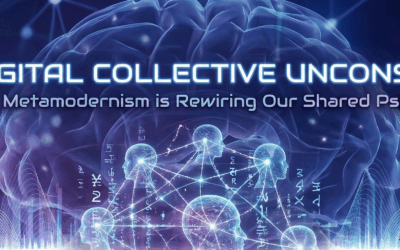
Some Jungian analysts and cultural theorists have begun viewing the internet as an externalized manifestation of the collective unconscious. It is a repository of all human knowledge, shadow, desire, and archetype, accessible instantly but lacking a filtering mechanism. Just as the collective unconscious can flood the ego in psychosis, the digital unconscious floods the modern subject with data, creating a state of continuous partial attention and fragmentation reminiscent of The Waste Land. The psychologist Robert Romanyshyn explores this in Technology as Symptom and Dream, published by Routledge, arguing that technology is both a symptom of our alienation from the body and earth, and a dream of transcendence.
Simulation Theory, the belief that reality itself is computer code, represents the ultimate logical conclusion of this trajectory. It is the Air Loom writ large, the belief that everything is generated by a machine. As Philip K. Dick anticipated, the boundary between the real and the mediated has collapsed. Dead Internet Theory, the idea that the internet is populated mostly by bots rather than humans, further reflects the anxiety that human agency has been totally subsumed by the machine. The modern psychotic does not just fear the machine. They fear they are the machine, or that everyone else is.
The influencing machine is also the shadow of our technological progress. As we build machines that can think through artificial intelligence and networks that connect everyone through the internet, the psyche projects its fear of assimilation onto them. The Gangstalking delusion is a shadow reflection of the actual surveillance capitalism we live under. Shoshana Zuboff’s work The Age of Surveillance Capitalism, published by PublicAffairs, documents the actual systems of tracking, prediction, and behavioral modification that characterize contemporary digital life. The delusion is true in a metaphorical sense. We are being watched, tracked, and influenced by algorithms. The psychotic merely literalizes the metaphor, collapsing the symbolic into the concrete, a hallmark of schizophrenic thought.
Working with individuals who experience these technological delusions requires understanding that we are not simply dealing with faulty neurotransmitters, though the dopamine hypothesis of schizophrenia remains well-supported by research published in journals like Nature Neuroscience. We are dealing with meaning-making gone awry, with the psyche’s attempt to create order from overwhelming chaos. The influencing machine is a repair mechanism, an attempt to explain the inexplicable experience of thought insertion, of feeling controlled, of sensing that something fundamental has gone wrong with one’s relationship to reality.
In clinical practice, this understanding shapes how I approach these experiences. Rather than simply dismissing the delusion as false, I try to understand what psychological truth it might contain. What does it mean when someone feels utterly surveilled? Often it means they have internalized a harsh, judging presence that watches their every move. What does it mean when someone believes their thoughts are being controlled? Often it means they feel they have lost agency in their life, that forces beyond their control dictate their choices. The machine becomes a concrete representation of very real psychological dynamics.
The treatment approach that seems most effective combines several elements. Antipsychotic medication, when appropriate and consented to, can reduce the intensity of hallucinations and delusions by modulating dopamine transmission. Information about evidence-based psychopharmacology can be found through the American Psychiatric Association which publishes treatment guidelines. But medication alone rarely addresses the underlying meaning-making crisis. Cognitive behavioral therapy for psychosis, or CBTp, helps individuals develop a different relationship to their unusual experiences. Rather than trying to eliminate the experiences entirely, CBTp helps people evaluate them more flexibly, reducing associated distress. The Beck Institute offers resources on cognitive approaches to psychosis.
Equally important is helping people rebuild what Eliade and Campbell described as the container for numinous experience. This might mean reconnecting with a spiritual or religious tradition that can hold transcendent experiences within a framework of meaning. It might mean creative expression through art, music, or writing that externalizes internal experience in a way that can be witnessed and reflected upon. It might mean finding community with others who have had similar experiences and have found ways to integrate them. The Hearing Voices Network provides peer support based on the principle that unusual experiences exist on a continuum and can be understood and lived with.
From a depth psychology perspective informed by Jung and Edinger, the work involves strengthening the Ego-Self axis. This means both fortifying the ego so it has greater capacity to encounter unconscious material, and creating conscious relationship with the Self so its power is not simply projected outward onto persecutory objects. Sandplay therapy, active imagination, and dream work can all facilitate this process. The C.G. Jung Institute offers training in these modalities. The goal is not to eliminate the numinous dimension of experience but to help the individual develop what Jung called a symbolic attitude, the capacity to understand that inner experiences are meaningful without being literally true in the external world.
The implications extend beyond the clinical realm. For anyone navigating the contemporary technological landscape, the history of the influencing machine offers warning and wisdom. We are all vulnerable to the collapse of the symbolic into the concrete, to mistaking the map for the territory. When we spend hours scrolling through algorithmic feeds, we are genuinely being influenced in ways that bypass conscious awareness. When we feel watched by our devices, that feeling contains truth. Smart speakers listen, fitness trackers monitor, recommendation engines predict. The infrastructure of surveillance capitalism means that many technological delusions contain kernels of reality.
The challenge is to maintain what the philosopher Ian McGilchrist calls the broad, sustained, vigilant attention of the right hemisphere while not losing the focused, narrow, grasping attention of the left. McGilchrist’s work The Master and His Emissary, published by Yale University Press, explores how hemisphere imbalances shape both individual psychology and cultural evolution. We need the capacity to see patterns and meaning, to sense when something is genuinely threatening, while also maintaining reality-testing and proportionality.
Practical approaches for maintaining this balance include what might be called digital hygiene. Limiting screen time, especially before sleep, protects the liminal space between waking and dreaming where the unconscious speaks most clearly. Spending time in nature, engaging in embodied practices like dance or martial arts, maintaining face-to-face relationships all help anchor us in unmediated reality. Reading deeply rather than skimming, creating rather than consuming, building actual things with actual materials all strengthen the boundary between self and screen.
Equally important is maintaining connection to sources of meaning that predate and transcend technology. This might be religious or spiritual practice, engagement with great works of art and literature, participation in community rituals, or cultivation of intimate relationships. These are the vessels that Eliade described, the containers that allow us to encounter the sacred without being overwhelmed. When we lose these connections, we become more vulnerable to the pathological manifestations of the numinous, including the influencing machine.
The history I have traced here suggests that the influencing machine will continue evolving. As artificial intelligence becomes more sophisticated, as virtual reality becomes more immersive, as the boundary between human and machine continues to blur through technologies like brain-computer interfaces, we will see new manifestations of technological delusion. Already there are reports of individuals who believe they are in communication with AI entities, who attribute divine or demonic qualities to large language models, who feel their consciousness is being uploaded or downloaded.
Understanding this evolution requires us to see it not as mere pathology but as the leading edge of collective anxiety about what it means to be human in an increasingly post-human world. The individuals who develop these delusions are not crazy in some simple sense. They are exquisitely sensitive to real tensions in the culture, real threats to human autonomy and meaning. Their nervous systems are like seismographs registering tremors the rest of us have learned to ignore.
What the history of the influencing machine ultimately reveals is that while the hardware changes, the software of human fear remains rooted in the struggle for autonomy against overwhelming power. James Tilly Matthews’ Air Loom, with its levers and magnetic fluids, was a prophecy of the industrial age’s encroachment on the soul. The Cold War radars and Philip K. Dick’s pink beam foretold the dissolution of privacy and the rise of the information state. Today’s Truman Show Delusion and Simulation Theory signal the final collapse of the boundary between self and screen.
From a depth psychology perspective, these delusions function as warnings. They alert us to the danger of a world where the sacred has been replaced by the technical. When the Ego-Self axis is damaged, when culture fails to provide healthy vessels for archetypal need for meaning, the psyche will manufacture its own, often terrifying, cosmology. The machine becomes the container for the sacred, but a sacred that burns rather than warms.
T.S. Eliot asked what roots clutch, what branches grow out of this stony rubbish. The answer, history suggests, is the Influencing Machine. It is the broken image of God in the age of the machine, a grotesque deity constructed from debris of a fragmented culture. To heal the delusion, both individually and collectively, we must recognize the machine not as an external persecutor but as a projected aspect of our own alienated souls, waiting to be reintegrated into a new, meaningful whole.
The challenge of modernity is to swim in the waters of the unconscious without drowning in the data stream, to find the signal of the Self amidst the noise of the Air Loom. This requires both individual work and cultural transformation. We need new rituals appropriate to the digital age, new containers for transcendent experience that neither deny technological reality nor are overwhelmed by it. We need to rebuild the mythic method that Eliot described, finding ways to connect with nothing with something, to transform the heap of broken images into a coherent narrative.
The work of therapy in this context becomes a form of cultural repair. When I sit with someone who believes they are being surveilled by satellites or that reality is a simulation, I am not just treating an individual illness. I am participating in the larger project of helping our culture find its way through a transformation as profound as the one that marked the transition from the bicameral mind to modern consciousness. The influencing machine will continue to evolve, but so too can our capacity to meet it with wisdom rather than terror, with integration rather than fragmentation, with the strength to swim rather than drown.
Timeline of the Influencing Machine
- 1790s-1810: James Tilly Matthews incarcerated in Bethlem Hospital, creates detailed drawings of the Air Loom, the first documented technological delusion in the modern sense.
- 1810: John Haslam publishes Illustrations of Madness documenting Matthews’ case in unprecedented clinical detail.
- 1848: The Fox Sisters spark the Spiritualism movement demonstrating cultural alternatives to technological frameworks for understanding invisible influences.
- 1890s-1900s: Freud and Breuer publish Studies on Hysteria marking the beginning of psychoanalytic approaches to understanding how unconscious forces manifest in consciousness.
- 1919: Victor Tausk publishes “On the Origin of the Influencing Machine in Schizophrenia” establishing the psychoanalytic framework for understanding technological delusions as projections of the alienated body.
- 1922: T.S. Eliot publishes The Waste Land diagnosing cultural and psychological fragmentation of the modern age.
- 1930s: Great Depression era sees shift in delusional content toward animistic themes with voices of spirits and ancestors becoming more prominent than mechanical persecution.
- 1944-1945: Atomic bombs dropped on Hiroshima and Nagasaki introducing nuclear anxiety into the cultural unconscious.
- 1950s-1960s: Cold War era sees surge in delusions involving radar, radio waves, communist conspiracies as documented in psychiatric literature of the period.
- 1958: John Nash begins experiencing delusions involving coded messages from extraterrestrials and government agencies, later winning Nobel Prize after recovery.
- 1976: Julian Jaynes publishes The Origin of Consciousness in the Breakdown of the Bicameral Mind proposing that schizophrenia represents vestige of ancient mentality.
- February-March 1974: Philip K. Dick experiences visions he calls 2-3-74 receiving what he describes as information downloads via pink beam of light.
- 1981: Philip K. Dick publishes VALIS fictionalizing his experience and developing theory of reality as information system.
- 1990s: Introduction of widespread internet access begins shifting delusional content toward digital surveillance themes.
- 1998: The Truman Show film released, eventually lending its name to a newly observed delusion type.
- 2000s: Psychiatrists Joel and Ian Gold identify Truman Show Delusion where patients believe they are stars of reality show.
- 2008: Satoshi Nakamoto publishes Bitcoin whitepaper introducing blockchain technology and fueling simulation theory speculation.
- 2016: Dead Internet Theory emerges suggesting most online activity is generated by bots rather than humans.
- 2019: Shoshana Zuboff publishes The Age of Surveillance Capitalism documenting actual systems of digital surveillance that mirror paranoid delusions.
- 2020-Present: Pandemic increases social isolation and screen time correlating with reported increases in technology-focused delusions and reality distortions.
Select Bibliography
- Campbell, J. (2008). The Hero with a Thousand Faces. New World Library.
- Dick, P. K. (2011). The Exegesis of Philip K. Dick. Houghton Mifflin Harcourt.
- Edinger, E. F. (1992). Ego and Archetype. Shambhala.
- Eliade, M. (1959). The Sacred and the Profane: The Nature of Religion. Harcourt.
- Eliot, T.S. (1922). The Waste Land.
- Gold, J., & Gold, I. (2014). Suspicious Minds: How Culture Shapes Madness. Free Press.
- Haslam, J. (1810). Illustrations of Madness.
- Jaynes, J. (1976). The Origin of Consciousness in the Breakdown of the Bicameral Mind. Houghton Mifflin.
- Jung, C. G. (1953–1979). The Collected Works of C.G. Jung. Princeton University Press.
- Laing, R.D. (1960). The Divided Self. Penguin Books.
- McGilchrist, I. (2009). The Master and His Emissary. Yale University Press.
- Romanyshyn, R. (1989). Technology as Symptom and Dream. Routledge.
- Tausk, V. (1919). “On the Origin of the Influencing Machine in Schizophrenia.”
- Zuboff, S. (2019). The Age of Surveillance Capitalism. PublicAffairs.















0 Comments