
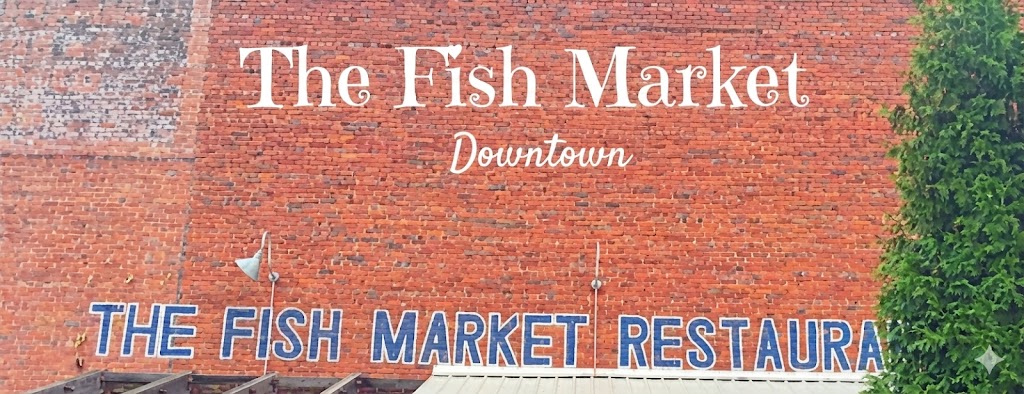
For residents of Mountain Brook, Vestavia Hills, Homewood, and greater Birmingham, one of our most beloved restaurants offers an unexpected lesson in self-worth.
Eight Seats and the Ambiance of a Styrofoam Box
In 1983, George Sarris opened The Fish Market in a tiny cinderblock building near UAB’s medical complex. The restaurant had eight seats. The decor was essentially nonexistent. One local writer memorably described the original location as having “all the ambiance of a Styrofoam box.”
And yet doctors from the medical center ate there. Lawyers drove over from downtown. Families from Mountain Brook and Vestavia Hills made the trip to Southside. Birmingham’s wealthiest residents sat elbow to elbow with students and construction workers, all of them eating some of the freshest Gulf seafood in the state off paper plates with plastic forks.
Nobody questioned it. Nobody complained. The Fish Market became one of the most successful and enduring restaurants in Birmingham’s history, eventually moving to a 400-seat warehouse space while maintaining its deliberately unpretentious character. To this day, you can still order at a counter and carry your own tray to a table if you prefer.
What was happening here? And what does it tell us about the psychology of confidence?
The Countersignal: When Less Says More
Psychologists and behavioral economists have identified a phenomenon called countersignaling. The concept is simple but counterintuitive. When someone is truly confident in their value, they often signal that confidence by refusing to perform the usual markers of status. They do not need to convince you. They know what they have.
Consider the difference between a newly wealthy person and someone who inherited generational money. The newly wealthy often feel compelled to display their success through visible consumption. Expensive watches, luxury cars, designer labels. They are still proving something, still asking the world to validate their new position.
Old money frequently operates differently. The truly wealthy sometimes drive modest cars, wear understated clothing, and live in homes that do not announce their net worth to passersby. They have nothing to prove. Their security is internal.
The Fish Market operated on this same principle, whether consciously or intuitively. By serving exceptional seafood on disposable plates in a cinderblock building, the restaurant sent a powerful message. We are so confident in the quality of our product that we do not need table linens and crystal stemware to convince you. The fish speaks for itself. Either you recognize quality or you do not. We are not going to perform for you.
This was not arrogance. This was freedom.
Reverse Snobbery as Class Performance in Birmingham
Birmingham has always had a complicated relationship with class and status. The city was built by iron and steel money, fortunes made rapidly by industrialists who then constructed the grand homes of Mountain Brook and the country clubs of Vestavia Hills. Old Birmingham society could be as status-conscious as any Southern city, with its debutante balls and Junior League memberships and careful attention to who belonged where.
The Fish Market offered an escape valve from all of this. In that cramped cinderblock building, and later in the warehouse space on 22nd Street South, the normal markers of status were deliberately suspended. As George Sarris has said about his restaurant, you might see a police chief at one table and someone he arrested yesterday at the next, both of them eating the same fresh snapper and smiling at each other.
The paper plates were not a cost-cutting measure. They were a philosophical statement. In here, we eat the same way. Your Mercedes in the parking lot does not get you better silverware. Your profession does not change the portion size. The only thing that matters is whether you can recognize good food.
For Birmingham residents who spend their days navigating complex social hierarchies in Homewood business districts, Mountain Brook Country Club, or Vestavia Hills corporate offices, the Fish Market offered permission to simply be hungry. To simply enjoy. To set down the performance of status for an hour and eat excellent fish with your hands if you wanted to.
What the Paper Plates Teach About Authentic Self-Worth
In my psychotherapy practice serving the Birmingham area, I frequently work with clients who are exhausted by the performance of competence, success, and status. They feel compelled to constantly demonstrate their worth through external markers. The right car. The right neighborhood. The right schools for their children. The right vacations posted to social media.
This performance is understandable. We live in a culture that equates external validation with internal security. If enough people approve of us, perhaps we can finally approve of ourselves.
But the paper plates of The Fish Market suggest another possibility. True confidence does not require external validation. It does not need the right presentation. It knows what it is, and it trusts that those capable of recognizing quality will find it.
This is not a license for arrogance or indifference to others. George Sarris built his restaurant on hospitality, warmth, and the genuine care that Greek immigrant families brought to Birmingham’s restaurant culture. The simplicity of the presentation was paired with extraordinary generosity of spirit.
The lesson is subtler than “do not care what people think.” The lesson is that authentic worth does not require constant proof. You can stop performing. You can stop auditioning. You can simply offer what you have and trust the right people to recognize it.
The Psychology of Why We Remember the Paper Plates
Decades later, Birmingham residents still talk about eating fresh grouper off paper plates at The Fish Market. Why does this detail persist in collective memory?
Memory research suggests we retain experiences that violate our expectations. When reality contradicts our mental models, the brain flags the event as significant and worth remembering. We expected fine seafood to come with fine presentation. When it did not, the violation created a memorable experience.
But there is something deeper happening as well. The paper plates created a moment of psychological relief. For residents of Mountain Brook and Vestavia Hills who spend significant energy maintaining appearances, the permission to eat expensive food off disposable plates may have felt like a small liberation. A temporary release from the exhausting performance of class position.
We remember the paper plates because they gave us permission to be simpler than we usually allow ourselves to be.
The Confidence Paradox in Therapy
One of the paradoxes I encounter in therapeutic work with Birmingham clients is that people who most need to develop genuine self-confidence often pursue it through strategies that undermine authentic confidence. They accumulate more credentials, more accomplishments, more visible markers of success. And each new achievement provides temporary relief before the anxiety returns.
This makes sense from a developmental perspective. If we learned early that our worth depended on performance, we will keep performing. If approval was conditional, we will keep seeking conditions to meet. The strategy worked at some point, even if it no longer serves us.
The Fish Market model suggests an alternative. Instead of endlessly improving the presentation, consider whether the fundamental offering is sound. If the fish is fresh, the plates do not matter. If your core self is worthy of connection and respect, the external packaging matters less than you have been taught to believe.
This does not mean abandoning all effort or presentation. The Fish Market maintains clean facilities, friendly service, and consistent quality. The casualness is not neglect. But the energy goes toward the substance rather than the performance of substance.
Practical Applications for Residents of the Birmingham Area
For those seeking therapy in Mountain Brook, Homewood, Vestavia Hills, or Birmingham proper, The Fish Market offers several invitations for reflection.
First, notice where in your life you are performing competence rather than simply being competent. Where are you investing energy in appearances that could be redirected toward actual quality? The exhaustion you feel may be the cost of presentation rather than the cost of genuine effort.
Second, consider where you might experiment with countersignaling. What would it feel like to stop proving something you no longer need to prove? Not as an act of rebellion, but as an acknowledgment that your worth is already established and does not require constant defense.
Third, pay attention to environments that offer you permission to drop the performance. These spaces are valuable. They give your nervous system a chance to rest from the constant vigilance of status maintenance. The Fish Market became beloved partly because it offered Birmingham residents this rare gift.
Beyond the Paper Plates
George Sarris eventually moved The Fish Market to a beautiful renovated warehouse with reclaimed timbers, Greek fishing boats as decor, and seating for nearly 400. The restaurant can now host wedding receptions and corporate events. You can order an $80 bottle of wine and receive full table service.
But the counter service option remains. The casual atmosphere persists. The fundamental philosophy endures. Quality does not require performance.
For residents of the Birmingham metropolitan area who find themselves exhausted by the constant effort of proving their worth, this philosophy offers hope. The paper plates were never about being cheap or casual. They were about confidence. They were about knowing what you have and trusting others to recognize it.
In a city built on the performance of success, that may be the most radical thing a restaurant ever served.

If you are seeking psychotherapy services in the Birmingham area, including Homewood, Vestavia Hills, and Mountain Brook, and would like to explore issues related to self-worth, authenticity, and the exhausting performance of status, please contact Taproot Therapy Collective to schedule a consultation.




















0 Comments