

Executive Summary: The Psychology of Ajax
The Core Conflict: Sophocles’ tragedy is the definitive study of the Rigid Ego shattering under the weight of change. It explores what happens when a person’s identity is wholly tied to their status (Persona), and that status is removed.
Jungian Key Concepts:
- Ego Inflation & Enantiodromia: Ajax believes he is self-sufficient (“I need no gods”). This inflation leads to a reversal into its opposite—total humiliation and madness.
- Shame vs. Guilt: Ajax commits suicide not out of moral guilt, but out of Narcissistic Shame. He cannot survive the destruction of his Ideal Self.
- Athena as the Trickster: The goddess represents the objective psyche that forces the Ego to see its own delusions, often through brutal means.
Clinical Relevance: A powerful allegory for Moral Injury in veterans and the suicidality that stems from the collapse of a grandiose self-image.
What Happens in Ajax? A Jungian Analysis of the Suicide of the Warrior
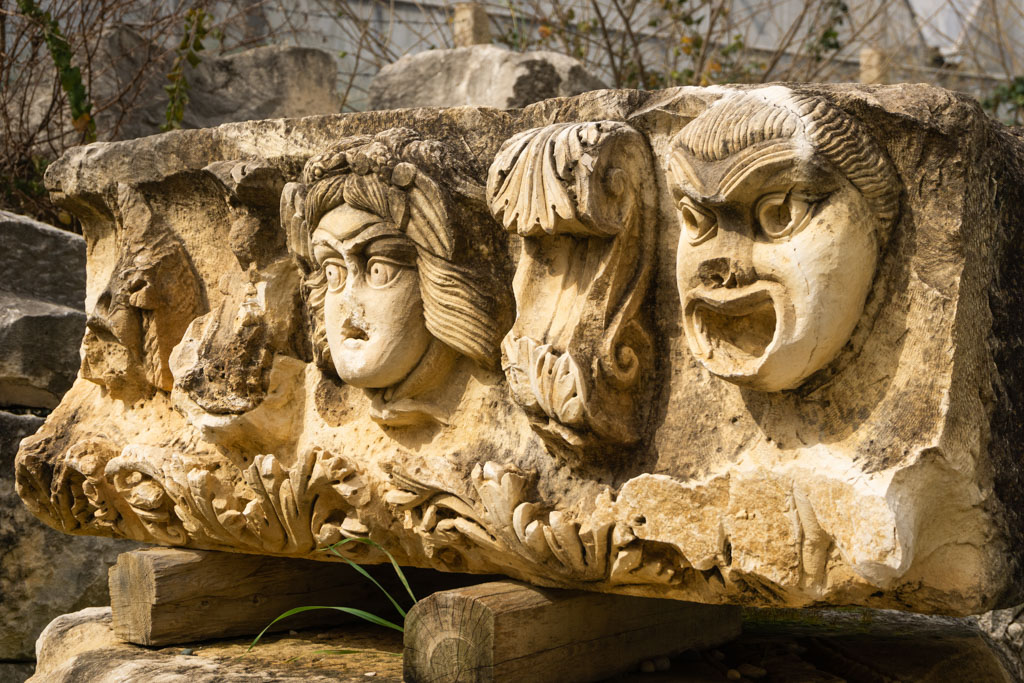
Sophocles’ Ajax (c. 440 BC) is the tragedy of the man who cannot bend, and therefore must break. It is the story of the strongest warrior in the Greek army, second only to Achilles, who is destroyed not by a Trojan spear, but by a vote.
From the perspective of Carl Jung and modern trauma psychology (specifically Dr. Jonathan Shay), Ajax is a case study in Narcissistic Injury. It asks: How does a man survive when the social system that defined his worth suddenly betrays him? The answer, for Ajax, is that he cannot.
Part I: The Descent into Madness (Plot Summary)
The play begins in media res, immediately following a psychotic break.
- The Judgment of Arms: Achilles has died. His divine armor is to be awarded to the “best of the Greeks.” Ajax expects it; he is the strongest fighter and saved the ships. Instead, the generals (Agamemnon and Menelaus) vote to give the armor to Odysseus, valuing cunning over strength.
- The Psychotic Break: Enraged by this slight, Ajax intends to murder his commanders in their sleep. However, the goddess Athena clouds his mind (dissociation). Instead of killing men, he slaughters the army’s cattle and sheep, torturing them in his tent, believing they are Odysseus and Agamemnon.
- The Awakening: Ajax wakes up covered in blood, surrounded by dead livestock. The delusion lifts. He realizes he has not avenged his honor; he has become a laughingstock. The “Hero” has become a “Butcher.”
- The Suicide: Ajax cannot live with this new reality. He deceives his wife, Tecmessa, and the Chorus, pretending he is going to purify himself. Instead, he goes to a lonely beach, buries his sword (a gift from Hector) hilt-down in the sand, and throws himself upon it.
- The Debate: The second half of the play is a political debate over his corpse. The Kings want to leave him unburied (carrion for birds). Odysseus, his rival, intervenes. He argues that even an enemy deserves burial, recognizing the common fate of all humans.
- The Burial: Ajax is buried, but his suicide remains the defining act of resistance against a world that no longer values him.
Part II: Archetypal Figures
Ajax: The Rigid Persona
Ajax is the archetype of the Static Warrior. He represents an older, simpler time where might made right.
Psychologically, he suffers from Ego Rigidity. He has no “flexible” adaptation. He is purely his Persona (“The Shield”). When the environment changes (shifting from a culture of strength to a culture of cunning), he cannot adapt.
Because his entire self-worth is externalized (dependent on the armor/awards), the loss of the armor causes the Collapse of the Self. He does not have an internal reservoir of value to draw upon.
Athena: The Reality Principle
Athena appears cruel in this play. She drives Ajax mad and invites Odysseus to laugh at him.
However, psychologically, Athena represents the Objective Psyche. Ajax was suffering from Inflation (Hubris). He famously told his father, “Any fool can win with the gods’ help; I will win without them.”
Athena is the Enantiodromia (the reversal). She forces the man who thought he was a god to act like a beast. She balances the scale of his ego with humiliation.
Odysseus: The Integrated Ego
Odysseus is the foil to Ajax. He is the Flexible Ego.
When Athena invites him to mock the mad Ajax, Odysseus refuses. He says, “I see the common lot of all of us in him.” This is Empathy arising from the realization of the Shadow. Odysseus knows that he, too, could go mad. He integrates the Shadow (Ajax) by burying him, whereas the Atreidae (Agamemnon/Menelaus) try to repress it.
Part III: Deep Psychological Themes
1. Shame Culture vs. Guilt Culture
To understand Ajax’s suicide, we must distinguish between Shame and Guilt.
* Guilt: “I did something bad.” (Internal moral transgression).
* Shame: “I am bad.” (External loss of face/status).
Ajax does not feel guilty about trying to kill the generals. He feels shamed that he failed and killed sheep instead. In a Shame Culture, the loss of the Ideal Self is a fate worse than death. Suicide is his attempt to “cleanse” the stain and restore his reputation.
2. The Sword of Hector (The Return of the Repressed)
Ajax commits suicide on the sword of Hector. He received this sword as a gift after a duel with the Trojan prince.
Jungian Symbolism: The sword represents the “Hostile Brother” or the Shadow. Hector was Ajax’s noble enemy. By dying on Hector’s sword, the play suggests that the violence Ajax projected outward has finally turned inward. The aggression he directed at the world eventually consumes him.
3. Moral Injury and the Betrayal of “Themis”
Dr. Jonathan Shay, in his book Achilles in Vietnam, uses Ajax to explain Moral Injury in combat veterans.
Moral Injury occurs when “what’s right” is betrayed by those in power. Ajax felt the vote was rigged. The social contract (“If I fight hard, I get the prize”) was broken.
When the social order creates injustice, the Warrior’s rage loses its container. It spills over into madness. Ajax’s slaughter of the sheep is a displaced rage—he wants to kill the system that betrayed him.
Part IV: Clinical Relevance
The Narcissistic Suicide
Ajax is a prototype for a specific kind of suicidality: the Perfectionist/Narcissistic Suicide.
This occurs in high-functioning individuals who encounter a public failure (job loss, divorce, scandal). Because their identity is fused with their success, they experience the failure as a total annihilation of the self. They kill the body to save the image.
Therapy with such clients involves building a “Self” that exists independent of achievement—a task Ajax could not complete.
Rigidity as Pathology
Ajax cannot change. He says, “A man must live with honor or die with honor.”
This black-and-white thinking is a hallmark of personality disorders. The refusal to mourn, to accept loss, or to adapt to a new phase of life leads to psychic death. The “Ajax Complex” is the inability to transition from the Hero archetype (young, strong) to the Wise Man archetype (aging, integrating).
Part V: Conclusion
Ajax is a tragedy of the transition from the Heroic Age to the Political Age. Ajax is a dinosaur—a magnificent, terrifying creature who cannot survive in the new climate of democracy and debate.
For the modern individual, the play is a warning against identifying too closely with one’s profession or status. It teaches that the Ego must be like Odysseus—fluid, humble, and aware of its own fragility—rather than like Ajax, whose very strength became his tomb.
Explore the Archetypes of Greek Drama
Taproot Therapy Collective Podcast
The Warrior & The Wound
Philoctetes: The Wound and the Bow
Oedipus at Colonus: The Redemption of the Hero
Seven Against Thebes: The Warrior’s Fratricide
The Shadow & The Self
The Bacchae: The Madness of the God
Prometheus Bound: The Suffering Ego
Family & Trauma
The Oresteia: The Evolution of Justice
Elektra: The Grief That Freezes Time
Antigone: The Conflict of Law and Heart
The Women of Trachis: The Poison of Jealousy
Iphigenia in Aulis: The Betrayal of the Daughter
Iphigenia in Tauris: The Healing
The Suppliants: The Right of Refuge
Alcestis: Death and Resurrection
Hippolytus: The Rejection of the Feminine
Greek Tragedies Influence on Jung
The Psychology of the Peloponesian War
Bibliography
- Sophocles. Ajax. (Various Translations).
- Shay, J. (1994). Achilles in Vietnam: Combat Trauma and the Undoing of Character. Scribner.
- Jung, C. G. (1953). Two Essays on Analytical Psychology. Princeton University Press.
- Knox, B. M. W. (1964). The Heroic Temper: Studies in Sophoclean Tragedy. University of California Press.
- Edinger, E. F. (1985). Anatomy of the Psyche: Alchemical Symbolism in Psychotherapy. Open Court.



















0 Comments