
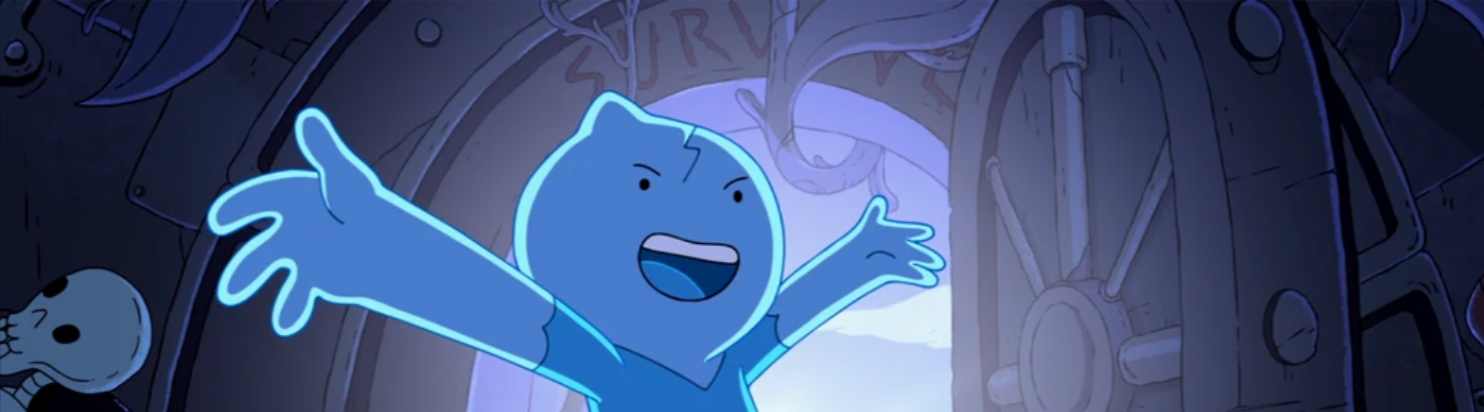
You were the easy one. The one who didn’t need much. The one who got good grades, stayed out of trouble, and never complained. While your parents rushed to doctors’ appointments, managed medications, navigated meltdowns, or sat vigil at bedsides, you learned to make yourself small. To not need. To handle things on your own.
You weren’t neglected in any obvious way. Your parents loved you. They were doing their best in impossible circumstances. But there was always someone who needed them more than you did, and you learned—without anyone ever saying it directly—that your needs came second. Maybe third. Maybe not at all.
If this sounds familiar, you may be what’s increasingly called a “glass child”—a term that captures the experience of siblings who grow up with a brother or sister who has significant medical, developmental, behavioral, or mental health needs. The name comes from the feeling of being looked through rather than looked at: transparent, invisible, seen but not truly seen.
What Is Glass Child Syndrome?
Glass child syndrome isn’t a formal diagnosis or a mental health condition. It’s a term that emerged from community conversations—popularized by Alicia Maples in a 2010 TEDx talk—to name an experience that millions of people share but rarely discuss. It describes the particular challenges faced by the siblings of children who require intensive parental attention due to chronic illness, disability, developmental differences, mental health conditions, addiction, or behavioral issues.
Research on siblings of children with chronic disorders confirms what glass children have always known: they often feel invisible in the context of their sibling’s condition while simultaneously feeling worried, anxious, or guilty about their brother or sister’s wellbeing. They carry emotional burdens that frequently go unrecognized by the very people who love them most.
The “glass” metaphor works on multiple levels. Glass children describe feeling transparent—parents look through them to see the child in crisis. But glass is also fragile, and many glass children carry unacknowledged pain that can shatter unexpectedly. And glass reflects: these children often become mirrors for what the family needs them to be, rather than developing their authentic selves.
The Research: Not Just a TikTok Trend
While “glass child” is relatively new terminology, the phenomenon it describes has been documented in psychological research for decades. Meta-analyses of well-being interventions for siblings confirm that children growing up with a chronically ill or disabled sibling are at increased risk for psychological difficulties, including depression, anxiety, and behavioral problems.
A 2022 systematic review found that siblings of children with chronic conditions had significantly higher depression scores than comparison groups. The research showed a standardized mean difference of 0.53—a moderate effect size indicating real and measurable psychological impact. This isn’t about being overly sensitive or making excuses. The effects are documented, consistent, and significant.
Qualitative studies paint an even richer picture. Research published in the Journal of Community & Applied Social Psychology identified four interconnected themes in glass children’s experiences: feelings of invisibility during social interactions, psychological difficulties from internalizing family roles, feelings of guilt and self-blame, and struggles with identity formation. Participants described learning to suppress their own needs, becoming hyper-attuned to family stress, and feeling unable to express negative emotions about their situation.
The Family System: How Glass Children Are Made
Understanding glass child syndrome requires understanding family systems. Families are organisms, not collections of individuals. When one member has high needs, the entire system reorganizes around those needs. This reorganization isn’t malicious—it’s adaptive. But it has consequences for everyone involved, including the children who appear to be “fine.”
The Lost Child Role
Family systems theorists have long identified the “lost child” as one of the common roles in dysfunctional or stressed family systems. The lost child is the quiet one, the dreamer, the one who stays out of the way. They make themselves small and undemanding, providing the family with evidence that “everything is okay” simply by not adding to the burden.
Glass children often become lost children by default. They learn that the family’s emotional and practical bandwidth is consumed by their sibling’s needs. There’s simply no room for them to have problems, express negative emotions, or require attention. So they don’t. They become self-sufficient not because they’re naturally independent, but because dependence was never an option.
This differs from the lost child role in families with addiction or abuse, where the pattern emerges from chaos and unpredictability. In glass child families, parents may be loving and well-intentioned. The constraint isn’t dysfunction—it’s resource scarcity. There are only so many hours in a day, only so much emotional energy available, and the sibling with greater needs consumes the lion’s share.
Parentification Without Recognition
Many glass children also experience parentification—the role reversal in which children take on developmentally inappropriate caregiving responsibilities. They may help care for their sibling, take on household tasks beyond their years, provide emotional support to stressed parents, or essentially raise themselves while parents focus elsewhere.
But there’s a particular cruelty in the glass child’s parentification: it often goes unrecognized. The child caring for a sibling with cancer may receive acknowledgment as a “little helper.” The child who simply manages their own life without requiring parental involvement gets nothing—because what is there to notice? They’re just… fine.
This invisibility of contribution compounds the invisibility of need. Glass children often grow up with the sense that what they give goes unseen and what they need doesn’t matter. Both messages wound.
The Psychological Adaptations: Survival Strategies That Become Prisons
Glass children develop predictable psychological adaptations to their situation. Like all survival strategies, these adaptations are intelligent responses to real constraints. The problem is that they persist long after the original situation has changed, becoming limitations rather than solutions.
Pathological Self-Sufficiency
Perhaps the most characteristic adaptation is what might be called pathological self-sufficiency—an extreme form of independence that makes receiving care nearly impossible. Glass children learn that their needs won’t be met by others, so they stop having needs. Or rather, they stop acknowledging, expressing, or even feeling their needs.
This manifests in adulthood as difficulty asking for help, discomfort receiving support, and a persistent sense that needing anything from anyone is shameful or burdensome. Glass children may be excellent caregivers—they learned those skills early—but terrible care-receivers. They give and give but cannot take in what’s offered to them.
At its extreme, this becomes counterdependence: an avoidant attachment style in which connection itself feels threatening. The glass child learned that depending on others leads to disappointment, so they preemptively reject the possibility of dependence. They maintain relationships at arm’s length, never fully letting others in, never really allowing themselves to be known or held.
Achievement as Worth
Many glass children become high achievers. Since they couldn’t get attention for their needs, they learned to get it through performance—good grades, athletic success, artistic accomplishment, perfect behavior. Achievement became the only acceptable currency for parental attention, and so they accumulated as much as possible.
This drives many glass children into successful careers. They’re often responsible, reliable, and accomplished. But underneath the achievement is a hollow core: the sense that they are only valuable for what they produce, not for who they are. Take away the accomplishments, and what’s left? They don’t know. They were never allowed to find out.
This can manifest as workaholism, perfectionism, and chronic overcommitment. The glass child turned adult fills every moment with productivity because stillness feels dangerous. To stop achieving is to stop mattering.
Emotional Suppression
Glass children learn early that their negative emotions are unwelcome. The family is already dealing with enough; adding their sadness, anger, or frustration to the mix feels selfish and inappropriate. So they suppress. They become experts at appearing fine when they’re not, at managing their emotional expression to avoid burdening others.
Over time, this suppression becomes so automatic that they lose access to their own emotional life. They may struggle to identify what they’re feeling, to know what they want, to access anger or grief when these responses would be appropriate. The emotional range narrows to what’s acceptable and manageable—which often means narrowing to near-nothing.
Some glass children develop what Karen Horney called the compliant personality style—moving toward others, prioritizing others’ needs, becoming exquisitely attuned to what others want while losing touch with their own desires. This isn’t generosity; it’s a survival strategy that sacrifices the self.
Guilt and Self-Blame
Glass children often carry profound guilt. Guilt for having it easier than their sibling. Guilt for sometimes resenting their sibling’s needs. Guilt for wanting attention they felt they didn’t deserve. Guilt for the times they wished they had different siblings, different families, different lives.
This guilt can become toxic, a constant background hum that colors everything. Glass children may feel they don’t deserve good things—after all, their sibling suffers so much more. They may sabotage their own happiness, unconsciously punishing themselves for the crime of being the “healthy” one. They may feel that any complaint they make is illegitimate given their relative privilege.
The research confirms this pattern. Studies consistently find that glass children experience feelings of guilt and self-blame as central features of their experience—not because they’ve done anything wrong, but because their family system inadvertently communicated that their needs were less important, their struggles less valid, their pain less real.
The Long Shadow: How Glass Child Patterns Show Up in Adulthood
Glass children grow up. They leave home, build careers, form relationships. But the patterns formed in childhood follow them, shaping adult life in ways that may not be immediately obvious.
Relationship Difficulties
Adults who were glass children often struggle in intimate relationships. They may choose partners who replicate the original dynamic—partners with high needs who consume all the attention, leaving the glass child in their familiar invisible role. This isn’t conscious; it’s the gravitational pull of the familiar.
Alternatively, they may avoid intimacy altogether. Having learned that closeness means being overlooked, they keep relationships superficial. They’re the friend who’s always there for others but never shares their own struggles. They’re the partner who gives endlessly but panics when asked to receive.
They may have difficulty believing that anyone truly sees them or wants to know them. The expectation of invisibility is so deeply ingrained that even genuine interest feels suspicious. “Why would anyone want to focus on me? There’s nothing to see here.”
Professional Patterns
Many glass children enter helping professions—medicine, therapy, social work, teaching. This makes sense: they developed caregiving skills early and find meaning in supporting others. But they often bring their maladaptive patterns with them, giving until depleted, struggling to set boundaries, unable to receive supervision or support.
Others become invisible in their workplaces, just as they were invisible in their families. They do excellent work but don’t advocate for themselves, don’t ask for raises or promotions, don’t speak up in meetings. They watch less competent colleagues advance while they remain overlooked—recreating the family dynamic in professional settings.
Identity Confusion
Perhaps most fundamentally, glass children often reach adulthood without a clear sense of who they are. They know who they’re supposed to be—the easy one, the helpful one, the one who doesn’t need much—but they don’t know who they actually are. Their authentic self was never invited to develop.
This can manifest as a pervasive sense of emptiness, of not knowing what they want, of drifting through life without direction. They may excel at adapting to what others need but have no idea what they themselves desire. The question “What do you want?” can feel unanswerable—even anxiety-provoking—because wanting was never safe.
The Depth Psychology Perspective
From a Jungian perspective, the glass child experience involves a particular kind of developmental arrest. The child’s authentic self—what Jung would call the emerging ego—doesn’t receive the mirroring and attention it needs to fully develop. Instead, a false self forms, organized around the needs of the family system rather than the child’s own nature.
Donald Kalsched’s work on archetypal defenses is relevant here. He describes how, in response to early trauma or developmental failure, a protective system forms within the psyche. Part of the self goes into hiding, protected by fierce inner guardians that prevent vulnerability. For glass children, the guardian might take the form of pathological self-sufficiency: “Don’t need anyone, don’t show weakness, don’t let anyone see you.”
The inner child of the glass child carries particular wounds: the wound of invisibility, the wound of unworthiness, the wound of having needs that were never met because they were never allowed to exist. This inner child didn’t experience dramatic trauma—they experienced the slow trauma of not being seen, the cumulative weight of mattering less.
The shadow of the glass child often contains all the “unacceptable” parts: the anger at their sibling for consuming parental attention, the resentment toward parents for not seeing them, the hunger for attention and care that they learned to suppress. These shadow elements don’t disappear; they go underground, emerging in dreams, symptoms, relationship patterns, or sudden eruptions of unexpected emotion.
The Path to Healing
Healing from the glass child experience requires becoming visible—first to yourself, then to others. This is harder than it sounds. The very act of acknowledging the wound can feel like a betrayal of the family system, a complaint against parents who were doing their best, an act of selfishness that confirms everything the glass child feared about themselves.
Recognition and Validation
The first step is simply naming what happened. Many glass children don’t recognize their experience as significant because “nothing really happened.” No one hit them. No one obviously neglected them. Compared to their sibling, they had it easy. This minimization is part of the wound—the continued invisibility of their own pain.
Learning that “glass child” is a recognized phenomenon, that others share this experience, that research documents real psychological effects—this can be profoundly validating. You’re not making it up. You’re not being dramatic. Something real happened, and it affected you.
Grieving What Was Lost
Glass children often need to grieve—not for what happened, but for what didn’t happen. The attention they didn’t receive. The developmental needs that went unmet. The childhood they didn’t get to have because they were busy being the easy one. The authentic self that didn’t get to emerge.
This grief can be complicated. There may be guilt about grieving, anger at having to grieve, and confusion about whether they even have the right to grieve. Working through these layers is essential. The unexpressed grief doesn’t disappear; it goes into the body, into symptoms, into depression and anxiety and a vague sense that something is missing.
Learning to Have Needs
One of the most challenging aspects of healing is learning to have needs—and to express them. For someone who spent their entire development suppressing needs, this can feel impossibly foreign. Even identifying what they need can be difficult; the internal signal has been ignored for so long that it barely registers.
This learning happens in relationship. The therapeutic relationship can provide a space where needs are not only tolerated but welcomed, where asking for something doesn’t lead to rejection or being told to wait, where visibility is possible. Over time, this experience can generalize to other relationships, slowly building the capacity to need and be met.
Working with Parts
Parts-based therapy is particularly valuable for glass children. From an Internal Family Systems perspective, the glass child developed protective parts that learned to suppress needs, achieve for worth, and maintain invisibility. These parts aren’t enemies; they’re protectors who took on their roles for good reasons.
Beneath these protective parts are exiled parts—the young parts that carry the pain of not being seen, the longing for attention that was never okay to express, the anger and grief that had to be suppressed. Healing involves helping the protectors relax their vigilance and accessing the exiles with compassion, finally giving them the attention they never received.
Nervous System Regulation
The glass child experience shapes the nervous system. Chronic activation of the stress response, combined with the impossibility of seeking comfort from caregivers (who were already overwhelmed), can create patterns of dysregulation that persist into adulthood.
Brainspotting and EMDR can help process the accumulated experiences of invisibility and unmet need that are stored in the body and subcortical brain. Somatic approaches help glass children reconnect with the body signals they learned to ignore, rebuilding the capacity to feel what they need and communicate it.
A Note to Parents
If you’re a parent reading this because you worry about your “easy” child, know that awareness is the first step. You can’t undo the reality that one child requires more attention than another. But you can acknowledge the impact on your other children, create intentional one-on-one time, explicitly validate their needs as legitimate, and make space for them to express difficult emotions about their situation.
The most healing thing you can do is see them. Really see them—not just their accomplishments or their helpfulness, but their struggles, their complexity, their inner life. Let them know that their needs matter, that they don’t have to be easy, that there’s room in the family for them to be fully human.
When to Seek Professional Help
Consider working with a therapist if:
You recognize the glass child pattern in yourself and it’s affecting your quality of life. You struggle with chronic people-pleasing and difficulty setting boundaries. You have trouble identifying what you feel or what you want. You’re in relationships where you’re consistently overlooked or undervalued. You experience depression, anxiety, or a persistent sense of emptiness. You’re unable to receive care or support even when it’s offered. You carry guilt or shame about needs you consider “selfish.” You want to understand how your family role shaped you and how to move beyond it.
At Taproot Therapy Collective, we work with adults who grew up as glass children, using Brainspotting, EMDR, parts-based therapy, and depth psychological approaches to help you become visible—first to yourself, then to the world.
We serve clients in Hoover and greater Birmingham, and offer teletherapy throughout Alabama including Montgomery and Tuscaloosa.
Becoming Visible
The glass child learned to be transparent. They learned that being seen was not for them, that their needs were secondary, that their role was to not-need and not-trouble and not-take-up-space.
Healing means becoming opaque. It means learning that you have the right to be seen, to have needs, to take up space. It means understanding that what happened to you was real and significant, even if it doesn’t match the dramatic narratives of obvious trauma. It means grieving what you didn’t get, and slowly, carefully, learning to receive what you can now.
You spent your childhood being the easy one. You don’t have to keep being easy. You can be complicated, demanding, messy, needy, visible. You can be fully human.
You can stop being glass.
Joel Blackstock, LICSW-S, is the Clinical Director of Taproot Therapy Collective in Hoover, Alabama. He specializes in complex trauma, family systems, and depth psychology using Brainspotting, EMDR, and parts-based therapy.






















0 Comments