
Who was Zosimos of Panopolis?
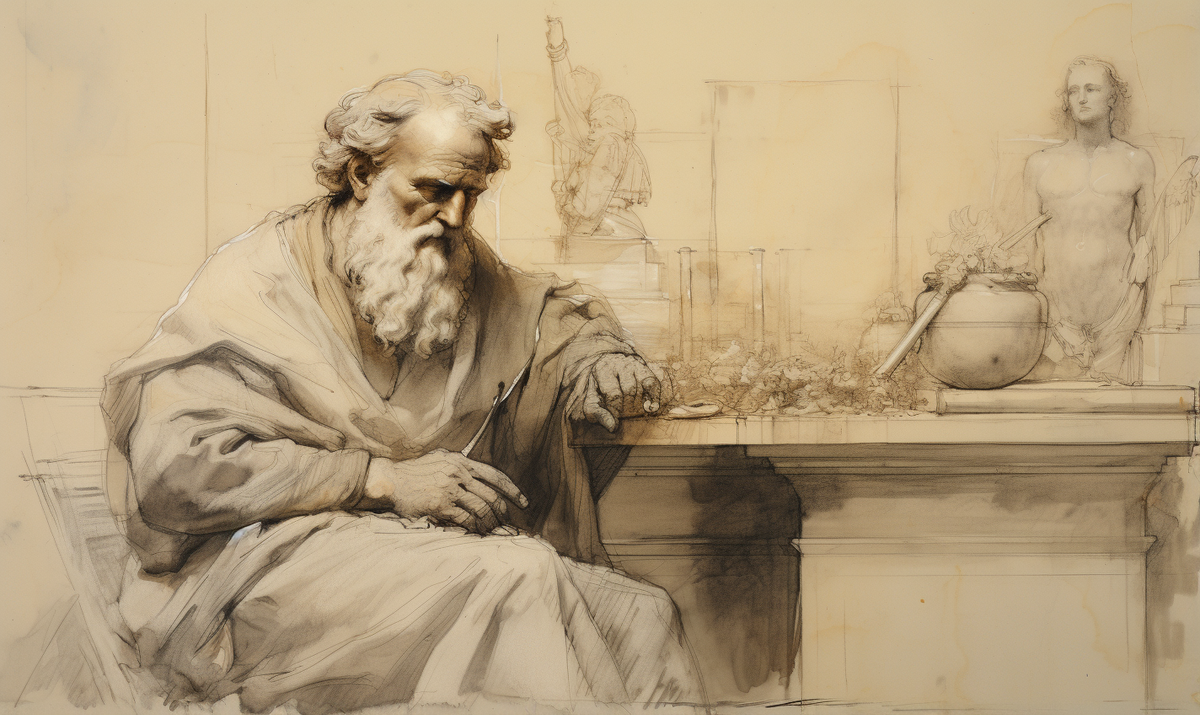
Zosimos of Panopolis, a Greek-Egyptian alchemist and Gnostic mystic who lived around the end of the 3rd and beginning of the 4th century AD, stands as one of the most influential figures in the history of alchemy and early chemistry. His works, though fragmented and often cryptic, provide invaluable insights into the philosophical and practical aspects of early alchemical thought. This essay aims to explore Zosimos’ life, his major contributions to alchemy, and the lasting impact of his ideas on the development of chemical science and esoteric philosophy.
-
The Life and Times of Zosimos
2.1 Historical Context
Zosimos lived during a period of great intellectual and cultural ferment in the Hellenistic world. The city of Alexandria, not far from his native Panopolis (modern-day Akhmim in Upper Egypt), was a center of learning where Greek, Egyptian, and Jewish traditions intermingled. This cosmopolitan environment provided fertile ground for the development of syncretic philosophical and religious ideas, including the Hermetic and Gnostic traditions that heavily influenced Zosimos’ thought.
2.2 Biographical Details
While concrete biographical information about Zosimos is scarce, we can glean some details from his writings and later references. He was born in Panopolis, an ancient Egyptian city known for its textile industry and as a center of alchemical practice. Zosimos likely received a comprehensive education in Greek philosophy, mathematics, and natural sciences, as evidenced by the breadth of knowledge displayed in his works.
-
Zosimos’ Alchemical Philosophy
3.1 The Spiritual Dimension of Alchemy
One of Zosimos’ most significant contributions was his integration of spiritual and philosophical concepts into the practice of alchemy. For Zosimos, alchemy was not merely a practical art aimed at transmuting base metals into gold, but a spiritual process of purification and transformation of the soul.
He drew heavily on Gnostic and Hermetic ideas, viewing the material world as a reflection of higher spiritual realities. The alchemical process, in his view, was a means of liberating the divine spark trapped within matter, paralleling the Gnostic quest for spiritual enlightenment.
3.2 The Concept of Transmutation
Zosimos developed a sophisticated theory of transmutation that went beyond the simple idea of changing one metal into another. He posited that all matter was composed of a single primordial substance, which could be manipulated through various processes to create different materials.
This idea of a fundamental unity underlying the diversity of matter would prove influential in later alchemical and chemical thought, foreshadowing modern atomic theory.
3.3 The Role of the Alchemist
For Zosimos, the alchemist played a crucial role in the cosmic drama of creation and transformation. He viewed the alchemist as a mediator between the spiritual and material realms, capable of harnessing divine powers to effect changes in the physical world.
This concept of the alchemist as a kind of priest or magus would have a lasting impact on the Western esoteric tradition, influencing later movements such as Rosicrucianism and Hermeticism.
-
Zosimos’ Practical Contributions to Alchemy
4.1 Alchemical Apparatus and Techniques
Zosimos made significant contributions to the practical aspects of alchemy, describing various apparatus and techniques in his writings. He provided detailed descriptions of distillation equipment, including the tribikos (a three-armed still) and the kerotakis (a device for subjecting metals to the action of vapors).
These descriptions offer valuable insights into the level of technological sophistication achieved by Hellenistic alchemists and laid the groundwork for later developments in chemical apparatus.
4.2 Chemical Processes and Substances
Zosimos’ works contain numerous references to specific chemical processes and substances. He described methods for the preparation of various compounds, including sulfur compounds and metal oxides. His writings also mention the use of mineral acids, suggesting an awareness of these important reagents centuries before their widespread use in medieval alchemy.
4.3 The Concept of Tinctures
Zosimos developed the important concept of “tinctures” – substances capable of transmuting base metals into gold or silver. This idea would become central to later alchemical theory and practice, influencing the search for the philosopher’s stone in medieval and Renaissance alchemy.
-
Zosimos’ Literary Legacy
5.1 The Corpus of Zosimos
Zosimos was a prolific writer, though much of his work has been lost or survives only in fragments or later translations. His known works include:
- “On Virtue”
- “The Final Quittance”
- “The Book of Pictures”
- Various treatises on apparatus and chemical processes
These texts, written in Greek and later translated into Arabic, Syriac, and Latin, formed an important part of the alchemical canon and were studied by generations of later alchemists.
5.2 Allegorical and Symbolic Writing
One of the most distinctive features of Zosimos’ writing is his use of allegorical and symbolic language. His texts often describe vivid dreams or visions in which alchemical processes are represented through mythological or religious imagery.
This style of writing, which blends technical information with mystical insights, became a hallmark of alchemical literature and contributed to the reputation of alchemy as an arcane and mysterious art.
-
The Influence of Zosimos on Later Thought
6.1 Impact on Medieval Alchemy
Zosimos’ ideas and practices had a profound influence on the development of alchemy in both the Islamic world and medieval Europe. His emphasis on the spiritual dimension of alchemy, as well as his practical descriptions of apparatus and processes, shaped the way later alchemists approached their art.
6.2 Contributions to the Development of Chemistry
While modern chemistry has moved far beyond the theoretical framework of alchemy, many of the practical techniques and apparatus described by Zosimos laid the groundwork for later chemical experimentation. His emphasis on careful observation and the systematic study of material transformations contributed to the emergence of a more scientific approach to the study of matter.
6.3 Influence on Esoteric and Mystical Traditions
Zosimos’ integration of spiritual and material concepts in alchemy had a lasting impact on Western esoteric traditions. His ideas about the transformation of the soul through alchemical processes influenced later mystical and magical systems, including Renaissance Hermeticism and various occult movements.
-
Lasting Relevance of the Greek Tradition
Zosimos of Panopolis stands as a pivotal figure in the history of alchemy, bridging the ancient wisdom traditions of Egypt and Greece with the later developments of medieval and Renaissance alchemy. His integration of spiritual and practical aspects of alchemy, his technical innovations, and his unique literary style all contributed to shaping the alchemical tradition that would flourish for centuries after his time.
While much of Zosimos’ work remains shrouded in mystery, obscured by the passage of time and the deliberate obscurity of alchemical writing, his influence can be traced through the long history of alchemy and into the foundations of modern chemistry. As we continue to unravel the complexities of his thought, Zosimos remains a fascinating figure, embodying the intricate interplay of science, philosophy, and spirituality that characterized the alchemical worldview.
Read More Depth Psychology Articles:
Taproot Therapy Collective Podcast
Bibliography:
Berthelot, M. (1888). Collection des anciens alchimistes grecs. Paris: Georges Steinheil.
Fowden, G. (1986). The Egyptian Hermes: A Historical Approach to the Late Pagan Mind. Cambridge University Press.
Holmyard, E.J. (1957). Alchemy. Penguin Books.
Lindsay, J. (1970). The Origins of Alchemy in Graeco-Roman Egypt. Frederick Muller.
Mertens, M. (1995). Les alchimistes grecs: Zosime de Panopolis. Les Belles Lettres.
Patai, R. (1994). The Jewish Alchemists: A History and Source Book. Princeton University Press.
Principe, L.M. (2013). The Secrets of Alchemy. University of Chicago Press.
Sheppard, H.J. (1970). “The Ouroboros and the Unity of Matter in Alchemy: A Study in Origins.” Ambix, 7(2), 83-96.
Taylor, F.S. (1930). “The Origins of Greek Alchemy.” Ambix, 1(1), 30-47.













0 Comments